

Wholesale Calf Massager Buying Guide for Wellness Retailers
2026-11-27
Wellness retailers are watching calf massagers shift from niche recovery gear to everyday self-care staples—but not every wholesale option can hold up to real customer expectations. This guide breaks down what to look for before you commit to inventory, and why XINGBU is emerging as a reliable name for buyers who want steady turnover and fewer returns.
What Wellness Retailers Should Verify Before Placing a Wholesale Order
Before committing to a wholesale order, pull the product's full ingredient deck and compare it against the finished label. A surprising number of discrepancies show up here: a supplier lists one preservative in the catalog, but the carton mentions another, or the active percentage has drifted between batches. Ask for the most recent certificate of analysis from a third-party lab, not just the manufacturer's in-house summary. If they hesitate or send a document older than six months, treat that as a signal to dig deeper rather than a dealbreaker to overlook.
Beyond the product itself, confirm that the supplier's facility has current Good Manufacturing Practices certification and, where relevant, organic or cruelty-free credentials that match the claims you plan to put on your shelf. Insurance deserves the same attention. A missing product liability certificate can leave your shop exposed if a customer reports a reaction, even when the fault sits upstream. Request the certificate holder name be updated to your business, and keep a copy filed before inventory arrives.
Pricing often looks clean until freight, minimums, and lead times enter the conversation. Pin down whether the quoted unit cost includes palletized shipping or if the carrier will bill separately, and ask about the reorder window once your bestsellers start moving. A low per-unit price with a 16-week restock gap can stall a shelf just as fast as an underperforming product. Clear terms on damaged goods and expiry dates matter too; getting those in writing gives you room to negotiate if a shipment arrives with short-dated stock or broken seals.
Finding Calf Massager Suppliers That Will Not Disappear After the First Shipment
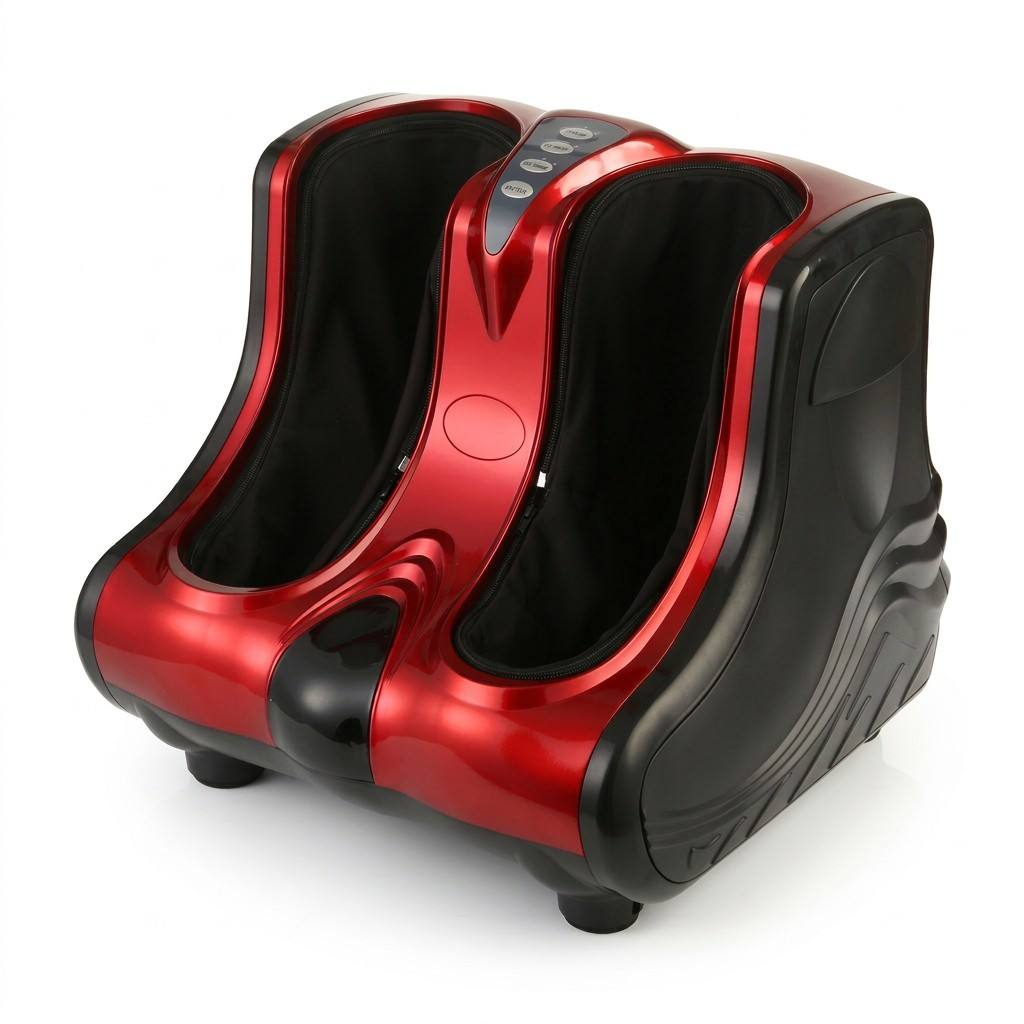
A supplier that vanishes after the first container rarely does so without warning signs. Start by looking at how long the company has actually been exporting calf massagers, not how polished their catalog looks. Ask for export records, a live video of the production line, and at least one recent client reference you can contact. If they hesitate on the video or give vague answers about their factory location, treat that as a red flag. A stable supplier usually has nothing to hide about where the units are assembled and who handles quality control.
Run a small trial order before committing to volume, and use it to test more than the product. Pay attention to how quickly they respond after payment clears, whether they send real production updates, and how they handle a minor packaging or labeling issue. Suppliers that disappear later often start losing interest right after the deposit arrives. Ask about replacement parts, motor warranty, and who covers repair costs in the first year. If those answers are clear and written down, the relationship is less likely to end at the first shipment.
Structure payment terms so leverage stays on your side. A reasonable deposit followed by balance against inspection report is normal, while wiring the full amount upfront invites silence. Include a short but precise clause about delayed shipments, defect rates, and after-sales responsibility. If a supplier accepts third-party inspection at their own factory and agrees to those terms without rewriting them, that is a stronger signal than any verbal promise.
Features That Separate High-Margin Models from Return Magnets
A product rarely becomes a margin leader by accident. The models that hold their price and rarely come back tend to solve a narrow, visible problem. They do not rely on dramatic styling or clever naming to justify the cost; the value becomes clear within the first few minutes of handling. That immediate clarity removes the gap between what the buyer expected and what actually arrived, which is where most return pressure starts.
Return magnets typically share one trait: the purchase decision leans on interpretation. Apparel sizing, shade variation, angle-dependent finishes, and ambiguous material descriptions all invite second-guessing. High-margin models strip away that guesswork. Dimensions are explicit, materials are shown in realistic context, and the item behaves the same way in a customer's hands as it does in the listing. When the delivered product matches the mental picture, restocking, inspection, and open-box markdowns never enter the profit equation.
There is also a quiet discipline around what not to sell. Some catalogs drop items that produce revenue but lose margin after return freight, repackaging, and discounting. The stronger performers tend to cluster around repeatable use cases, sturdy construction, and purchases tied to identity rather than impulse. A high-margin model does not just cost less to produce; it costs less to manage after the sale, which keeps the contribution margin intact.
Pricing Structures, Order Minimums, and the Numbers That Actually Matter
Most sourcing conversations start with the unit price on a quote sheet, but that number rarely survives contact with freight, packaging, and payment terms. A supplier might offer $3.10 per unit at 1,000 pieces and $2.85 at 2,500 pieces, yet the cheaper tier falls apart when you factor in a $480 pallet fee, slower production lead time, or a 30% deposit that ties up cash before anything ships. The pricing structure itself is the first thing to map: how discounts are applied, whether breaks are based on total order volume or per SKU, and what happens to the price when an order misses a tier by a few dozen units. Those mechanics determine whether the headline price is a real number or just a starting point.
Order minimums tend to be treated as a yes/no gate, but the more useful view is to convert them into how many weeks of inventory they represent. A 600-unit MOQ sounds reasonable until you match it against a product selling 30 units a month, which means roughly five months of stock sitting in a warehouse before you recover the outlay. The same 600 units for a product moving 150 units a month is barely over a month of cover. It helps to ask for the minimum by color or size as well, because a 1,200-unit order split across four colorways might still leave you with too much depth in the wrong variant. Minimums only become meaningful when they are compared to sell-through, not when they are read as an isolated number on a line sheet.
The figures that actually matter tend to be the ones that don't appear on a standard quote. Landed cost per unit, gross margin after freight and duties, cash conversion cycle, and weeks of cover are far better predictors of whether an order makes money than the ex-factory price. A product can look like a 68% margin item at the FOB price and still bleed cash if payment terms require 50% upfront and the sea shipment takes 42 days. Working backward from expected retail price and monthly sales velocity usually gives a clearer ceiling for what you can afford to pay per unit. Once those internal targets are set, the negotiation stops being about chasing a lower quote and becomes about fitting a supplier's pricing structure and minimums to your own unit economics.
Quality Checks That Reduce Customer Complaints and Chargebacks
Most complaints and chargebacks don't come from problems you can't control. They come from small mismatches that could have been caught before the package ever left your facility. A product photo that looks slightly different from the actual item, a size chart that is off by a half-inch, a tiny scratch that nobody noticed during packing—these are the details that later turn into "item not as described" claims. Train your team to inspect the physical product against the listing at the point of fulfillment, not just to assume the warehouse stock is correct. Phones are the easiest tool here: photographing or taking a short video of higher-value orders before sealing the box can settle disputes faster than a long email chain.
Order-level checks also make a measurable difference. Before a label is printed, confirm that the SKU, quantity, color, and shipping address all match what the customer actually selected. It sounds basic, but it is exactly where many chargebacks begin. For orders where the billing and shipping details don't line up, or where the purchase pattern feels unusual, a quick manual review is worth the delay. A short message to confirm the order with the customer may feel like friction, but it blocks the larger cost of a fraud-related chargeback. For fragile items, liquids, or electronics, add a packaging check that goes beyond box size—look at cushioning, seal strength, and whether the box can survive being dropped once or twice.
The strongest quality process is one that doesn't only catch mistakes but stops them from repeating. When an item is flagged during inspection, route that information back to the product listing, the supplier, or the packing instructions. Use simple defect codes like wrong item, cosmetic damage, or packaging failure, and review them weekly instead of waiting for a quarterly report. Over time, you will see patterns: maybe one vendor consistently ships items with loose threads, or one product always gets damaged in transit because the inner tray is too thin. Fixing those root causes costs far less than issuing refunds, paying dispute fees, and watching repeat customers quietly leave.
Merchandising Angles That Make Calf Massagers an Easy Add-On
Calf massagers rarely sit on a customer's must-have list, but they become an easy add-on when placed near recovery tools, standing desks, or travel accessories. Instead of treating them as standalone medical devices, frame them as comfort upgrades for people who already spend long hours on their feet or in front of a screen. A small shelf tag that says “pair with your favorite running shoes” or “works while you answer emails” shifts the product from a luxury to a practical companion.
Bundling works even better when the calf massager is shown in action rather than boxed. A short loop video of someone using it under a desk while typing, or on a couch after a hike, gives shoppers a clear mental picture. Retailers see higher attachment rates when the demo feels like a real moment, not a clinical demonstration. Highlight portability and quiet operation, because those are the two details that convince someone they will actually use it daily.
Price anchoring also plays a quiet role. Placing a mid-range calf massager next to premium massage guns or foam rollers makes the calf unit feel like a sensible, lower-cost way to get similar relief. Use simple signage like “recovery for your legs, not just your back” to tap into the logic of whole-body care without pushing a hard sell. The goal is to make the add-on feel obvious, almost like the shopper thought of it themselves.
FAQ
Look beyond basic air compression. Heat therapy, adjustable intensity levels, and wrap designs that fit different calf sizes matter more in a retail setting because customers will ask about comfort and ease of use before they ask about price.
Ask for their production lead times and minimum order quantities in writing, then request a sample order before committing. A supplier that can walk you through their packaging, quality control checks, and shipping timelines is usually more dependable than one that only quotes the lowest unit price.
Cordless models with simple one-button controls tend to move faster because buyers can imagine using them while watching TV or after a workout. Removable, washable liners also help, since hygiene is one of the first concerns customers raise.
It varies widely by build quality and features, but many mid-range units fall between $35 and $80 per piece at wholesale. Budget options under $30 often sacrifice motor durability, while premium units with stronger compression and heat can exceed $100.
Retailers should ask for packaging that works both on shelves and in online unboxing. Sturdy, clean boxes with clear feature callouts reduce the need for extra sales support, but avoid overly bulky packaging that inflates shipping costs.
A 12-month warranty is common, but the more important part is how returns and replacements are handled. Confirm whether the supplier covers shipping for defective units and how quickly they resolve claims, because that directly affects your customer service workload.
Start with a small mixed order or run a pre-order page to gauge interest. If you have a physical space, let customers try a demo unit and track how often they ask about price or availability before scaling up.
Conclusion
Before committing to a calf massager order, pull the supplier's history apart rather than relying on a polished catalog. Request a sample unit, check the actual compression depth and heat consistency across all intensity levels, and ask what happens when a motor or air hose fails during the warranty period. A supplier that can name replacement parts, repair turnaround times, and real reorder lead times is far less likely to vanish after the first shipment. Pay attention to the chassis and cuff materials too: stitched seams, accessible zippers, and a control panel that does not feel spongy often separate models that hold their margin from ones that generate returns.
On the pricing side, map the full landed cost instead of fixating on the unit quote. Minimum order quantities, freight, tariff exposure, and payment terms shift the true margin quickly, so run the numbers at two or three order volumes before negotiating. Build quality checks into receiving: test a random sample for overheating, uneven inflation, and remote calibration issues, and document the failure rate so chargebacks become easier to dispute. Merchandising works best when calf massagers sit near recovery tools, compression boots, or travel accessories, with a short demo loop showing the lowest and highest settings. That turns the product into an easy add-on rather than a high-consideration purchase.
Contact Us
Contact Person: Hannah
Email: [email protected]
Tel/WhatsApp: +86 18266954198
Website: https://www.okmassager.com/