

Ultrasonic Transducer Company Selection Guide for High-Performance Applications
2026-08-15
Why do some ultrasonic cleaning or welding lines hum along for years while others eat transducers every quarter? The answer often sits in the supplier choice—and it’s rarely about the lowest quote. This selection guide lays out what high-performance applications actually demand, including where Siansonic fits into that shortlist.
Separating Real Frequency Stability from Marketing Claims
When a datasheet boasts a ±10 ppb frequency stability figure, that number usually comes from a tightly controlled lab setup. The oscillator sits in a temperature-stable chamber, the load is perfectly matched, and the measurement window is short enough to hide slow drift. Real-world circuits rarely enjoy those luxuries. Supply ripple, board stress, nearby heat sources, and aging all pull the actual output away from the printed spec. A more honest gauge is to look at how stability behaves over minutes and hours, not just seconds, and to ask for plots under varying temperature and load rather than a single clean data point.
Marketing language leans on peak performance while quietly omitting the conditions that make it possible. Terms like “ultra-low jitter” or “atomic-grade stability” often refer to a narrow frequency offset range or a best-case temperature point. To separate substance from noise, check whether the vendor publishes phase noise curves across multiple offsets, Allan deviation over integration times from milliseconds to days, and sensitivity to supply voltage changes. If those details are missing or only available under NDA, treat the headline number with skepticism. Real stability is reproducible and documented, not a one-off measurement cherry-picked for a flyer.
Another giveaway is how aging and retrace are handled. An oscillator may start life impressively accurate, but if it shifts by several ppb in the first month or after a power cycle, that initial figure means little. Ask for aging curves under constant operation and retrace after thermal cycling. Field returns and long-term reliability data tell you more than any lab report. A vendor confident in genuine stability will share those unglamorous details without hesitation; one hiding behind a single spec line is usually selling a story rather than a component.
The Piezoceramic Grade Your Application Actually Needs
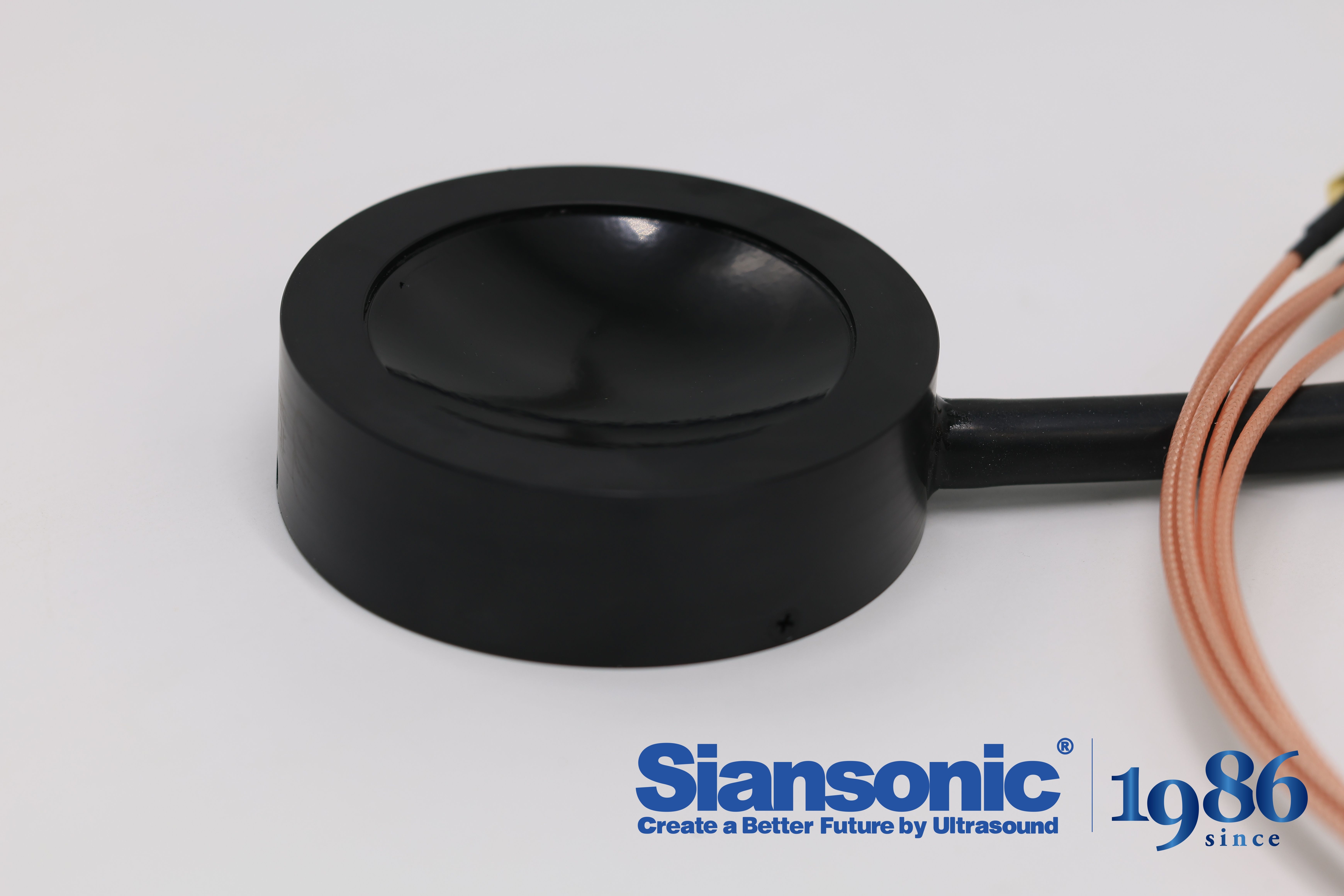
Most piezoelectric material choices start with the assumption that higher d33 is always better. That leads straight to a soft PZT grade like PZT-5H, which produces a strong charge response at low field and is fine for passive sensing or low-duty-cycle actuators. The moment the device runs continuously, at elevated ambient temperature, or under a compressive preload, that same grade can begin losing polarization or heating internally.
For transducers driven hard and often—cleaning tanks, ultrasonic welders, sonar projectors—a hard PZT such as PZT-4 or PZT-8 is usually closer to what the design needs. These grades trade some field-induced strain for lower dielectric loss and a higher mechanical quality factor, which means less self-heating and better efficiency when driven near resonance. PZT-8, in particular, handles higher preload and drive levels before depoling.
Rather than picking a grade from a summary table, check the loss tangent, Qm, and d33 at the actual operating temperature and bias. A material that looks marginal at room temperature can become the stable choice at 80°C or under constant DC bias, while the "sensitive" grade falls off quickly. The right piezoceramic grade is the one that keeps its properties under your working conditions, not the one with the highest number on the first page of the datasheet.
Why Custom Housings Demand a Different Kind of Supplier
Off-the-shelf enclosure suppliers typically optimize for volume and repeatability. When you hand them a drawing with a non-standard depth, a recessed connector panel, or a gasket groove that has to hold IP65, the process slows down. It is not that they cannot do it; it is that their systems are not built to absorb frequent changes without inflating cost and lead time.
Custom housings also change during prototyping. A bracket moves, a PCB gets taller, or thermal testing shows the need for an extra vent. A supplier with deep fabrication experience treats those revisions as part of the job, not as a disruption. They can suggest a different seam strategy or a more forgiving tolerance stack instead of simply quoting the first drawing.
Then there is the finishing stage. Housings that look simple on screen often need edge rounding, masking for conductive surfaces, or powder coat adhesion on sharp corners. A dedicated custom shop understands how those details affect assembly later, so the housing arrives ready to integrate rather than becoming another problem on the line.
How to Evaluate a Vendor's Testing Rigor Before You Commit
Most vendors will hand you a polished case study and a security questionnaire that reads like a marketing brochure. If you want the real story, start by asking for the test artifacts themselves—not summaries. Request the actual defect logs, the raw test execution reports, and the automation coverage maps. A vendor with true rigor will be able to show you the gaps, not just the green checkmarks. Look for evidence of negative testing: what happens when the integration receives malformed payloads, times out mid-transaction, or falls over under peak load? If that data doesn't exist or they hesitate to share it, treat it as a red flag.
Next, dig into how they handle regression cycles. Ask them to walk you through the last three releases and explain exactly which test suites were run, what percentage were automated versus manual, and how long it took to certify each build. Watch for vague answers like "we follow industry best practices." Instead, you want specifics: did they run 2,500 API assertions in under four minutes? Did they replay production traffic against a staging environment? A rigorous vendor will have hard numbers on flaky test rates and mean time to detection for regressions—and they'll volunteer that information without being prompted twice.
Finally, don't just trust their word—ask for a live walkthrough of their test environment. Have them show you the test data management strategy, especially how they handle PII and edge-case datasets. Ask to see the actual CI/CD pipeline with test gates enforced, not a slide deck. If they can't demonstrate a failing test being caught before deployment, or if their "rigor" evaporates when you push for details, you're looking at a vendor who tests for compliance, not for confidence. Commit only when you've seen the machinery, not the marketing.
Field Longevity Is the Metric Most Data Sheets Skip
MTBF figures and ingress ratings dominate the first page, yet neither tells you how a device will hold up after three years of thermal cycling, dust intrusion, and occasional voltage spikes. Lab tests isolate variables; real installations never do. That gap is why so many rugged components fail quietly in the field while their datasheets still look flawless.
Field longevity, when it is reported at all, usually comes from warranty claims and service logs rather than accelerated life testing. A supplier who publishes this metric has typically gathered data from thousands of units across different climates and load profiles. Without it, maintenance planners fall back on conservative replacement cycles, inflating inventory costs and risking unplanned downtime.
The absence of this number is not an oversight. It is a choice that shifts risk downstream. For critical infrastructure, asking for field longevity data before signing a purchase order often reveals more about a product than any IP rating or temperature spec ever could.
When Application Engineering Support Becomes the Deciding Factor
When products from competing vendors look nearly identical on a spec sheet, the quality of application engineering support often tips the scale. A customer may not realize during the sales cycle that their environment has unique constraints—legacy systems, unusual data flows, or strict compliance requirements—until an engineer digs into the details. The vendor whose application engineers proactively flag these issues and propose workable solutions is the one that earns the signed contract.
Strong application engineering support goes far beyond answering tickets after deployment. It means joining the customer's design reviews before a purchase is even finalized, suggesting architectural adjustments that reduce long‑term maintenance, and delivering proof‑of‑concept tweaks within days instead of weeks. These interactions build a level of trust that no polished marketing brochure can match, and they frequently become the reason a customer walks away from a cheaper or faster alternative.
In many real‑world decisions, the winning vendor is not the one with the most impressive feature list but the one whose engineers made the customer feel safe. When an application engineer can point to a past integration similar to the prospect's setup and explain exactly how they handled unexpected failures, that concrete evidence outweighs theoretical performance claims. Decision makers remember who answered the phone at 9 PM during the evaluation, and that memory often determines where the purchase order goes.
FAQ
Look for evidence of thermal modeling, not just power ratings. A supplier serious about continuous operation will discuss internal losses, heat sinking, and derating curves rather than only quoting maximum watts. Ask for measured temperature rise at the crystal stack under your target load and cycle time.
Ask which ceramic formulations they stock or can source—PZT-4, PZT-8, and hard versus soft variants behave very differently under high drive. A capable vendor will specify d33, Qm, and dielectric loss for the selected element, not just say “PZT.” Also listen for whether they match the ceramic to the front mass and horn, not just the frequency.
Series and parallel resonant frequencies, impedance at resonance (Zmin), phase margin across the band, and capacitance. Have them run an impedance sweep with a network analyzer and share the Smith chart, not a single-point LCR reading. This reveals weak bonding, poor prestress, or internal delamination that a simple continuity test misses.
Confirm whether the supplier characterizes transducers under realistic load—air readings are nearly useless for a horn coupled to a liquid or solid. Request impedance and phase data with the horn attached and loaded. Also ask how they handle reflected energy and whether they recommend matching inductors or transformer taps based on their own measurements.
Request SPC data for at least three production runs: resonant frequency spread, capacitance variation, and output amplitude under identical drive. A consistent vendor will have acceptance limits tighter than ±5% on frequency and will track ceramic lot history. Beware of anyone who says every build is "custom-tuned to spec" but can't show process control charts.
Ask where heat is generated in the stack, how the prestress bolt behaves as temperature rises, and what happens to resonant frequency when the assembly warms up. A strong response includes expected temperature coefficient of frequency, cooling options beyond ambient air, and a defined maximum operating temperature for the ceramic, not just the housing.
Require a loaded test that mimics your operating medium, whether it's cavitating liquid, plastic melt, or tissue. The vendor should measure delivered acoustic power or displacement, not electrical input only. Ask for a short endurance run at your maximum duty cycle and inspect for frequency drift, impedance change, and any visible stress on the bond lines.
They won’t provide impedance curves, they quote only wattage without frequency/load details, they cannot name the ceramic family, or they offer no custom horn support. Another warning sign is a vendor that treats every application as a catalog item and asks no questions about your acoustic stack, mounting, or thermal environment.
Conclusion
Selecting an ultrasonic transducer supplier for high-performance work means cutting through glossy spec sheets and marketing noise. The first thing to ignore is any headline frequency number without context—real stability shows up in drift under thermal load and long-term resonance shift, not a static value on a datasheet. Piezoceramic grade matters far more than most buyers assume: a soft PZT-4 may deliver higher coupling for cleaning or sensing, but a hard PZT-8 handles continuous high-power drive without depoling, so matching the ceramic to your actual duty cycle is non-negotiable. Custom housings add another layer of risk, because a supplier who only tweaks off-the-shelf designs rarely understands the acoustic impedance mismatches or node clamping issues that arise when you change geometry or mounting.
Testing rigor separates serious vendors from parts resellers. Ask for impedance sweeps under realistic load, not just free-air resonance, and push for accelerated aging data or at least cyclical drive tests—many companies never run them. Field longevity is almost always missing from documentation, so demand failure histories or references from applications resembling yours, because a transducer that works for six months in a lab can crack in six weeks on a production line. Finally, application engineering support often becomes the deciding factor: a vendor that helps you tune drive electronics, select backing layers, and troubleshoot acoustic coupling will save more time and cost than a cheaper quote ever could. Choose the partner who asks about your operating environment before quoting a price.
Contact Us
Contact Person: Ivy Zhang
Email: [email protected]
Tel/WhatsApp: +86 1081502288
Website: https://www.siansonic.com/