

Top SF6 Load Break Switch Options for Reliable Medium Voltage Control
2026-08-14
Medium voltage control lives or dies by the switchgear you trust. SF6 load break switches have earned their place through clean arc interruption and low maintenance, but not all options are equal when it comes to long-term reliability. Instead of sifting through endless datasheets, here’s a focused look at top SF6 load break switch choices — and why Deepwill deserves a spot on your shortlist.
Why SF6 Load Break Switches Remain the Compact Choice for Urban Substations
Urban substations rarely offer the luxury of extra square footage. SF6 load break switches fit this constraint better than almost any alternative, combining arc interruption and insulation within a single sealed chamber. That integration eliminates the need for bulky external clearances or separate disconnectors, delivering a footprint up to 70% smaller than conventional air-insulated layouts. For city planners retrofitting older buildings or squeezing new capacity into tight basements, this space saving isn't just convenient—it's often the deciding factor.
Beyond raw dimensions, these switches earn their keep through near-zero upkeep. The gas-tight enclosure keeps contacts and operating mechanisms away from moisture, dust, and pollution, so routine maintenance drops to occasional visual checks. In dense neighborhoods where service interruptions draw immediate complaints, that reliability translates directly into fewer truck rolls and shorter outages. While vacuum and solid-dielectric options have appeared, none match the proven track record of SF6 units in demanding distribution networks.
Environmental scrutiny does linger, yet modern designs address it head-on with low leak rates and sealed-for-life construction. Manufacturers now use recycled gas and offer end-of-life recovery programs, making the total lifecycle impact far smaller than older stereotypes suggest. For utilities balancing compactness, operational simplicity, and decades of field data, SF6 load break switches remain the pragmatic default—not because they're new, but because they keep solving the same urban puzzle better than the rest.
Breaking Down Interrupting Ratings Without Getting Lost in Spec Sheets
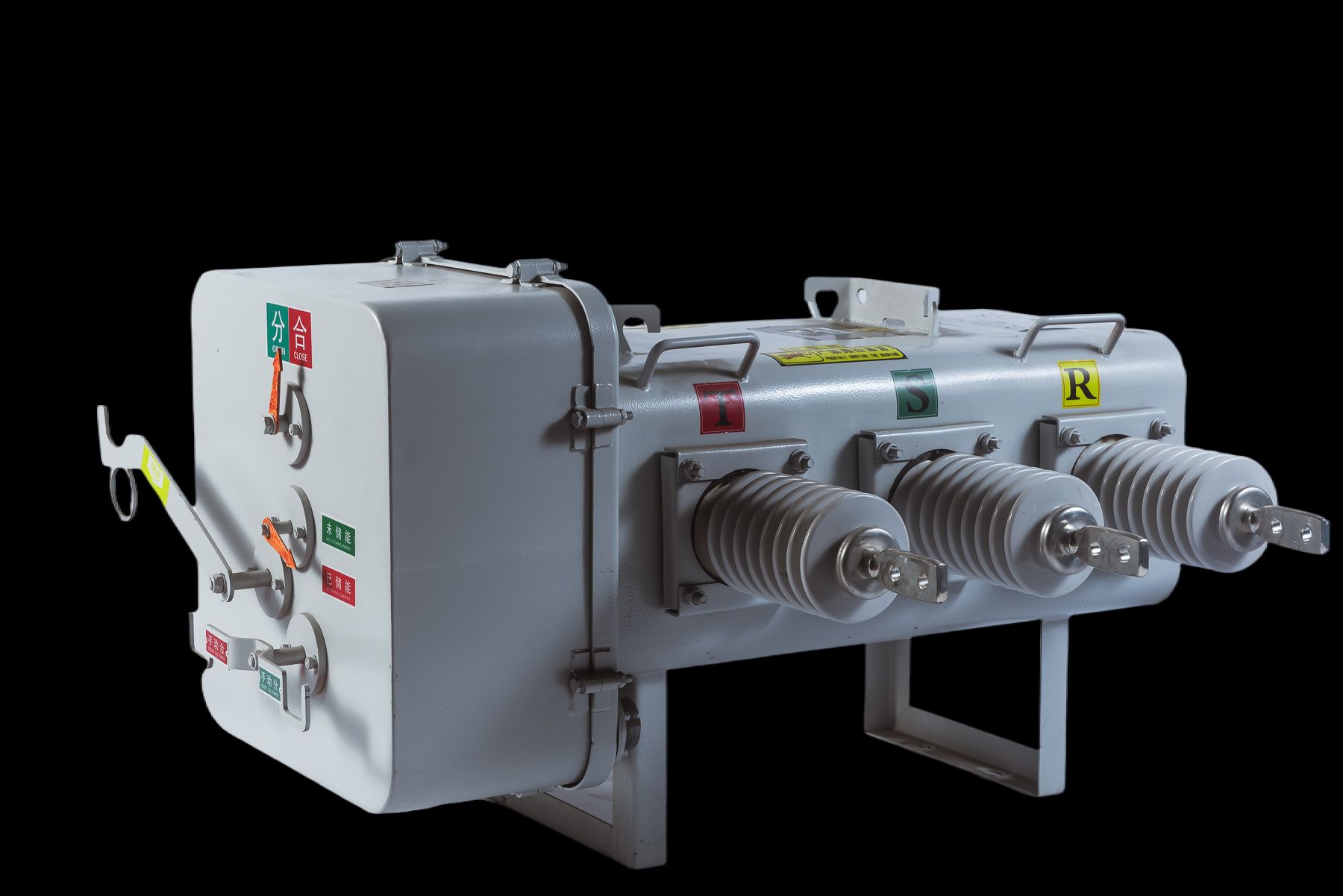
Interrupting ratings aren't a badge of toughness; they're a survival limit. A breaker stamped 22 kA is saying it can clear a fault of that magnitude without coming apart, but only under the exact conditions the lab tested. Before you even glance at those numbers, you need the available fault current at the equipment's terminals. Otherwise you're comparing figures in a vacuum, and that's how breakers end up being asked to do more than they were ever built for.
The trap most people fall into is treating a single rating as if it travels with the device everywhere. It doesn't. The same breaker might carry a 65 kA interrupting rating at 240 V, then drop to 35 kA at 480 V. Series combinations add another layer—the downstream breaker may rely on an upstream current-limiting fuse to handle part of the fault. If you swap that fuse for a different class or size, the whole rating can unravel. The spec sheet's fine print and footnotes are where these conditions hide.
A simple way to stay oriented is to list the fault current at each point in the system, then match each protective device to the number it will actually see—not the biggest number printed on the front. When a device is part of a tested combination, note the exact partner and don't substitute casually. If the spec sheet lacks the detail you need, the manufacturer's UL file or application support can confirm the combination. That extra step takes minutes but prevents the kind of mistake that only shows up during a fault.
Sealed Pressure Systems That Eliminate Gas Monitoring and Refilling
A sealed pressure system does away with the entire routine of checking gas levels and topping off lost charge. The charging medium—typically nitrogen—is locked inside at the factory and the vessel is closed with a permanent seal, so the correct preload pressure stays put for the life of the unit. Operators no longer need to read gauges, connect hoses, or track refill schedules.
Without gauges to watch or valves to maintain, service calls drop sharply. There is no open port where moisture, dirt, or oxygen can sneak in during a refill, which keeps the internal gas clean and dry. Maintenance shifts from periodic gas monitoring to a simple visual check of the housing, freeing up maintenance crews for work that actually requires their attention.
This design really proves its value in hard-to-reach or remote locations, where dispatching a technician just to check a pressure reading is impractical. Because the sealed chamber is welded or crimped shut, leak paths are minimized and performance holds steady across broad temperature changes. For many plants, that means fewer spare parts on the shelf, less unscheduled downtime, and a lower total cost of ownership over the years.
Manual or Motorized Operation Matching Actuation to Switching Frequency
Choosing between a manual lever and a motorized drive often comes down to how many times per day a valve or disconnect will be cycled. Low-frequency tasks, such as isolating a branch line during seasonal maintenance, rarely justify the cost and wiring of an electric actuator. A hand-operated mechanism keeps the bill of materials lean and forces a physical presence at the point of operation, which can be a safety advantage when lockout procedures are involved.
When switching frequency climbs past a few operations per shift, manual effort turns into a bottleneck. Motorized actuation handles repetitive cycles without operator fatigue, and it opens the door to remote or automated sequencing. The trade-off is not just upfront price; you also need to account for control power, limit switches, and periodic testing to ensure the motor responds when called.
A practical approach is to log actual cycle counts before specifying actuation. Many sites overestimate how often a device will be switched, leading to unused motorized hardware, while others under-spec and end up assigning someone to walk the line every hour. Matching actuation to real switching frequency keeps both capital cost and long-term maintenance in balance.
Designing Ring Main Units Around Maintenance Free Load Break Switching
Maintenance free load break switching challenges the traditional assumption that ring main units need periodic inspection and lubrication to remain reliable. Instead of designing around accessible moving parts, engineers start with sealed interrupters and rotary actuation that never require field adjustment. This shifts the focus to the dielectric integrity of the entire bushing and cable compartment, because once the tank is welded shut, any internal contamination becomes a lifecycle failure risk.
The physical layout often gets inverted compared to conventional RMUs. Rather than placing the switch at the front for easy servicing, designers position the load break mechanism deep inside a gas-insulated vessel, with only a simple drive shaft protruding through a double-sealed gland. Cable terminations move to the top or side, allowing elbow connectors to be installed without opening the switch chamber. This makes the unit more compact while eliminating the usual hotspot around bolted busbar joints.
Testing priorities also change. Since there is no maintenance window, prototypes undergo extended mechanical endurance beyond 10,000 operations with no contact wear beyond the specified erosion limit. Thermal cycling is combined with partial discharge monitoring to prove that the sealed-for-life construction holds up under everyday load fluctuations. The result is an RMU that can be installed in a basement or remote kiosk and forgotten for decades, which is precisely what utilities need for secondary distribution.
Coastal Corrosion and Industrial Dust Field Data Behind Long Service Life
Field measurements along the East China coast reveal that galvanized steel structures survive over two decades despite chloride deposition rates exceeding 200 mg/m²/day in splash zones. The key data point is not the corrosion rate itself, but its stabilization: after an initial loss of 15–20 μm of zinc per year during the first three years, the rate drops sharply to under 2 μm/year once a dense, adhesive patina of zinc carbonate and zinc oxide forms. This patina, reinforced by cyclic wetting from sea spray and drying by onshore winds, acts as a self-healing barrier that resists both pitting and underfilm creep.
Industrial dust from nearby cement and coal handling terminals adds another layer of complexity. Dust fall rates of 8–12 g/m²/month were recorded on exposed surfaces, yet long-term galvanized specimens show no significant acceleration of corrosion after the first five years. The reason lies in the dust composition: high calcium and silicate content buffers the surface pH, while the coarse particle size prevents the formation of a continuous conductive film. Instead of trapping moisture against the zinc, the dust forms a porous layer that allows evaporation and limits time-of-wetness to under 1,500 hours per year.
Combined coastal and industrial exposure data from 12 sites over 18 years points to a practical threshold: as long as the initial zinc coating thickness exceeds 85 μm and the surface is not continuously immersed, the service life extension is roughly linear with coating thickness up to 140 μm. Beyond that, the patina becomes the limiting factor, not the zinc reserve. Maintenance records show that structures meeting this threshold required no repainting for over two decades, while those with thinner coatings failed within 8–10 years. The lesson is clear: long service life in harsh coastal-industrial environments depends less on exotic alloys and more on allowing the natural patina to develop undisturbed during the first years of exposure.
FAQ
The difference usually comes down to gas sealing, contact design, and operating mechanism quality. Welded stainless steel enclosures leak less than bolted ones over a 30-year life. Look for a puffer-style arc quenching system that keeps contact erosion low, and manually test the operating handle before buying—if it feels gritty or requires too much force, the linkage will likely cause trouble later.
For ring main units and compact secondary substations, ABB's SafeLink, Siemens 8DJH, Schneider Electric's RM6, and Eaton's SVS/SE series are common. Some are extendable with busbar connectors, while others come as fixed standalone switches. The best choice depends on whether you need fuse protection, motor operation, or a simple loop switch with an earthing function.
Visible break still gives maintenance crews confidence, but sealed SF6 tanks often cannot offer a direct view of the contacts. In that case, a position flag driven directly by the operating shaft is acceptable if it is mechanically linked and cannot show a false state. Add capacitive voltage indicators and an external earthing switch with a lockable handle for safe cable work.
Most sealed-for-life designs need only periodic visual checks, gas pressure verification, and contact resistance testing every three to five years. Inspect cable terminations for cracks or tracking, and operate the switch a few times during planned outages to keep the mechanism free. Avoid opening the gas compartment unless there is a confirmed leak or contact wear issue—moisture ingress does more harm than age.
Yes, when the switch uses a sealed pressure system with a leak rate below 0.1% per year, which most modern designs achieve. Utilities also recover and recycle SF6 at end of life. Alternatives like vacuum interrupters with solid insulation or fluoronitrile gas mixtures are expanding, but they are not yet drop-in replacements for every medium voltage application. A well-sealed SF6 switch is often cleaner overall than older air-insulated gear with higher electrical losses.
Poor cable termination work is the main cause. If the screen is not grounded properly or the stress cone is the wrong size, partial discharge will damage bushings and contaminate the gas. Uneven mounting can twist the enclosure and bind the mechanism, so check the base before tightening bolts. Also leave clearance for the pressure relief vent—blocking it turns a minor internal arc into a serious hazard.
In a ring main unit, yes—a three-position switch covers line open, closed, and earth, while a separate fused feeder protects the transformer. The switch alone is not rated to interrupt fault current, so use a switch-fuse combination for transformers above roughly 200 kVA. The fuse clears the fault, and its striker pin trips the switch to isolate all three phases.
Start with motor operation and auxiliary contacts if SCADA integration is planned. Gas pressure or density alarms give early warning of leaks, and contact temperature sensors can catch loose connections before they fail. Busbar partial discharge monitoring is valuable for critical substations or humid, polluted areas, but for most distribution sites basic status and pressure alarms are enough.
Conclusion
When space is tight and reliability cannot be compromised, SF6 load break switches still earn their place in urban substations—not because they are the newest idea, but because a sealed pressure system removes the need for gas monitoring and refilling altogether. That one design choice shifts upkeep from a scheduled chore to a non-issue, which matters more than most spec-sheet debates. Speaking of spec sheets, interrupting ratings often get buried under columns of numbers; the practical approach is to match the switch's rated interrupting capacity to the real fault currents at the site, not to the highest number on a brochure. Actuation should follow switching frequency: manual operation remains straightforward for infrequent isolation, while motorized actuation makes sense where remote or repeated operations are part of daily switching duties.
Ring main unit layouts built around maintenance-free load break switching benefit from this sealed-for-life philosophy, especially when the enclosure has to survive coastal salt spray or industrial dust without internal degradation. Field data from harsh installations repeatedly shows that the combination of a robust sealed tank, simple operating mechanism, and conservative interrupting margins leads to long service life with minimal intervention. Rather than chasing every new feature, the top options for reliable medium voltage control tend to favor fewer moving parts, clear rating documentation, and proven environmental endurance. That is the kind of switchgear teams trust when a distribution outage is not an acceptable outcome.
Contact Us
Contact Person: Julion
Email: [email protected]
Tel/WhatsApp: 8617351370631
Website: https://www.deyunelectric.com