

Top Press Brake Machine Choices for Precision Bending
2026-09-14
Precision bending is where good shops become great—and where mediocre press brakes get exposed fast. If you’re hunting for a machine that can hold tight angles without constant shimming or guesswork, the current crop of top press brake choices offers some serious upgrades. We’re talking electric-hydraulic hybrids, adaptive crowning, and CNC controls that actually learn your material. Among the names making waves right now, HUNSONE stands out for balancing heavy-duty frames with surprising usability. Curious which models earn a spot on the shortlist? Let’s dig into what separates precision performers from the rest.
What Separates a High-Precision Press Brake from the Rest?
A high-precision press brake starts with how the frame handles deflection. When the ram applies full tonnage across a long bend, the bed and upper beam try to bow away from each other. In less refined machines, this flex shows up as a shallow angle in the middle of the workpiece and tighter angles at the ends. Precision models counter this with thicker side housings, machined guide surfaces, and a crowning system that adjusts in real time to the exact bend length and force. That means the tool gap stays parallel even under uneven load, so one setup produces a consistent angle from end to end.
Repeatability is another separator. It is not enough for the ram to reach a position once; it must return to the same depth thousands of times without drift. High-end machines use direct position feedback on the ram itself rather than inferring depth from motor rotations. The back gauge is similarly rigid, with minimal finger deflection and no backlash in the drives. When material thickness varies slightly, the control measures the actual bend angle and corrects the next stroke automatically instead of relying on the operator to shim the die. Over a full shift, these small corrections keep a bending cell within a few tenths of a degree while a standard machine may wander by half a degree or more.
Hydraulic vs. Electric Bending Machines: Where Precision Actually Comes From
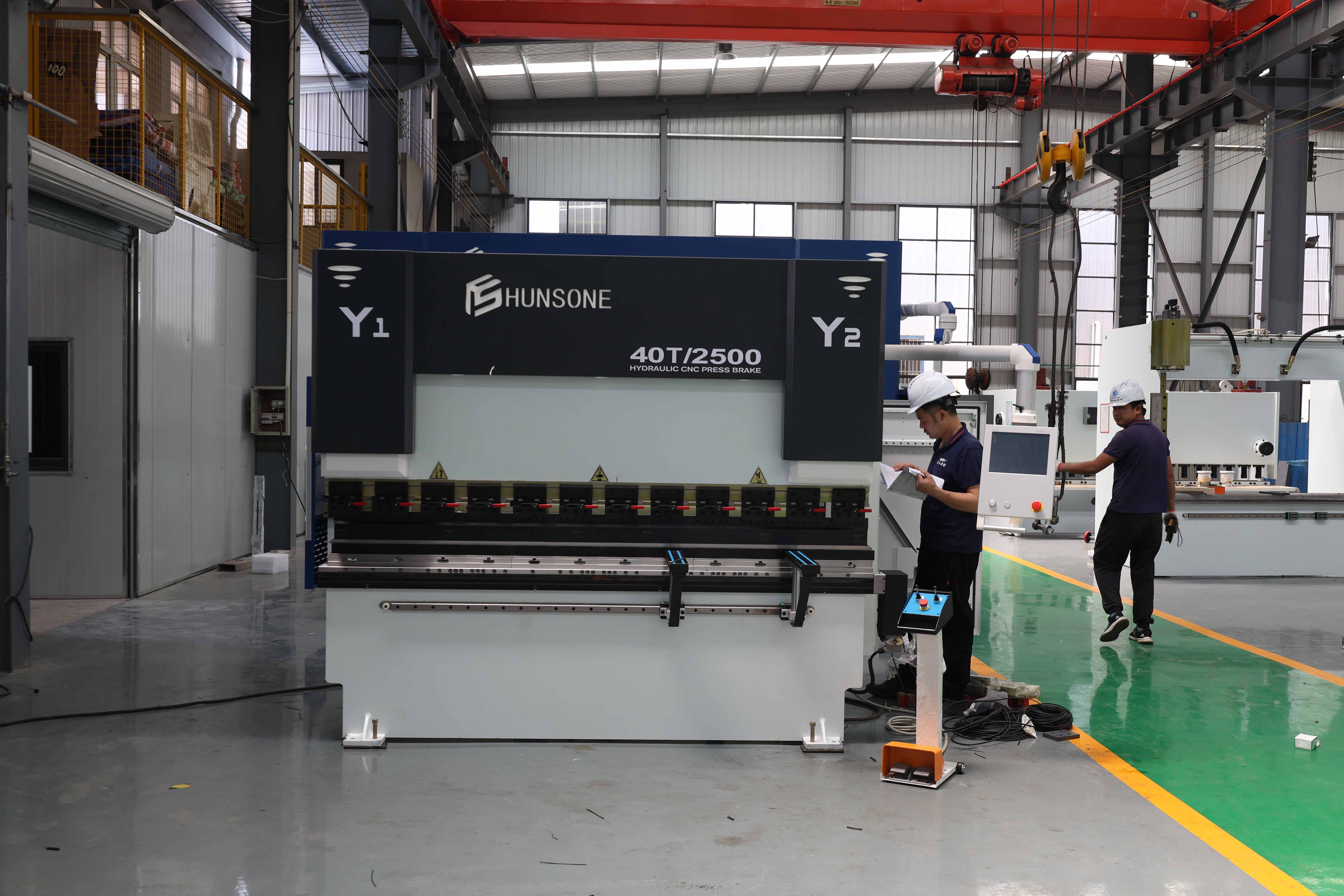
Precision in metal bending rarely starts with the power source. It starts with how the frame reacts when load hits. A hydraulic machine can be extremely accurate if the ram is guided by a stiff linear rail and the position is read at the tool, not at the cylinder. But hydraulic oil changes viscosity as it warms, and valve response drifts over a long run. That drift shows up as inconsistent angles, especially on parts with tight repeatability requirements.
Electric servo machines remove the thermal drift problem, but they carry their own weak spots: ballscrew backlash, belt stretch, and motor tuning that can overshoot if the controls are cheap. What separates a precise machine isn't the motor type—it's the feedback loop and the mechanical skeleton. How well does the crowning system counter bed deflection? How rigid are the side frames at full tonnage? Does the control measure the actual bend angle after springback, or does it just repeat a fixed stroke? A well-built hydraulic brake will hold tighter angles than a poorly assembled electric one any day.
CNC Controls and the Pursuit of Repeatable Bends
Repeatability in bending often gets attributed to frame stiffness or tooling precision, but the control system is where consistency actually lives. A modern CNC doesn't just drive the ram to a set depth; it reads angle feedback, monitors hydraulic pressure, and adjusts for springback that shifts from one sheet to the next. Operators learn quickly that two parts cut from different coils can behave differently, and the control has to store more than a simple target angle. It needs a correction map built from measured results, not just theoretical geometry.
What separates acceptable from truly repeatable work is how the control handles drift during a run. Thermal expansion in the machine, tool wear on a high-volume job, even small changes in oil temperature alter the relationship between commanded position and actual bend angle. Some systems compensate by comparing the first part of each batch to a stored signature, then adjusting the ram reversal point before the next cycle. Others rely on in-process angle sensors that feed data back between bends, effectively turning each part into a calibration sample. This closed loop isn't perfect; it still depends on clean tooling, consistent material thickness, and a control that isn't fighting outdated firmware.
The pursuit, then, is less about hitting a number once and more about shrinking the spread across a full shift. A shop chasing better repeatability might log angle deviations by job, track which correction strategy was active, and periodically verify the control's zero point. Sometimes the best improvement comes from changing how the bending sequence is programmed—using a slower final approach or adjusting dwell time—rather than buying a more expensive machine. The control is only as repeatable as the assumptions fed into it, and that demands attention from someone who understands where the variability actually comes from.
How to Size a Press Brake Without Overbuying or Underbending
Most shops end up with a press brake that's either too big for their daily work or too small to handle the occasional thick plate. The mistake usually starts with guessing instead of mapping out your real bending range. Look at the thickest material you actually form, not the thickest you imagine you might form someday. A machine rated for 1/4-inch mild steel across a short bend will often struggle with 3/8-inch plate over a full-length die, so you need to check the tonnage requirement at the specific bend length you use most.
Another overlooked factor is the bed length. Buying an 8-foot brake because you once bent a 6-foot panel means paying for unused capacity and floor space. Instead, measure the longest parts you bend at least once a month, then add a small margin for future product changes. Don't let a single exceptional job drive the purchase. A 4-foot or 6-foot bed covers far more work than most realize, especially when you use staged bending or re-positioning for rare long pieces.
Finally, match the tooling and backgauge to the same philosophy. A heavy frame with light-duty tooling is a false economy, and a fancy CNC backgauge on a brake that only runs simple 90-degree bends adds cost without real benefit. Write down your five most common bend profiles and check that the machine handles them comfortably—not at the extreme edge of its rating. That honest list will keep you from overbuying on paper specs while ensuring you don't underbend on the shop floor.
Tooling Tricks That Improve Accuracy on Any Machine
Machinists often reach for expensive upgrades when chasing tighter tolerances, but a few overlooked tooling adjustments can make an immediate difference. Start by checking the runout at the tool holder—even a few microns of wobble at the spindle nose translates into measurable taper and surface finish issues. Using shrink-fit or hydraulic holders instead of generic collet chucks removes much of that inconsistency, and a quick indicator sweep before each job lets you catch worn retention knobs or dirty tapers before they ruin a part.
Another trick that pays off on any equipment is balancing tool length against rigidity. Shorter gauge lengths reduce deflection during aggressive cuts, but sometimes you need reach; in those cases, swapping to a variable-helix end mill or adding a damped boring bar can suppress harmonics that cause chatter. Pair that with light spring passes at a slightly different feed rate when finishing critical bores, and the machine's built-in limitations start to matter far less than your setup choices.
When to Add Automation for Consistent Precision Bending
Automation starts earning its keep the moment bend angles drift beyond what downstream fit-up can absorb. If operators are constantly shimming, reworking, or scrapping parts because the same program yields 88° on one shift and 92° on the next, the process has already told you it needs closed-loop control. The trigger isn't a production volume number—it's the cost of inconsistency. Track how often a brake press cell re-bends or quarantines parts for angle checks; once that figure climbs above a few percent and tolerances are under ±0.5°, the manual correction loop is too slow and too variable.
Another clear signal is repeat work. When you see the same part numbers coming back every month with hand-written setup notes and tribal knowledge required to hold critical dimensions, that's a prime candidate for automated bending sequences with stored angle correction. Also watch for operator dependence. If only one person can run the tricky brackets without scrap, automation removes that bottleneck and makes training faster. In short, automate when precision stops being a skill and starts being a requirement you can measure—and when the cost of a bad bend outweighs the cost of the equipment.
FAQ
Frame rigidity and ram repeatability matter more than the control panel's touchscreen size. Look at the deflection compensation system, the quality of the linear guides, and whether the Y-axis uses glass scales or just motor encoders. A heavy welded frame that's stress-relieved after machining will keep the tooling aligned under load, which is where most precision loss actually happens.
Electric brakes win on repeatability and speed in thin-gauge work because the ram position is directly driven without oil temperature swings. Hydraulic machines still hold an edge for thick plate or long parts where you need consistent force across a wide bed, but they require warm-up cycles and regular valve tuning to stay tight. If your parts are under 10 gauge, a well-built electric model is usually the safer bet for tight numbers.
Not really. Tonnage only tells you how much force the machine can push. Accuracy comes from how straight the ram stays under that force, how well the crowning system compensates for bed and ram deflection, and how precisely the backgauge positions the part. Many shops run a 60-ton machine more accurately than a 150-ton one simply because the smaller frame deflects less proportionally.
Crowning counteracts the natural tendency of the bed and ram to bow in the middle under load. Without it, you get an angle that's slightly different at the center compared to the ends. Mechanical crowning tables or hydraulic cylinders under the die can be adjusted to match the actual deflection curve, which is essential for parts over four feet long. For very short parts, crowning is less critical but still helps if the machine has uneven wear.
If you're doing more than five setups a day, yes. A good CNC control lets you store tooling and material libraries, set up multi-step bend sequences, and correct angles automatically on the first part. But don't pay for features you won't use: a basic graphic interface with angle correction is enough for most small shops. The real value is reducing scrap on short runs, not impressing customers with a fancy screen.
Don't rely on the machine's angle correction alone. Keep a set of test pieces for each thickness and grade you commonly run, and note the actual bend allowance and springback after each setup. Adjust the punch penetration and dwell time based on those records, not just the nominal sheet thickness. Also clean the die shoulder and punch tip regularly, because built-up scale or oil changes the effective gap and throws off your repeatability.
Depends on how it was maintained and what you're bending. A 1980s mechanical or early hydraulic brake can still hit tight angles if the ram gibs are adjusted, the backgauge isn't sloppy, and the crowning system works. But you'll fight it on complex parts with multiple bends, because the control won't have automatic angle correction or bend simulation. If you only run simple 90-degree bends in thin sheet, an older machine may be fine with a good operator and regular calibration.
The punch tip radius and die opening width set the inside radius and minimum flange length, so getting those right for your material is step one. After that, tooling alignment and clamping consistency matter more than brand name. Ground precision tooling holds tighter than planed tooling, but it costs more and needs careful storage. For long runs, consider segmented tooling to reduce setup time and replace only the worn sections, which keeps your bends straighter over time.
Conclusion
Precision bending isn't about buying the most expensive press brake—it's about matching machine architecture, control logic, and tooling to the actual work. A high-precision machine separates itself through frame rigidity, backlash-free drives, and thermal stability, but those alone won't guarantee repeatable bends. Hydraulic systems still dominate for heavy tonnage, yet electric press brakes often deliver tighter angular consistency on thin material because they eliminate oil temperature drift and valve lag. The real difference shows up in CNC controls: modern controllers compensate for material springback, manage ram positioning to microns, and store bend sequences so a job runs the same on Tuesday as it did on Monday.
Sizing mistakes are more common than control failures. Too many shops overbuy tonnage and bed length, then struggle with deflection on short, thick parts. Tooling choices matter just as much—segmented punches, precision-ground dies, and proper crowning can fix accuracy problems no amount of servo tuning will solve. For high-mix or high-volume work, adding automation like sheet followers or robotic part manipulators keeps bend angles stable by removing operator inconsistency. Ultimately, the best press brake choice is the one sized to your thickest real job, not your biggest hypothetical one, and paired with tooling and controls that make every bend predictable.
Contact Us
Contact Person: James Chen
Email: [email protected]
Tel/WhatsApp: 86 13770803946
Website: https://www.hunsone.com/