

Top Industrial Transformers: Boosting Efficiency and Power Quality
2026-05-19
In today’s industrial landscape, every watt counts—and every fluctuation in power quality can ripple into costly downtime. That’s where top-tier transformers step in, silently shaping the backbone of efficient, reliable operations. At TPS, we don’t just build transformers; we engineer solutions that turn energy challenges into competitive advantages. But what really sets a great industrial transformer apart? Let’s plug into the details.
Advanced Core Materials Slash Energy Losses
Traditional silicon steel cores have long been the standard in transformers and inductors, but they come with a built-in penalty: energy lost as heat. This wasted power stems from two main culprits—hysteresis, where the magnetic material resists rapid changes in magnetization, and eddy currents, tiny loops of electric current that swirl uselessly within the core. Advanced materials attack both problems at once. Amorphous metals, for instance, lack the crystal structure of conventional steel, allowing magnetic domains to flip with far less friction. The result is a dramatic drop in hysteresis loss, often by 70% or more compared to grain-oriented silicon steel.
Nanocrystalline alloys push these benefits even further. By engineering grain sizes down to the nanometer scale, manufacturers create a material that combines the low losses of amorphous metals with higher saturation flux density, meaning it can handle stronger magnetic fields without saturating. This makes nanocrystalline cores especially valuable in high-frequency applications like inverters for solar panels or electric vehicle chargers, where conventional cores would quickly overheat. The fine structure scatters eddy currents into insignificance, slashing total core losses to a fraction of what older designs endure.
It’s not just about the raw material—how these cores are fabricated matters hugely. Advanced winding techniques and precise annealing processes ensure that the magnetic properties are uniform throughout, preventing hotspots that can drain efficiency. In practice, swapping in an advanced core often allows engineers to shrink the size and weight of the entire component, since less waste heat means less need for bulky cooling systems. The payoff shows up in everything from data center power supplies to industrial motor drives, where every watt saved translates directly into lower operating costs and a smaller environmental footprint.
Robust Insulation Extends Service Life
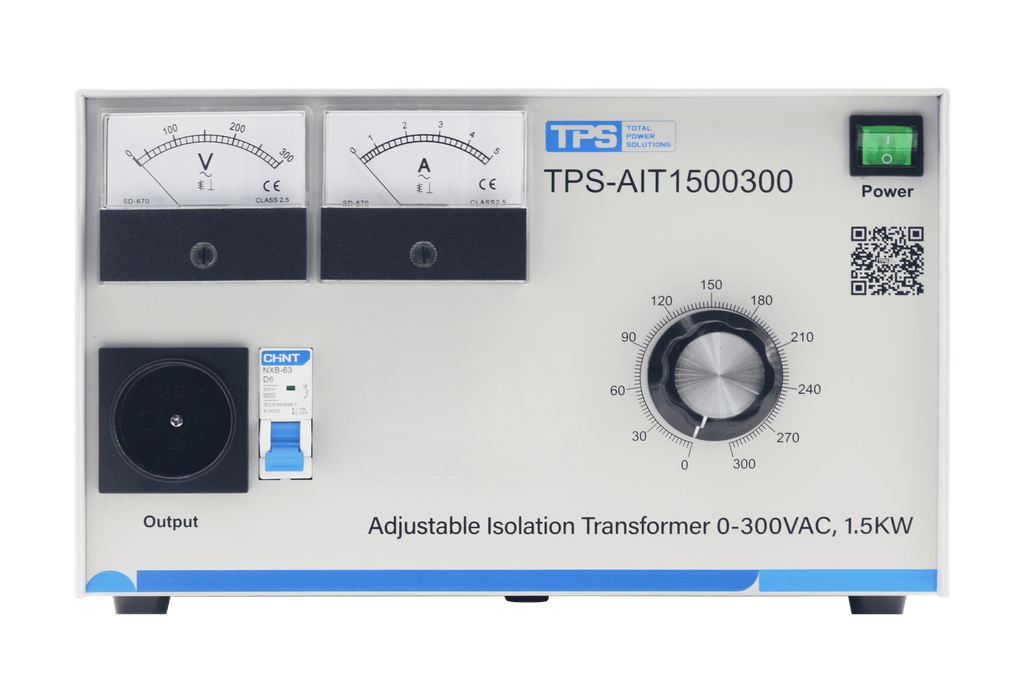
Durable insulation acts as a shield, blocking moisture, heat, and mechanical wear that would otherwise degrade critical components over time. By maintaining a stable internal environment, it prevents the slow damage that leads to costly failures.
In harsh settings, from subsea pipelines to industrial furnaces, weak insulation quickly cracks or crumbles, exposing equipment to corrosion and thermal cycling. Robust materials, carefully applied, maintain integrity far longer, directly stretching the timeline before repairs are needed.
The math is straightforward: better insulation means fewer interventions. That translates to lower lifetime costs and less downtime, not because of marketing promises, but because the physics of degradation are slowed at the source.
Voltage Regulation for Sensitive Machinery
Precision equipment like CNC machines or medical imaging gear often reacts poorly to voltage swings. Even a brief dip below nominal can scramble control circuits, mar a workpiece, or trigger a costly recalibration. The fix isn’t just a heavier cable or a bigger transformer—it’s about understanding the load’s tolerance curve and matching a regulator that responds fast enough to catch transients before they cause harm. Ferroresonant units, for instance, soak up sags without a hiccup, but their bulk makes them a tough fit in tight electrical closets.
Then there’s the harmonics headache. Some sensitive machinery not only needs steady voltage but also clean sine waves. An electronic tap-switching regulator might keep the RMS value in check, yet introduce waveform notching that confuses zero-crossing detectors in thyristor-driven motors. That’s where double-conversion online UPS systems or active conditioners earn their keep—they actively rebuild the waveform, isolating the load from upstream chaos. The trade-off is energy loss, so we often reserve these for the most finicky machines rather than the whole shop floor.
Installation quirks can trip up even the best regulator. A unit placed too far from the sensitive load lets voltage drop creep back in through the branch circuit, undermining regulation accuracy. Ground loops and neutral-ground bonds also conspire to inject noise that mimics fluctuation. Smart commissioning means scoping the actual load behavior during startup surges and idle modes, then tweaking sensing leads or adding isolation transformers where they really count. In practice, a cheap power quality logger left overnight uncovers more than a month of manual spot-checks ever will.
Eco-Cooling Designs Lower Operating Costs
Modern buildings are increasingly turning to eco-cooling designs that slash operating costs by minimizing energy consumption. Through strategies like strategic window placement for natural cross-ventilation, reflective roofing materials, and insulating green roofs, these structures stay cooler without cranking up the air conditioning. The result is a dramatic drop in electricity usage, which directly translates to lower monthly bills.
Beyond just saving power, eco-cooling approaches reduce wear and tear on HVAC systems. With less demand placed on mechanical cooling, equipment lasts longer and requires fewer repairs, cutting maintenance budgets substantially. For commercial facilities, this means avoiding costly downtime and unexpected replacement expenses, all while maintaining a pleasant indoor environment.
The financial upside also extends to potential rebates and long-term property value. Many regions offer incentives for energy-efficient retrofits, and buildings designed with passive cooling techniques often command higher rents. Over time, the reduced operational expenses can significantly boost the bottom line, making eco-cooling a smart investment rather than just an environmental choice.
Real-Time Load Adaptation Optimizes Performance
Modern workloads rarely follow a steady pattern, so systems that adjust resources on the fly avoid both over-provisioning and dangerous bottlenecks. Instead of relying on static thresholds, a dynamic approach monitors latency, throughput, and error rates in short windows, then redistributes computing power where it is actually needed. This responsive behavior means no single component becomes a choke point, and unused capacity is reclaimed before it wastes money or energy.
The real advantage shows up when traffic spikes unpredictably. Rather than dropping requests or queuing them indefinitely, the load‑aware mechanism spins up additional handlers, rebalances connections, or shifts non‑critical tasks to quieter periods. Because decisions are made continuously, the system smooths out the peaks without human intervention, keeping response times consistent even when demand doubles in seconds. Operators spend less time firefighting and more time on improvements that matter.
Under the hood, this kind of adaptation often uses lightweight heuristics or reinforcement learning that acts on signals already available in the application stack. It does not require a crystal‑ball forecast—just fast feedback loops that compare current metrics against recent baselines. The result is a setup that stays efficient during lulls and resilient under pressure, ultimately giving users a snappier experience while keeping infrastructure costs tightly controlled.
Modular Architectures Simplify Maintenance
When you break a system into self-contained modules, each with a clear responsibility and well-defined interfaces, routine maintenance becomes far less daunting. Instead of combing through a monolithic codebase where a single change can ripple unpredictably, you can focus your attention on the specific module that needs attention. This isolation means that updating a payment processing component, for instance, doesn't force you to retest the entire user authentication layer, saving both time and mental energy.
The real beauty of modular design emerges when things go wrong. Faults are naturally contained, preventing a minor glitch in a logging service from cascading into a full system outage. Troubleshooting also becomes more straightforward, because you can swap out or debug a misbehaving module without deep knowledge of every other part of the application. Over time, this approach keeps the system healthier and reduces the dread often associated with maintenance windows.
Teams also find that modular architectures make it easier to evolve the system incrementally. An outdated module can be rewritten or retired independently, allowing you to modernize your stack piece by piece rather than undertaking risky, large-scale rewrites. By keeping the interaction points stable, you preserve the overall integrity of the application while continuously improving its internal workings. This practical separation turns what could be a constant battle against technical debt into a manageable, almost routine, process.
FAQ
Industrial transformers broadly fall into categories like distribution transformers, power transformers, dry-type transformers, and oil-filled transformers. Distribution units step down medium voltage for facility use, often seen in factories. Power transformers handle bulk transmission at higher voltages. Dry-type units are favored indoors for safety, as they use air cooling instead of flammable oil, while oil-filled ones excel in outdoor, high-load scenarios due to better cooling and durability.
They minimize core losses through high-grade silicon steel or amorphous metal cores that reduce hysteresis and eddy currents. Lower resistance windings, often copper, cut copper losses. Advanced design also ensures the transformer runs near its optimal load point, and some incorporate smart cooling systems that adapt to demand, all of which collectively push efficiency above 98% in premium models.
They regulate voltage to counter sags and swells, filter harmonics via specific winding configurations like zigzag or through built-in shielding, and isolate sensitive equipment from grid noise. Special designs, such as K-rated transformers, handle harmonic-rich loads without overheating, while ferroresonant types deliver rock-steady output despite input fluctuations.
Key considerations include the total connected load and its nature (motor-heavy, non-linear, etc.), ambient temperature and installation environment, required efficiency level, footprint and weight constraints, cooling method, and future expansion plans. Reliability and lifecycle cost often outweigh upfront price, so look at maintenance needs, warranty, and the manufacturer's track record.
Impedance determines the voltage drop under load and the available short-circuit current. A higher impedance limits fault currents but causes more voltage sag during motor starts. In industrial networks, designers balance this: enough impedance to protect downstream gear without starving motors of startup torque. Typical values range from 4% to 7% for distribution transformers.
Dry-type transformers require minimal upkeep—just periodic cleaning and checking connections—and eliminate oil leaks or fire risks, making them ideal for occupied buildings. Oil-filled units need regular oil sampling and may involve spill containment, but they offer better overload capacity and heat dissipation. For harsh outdoor environments, oil-filled often prevails; indoors, dry-type is preferred unless the load demands otherwise.
Conclusion
Modern industrial transformers have moved far beyond simple voltage conversion, integrating cutting-edge materials and smart systems to tackle energy waste and power stability head-on. Advanced amorphous metal cores now replace traditional silicon steel, dramatically cutting no-load losses by up to 70% in some designs—this means less electricity drawn even when machinery idles, directly trimming operational carbon footprints. Paired with high-grade insulation systems that resist thermal and electrical stress, these units easily outlast older models, reducing replacement cycles and maintenance shutdowns. For factories reliant on precision robotics or CNC equipment, tighter voltage regulation ensures equipment receives steady power regardless of grid fluctuations, preventing costly errors and downtime. Meanwhile, eco-conscious cooling approaches, like directed airflow or biodegradable liquid coolants, keep internal temperatures in check without the heavy energy drain of traditional air conditioning, slashing auxiliary power use.
Beyond the hardware, adaptive control electronics now let transformers actively monitor load conditions across the factory floor, dynamically adjusting output to match real-time demand—this not only further refines efficiency but also suppresses harmonic distortion that can degrade sensitive electronics. When maintenance is needed, modular construction comes into play: individual components like tap changers or bushings can be swapped out in hours rather than days, minimizing production interruptions. Together, these advances redefine what industrial transformers can deliver, fusing longer service life with tangible savings and rock-solid power quality that modern automated processes demand.
Contact Us
Contact Person: Lily
Email: [email protected]
Tel/WhatsApp: +49 (0) 2161 49526-0
Website: https://tps-elektronik.com/en/