

Top Carbonated Beverage Production Line Supplier: Key Traits That Define Industry Leaders
2026-11-16
If you’ve ever watched a canning line run at full speed, you know it’s not just about filling bottles. In the carbonated drinks world, the real difference between a line that runs smoothly and one that costs you hours of downtime often comes down to who built it. After years of working closely with beverage producers, we’ve noticed one name keeps surfacing when reliability and smart engineering are non-negotiable: INTOP Machinery. But what exactly separates the best production line suppliers from the rest? The answer runs deeper than a flashy spec sheet—and that’s what this post will unpack.
Engineering Precision That Eliminates Bottlenecks Before They Form
Precision engineering thrives on forethought. Instead of reacting to bottlenecks when they surface, the focus shifts to designing workflows where constraints simply don't materialize. This means analyzing every stage—material handling, machine sequencing, operator interaction—long before production ramps up. By embedding triggers and fail-safes directly into the equipment logic, the line self-regulates, keeping throughput steady without constant intervention.
Real gains come from aggregating nuanced data at a granular level. It’s one thing to track output per shift; it's another to measure spindle load variations across tool changes or thermal drift in real time. These micro-signals expose the hidden precursors to jams and slowdowns, allowing engineers to recalibrate clearances, adjust feed rates, or re-order operations before a bottleneck can take hold. The result is a system that adapts autonomously, preserving speed without sacrificing dimensional accuracy.
The most resilient lines share a trait: they treat every component as an active participant in flow control. Rather than relying on a central scheduler, conveyors and workstations communicate directly, buffering small deviations and smoothing transient spikes. This distributed intelligence means a slowdown in one zone never cascades; instead, it’s absorbed and resolved locally, keeping the entire operation feeling frictionless—as if the bottleneck was never there at all.
Modular Systems Built Around Your Recipe, Not the Other Way Around
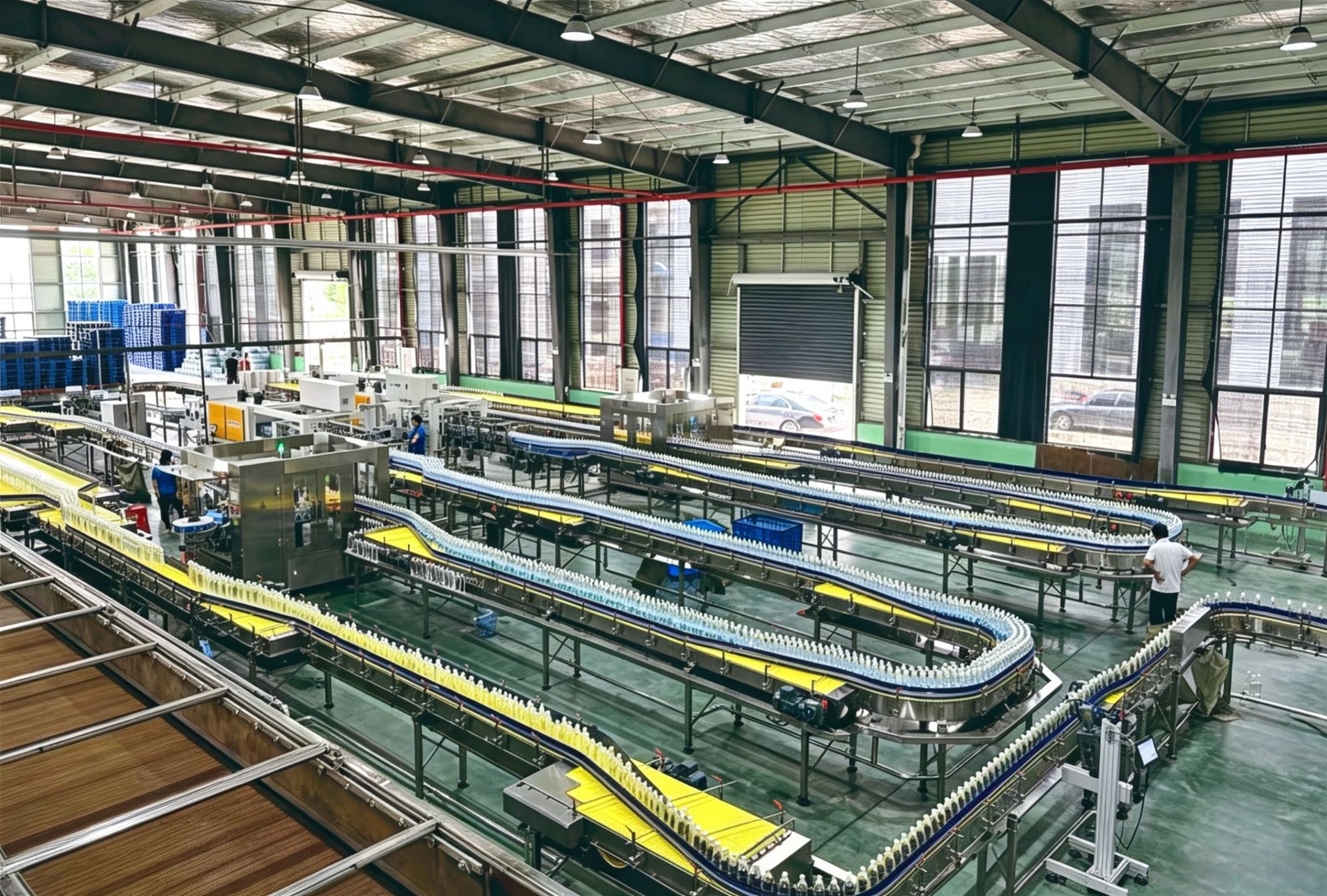
Your process is unique. The mixers, conveyors, and weighing systems we engineer don’t force you into a fixed flow—they adapt to the way you already work, whether you batch by hand or run continuous lines. Instead of standard modules that dictate your steps, our components slide into your setup, respecting your ingredient order, your timing, and your in-house tricks that make the product unmistakably yours.
We start by listening to what’s non-negotiable in your recipe: a delicate folding stage, a sudden temperature shift, a rest period most equipment ignores. Then we build around those moments, not the other way around. The result is a line that feels familiar to your team from day one, minus the bottlenecks they’ve learned to live with.
When your recipe leads the design, you stop fighting the machinery and start getting the same texture, rise, or melt every single batch. Flexibility isn’t a feature we add later—it’s the starting point, so your signature stays intact even as volumes grow.
The Quiet Shift Toward Water and Energy Stewardship
The meaning of efficiency has quietly evolved. It no longer lives in spreadsheets alone but in the sound of a pump that modulates its own speed to match actual demand, in the way a cooling tower cycles water just one more time before discharge, and in the shift from viewing utilities as fixed costs to treating them as design variables. For decades, industry chased production output with little attention to the invisible flows of water and kilowatt-hours moving behind the walls. That era is fading. A growing number of operations people now walk their sites with a different set of eyes, noticing where heat escapes, where condensate drips, and where pressure drops offer clues rather than just noise. There is no grand proclamation, just a steady, quiet pivot toward seeing water and energy not as commodities to be consumed, but as resources to be guided.
This shift does not always arrive with a technology label attached. It sometimes starts when a maintenance lead questions why a rinse tank overflows twenty-four hours a day, or when a plant manager notices that identical production lines use strikingly different amounts of compressed air. Internal conversations are changing. Instead of asking “what is the unit cost?” teams are beginning to ask “what is the actual need?” and “where does the rest go?” The answers often reveal that some of the most meaningful reductions lie buried in behaviors, in setpoints that were chosen out of habit, and in legacy sequences that were never revisited. As these conversations spread, stewardship becomes less of a corporate initiative and more of a collective instinct—a shared discomfort with waste that requires neither a campaign nor a slogan, only sustained curiosity.
Water and energy become most interesting when viewed together. In many processes they are coupled so tightly that improving one without the other feels almost clumsy. Warm wastewater, for instance, carries both a disposal cost and a heating penalty already paid. When operators begin to see that connection, small changes accumulate: heat exchangers are cleaned on time, flow rates are trimmed at the edge of what works, and the idea of “good enough” gets redefined. There is a growing recognition that stewardship is not about perfect optimization but about closing loops wherever possible—reusing, recirculating, rethinking sequences—until the line between operational discipline and resource care blurs into something that simply feels like responsible manufacturing. The shift is quiet, yet its effects settle deep into the daily rhythm of a facility, layer by layer, season by season.
When Support Goes Beyond the Warranty Period
There’s a quiet kind of relief that comes with knowing a purchase is still covered, even after the official window has closed. It might be a laptop that starts acting up a month past the end date, or a kitchen appliance that suddenly refuses to cooperate. In those moments, the expected response is a shrug from customer service and a bill you weren’t planning on. But sometimes, the script flips. A support agent takes an extra look at your case, remembers a goodwill policy, or simply decides that your loyalty over the years matters more than a few weeks on a calendar. That’s when a warranty becomes less about legal terms and more about a company’s character.
Of course, this kind of help rarely comes with a guarantee. You can’t add it to a cart or opt into it during checkout. It lives in grey areas—when a known defect has a quiet extended repair program, or when a representative uses their own judgment to override the system. The conversation might start with the usual script, but then there’s a pause, a brief hold, and a new tone. “We’ll take care of this one for you.” The relief isn’t just financial; it’s the feeling of being seen as more than a ticket number. It turns a transaction into something that almost feels like a relationship.
Stories of post-warranty support travel differently than complaints. People don’t post on social media when their printer dies a day after coverage ends—they just buy a new one, maybe from a different brand. But when a manufacturer replaces a failed part without asking for a receipt or a credit card, that story gets shared quietly at family dinners or in a text to a friend. It reshapes how someone thinks about a brand, because the help arrived when it didn’t have to. And that’s the thing about going beyond the warranty period: it’s an unspoken signal that the company still stands behind what it made, long after the paperwork says they’re done.
Material Choices That Keep Acidity and Pressure in Check
When you’re pulling a shot that leans a little bright or tends to run fast, the metal your portafilter basket is made from can quietly shift the balance. Stainless steel, especially the thicker, precision-cut types, tends to mute sharpness just enough to let sweetness step forward without muddying the cup. It’s not about filtering acidity out—it’s about rounding the edges so you’re not wincing at the first sip. Some baristas lean on coated brass baskets for exactly this reason: the slight thermal mass bump can drag the extraction into calmer territory.
Beyond the basket, gasket material plays a sneaky role. Rubber gaskets that have hardened with age can create micro-gaps, letting pressure bleed where you can’t see it. That drop might seem small, but it can turn an otherwise balanced shot hollow. Silicone gaskets, meanwhile, hold their seal with less fuss and fewer replacements, keeping the ramp-up steady and the pressure curve predictable. If your machine runs hot, silicone also shrugs off the extra heat without turning brittle, so you’re not chasing your grind setting to compensate for a wandering group seal.
Then there’s the quiet work of dispersion screens and showers. A screen cut from a single piece of stainless steel tends to clog less and spread water more evenly than the multi-layer mesh types that trap fines and stale oils. Fewer blockages mean the puck doesn’t get slammed in one spot and neglected in another, which is often where harsh acidity hides. Combined with a brass dispersion block that gently preheats the water, these choices add up to an extraction that feels more laid-back and integrated—brightness still there, but no longer poking at your palate.
How Legacy Know-How Shortens the Path from Idea to First Bottle
Deeply ingrained methods passed down through generations remove the guesswork that plagues newcomers. When a distiller knows precisely how a particular strain of yeast behaves in their century-old cypress tanks, or how the local water’s minerality interacts with the grain during a slow fermentation, there’s no trial-and-error lag. Every variable has already been mapped by instinct and sensory memory, letting the team move swiftly from a fleeting tasting note in someone’s mind to a test batch that actually tastes the way it should on the first try.
This living archive of tactile knowledge also collapses the time spent sourcing and calibrating materials. Instead of soliciting samples from dozens of neutral grain spirit suppliers, the cellar master simply walks to a corner of the warehouse where the right base distillate has been resting for years, waiting for a purpose. The cooper’s worn hands know exactly how long to char a miniature barrel to mimic the character of a full-sized cask in a fraction of the time. These shortcuts aren’t rush jobs—they’re rooted in a confidence that turns iterative development into a deliberate, unhurried act of composition.
Perhaps most crucially, legacy know-how keeps panic out of the first bottling decision. A rookie might second-guess a blend’s readiness every week, pulling samples too early and muddying the flavor with overhandling. Veterans lean on organoleptic benchmarks that no instrument can capture: the moment a spirit’s edge relaxes into a silken texture, the precise stage when botanicals stop shouting individually and start singing in chorus. That inherited clarity eliminates the months of waffling that typically stretch between a good prototype and a bottled reality, allowing the liquid to reach its audience while the original spark is still alive.
FAQ
It comes down to a refusal to compromise on engineering integrity. Top providers don't just assemble machinery; they obsess over every weld, the precision of the filling valves, and the seamless integration of mixing and carbonation systems. They understand that consistency at 30,000 bottles per hour requires more than just fast machines — it demands master-level synchronization of temperature control, pressure stability, and hygiene design that others often treat as afterthoughts.
The real magic happens through proprietary blending and carbonation modules that adjust in real time. Instead of relying on manual sampling, leaders embed inline brix and CO2 sensors that feed data directly into the process control system. If the syrup-to-water ratio drifts by even 0.2%, the system compensates instantly, and any out-of-spec product is automatically diverted before it ever reaches a filler. That kind of closed-loop quality assurance is what eliminates the 'bad batch' scenario entirely.
Absolutely, but only if the line is designed from the ground up with modular changeover in mind. The real leaders furnish CIP-compatible filling turrets, quick-release valve clusters, and recipe-driven automation that can switch from a sugary cola to a sensitive malt-based seltzer in under 15 minutes. It's about building a chassis that accommodates radically different liquid personalities without requiring a complete teardown or a second dedicated line.
It's not just about slapping an efficient motor on the conveyor. Forward-thinking providers redesign the entire thermal footprint — capturing waste heat from compressors to pre-heat bottle rinsing water, using variable-speed drives on mixers that idle during line stoppages, and engineering air rinsers that use ionized air at precisely the right pressure to minimize both power draw and bottle stress. The result is a line that uses up to 30% less energy while running quieter and cooler.
They send a blended team of mechanical, electrical, and process engineers who stay embedded until the line runs at nameplate capacity — not just until it powers on. Training shifts from classroom theory to shadowing operators on the floor, with nightly feedback sessions. The best suppliers leave behind not just manuals, but also a digital twin of the line that operators can use for simulation-based practice long after the commissioning team leaves.
Expect a direct-to-factory hotline staffed by engineers who can remotely access the line's PLCs and sensor streams — with your permission — to diagnose issues before you even finish describing the symptom. Leaders replace the standard 'please log a ticket' model with proactive vibration monitoring on critical pumps and predictive alerts for filler valve wear. Spare parts are often pre-positioned in regional hubs, so a replacement reaches most sites within 6–12 hours, not days.
Ask for the shift reports of lines they installed five years ago, not just the shiny new ones. Leaders will gladly connect you with maintenance managers who track unplanned stoppages and changeover times religiously. You'll often find that their lines still run within 2% of original OEE targets, and that their technical team still picks up the phone on the second ring for a machine that's way past its warranty. Long-term operating data tells a far starker truth than any demo day ever could.
The game-changers are practical: integrated digital twins that allow recipe changes to be stress-tested virtually before touching a physical machine, and vision systems that inspect crown corks at full line speed for sub-millimeter defects that manual checks miss. Add in self-adjusting labelers that compensate for ambient humidity changes throughout a shift, and you have lines that learn and adapt rather than just repeat. These aren't lab concepts — they're already installed in plants that demand less than 0.1% product loss.
Conclusion
In the fast-moving world of carbonated beverages, a top-tier production line supplier doesn’t just sell machinery—it embeds decades of process insight into every weld and sensor. The real differentiator surfaces long before installation, when engineering teams map out potential chokepoints and design them out of the system entirely. Rather than forcing your formula into a fixed chassis, they assemble modular units around your specific syrup ratios, carbonation levels, and filling speeds, ensuring the line flexes with seasonal recipes or future SKU shifts without a costly rebuild. This hardware fluency is paired with a material science rigor that often goes unnoticed: valve alloys, seal compounds, and tank linings are chosen not simply for food safety, but to withstand the relentless acidic bite and high-pressure dance that define sparkling drinks, preventing micro-leaching or seal fatigue that could compromise taste years down the line.
Beneath the gleaming stainless steel, the quiet architecture of resource stewardship has become a defining mark of industry leaders. Water reclaim loops, low-thermal pasteurization tunnels, and variable-speed compressors now come as standard intelligence, trimming both utility bills and environmental footprint without requiring operator heroics. Yet hardware alone falls flat if the partnership fades after commissioning. The suppliers that earn long-term trust build support programs that feel less like an extended warranty and more like a continuous engineering dialogue—remote diagnostics, on-site process audits, and operator upskilling that turn shift crews into line owners. This depth grows from a legacy of trial across countless production floors: when a supplier can pull from a library of past start-up data, the leap from a napkin sketch to the first shelf-ready bottle becomes significantly shorter. In that condensed timeframe, you get more than equipment—you get a launch partner who has already solved the problems you haven’t yet encountered.
Contact Us
Contact Person: Laura
Email: [email protected]
Tel/WhatsApp: +86 13957758832
Website: https://www.intopmachinery.com