

Top 7 Segment LCD Screen Manufacturers for Reliable Display Solutions
2026-05-16
Seven-segment LCD screens remain the unsung heroes of modern electronics, delivering crisp numeric readouts in everything from medical monitors to industrial controllers. But not all manufacturers meet the same high bar for longevity and clarity. In this curated roundup, we spotlight seven standout suppliers known for consistent quality and innovation—with special emphasis on Jingda-Display, a rising force that blends precision engineering with responsive customization. Whether you’re prototyping a wearable or scaling a smart-meter line, these are the names you’ll want on your shortlist.
Why Segment LCDs Still Hold Their Ground in a Digital World
In an era dominated by high-resolution OLED and TFT displays, segment LCDs might seem like relics from a bygone age. Yet, they persist in countless devices around us, from kitchen appliances to medical equipment. Their longevity isn't accidental—it's rooted in a combination of simplicity, reliability, and cost-effectiveness that modern displays struggle to match. While flashy screens demand constant power and complex controllers, segment LCDs offer a straightforward, low-energy solution that gets the job done without unnecessary frills.
One of the key reasons segment LCDs remain relevant is their exceptional readability under a wide range of lighting conditions. Unlike many digital displays that wash out in direct sunlight or strain the eyes in dim environments, reflective segment LCDs use ambient light to their advantage, delivering crisp, high-contrast visuals without a backlight. This makes them ideal for outdoor equipment, automotive dashboards, and battery-powered devices where energy efficiency and clarity are non-negotiable. Moreover, their custom-designed segments allow for tailored information display that is instantly recognizable, reducing the cognitive load for users who need quick, unambiguous readings.
Beyond practicality, segment LCDs have carved out a niche in industries where durability and longevity are paramount. With no delicate pixel arrays or complex electronics, they withstand extreme temperatures, vibrations, and humidity far better than their graphically rich counterparts. A simple numeric display on a factory floor or a vital signs monitor in a hospital doesn't need animation—it needs to work flawlessly for decades with minimal maintenance. That dependability, coupled with dirt-cheap production costs, ensures that segment LCDs will continue to hold their ground in a digital world that often overlooks the elegance of doing one thing perfectly.
Decoding the Manufacturer Selection Maze
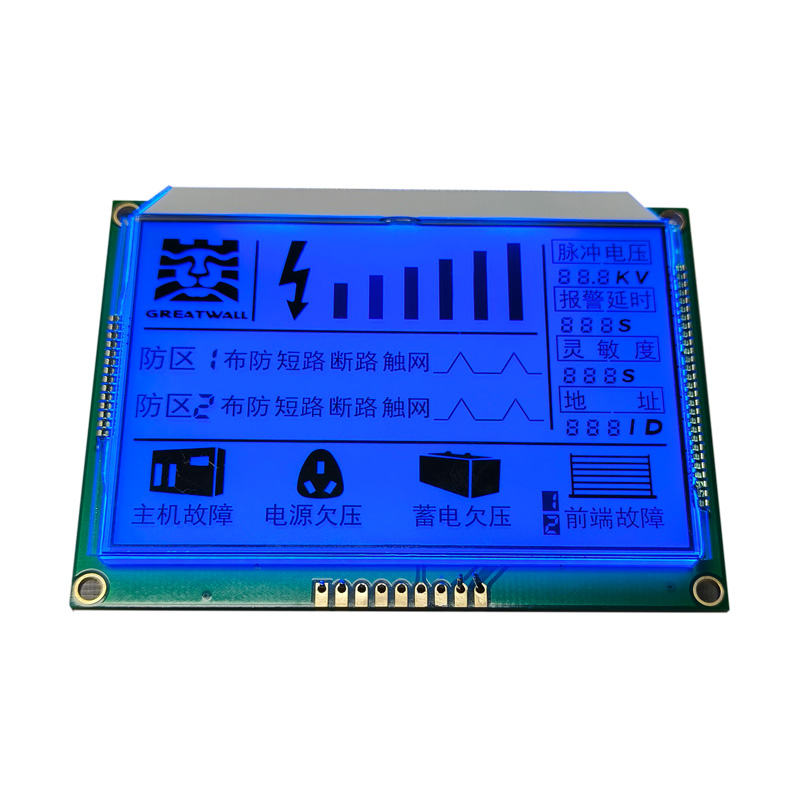
Choosing a manufacturer feels straightforward until you step into the mess of half-truths, hidden fees, and inconsistent quality. Many buyers fixate on the lowest bid, only to watch lead times stretch and communication collapse. The real skill is untangling what a factory actually delivers versus what they promise—digging into their past client experiences, touring the floor if possible, and testing how they handle unexpected hiccups.
Beyond the basics of cost and capacity, subtle clues often separate a lasting partnership from a headache. Notice how quickly they admit to mistakes—defensiveness is a red flag. Ask about their process for iterative tweaks; an adaptable shop saves you countless rounds of back-and-forth. And don’t overlook the vibe of the relationship: a team that genuinely listens and suggests smart shortcuts brings far more value than a rubber-stamp quote machine.
It’s easy to drown in comparison charts, but the maze isn’t solved by data alone. Anchor your search in two or three make-or-break requirements, then allow for intuition. Sometimes the best insight comes from a casual conversation with their floor supervisor or a sample that arrives ahead of schedule. The goal isn’t a perfect spreadsheet—it’s a partner you trust to grow alongside you.
Tailor-Made Displays That Align with Your Vision
Every brand has a story, and yours is unlike any other. We dive deep into what makes your vision distinct, then craft display solutions that bring those ideas to life with precision and personality.
From material selection to structural design, every element is chosen not just for its quality but for its ability to carry your message. You won't find off-the-shelf templates here—just collaborative creation that turns concepts into physical, unforgettable experiences.
The result is a space that feels authentically yours, engaging your audience in a way that generic setups never could. Because when your display truly reflects who you are, it doesn't just attract attention—it builds connection.
Rigorous Testing: The Non-Negotiable for Long-Lasting Screens
When a screen claims to be built for endurance, the only way to back that up is through relentless testing. It’s not enough to assume components will hold up—they need to be pushed past their expected limits in controlled environments. High-pressure humidity chambers, rapid temperature cycling from freezing to scorching, and continuous vibration rigs are just the starting point. Every panel is subjected to these extremes not once, but repeatedly, to expose even the faintest weaknesses before they ever reach a user’s hands. This isn’t about meeting minimum standards; it’s about ensuring survival in places where failure simply isn’t an option.
Over time, even microscopic flaws can lead to visible degradation. That’s why testing protocols drill down to the material level, examining how adhesives, polarizers, and backlight films age under UV exposure and oxidative stress. Accelerated life testing compresses years of real-world wear into weeks, allowing engineers to study failure modes most people will never encounter. If a screen develops a faint yellow patch after the equivalent of five years of 24/7 operation, the design is reworked—no exceptions. This obsessive attention to long-term behavior is what separates a display that lasts a season from one that remains flawless for a decade.
Out in the field, screens face unpredictable physical abuse: impact, abrasion, and even chemical spills. Testing labs replicate these with projectile strikes, steel-wool scrubbers, and solvent baths, ensuring the cover glass and touch layers maintain integrity and responsiveness. It’s not pretty, but it’s necessary. A truly robust screen emerges from this gauntlet with its clarity, touch sensitivity, and structural integrity intact, ready for whatever the world throws at it.
From Small Batches to High-Volume Orders with Equal Finesse
Whether you’re prototyping a dozen units or scaling to thousands, our production process never loses its grip on precision. We treat each order with the same meticulous attention, ensuring that the solder joints on a single custom board are just as flawless as those on a high‑volume run. There’s no assembly line indifference here—every component placement, every reflow profile, is tuned to the exact demands of your design, regardless of quantity.
Ramping up doesn’t mean sacrificing the personal touch. Our team adapts quickly, recalibrating for scale without letting the rhythm of quality slip. We’ve seen too many operations where speed erodes care; we flipped that dynamic by building flexibility into our workflows. The same eyes that inspect a delicate prototype will sign off on a bulk shipment, catching micro‑defects long before they become macro problems.
This balance comes from a floor‑level understanding that volume is just a number—it doesn’t change the craft. We’ve trained our people to flow seamlessly between project sizes, carrying the same quiet pride whether they’re hand‑loading ten boards or managing an automated pick‑and‑place line for ten thousand. The result is a consistency you can feel, as if every order was the only one that mattered.
Inside the Partnerships That Power Global Brands
Behind every iconic global brand lies a web of carefully chosen alliances that most consumers never see. These aren't just supplier agreements or distribution deals—they're deep, often decades-long collaborations where strategy, innovation, and trust intertwine. When a luxury fashion house works with a specific mill in Italy, or a tech giant co-develops components with a single manufacturer, they're not just buying a service. They're betting on a partner's ability to evolve alongside them, sharing both the risk and the reward of pushing boundaries.
The magic happens when these relationships move beyond transactional into something more symbiotic. Partners begin to anticipate needs before they're voiced, investing in R&D that aligns perfectly with the brand's unannounced roadmap. It's the reason a beverage company's formula tastes identical whether bottled in São Paulo or Shanghai—not because a manual mandates it, but because local partners live and breathe the same standards. These alliances become the invisible scaffolding that supports brand consistency across continents, languages, and cultures.
Of course, not all partnerships survive the strain of growth. The ones that do often share an unspoken understanding: the brand's success is their success. They weather supply chain shocks together, adapt to regulatory shifts without finger-pointing, and sometimes even turn down other lucrative opportunities to protect the exclusivity and integrity of the relationship. It's a quiet, relentless commitment that turns a contract into a legacy, reminding us that the most powerful engines of global commerce are built on human connection, not just legal agreements.
FAQ
The leading names often include companies like Varitronix, Newhaven Display, Tianma Microelectronics, Winstar Display, Orient Display, E3 Displays, and Pacific Display Devices. Each brings its own strengths in customization, durability, or cost-effectiveness for various applications.
Reliability hinges on factors like consistent production quality, wide temperature tolerance, long-term availability of components, and responsive technical support. Industrial buyers often prioritize suppliers with a proven track record in harsh environments and minimal failure rates.
Focus on ultra-low power consumption displays with integrated drivers that support static or multiplexed drive modes. Reflective or transflective LCDs with no backlight are ideal, as they draw minimal current and perform well under ambient light.
For small runs, the tooling costs can be significant, but some manufacturers offer low minimum order quantities and reusable standard segment designs. It’s a trade-off between uniqueness and budget—sometimes a standard numeric LCD module with a custom overlay does the job.
Manufacturers are introducing chip-on-glass (COG) assemblies to reduce size, flexible substrate options, and hybrid displays that combine segment elements with dot-matrix areas. Improved fluid materials enhance viewing angles and contrast without driving up cost.
Appliances, automotive dashboards, measurement tools, and medical devices are heavy users. Their need for simple, at-a-glance readouts with high reliability in sunlight or extreme temperatures makes segment LCDs a default choice.
Request samples for life-cycle testing, ask about their ISO certifications, and check if they comply with RoHS or other environmental regulations. Visiting their facility or arranging a third-party audit can reveal a lot about their process controls.
Conclusion
Segment LCDs might seem like throwbacks in a world obsessed with high-resolution touchscreens, but their staying power in medical monitors, industrial gauges, and kitchen appliances tells a different story. Their secret isn't glamour—it's brutal simplicity: readable in direct sunlight, sipping microamps, and lasting a decade without a hiccup. Choosing a manufacturer, though, is a maze of half-truths. You need more than a catalog; you need someone who grills you about your end-use, ambient light, glass thickness, and connector quirks before offering a quote. The real differentiator is how they handle the awkward phase between idea and reality. A solid partner doesn't just accept your CAD files—they push back on tolerances, suggest polarizer swaps, and prototype like they're building the final product. And when the samples land, they've already been baked, frozen, and vibrated in ways most screens never survive. That quiet confidence comes from testing labs where reliability isn't a marketing slide; it's a daily obsession.
Scaling from a napkin-sketch order of 20 units to a container-load of 20,000 reveals a manufacturer's true character. The ones worth sticking with don't flinch at small batches—they keep the same tooling team and production-line care whether your order fits on a pallet or fills a truck. Under the hood, these facilities run like clockwork: automated polarizer attachment, ultrasonic bonding stations, and a supply chain so tight that ITO glass shortages rarely ripple into your timeline. Many of the world's most recognizable appliance and automotive names aren't just clients—they've grown interdependent with these display makers. That level of trust is built over years of navigating design freezes, last-minute BOM changes, and the quiet panic of a failing field unit that needs a root-cause analysis by Tuesday. It's less about transactional perfection and more about a stubborn refusal to let a screen be the reason a product gets returned.
Contact Us
Contact Person: Vincent
Email: [email protected]
Tel/WhatsApp: 86 135 5485 1379
Website: https://www.jda-display.com/