

Substantial Slip Ring Essentials: Reliable Power and Signal Transfer for Rotating Systems
2026-07-27
Rotating systems are everywhere—from wind turbines to industrial automation—and their reliability hinges on a component often overlooked: the slip ring. Without it, transmitting power and data across a moving interface becomes a serious challenge. That's where MOFLON comes in, offering robust slip ring solutions that keep things turning smoothly. In this post, we'll explore the essential role slip rings play, the key factors in choosing one, and how the right design can prevent costly downtime.
Why Slip Rings Are the Unsung Heroes of Rotating Machinery
When you see a massive wind turbine sweeping through the sky or a factory robot performing intricate maneuvers, the seamless rotation often depends on a component so small it's easy to overlook. Slip rings quietly bridge the gap between stationary structures and spinning parts, transmitting power and data without tangling wires. Without them, many of our most advanced machines would be tethered by literal knots, limiting their range and efficiency. They don't demand attention, yet they're the reason your radar systems keep scanning and your packaging lines never pause.
Engineers often obsess over motors, gears, and controllers, but slip rings are the connectors that make continuous rotation possible in the first place. Placed at the heart of rotating assemblies, they handle everything from high-current power to delicate fiber-optic signals, enduring friction, wear, and environmental extremes. Their reliability determines whether a CT scanner captures a clear image or a satellite antenna points precisely. In many designs, a failure in a slip ring means catastrophic downtime, yet they soldier on with minimal maintenance, rarely earning a mention in the spec sheet.
What makes them truly heroic is their adaptability. Modern slip rings can be found in surgical robots, where they enable 360-degree dexterity, and in underwater cameras, where they defy pressure and corrosion. Advances in materials and contact technology have shrunk their footprint while boosting signal integrity, allowing engineers to push boundaries in robotics, renewable energy, and beyond. They are the silent enablers of motion, proving that sometimes the most vital innovations are the ones you never see.
Decoding the Anatomy of a Durable Slip Ring
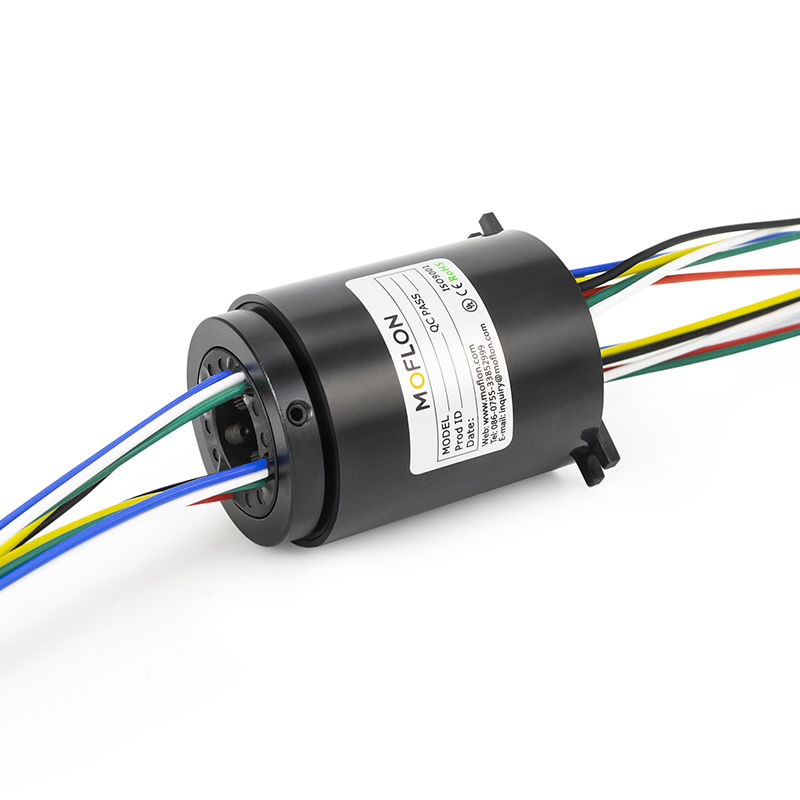
At the heart of every rugged slip ring lies a carefully engineered contact system. Unlike standard units, durable designs often blend noble metal alloys with advanced composite brushes to resist wear and minimize electrical noise. The ring itself is typically machined from hardened brass or plated with gold over nickel, ensuring consistent conductivity even after millions of revolutions. What sets these apart is the precise alignment of the rotating ring and stationary brush block—any misalignment accelerates degradation, so precision bearings and robust housings are non-negotiable.
Encapsulation plays an outsized role in longevity. In harsh environments, a durable slip ring is sealed with labyrinth or lip seals that fend off moisture, dust, and chemical vapors without increasing rotational torque. Some models go further, potting internal chambers with epoxy or silicone to lock components in place and dampen vibration. This not only protects delicate pathways but also maintains stable electrical characteristics across a wide temperature range, typically from -40°F to 250°F, without cold stiffening or thermal expansion loosening connections.
Another often-overlooked factor is the lead wire termination. Fleeting connections inside the rotor or stator can undermine the whole assembly. Durable slip rings use strain-relieved, high-flex wiring with crimped or soldered joints, often reinforced by over-molding at the exit point. By combining these meticulous details—contact metallurgy, environmental sealing, and robust terminations—a slip ring becomes not just a rotary joint, but a resilient component that thrives under continuous duty cycles.
Power Meets Precision: Managing High-Current and Low-Noise Transmission
Delivering substantial current while preserving signal integrity isn't just a design goal—it's a balancing act that demands careful attention to both layout and component selection. High-current paths generate magnetic fields that can easily couple into sensitive low-noise circuits, turning a clean signal into a noisy mess. The key is to treat the return path with as much respect as the forward trace, keeping loop areas minimal and using solid ground planes to steer return currents away from vulnerable nodes. This is where physical separation becomes your first line of defense, giving high-energy routes their own space and shielding quiet areas with guard rings or dedicated isolation slots.
Active circuitry also plays a vital role in reconciling these opposing demands. Linear regulators, while quiet, buckle under high currents without heavy heatsinking, leading designers toward switching topologies that hum with efficiency but sing a noisy tune. By combining a carefully filtered switcher with a high-PSRR linear post-regulator, you can tame both the thermal and spectral challenges simultaneously. Alternatively, spread-spectrum modulation and slew-rate control on switching edges can push noise into less critical regions, allowing sensitive analog stages to breathe even when a few amps are flowing nearby. It's all about choosing the right compromise for your specific signal chain.
At the board level, component placement and stackup design become the unsung heroes. Placing a sensor amplifier right next to a motor driver is asking for trouble, but moving it to the opposite end of the board—and giving it its own dedicated, quiet ground reference—can work wonders. Inside a multilayer board, interspersing power and ground planes not only reduces inductance for high-current spikes but also creates natural shielding. Wrapping sensitive traces with grounded copper pours and routing them on inner layers between planes turns them into protected tunnels, largely immune to the magnetic storms raging in the high-current paths above or below.
The Hidden Challenges of Signal Integrity in Constant Rotation
Maintaining signal integrity in systems with constant rotation is a deceptively complex puzzle. It’s not simply about keeping a wire connected—it’s about managing the subtle, cumulative effects that degrade a signal as parts move continuously. Minute variations in contact resistance across a rotary joint, for instance, can introduce intermittent noise that mimics data errors. Thermal drift and mechanical wear further distort the electrical pathway, often in ways that are difficult to reproduce in a lab. Designers quickly learn that what works flawlessly on a static bench can behave erratically once rotation enters the picture.
The physical environment adds another layer of difficulty. In rotating systems, exposed conductors become antennas, picking up electromagnetic interference from nearby motors or power lines. Even with shielding, the rotational motion can modulate the interference in unpredictable patterns, making it hard to filter out. At higher frequencies, stubs and impedance mismatches along the rotating interface cause reflections that corrupt the signal edge. These reflections aren’t always consistent—they shift with rotation speed and angle, turning a clean digital waveform into a jumbled mess. Over time, such degradation can lead to protocol lockups or silent data corruption that diagnostics rarely flag.
Real-world applications seldom offer the luxury of ideal conditions. Lubricants applied to reduce friction can act as dielectrics, changing the capacitance of the rotating joint and affecting high-frequency performance. Vibration from the rotating assembly creates micro-interruptions that fool active equalization circuits. Engineers end up fighting a multidimensional battle where solutions for one problem often worsen another. The hidden challenge is that every rotation slowly rewrites the rules of signal propagation, demanding constant vigilance in both design and maintenance to keep the data flowing cleanly.
Material Matters: Contact Technology That Defines Longevity
Ever notice how some connectors seem to go forever while others fail after just a few mating cycles? The secret often lies in the contact material itself. Rather than relying on off-the-shelf alloys, engineers now tailor the grain structure and plating thickness at a microscopic level to resist fretting, oxidation, and arc erosion. This isn’t about choosing gold over tin — it’s about how the base metal’s hardness interacts with the coating, how the surface finish affects true contact area, and how impurities can either strengthen or embrittle the interface over time.
Modern long-life contacts borrow heavily from the semiconductor world, using vapor-deposited layers just a few atoms thick to create barriers that stop corrosion without adding electrical resistance. Some designs even incorporate self-healing lubricants within the contact alloy itself, so every actuation renews the protective film. When a contact point can survive millions of cycles in a dusty factory or a saline coastal environment, it’s not luck — it’s material science redefining what “durable” actually means.
Selecting the Right Slip Ring: Balancing Performance and Environment
Choosing a slip ring often means weighing what you need it to do against where it needs to do it. A unit that excels in a clean laboratory may fail quickly on a dusty factory floor, while a ruggedized version can carry unnecessary cost for a benign environment. The key is to clearly define both the electrical demands and the physical conditions upfront, then seek a design that aligns without over-engineering.
On the performance side, consider the type and quality of signals you’re transmitting. Low-level sensor signals require minimal noise and contact resistance variation, while power circuits need adequate current rating and thermal management. Think about rotational speed, duty cycle, and whether you need continuous rotation or only occasional movement. Bandwidth, data protocols, and insulation requirements all play into the selection — but they remain half the picture.
Environmental factors can easily overshadow performance specs if overlooked. Temperature extremes may call for special lubricants or materials; high humidity or washdown conditions demand sealing and corrosion resistance. Dust, vibration, and exposure to chemicals all pull the design toward specific housing styles, contact platings, and bearing arrangements. The sweet spot is a slip ring that delivers the required performance without being pushed beyond its environmental limits, ensuring a reliable interface for the life of your application.
FAQ
A substantial slip ring primarily enables uninterrupted transmission of electrical power and signals across a rotating interface, ensuring that components like sensors, actuators, or cameras stay connected without cable twisting.
They are engineered with heavier-duty materials, larger current capacity, and enhanced shielding to handle higher power loads, multiple signal types, and harsh environments, making them suitable for industrial machinery rather than light applications.
Industries such as wind energy, robotics, medical imaging (CT scanners), marine cranes, and defense turret systems rely on slip rings to maintain continuous rotation without signal loss or power interruption.
Key factors include low-resistance precious metal contacts, impedance-matched paths for high-frequency signals, effective EMI shielding, and precise mechanical alignment to reduce noise and wear over time.
Yes, they can be configured with dedicated circuits for analog video, Ethernet, CAN bus, and other protocols, often integrating coaxial or fiber-optic channels for high-bandwidth data alongside power rings.
Regular cleaning of contact surfaces, checking for brush wear, ensuring proper lubrication (if applicable), and monitoring environmental seals can significantly extend service life, especially in dusty or corrosive settings.
Substantial slip rings often feature IP-rated enclosures, gaskets, and sometimes positive air pressure systems to block dust, moisture, and chemicals, preserving contact integrity in challenging outdoor or washdown environments.
Fiber optic rotary joints allow electromagnetic immunity, higher data rates, and isolation from crosstalk, making them ideal for noise-sensitive, high-speed data links in medical or military rotating platforms.
Conclusion
Rotating machinery often depends on a component that rarely gets the spotlight: the slip ring. These devices enable uninterrupted power and data flow across rotating interfaces, functioning as the silent backbone of systems from wind turbines to medical scanners. A well-designed slip ring houses a precise arrangement of conductive rings and brush contacts, where the quality of materials directly governs its lifespan. Gold-on-gold interfaces, for example, provide exceptional corrosion resistance and low electrical noise, while silver-graphite composites strike a balance between conductivity and wear resistance. The housing must also protect internal parts from dust, moisture, and vibration, ensuring consistent performance even in harsh industrial environments. Understanding this anatomy helps engineers appreciate why a slip ring is never a mere commodity—it’s a tailored solution for continuous rotation.
As demands grow for higher power and faster data rates, slip rings face the twin challenges of managing substantial current without overheating and preserving signal clarity amid electromagnetic interference. High-current paths require robust contact forces and advanced cooling strategies, while sensitive signal lines need shielding and minimal contact resistance variation to avoid data corruption. Even microsecond interruptions can disrupt communication protocols, making signal integrity a constant engineering battle. Selecting the right slip ring therefore means evaluating not just electrical specs but also environmental factors like temperature swings and chemical exposure. The optimal choice emerges from a careful trade-off: a design that harmonizes power delivery with pristine signal transmission, tailored to the unique stresses of its application.
Contact Us
Contact Person: Xiangpin Li
Email: [email protected]
Tel/WhatsApp: 86 186 1706 8578
Website: https://www.moflon.com