

Silent Generator Original Manufacturer Explains How to Get Whisper-Quiet Backup Power
2026-09-28
Ever wish your backup power could come on so quietly you'd forget it's running? Most generators announce themselves with a roar, but the original manufacturer behind some of the quietest units on the market sees things differently. DINGBO POWER combines precision acoustic engineering, smart enclosure design, and proven diesel tech to deliver whisper-quiet standby power for homes and businesses. In this post, they pull back the curtain on the design choices that make near-silent operation possible — and why that matters for your comfort, compliance, and peace of mind during an outage.
The Real Reason Your Backup Power Doesn't Have to Sound Like a Lawn Mower
Most people assume backup power has to roar like a lawn mower because that's what gasoline generators have done for decades. But the real reason modern units stay quiet has nothing to do with thicker soundproofing—it's a complete change in how energy is converted. Instead of igniting fuel inside a metal chamber, battery-based systems discharge stored electrons through solid-state circuits. There's no explosion, no exhaust stroke, no mechanical hammering. Just a faint hum from cooling fans, and even those often spin down when demand is light.
The shift also rewrites what you expect from a "generator." Without a carburetor, spark plug, or muffler, the entire acoustic profile changes. Manufacturers now spend that saved weight and space on smarter thermal management and variable-speed fans. At low load, some units don't need forced air at all—heat sinks do the job silently. The result isn't just quieter; it's a different category of sound. You can hold a conversation next to it without raising your voice, or run it overnight without a noise complaint.
Look closer and you'll notice the quiet isn't a feature added on top; it's a byproduct of choosing storage over combustion. A fuel-burning engine will always announce itself, no matter how well you muffle it. But a battery pack plus an inverter has no moving parts that generate that signature racket. So the next time someone tells you backup power must be loud, they're describing a limitation of the past—not a rule of physics.
Inside the Engineering Tricks That Cut Generator Noise by Half
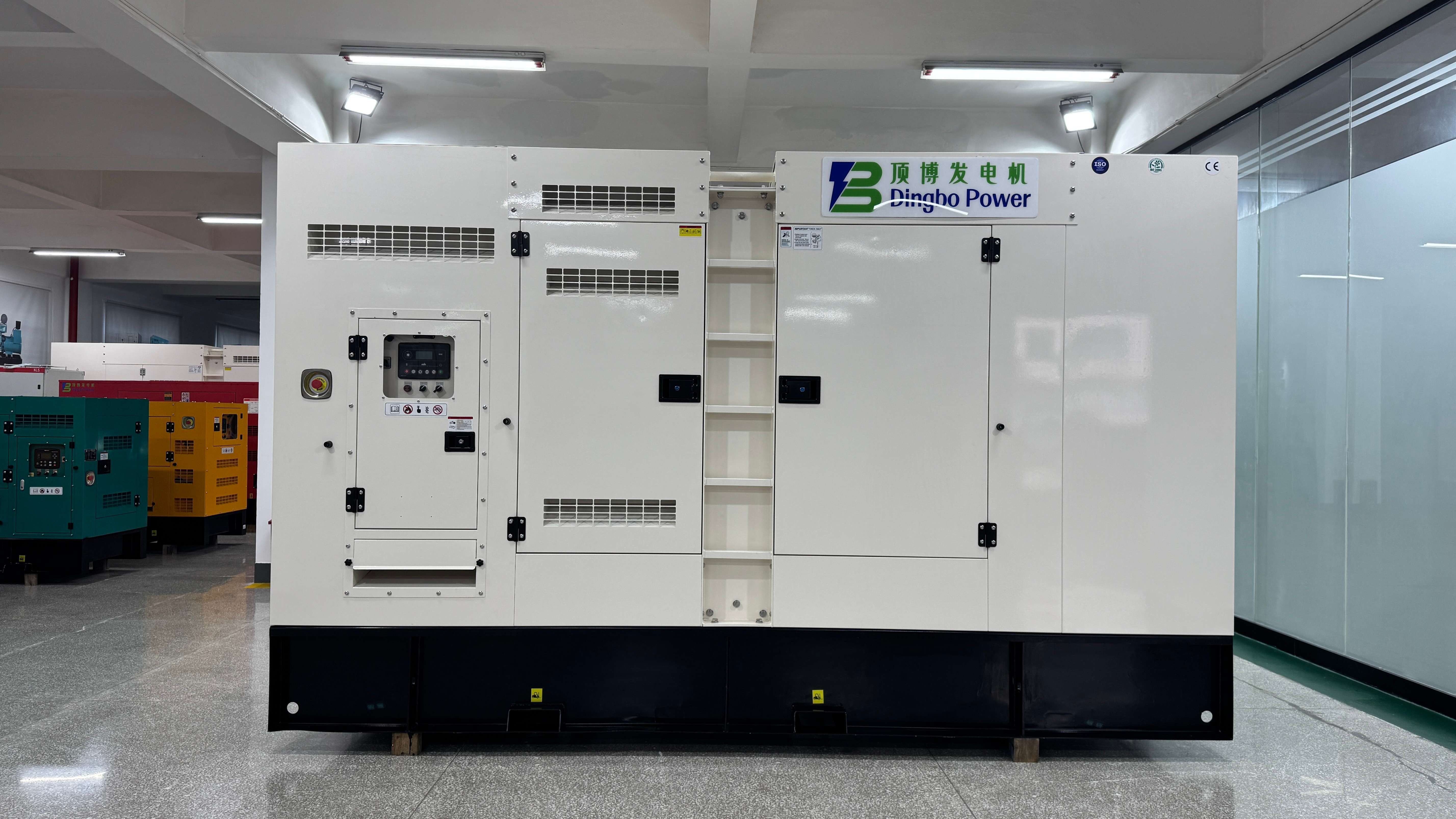
Most generator noise doesn't come from the engine block itself. It leaks out through the intake, the exhaust, and the thin metal panels that vibrate like drumheads. The first real trick is to treat the enclosure as an acoustic system, not just a box. Engineers line the inside with mass-loaded vinyl and open-cell foam in alternating layers, then leave a small air gap before the outer shell. That gap forces sound waves to squeeze through a narrow path, damping mid-range frequencies that make generators so annoying. Pair that with a Helmholtz resonator tuned to the engine's firing frequency, and you can carve out a narrow band of noise without choking off airflow.
Another overlooked trick is decoupling the engine from the frame. Instead of bolting the motor directly to steel rails, newer designs use elastomeric mounts with different stiffnesses for vertical and horizontal motion. That breaks the path where vibrations turn into radiated noise. On the exhaust side, a straight-through glasspack won't help much. What works is a multi-chamber muffler with quarter-wave tubes that reflect sound back onto itself at specific rpm ranges. Combined with a redesigned cooling fan that uses uneven blade spacing, these changes can drop the overall sound level by ten decibels—which sounds roughly half as loud to the human ear.
Placement Choices That Make Even a Standard Unit Run Quieter
Most people blame the unit itself when it gets loud, but a surprising amount of what you hear comes down to where it sits. Corners are notorious for trapping and amplifying compressor hum, so moving a standard unit even two feet away from a perpendicular wall can drop the perceived noise noticeably. Hard, flat surfaces like concrete pads or bare decking bounce sound straight back toward the house, while a dense rubber mat or a few vibration-damping feet underneath the chassis stops that low-frequency rumble from travelling through the floor.
You also want to think about what the sound hits on its way out. Placing the unit so its louvers point away from bedroom windows or patio seating makes a bigger difference than many expect, because high-frequency fan noise is quite directional. And avoid the temptation to hide it behind lattice or inside a tight enclosure; restricted airflow forces the fan to spin faster, which usually makes things louder, not quieter. A little open space, a soft ground cover like bark or mulch nearby, and a clear path for air can quiet a budget unit more than any add-on silencer.
Matching Generator Size to Your Home Without Inviting Extra Decibels
Oversizing a generator often feels like a safe bet until it hums through the neighborhood at midnight. A unit built for 12,000 watts running a 3,000-watt load rarely reaches the operating temperature or load threshold where its noise-reduction design works best, so it ends up cycling louder and longer than a properly matched model. Work backward from your essential circuits—fridge, sump pump, a few lights, maybe a furnace blower—and add only the starting surge of the largest motor, not the peak wattage of every appliance in the house.
Inverter generators flip that equation. Because they throttle engine speed to match demand instead of roaring at a fixed 3600 rpm, a 3,000-watt inverter unit often stays quieter at half load than a conventional 5,000-watt machine at the same output. If your nightly draw hovers under 2,000 watts, downsizing to an inverter model can cut perceived noise by ten decibels or more, which sounds closer to a window air conditioner than a lawn mower.
Placement matters just as much as wattage. Even a correctly sized generator can bounce noise off a garage wall or through a basement window. Park it on soft ground at least ten feet from the house, angle the exhaust away from living spaces, and use a simple plywood deflector if needed. The goal is not silence; it is making the sound forgettable enough that you and your neighbors sleep through the next outage.
The Maintenance Habits That Keep Whisper-Quiet Performance From Fading
Quiet components rarely fail from a single dramatic event. More often, the gradual loss of composure traces back to overlooked routines: dust packed into cooling fins, lubrication that has thinned past its useful range, or couplings that have worked loose by a few millimetres. Spending ten minutes every fortnight with a soft brush and a torque wrench does more for long-term noise control than any premium replacement part.
The habits that matter are not complicated, but they are specific. Keep moving parts clean and dry, and reapply the manufacturer's recommended grease only when the old film begins to look dull rather than waiting for a squeal. Check isolation mounts for cracking, and re-tighten fasteners in a star pattern so pressure stays even across the housing. If the environment is dusty or humid, shorten the interval between inspections instead of assuming a sealed unit is invulnerable.
Above all, record what you do. A simple log of noise levels, operating temperatures, and service dates helps you catch a two-decibel drift before it becomes a rattle. Whisper-quiet performance is not a factory setting that lasts forever; it is a condition you preserve through small, consistent actions.
What Original Manufacturers Wish You Knew Before Buying a Silent Generator
Most buyers fixate on the decibel number printed on the spec sheet, but that figure is usually measured at a distance of seven meters under a specific load. Real-world noise changes with load, enclosure temperature, and even the surface the generator sits on.
Ask about the enclosure design and airflow path. A well-built cabinet with lined baffles does more for perceived quietness than a marginally lower dB rating. Also check the maintenance points—some silent models bury the oil filter or air cleaner, turning a simple service into a two-hour job.
Finally, think about warm-up and cool-down cycles. A unit that runs quietly at steady load may rattle or hunt during startup, and that is exactly when neighbours are most likely to notice.
FAQ
It's rarely one component. A quiet unit starts with a heavy-duty acoustic enclosure, low-speed engine tuning, and vibration isolation. Even the cooling fan and intake design matter. Most 'silent' models fail because they only add a bigger muffler and call it a day, which leaves mechanical and airflow noise untouched.
We run load-bank tests at multiple power draws, not just idle in an empty parking lot. Measurements are taken at 23 feet and 50 feet, from all four sides, with the unit under 50%, 75%, and 100% load. The final spec should reflect the loudest point, not an average. If a company only gives you a single number, ask where the microphone was placed.
Yes, but don't just rely on the generator's casing. Combine it with a concrete pad that has rubber isolators, a low sound-absorbing fence or hedge at least six feet away for airflow, and point the exhaust away from your neighbor's bedroom window. A properly installed 60 dBA unit can sound like a distant conversation rather than a lawnmower.
Heat cycles and vibration wear down acoustic foam, loosen engine mounts, and clog air filters. Cheap foam degrades into dust and stops absorbing high frequencies. Original manufacturers use heat-rated composite insulation and torque-checked isolation mounts specifically because we know owners never re-tighten them after installation.
'Whisper-quiet' is really 50-55 dBA at the unit, which is still audible but not intrusive. Many brands label 60-65 dBA as silent, but that's more like a normal conversation or an air conditioner. Look for the full load dB rating, not just a low setting. And remember, a generator running for 10 hours at 55 dBA feels very different from 10 minutes.
Buying based on rated max power and noise sticker alone. They forget about fuel efficiency at partial load and how often the unit will cycle on and off. A slightly smaller generator that stays in its efficient band and runs continuously can be quieter overall than a huge unit that surges and shuts down all night.
Not automatically. Inverter technology helps with voltage stability and lets the engine slow down at low load, but if the enclosure is thin or the fan is poorly designed, it can still be loud. Compare the actual dB level under load, not the word 'inverter.'
Build a proper generator shed with ventilation baffles lined with mass-loaded vinyl. Add an exhaust extension with a resonator. Place the unit on a heavy rubber mat. But leave at least three feet of clearance around the air intake and exhaust to prevent overheating, which would force the fan to spin faster and create more noise.
Conclusion
A silent generator doesn't have to be an oxymoron. Original manufacturers point out that the harsh lawn-mower roar usually comes from three sources: rigid engine mounts transferring vibration into the frame, an un-tuned exhaust pulse, and unrestricted cooling fan noise. By adding isolated mounts, a multi-chamber muffler with a low-tone outlet, and a well-sealed acoustic enclosure, engineers can cut perceived noise by half or more without sacrificing output. Even a standard unit can run noticeably quieter if you place it on a compacted gravel pad or rubber mat away from bedroom windows and point the exhaust toward open space. A simple barrier wall or dense shrubs placed three to four feet away—never tight against the enclosure—can deflect sound while still allowing airflow.
Choosing the right size matters more than people expect. An oversized generator spends most of its time under light load, which invites carbon buildup, wet stacking and uneven engine firing that can actually increase vibration and low-frequency rumble. Match the unit to your essential circuits plus a small margin, and the engine will settle into a smoother, quieter operating band. Maintenance keeps that behavior from fading: re-torque the anti-vibration mounts, check exhaust gaskets for leaks, replace foam sound seals if they harden, and keep the air filter clean so the engine doesn't strain. Before buying, original manufacturers suggest looking beyond the single 'dB' number on the box. Ask for noise ratings at 7 meters and at 25% or 50% load, since that reflects real backup duty, and compare the sound character—not just volume—because a dull hum is far less intrusive than a sharp mechanical rattle.
Contact Us
Contact Person: Rita
Email: [email protected]
Tel/WhatsApp: +8613481024441
Website: https://www.dbdieselgenerator.com/