

Rubber Machinery Factory Advancements in Efficient Rubber Processing Equipment
2026-10-19
The rubber industry has a dirty little secret: most factories are still using processing equipment designed for a different decade. While materials and demand have evolved, many production lines haven't. That gap is exactly where the latest wave of rubber machinery factory advancements is making its mark. From adaptive temperature control to low-friction barrel coatings, these aren't minor tweaks—they're the difference between profitable, high-volume runs and constant downtime. And when it comes to turning these innovations into reliable, day-to-day performance, AUGU AUTOMATION has become a name worth watching. In this post, we'll break down the key upgrades reshaping efficient rubber processing and why they matter for your bottom line.
Rotor geometry upgrades that shorten mixing cycles without raising temperatures
Redesigned rotor profiles now distribute shear more evenly across the chamber, slicing minutes off typical batch times. Instead of relying on aggressive kneading that spikes heat, the new geometry keeps material moving in tighter, more frequent folds. The result is faster homogenization with peak temperatures staying well within safe limits for heat-sensitive compounds.
A key shift involves asymmetric lobe angles and a steeper helix on the long rotor. This pulls material from the ram area into the mixing zone earlier, reducing dead spots and re-circulation loops. Operators report that even high-viscosity stocks reach dispersion targets up to 20% sooner, while discharge temperatures often drop by several degrees compared with previous rotor designs.
Cooling efficiency also improves because the optimized rotor surface generates less frictional heat per revolution. Less energy lost as heat means more of the drive power goes directly into mixing action. For compounding lines, this translates into shorter cycles, lower cooling-water demand, and a wider processing window for challenging formulations without any increase in thermal degradation risk.
Self-correcting die pressure keeps extrusion output within spec
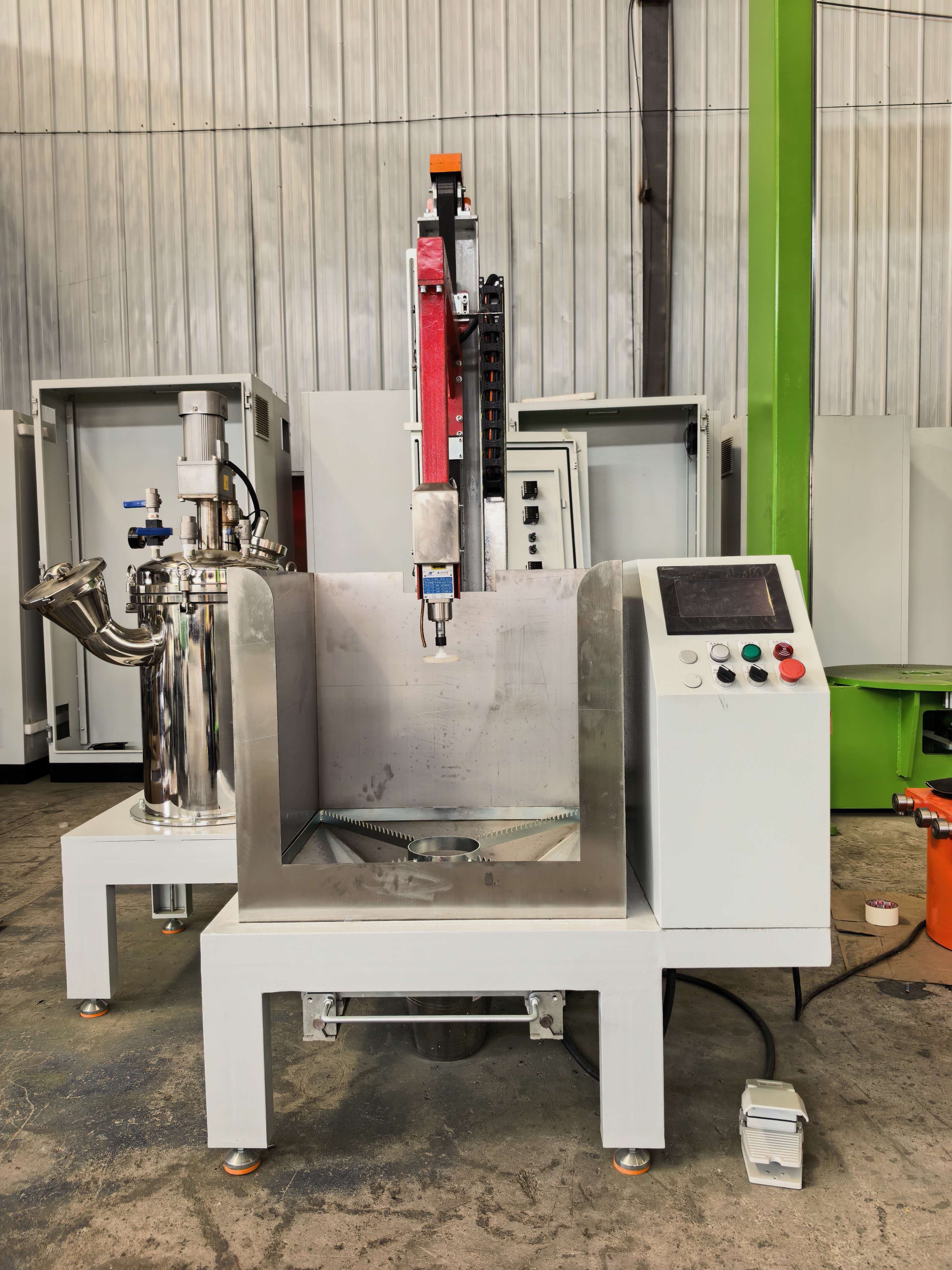
Maintaining consistent die pressure is a constant challenge in extrusion, where fluctuations can lead to out-of-spec wall thickness, surface defects, and dimensional drift. Rather than relying on manual adjustments or conservative process windows, modern systems integrate self-correcting pressure control that actively monitors the melt stream and adjusts screw speed or melt pump output in real time. This closed-loop approach compensates for viscosity shifts, temperature variations, and even minor feedstock inconsistencies, keeping the pressure at the die face within a narrow band.
The self-correcting mechanism works by continuously comparing actual die pressure against a target profile derived from the product's critical dimensions. When pressure deviates beyond a preset tolerance, the controller instantly trims the extruder's throughput or back pressure valve position, often within a single revolution of the screw. This rapid response prevents the slow drift that can occur with barrel wear or screen pack loading, ensuring that every meter of extrudate meets specification without operator intervention.
Beyond just holding a setpoint, the system learns from recurring patterns—such as a gradual pressure rise as the filter clogs—and preemptively adjusts parameters before the deviation becomes measurable in the final product. The result is higher yield, less scrap from start-up or transition phases, and the ability to run closer to the material's upper processing limits without risking out-of-spec output. For converters running tight-tolerance tubing, profiles, or medical-grade extrusions, self-correcting die pressure is no longer a luxury but a practical necessity.
Quick-change calender stacks that reduce profile swap downtime
Replacing a calender stack used to mean hours of disassembly, realignment, and trial runs. Quick-change designs eliminate that bottleneck. Instead of unbolting each roll and manually repositioning it, operators slide out the entire pre-configured stack on rails and lock in a new one. The swap happens in under fifteen minutes on many lines, so a profile change no longer eats an entire shift.
The key is precision locating features built into the frame. Tapered pins, hydraulic clamps, and self-aligning couplings let a replacement stack drop into the same position every time, without skilled technicians fine-tuning roll gaps. That repeatability also cuts scrap during startup, because the first sheet off the line is closer to spec.
For plants running short production runs or frequent product changes, this approach changes the economics. Instead of batching similar profiles to avoid changeovers, you can schedule what customers actually need. The calender becomes a flexible tool rather than a fixed bottleneck, and the payback often shows up within months through higher asset utilization.
Press maintenance that predicts failures before they stop production
Gone are the days when press maintenance meant reacting to a sudden breakdown on the shop floor. Modern stamping presses now carry a network of sensors that continuously track vibration patterns, hydraulic pressure fluctuations, and bearing temperatures. These readings stream into a machine learning model trained on years of historical run data, so it knows what a healthy press sounds and feels like down to the decimal point. When the signals drift outside normal bounds, the system raises a flag long before a component actually fails. This shift from scheduled checkups to condition-based alerts changes how maintenance teams spend their day—they stop putting out fires and start planning small, targeted fixes during planned downtime.
Rather than relying on generic thresholds, the prediction engine learns each press's unique fingerprint. A 400-ton mechanical press on the left side of the aisle may run slightly hotter than its twin on the right due to airflow differences, and the model accounts for that. It picks up early signs of die misalignment, worn crank bearings, or a weakening clutch by spotting subtle shifts in energy consumption or high-frequency noise that a human ear would miss. Maintenance managers receive a prioritized list of likely failure points, often with a suggested time window—say, within the next two weeks or next 200 cycles. That specificity lets them order replacement parts ahead of time and schedule the work during a shift change or between job runs.
On the floor, this translates into fewer surprise stoppages and longer service life for expensive tooling. One plant that adopted predictive press maintenance saw unplanned downtime drop by nearly forty percent in the first year, simply because they caught failing solenoids and worn guide bushings before they seized. The data also helps refine operating practices: if a particular die consistently triggers early warnings after a certain number of hits, engineers can adjust lubrication intervals or redesign that section. Production planners start to trust the press availability forecasts, which means they can quote tighter delivery dates without risking overtime. Ultimately, the press stops being a mysterious black box that occasionally quits, and becomes a predictable partner in the manufacturing flow.
Automated batch handling keeps filler dispersion uniform
Manual addition of fillers often introduces slight timing or quantity variations that snowball into uneven dispersion. Automated batch handling removes that guesswork by sequencing each metering and mixing step against a programmed recipe, so every batch sees the same shear history and residence time. The result is a filler network that stays open and evenly distributed instead of clumping in dead zones.
Real-time feedback from torque and mass-flow sensors lets the system adjust rotor speed or dosing rate mid-cycle without operator intervention. That keeps viscosity stable and prevents the sudden spikes in agglomerate formation that usually show up later as surface defects or weak spots. Because the process responds to actual conditions rather than fixed timers, the dispersion remains uniform even when raw material lot characteristics drift.
Over long production runs, this consistency directly reduces batch-to-batch drift and rework. Operators spend less time chasing spec deviations, and downstream processes like coating or extrusion run smoother because the filler distribution is already locked in before the material leaves the mixer.
Energy recovery loops feed auxiliary drives instead of wasting heat
Most plants treat surplus heat as a disposal problem, spending extra energy on cooling towers or fans just to get rid of it. A smarter setup closes that gap by piping exhaust or process heat through a recovery loop that runs a small turbine or expander. The shaft work from that turbine then spins auxiliary drives like water pumps, air compressors, or hydraulic units. This direct mechanical path avoids the double conversion losses that come with generating electricity and feeding it back into the grid.
The key is matching the heat source's temperature and flow stability to the auxiliary load. For instance, a cement kiln or glass furnace produces a steady stream of hot flue gas. A closed loop with a thermal oil or organic working fluid captures that heat, evaporates the fluid, and sends the vapor through an expander coupled to a pump drive. Because many auxiliary drives run constantly during production, they absorb the recovered energy without needing complex storage. Retrofits often use skid-mounted units that tap into existing ductwork, leaving the main process untouched.
The payoff goes beyond lower electricity bills. Removing heat before it reaches the exhaust stack shrinks the load on cooling systems, reduces thermal stress on filters and downstream equipment, and can even lower water consumption in wet scrubbers. In marine and remote industrial settings, feeding auxiliary drives from recovered heat also trims generator runtime, which cuts fuel use and maintenance intervals. Compared to selling waste heat as low-grade steam to a district network, keeping that energy on site for direct mechanical work usually delivers a faster return because it replaces high-value electrical or hydraulic power instead of competing with cheap boiler fuel.
FAQ
The factory has focused on reducing cycle times and energy use. New rotor geometries in internal mixers, better temperature control on two-roll mills, and upgraded control systems now let operators fine-tune processing parameters in real time.
By using direct-drive motors instead of gearboxes, variable-frequency drives, and heat recovery from the vulcanization line, the machines cut power consumption by roughly 18 to 22 percent compared with older models.
Internal mixers, extrusion lines, and compression presses see the biggest gains. The latest extrusion screws handle higher filler loadings without overheating, while presses now have faster clamping and more even pressure distribution.
Automation handles batch weighing, mixing sequences, and mold changes. Sensors track viscosity and temperature continuously, so the line adjusts itself instead of waiting for manual sampling. That reduces rejects and keeps output consistent.
In many cases, yes. The factory offers control system upgrades, new screw and barrel kits for extruders, and hydraulic system overhauls for presses. Retrofits usually recover their cost within 14 to 18 months through lower energy and scrap.
Because mixing and curing are more uniform, the finished rubber has fewer air traps and better tensile strength. Customers report less variation in hardness and elongation, which matters a lot for seals, gaskets, and tire components.
Everything from natural rubber and SBR to EPDM, nitrile, silicone, and fluoroelastomers. The temperature control is precise enough to handle heat-sensitive compounds without scorching, even at high throughput.
Each machine runs a full production trial with the customer's own compound whenever possible. The factory checks throughput, energy consumption, temperature stability, and final physical properties, then adjusts the setup before delivery.
Conclusion
Recent updates at the rubber machinery plant have concentrated on the points where cycle time and temperature control tend to fight each other. Rotor geometry has been reworked so that mixing cycles finish noticeably faster without driving stock temperatures into a range that would invite scorch. On the extrusion side, a self-correcting die pressure system now holds output dimensions inside tighter limits, cutting the need for constant manual correction and reducing scrap. Calender lines have received quick-change stack designs as well, letting operators swap profiles in a fraction of the downtime that used to be accepted as normal.
Further down the line, the focus moves toward keeping production steady and using energy with more intent. Press maintenance relies on early warning signals to spot weakening components before they let go, which prevents the kind of abrupt halts that can throw off an entire shift. Automated batch handling keeps filler dispersion uniform from one mix to the next, so compound quality no longer swings with operator timing or fatigue. Heat that used to be vented from key processes is now captured and fed to auxiliary drives, trimming the overall power demand without placing extra load on the main supply.
Contact Us
Contact Person: Lareina
Email: [email protected]
Tel/WhatsApp: +86 17561696737
Website: https://www.auguauto.com/