

Reliable Expansion Valve Features That Keep Refrigeration Systems Running Smoothly
2026-11-20
An expansion valve can make or break a refrigeration system. When it responds cleanly to load changes, everything runs with less stress. When it hunts or sticks, temperatures drift and compressors pay the price. The difference usually comes down to a handful of design features—not marketing claims. Below, we unpack those features and show why HONGSEN builds them into every valve.
Superheat Stability Without Hunting When Walk-In Doors Stay Open
Walk-in coolers in busy kitchens rarely get the chance to run under steady conditions. When a door stays propped open during prep or delivery, the evaporator sees a sudden spike in both temperature and moisture load, and the suction pressure climbs fast. A conventional mechanical valve tends to overcorrect in this situation, opening wide, then slamming toward closed as the pulldown progresses. That cycle—often called hunting—shows up as a wandering superheat reading and can starve the compressor or flood it. Keeping superheat steady here is not just about setpoint; it is about how quickly the valve can read the actual heat load and match refrigerant flow without chasing every pressure ripple.
The difference becomes clearer when the control strategy is built around continuous feedback rather than step-like corrections. A properly tuned electronic expansion valve or a well-damped thermostatic design will hold the superheat within a narrow band even as the door remains open and air curtains struggle to limit infiltration. The sensor placement matters as much as the valve itself. Reading temperature at the evaporator outlet with a fast-response element, and pairing that with a controller that filters transient spikes, prevents the system from interpreting every warm gust as a demand for full refrigerant flow. The result is a stable suction line condition that protects compressor reliability without constant manual adjustment.
Field behavior often separates good installations from marginal ones. In one open-door test, a walk-in holding produce at 38°F showed superheat fluctuations from 4°F to 22°F with a standard TXV under the same conditions. After switching to a control setup with tighter proportional response and shorter refresh intervals, the superheat stayed between 8°F and 11°F for the duration of the door-open period. That kind of stability reduces coil icing, keeps product temperatures from drifting, and gives the compressor a more predictable return gas condition—even when the door never stays closed long enough for the box to recover.
Marine-Grade Alloys for Condensing Units Facing Salt and Humidity
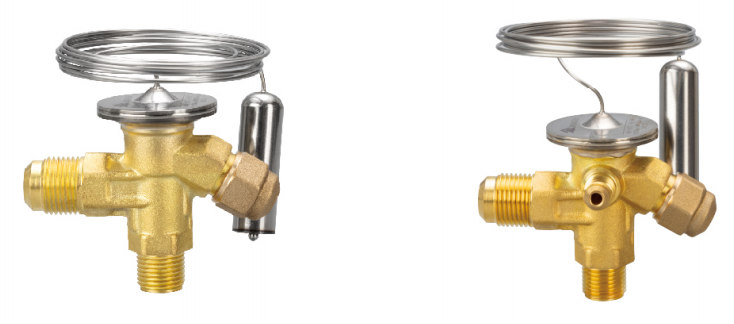
Salt-laden air works like a slow abrasive on ordinary condensing units. The corrosion often starts where the coil fins meet the tube sheets and in the cabinet lap joints, places that never dry completely. In this environment, specifying a marine-grade alloy is not about adding a thicker coat of paint; it is about choosing metals that can hold their own when the protective layer is inevitably scratched or worn. 316L stainless steel cabinetry and hardware, along with copper-nickel coil circuits, remain stable long after conventional galvanized steel has begun to scale.
Coil construction deserves particular attention. Copper-nickel alloys such as 90/10 CuNi are common in seawater piping because they resist pitting and crevice corrosion, and they bring that same behavior to condenser coils exposed to coastal humidity. Where budget or weight rules out a full CuNi coil, a practical alternative is a copper tube/aluminum fin coil with a dense epoxy or polyurethane coating, provided the coating is specified at the coil manufacturer rather than applied as a field touch-up. Bare aluminum fins, even those with a factory conversion coating, tend to lose their edge in direct salt spray.
The final difference comes from isolating unlike metals. Stainless steel, copper, and aluminum can form aggressive galvanic couples when salt moisture bridges them. Marine-duty condensing units avoid that by pairing metals with close galvanic potential, separating them with non-conductive gaskets or bushings, and using coated fasteners at every mounting point. Drip trays should be pitched steeply enough to drain briny condensate instead of holding it against the metal, and sealed control compartments keep airborne chlorides off relays and terminal strips. A well-chosen alloy only pays off when the surrounding details stop trapping salt.
Balanced Ports That Ignore Sagging Head Pressure After Sunset
The shift from late afternoon to dusk is rarely clean for solar-driven irrigation. As panel output fades, pump speed and line pressure taper off together, and ordinary multi-port headers begin to favor the closest outlets. These balanced ports are tuned to ignore that sag, holding a steady share of flow across every position without nudging a valve or adjusting a timer.
Inside each port, a simple pressure-compensating mechanism absorbs the drop instead of passing it downstream. That means the last row doesn’t run dry while the first row puddles, even when head pressure falls below the level that would normally cause uneven output. The balancing action is passive, so the manifold behaves the same at 4:00 p.m. or 7:30 p.m.
For landscapes that depend on solar pumps, that kind of predictability removes a common source of dry patches and overwatered corners. The system can coast through sunset without a spike in flow variability, and the only thing you need to watch is whether the plants actually need the water.
Glove-Friendly Adjustment Stems for Fast Field Calibration
Field calibration often happens in awkward spots, near a running pump, inside a weatherproof enclosure, or on a valve assembly that has already picked up a thin layer of grime. The adjustment stems here are raised slightly above the housing with a wider, ridged barrel instead of sitting flush. That extra height and spacing lets a technician wearing insulated or chemical-resistant gloves get two fingers around the stem and turn it without stripping the ridges or bumping the adjacent channel.
The knurling is not just for grip. It uses a coarser pitch than typical instrument screws, so wet or dusty glove material catches rather than slides across the surface. Resistance is set high enough to avoid drift from vibration but low enough that a deliberate quarter-turn gives clear tactile feedback. A flat face on one side of the stem lines up with the marked scale, which helps when the display is not in direct view or the lighting is poor.
Because these stems are tool-free, calibration can be handled without removing gloves, without opening a secondary cover, and without carrying a small screwdriver that tends to roll under the skid. In cold or wet conditions that detail matters. Fewer fine-motor steps means the job gets done faster, and the technician is not forced to expose bare fingers just to make a quick adjustment.
Contaminant-Tolerant Seats That Outlast Rough Piping Days
Hard water, rust flakes, and leftover cutting debris don't just pass through a valve—they grind away at the seating surface until a perfect bubble-tight shutoff becomes a memory. Most seats fail quietly, developing thin channels that leak long before anyone notices a pressure drop. The better approach builds the seat from materials that absorb particle impact rather than resisting it, letting grit embed harmlessly while the sealing lip stays intact. That small shift in material choice changes how long a valve survives on a pipeline that was never cleaned as thoroughly as the drawings promised.
Field crews often discover the difference after the third or fourth rebuild in the same location. A conventional seat might look acceptable on the bench but loses its edge after a few hundred cycles against sandy slurry or boiler carryover. Seats designed for contaminated service trade a little initial softness for a lot of forgiveness—they deform locally around a trapped particle instead of cracking or tearing. The result is a predictable, slow wear pattern that maintenance teams can plan around, rather than an abrupt failure that shuts down a header at the worst possible time.
Specifying a contaminant-tolerant seat also means fewer break-in surprises. Rough piping days leave behind weld spatter, mill scale, and thread chips that find their way into the seat pocket during commissioning. A robust seat shrugs off this early abuse and still holds a tight seal after the system is flushed. It's the kind of detail that rarely shows up in a spec sheet but becomes obvious after the first year of operation, when the valves with ordinary seats are already weeping and the ones with properly selected seats are still holding their line.
One Body Across Refrigerant Retrofits and Low-GWP Changeovers
A single platform no longer means a narrow operating window. The same body has been tuned to handle legacy refrigerants during retrofit work and the newer low-GWP options that follow. That removes the usual fork in the road where contractors have to swap cores, gaskets or entire assemblies just because the refrigerant label changes.
Field conversions become less about parts hunting and more about setting adjustments. Since the internal clearances, seal materials and pressure boundaries were selected for both older HFCs and replacements like HFOs or blends, the unit keeps its original footprint. The result is a shorter downtime window and fewer chances for mixed inventory on the truck.
There is also a quiet benefit in consistency. When the same body carries across jobs, leak points do not move, bolt patterns do not shift, and the service procedure stays familiar. That matters most in tight mechanical rooms where a low-GWP transition already brings enough changes to electrical settings and oil management.
FAQ
It usually comes down to how consistently it holds superheat under shifting loads. Valves with a balanced port design don't get thrown off by changes in condensing pressure, so the refrigerant feed stays steady instead of swinging.
Low ambient can cause head pressure to drop, and a conventional valve may overfeed or underfeed. A balanced port keeps the opening force stable, which means the evaporator still gets a predictable refrigerant flow even when the condenser is seeing cold weather.
Refrigeration systems often run wet, slightly acidic, or with trace contaminants. Stainless steel internals and corrosion-resistant body materials prevent pitting and sticking, so the valve doesn't seize or lose its setpoint over time.
Yes. By keeping superheat accurate, it prevents liquid refrigerant from leaving the evaporator and reaching the compressor. That precise metering is a first line of defense against slugging and winding damage.
The bulb charge determines how the valve reacts to temperature changes at the evaporator outlet. A charge matched to the operating range gives a faster, smoother response without hunting, which is critical for short cycling boxes.
Usually. When an evaporator has a noticeable pressure drop, an external equalizer lets the valve see the actual evaporator outlet pressure. Without it, the valve tends to run too high a superheat and starve the coil.
They let technicians swap out the seat, needle, or cage during a service call rather than replacing the whole valve. That cuts downtime and keeps the original piping intact, which avoids new potential leak points.
Hunting suction pressure, frost patterns that creep back toward the compressor, or a system that can't hold box temperature after a load change are all red flags. Often it's a sticking pin or a lost bulb charge.
Conclusion
Walk-in coolers rarely misbehave on a schedule. A door gets propped open during the dinner rush, outdoor humidity creeps into a coastal condensing unit, or head pressure sinks after sunset, and the expansion valve either holds the line or lets the system drift. The valves that keep things smooth tend to share a few unglamorous traits. Their superheat response stays flat instead of swinging when load changes suddenly, so the coil does not hunt or flood. The port design shrugs off sagging head pressure instead of chasing it, which keeps evaporator temperatures predictable even when the condenser is working against cool evening air. In salt-heavy installations, marine-grade alloys on the valve body and connections prevent the kind of corrosion that quietly shortens component life.
Field work tells the other half of the story. A gloved hand can actually turn the adjustment stem without reaching for a wrench or removing the valve, so calibration happens in seconds during a busy service call. Seats that tolerate leftover pipe scale, flux, or brazing debris save a lot of repeat visits, especially on rough piping days when the system is not perfectly clean. And because one body can handle refrigerant retrofits and low-GWP changeovers, the same valve often survives a switch from an older refrigerant to a newer blend without a full teardown. None of this is flashy, but it is the difference between a system that needs constant nursing and one that keeps the box cold through long, messy shifts.
Contact Us
Contact Person: KOPASS HO
Email: [email protected]
Tel/WhatsApp: 8613606566112
Website: https://www.hongsenref.com/