

Recommended Ranking of Laser Pain Relief Options That Deliver Real Results
2026-11-24
Most laser pain relief roundups read like a shopping list, not a useful guide. That’s why we took a different approach: a recommended ranking of laser pain relief options that deliver real results—based on whether they actually reduce discomfort in everyday use, not just on marketing claims. We also looked at where GUANG TAI fits, because a trustworthy ranking should help you make a confident choice, not leave you with more questions.
Start With the Kind of Pain You’re Treating
Pain rarely arrives with a clear label, but the first real decision is figuring out whether you're dealing with an aching, dull discomfort around a joint or the sharp, electric jabs that follow a nerve. That distinction changes the entire conversation. A twisted knee after a fall doesn't behave like the burning pins-and-needles that linger after shingles, and treating them as if they were the same quickly leads to frustration.
Most day-to-day pain can be sorted into a few practical buckets, such as nociceptive pain from tissue damage, neuropathic pain from a misfiring or compressed nerve, and the mixed picture that comes with long-standing back trouble or diabetic foot pain. Nociceptive pain tends to respond to rest, ice, or anti-inflammatories. Neuropathic pain often ignores those approaches or gets worse with light touch, which is why a precise description of what the pain feels like matters more than a generic pain score.
Before reaching for a treatment, ask what makes the pain flare and what actually calms it down. If pressure on the outside of the elbow reproduces the ache and rest eases it, you're probably looking at a tendon problem. If the pain follows a nerve path down the leg and numbness shows up in the foot, the source is likely higher up. Starting with the kind of pain narrows the list of useful options and avoids the cycle of trying one random remedy after another.
Wavelengths That Actually Reach the Tissue
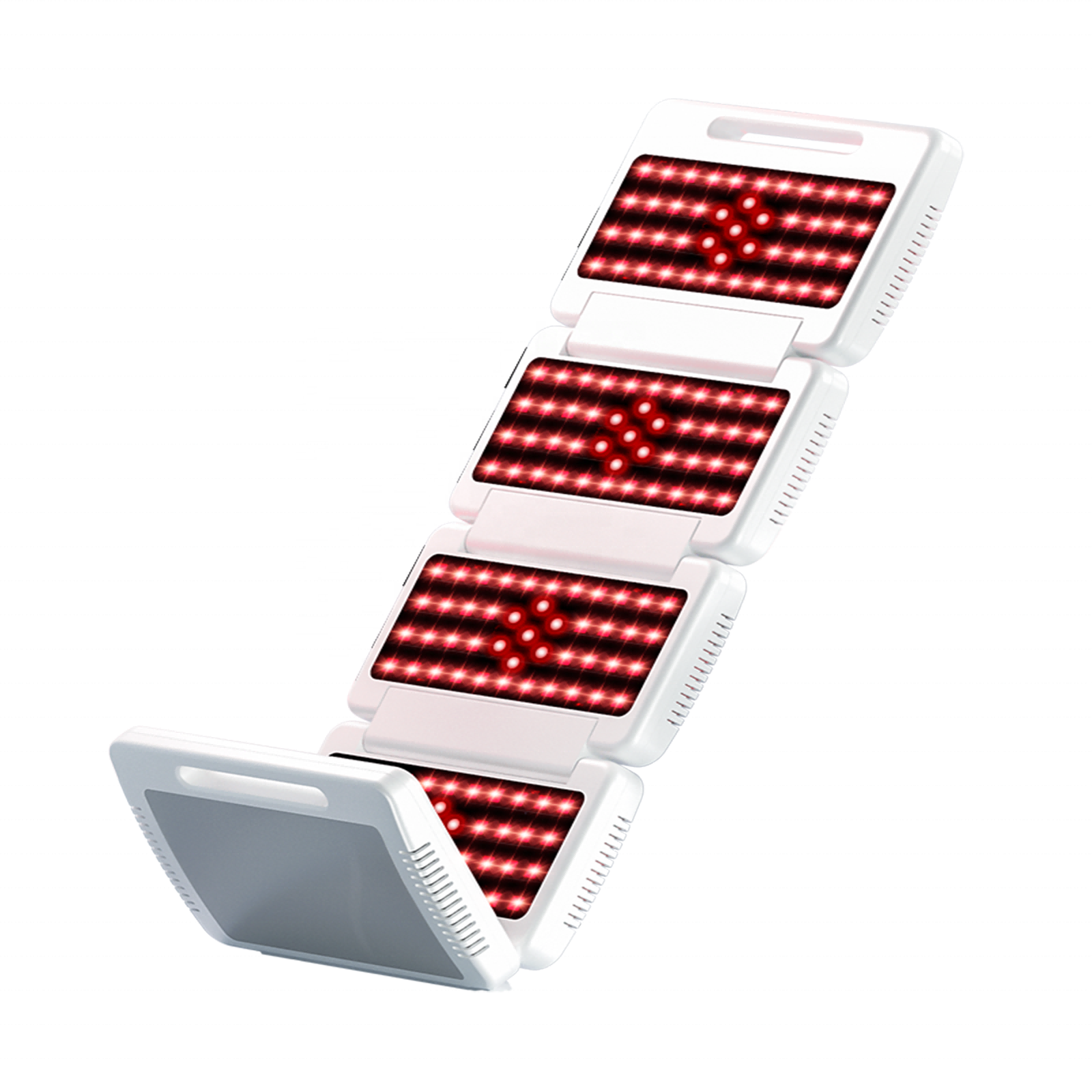
Most light sources brag about total output, but that number means very little once photons hit skin. Melanin, water, and hemoglobin each steal a slice of the spectrum before any meaningful depth is reached. The wavelengths that actually arrive at the dermis tend to sit in narrow, predictable windows—roughly 600 to 900 nanometers—where scattering drops off and absorption from blood and pigment becomes manageable. Push too far into the infrared and you trade penetration for heat; stay too close to green or blue and the epidermis turns into a wall.
This is why practical devices rarely chase a single perfect wavelength. Instead, they lean on a handful of proven bands: amber and deep red for superficial vascular work, near-infrared for muscle and joint targets. The tissue itself acts as a filter, and what matters is not what the emitter produces, but what remains after the first few millimeters of skin have had their say.
A narrower claim about “clinical wavelength” often ignores that penetration is also tied to beam profile, pulse structure, and tissue type. Dry skin, darker skin, swollen tissue—each shifts the usable window slightly. So rather than trusting a marketing spec, it helps to ask which wavelengths lose the least energy before reaching the layer you actually want to affect. The answer is rarely the brightest light on the chart.
Power Levels That Hold Up in Real Use
A number on a chart only means something after twenty minutes of actual work. Plenty of devices can spike into impressive territory for a short burst, but the ones worth keeping are those that stay close to their claimed output when the room warms up, the battery dips, or the workload gets messy. That gap between a quick test and a long session is where most specs fall apart.
Real use tends to punish heat buildup and power delivery more than any benchmark loop. A motor, processor, or light source that holds steady without dropping into a lower state matters far more than the peak figure printed on the box. If you can forget about the hardware and just finish the job, the power level is doing what it should.
Home Options That Rival the Clinic Visit
LED face masks have quietly become the workhorse of home skin routines, and the better ones now deliver wavelengths and energy levels that actually justify skipping a dermatologist visit for mild redness and fine lines. The difference comes down to consistency: a short session four or five nights a week tends to even out skin tone faster than a single monthly in-office treatment, without any downtime or the usual post-facial irritation.
Radiofrequency and microcurrent tools have crossed a similar line. They won't match the intensity of professional equipment, but the advantage is frequency. Ten minutes every other day can build firmness and lift in a way that a quarterly appointment simply can't sustain. The warmth feels controlled, the slight tingling fades quickly, and after a few weeks the jawline and cheekbones look more defined even when you're tired.
For hair removal and resurfacing, at-home IPL and microdermabrasion devices have fixed most of the old safety frustrations. Skin tone sensors and adjustable intensity let you start low and work upward without turning your face into a test patch. Results are gradual, but by week four the need to shave drops off and the surface of the skin feels noticeably smoother under makeup.
The Difference Between Relief and Numbness
Relief arrives with an exhale. It might be quiet or sudden, but it usually has a shape. The shoulders drop, the jaw unclenches, and a problem that had been circling finally lands somewhere outside the body. Even when relief brings tears or exhaustion, there is a sense of returning to the room you were already in. Numbness rarely announces itself that way. It is more like the volume being turned down so gradually that you don't notice the silence until you try to reach for a feeling and find your hand pressing against something flat.
The two can look similar from the outside because both make a person stop fighting. Inside, though, relief leaves a trace of warmth or tenderness, while numbness tends to leave a blank space where even comfort used to be. One way to tell them apart is to check whether the absence of pain feels like rest or like distance. Rest still has texture; distance has almost none.
What Still Works After the Novelty Wears Off
Novelty has a way of making almost anything feel important, as if the shine itself were the point. Once that initial charge fades, what remains tends to be quieter. The things that still work are rarely the flashy ones. They are the routines that don't demand attention, the tools that fit a hand without thought, the habits that survive a bad week. Their value isn't in how they feel; it's in what they keep moving.
A new system, a new relationship, a new creative method all arrive with a kind of static electricity. When it dissipates, you're left with structure. If the structure was built around the rush, it collapses. If it was built around repetition, patience, or genuine usefulness, it stays. That's why boring often outlasts brilliant. Brilliance gets you through the first month; boredom gets you through the fifth year.
There's also a strange relief in the fade. Without the pressure to be dazzled, you can finally see what a thing is for. A note-taking app stops being a miracle and becomes a place where ideas wait. A friendship stops being a spark and becomes a schedule of calls and shared silences. The novelty wearing off isn't failure; it's the point at which real use begins.
FAQ
Devices using true low-level laser therapy in the 650 to 850 nanometer range with at least 3 to 5 joules per point tend to lead because they penetrate deeper and show faster relief for joint and muscle pain.
The key is dosage and wavelength, not heat. A real photobiomodulation device delivers targeted light energy that cells can use, while many cheap units rely on a warming sensation that fades without lasting change.
They can for superficial issues like knee, wrist, or lower back pain, provided the output is sufficient and sessions are consistent. Clinic devices usually offer higher power and broader coverage, so they may work faster for deeper or stubborn conditions.
Many people feel a reduction in soreness after the first few sessions, but lasting improvement typically builds over two to four weeks of regular use, with 10 to 20 minute sessions several times a week.
The main risks are eye exposure and using the device over suspicious or cancerous lesions, pregnancy areas, or open wounds. Otherwise, when used as directed, low-level laser therapy is generally well tolerated with minimal side effects.
Wavelength and energy delivery matter most because they determine whether the light reaches the tissue and triggers a response. After that, real-world usability like battery life, comfort, and clear treatment timers separate top picks from frustrating ones.
Osteoarthritis pain, tendinitis, muscle strains, and post-exercise soreness tend to respond most reliably. Nerve-related pain and deep joint problems can improve too, but results are more variable.
Not always. Some expensive devices prioritize branding over clinically meaningful output. A mid-priced unit with proper wavelength, adequate power, and consistent dosing often outperforms a pricier model with vague specs.
Conclusion
A useful ranking has to start with the pain itself, not the device specs. A stiff knee from osteoarthritis, a shoulder strain after lifting, and nerve pain in the foot respond to different depths and treatment times. If a list ignores that, it is just marketing. The wavelengths that matter are the ones that actually reach the target tissue instead of heating the skin. Near-infrared ranges around 800 to 900 nanometers tend to do that, but only when the output stays steady. Power ratings on the box mean little because many units drop sharply after a few minutes. Relief that lasts comes from real energy delivery, not from a brief numbing sensation that fades within the hour.
Home devices have improved enough that some now rival a clinic visit for mild to moderate pain. The better ones let you adjust intensity and treat a full area without constant repositioning. Still, the gap between true relief and temporary numbness separates the top picks from the rest. Numbness can hide pain for a while, but it does not change the underlying irritation. A more honest ranking also weighs what happens after the first few weeks. The novelty wears off quickly if the device is awkward to use or needs endless sessions. The options that stay in regular rotation are usually simple, comfortable, and produce a clear reduction in pain that people actually notice day to day.
Contact Us
Contact Person: Manager Mei
Email: [email protected]
Tel/WhatsApp: +8618627866609
Website: https://zzgt.en.alibaba.com/