

Professional Flexible Stone: A Versatile Cladding Material Revolutionizing Modern Construction
2026-07-29
Imagine a material that combines the authentic beauty of natural stone with the flexibility to wrap around curves and contours effortlessly. This is not a futuristic concept but a present-day revolution in construction: professional flexible stone. Unlike rigid alternatives, it opens up design possibilities that were once impractical or cost-prohibitive. At the forefront of this innovation is Magic Stone, offering a cladding solution that is lightweight, durable, and stunningly realistic. Whether you're an architect pushing creative boundaries or a homeowner craving a unique facade, flexible stone might just redefine your next project. Let's dive into what makes this material a game-changer for modern construction.
The Unlikely Origin of Flexible Stone and Its Rise in Modern Architecture
Flexible stone emerged from a peculiar convergence of geology and material science, its story beginning not in a high-tech laboratory but in the sedimentary layers of the earth. Thin sheets of natural stone, peeled away like pages from an ancient manuscript, revealed an unexpected pliability. This material, often discarded as waste in traditional quarrying, caught the attention of engineers who saw beyond its fragility. By bonding these fragile slices to flexible backings, they transformed what was once overlooked into a durable, bendable surface that could wrap around curves and contours, defying the rigid nature of stone.
The rise of flexible stone in modern architecture is tied to a growing desire for authenticity without compromise. Architects, weary of synthetic imitations, found in this material a way to imbue spaces with genuine stone textures while circumventing the weight and installation challenges of slab stone. Its lightweight nature allowed it to be applied to facades, interiors, and even furniture, expanding design possibilities. Early adopters in boutique hotels and retail spaces showcased its ability to create seamless, sculptural forms that appeared as if carved from a single block, sparking curiosity and demand.
What truly propelled flexible stone into the architectural mainstream was its alignment with sustainability. As construction faced pressure to reduce carbon footprints, the material offered a compelling narrative: it used recycled stone veneer and required less energy to produce and transport than traditional stone. Designers began specifying it for large-scale projects, from airport lounges to residential towers, valuing not only its aesthetic but its contribution to leaner, greener building practices. This marriage of ancient material and modern need cemented flexible stone’s place in contemporary design, turning an unlikely origin into an enduring innovation.
How a Thin Veneer Transforms Buildings Without Adding Structural Weight
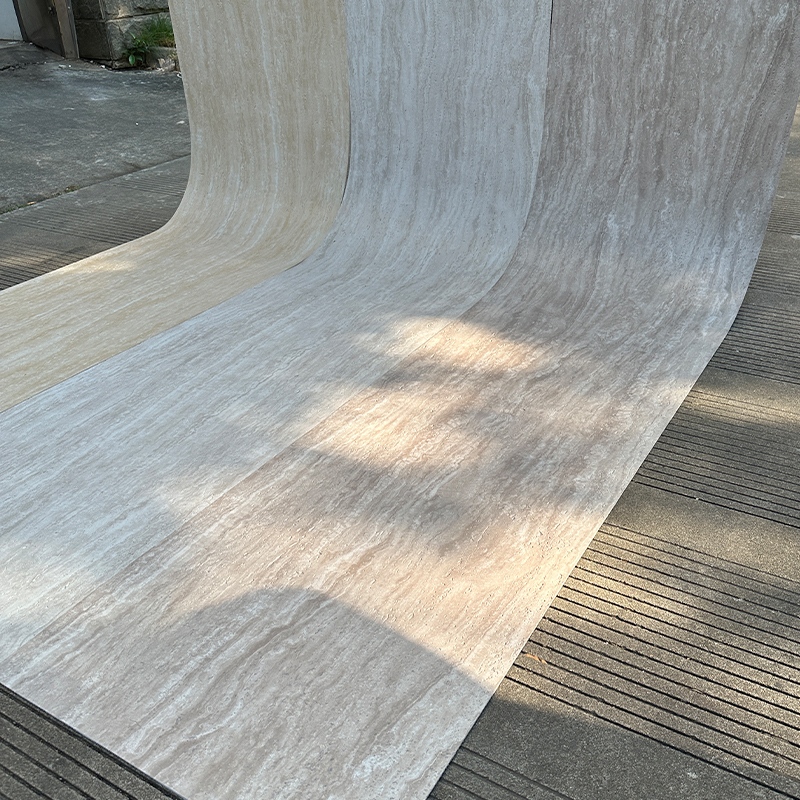
The secret lies in material advances that produce cladding panels just a few millimeters thick—engineered stone, ultra-thin porcelain, or metal composites—that deliver the look of hefty masonry without the mass. These veneers attach via lightweight subframes or direct adhesive, so the underlying structure sees only a fraction of the load it would from traditional brick or precast. This opens up retrofits that were previously impossible, letting designers wrap aging frames in modern skins with zero foundation upgrades.
Installation speed is another quiet revolution. Because panels are large-format and prefabricated, a crew can sheath a whole facade in days rather than weeks, minimising disruption to occupied buildings. The weight savings also simplify logistics—less trucking, smaller cranes—so projects in dense city centers move faster and stay leaner on cost. It’s a practical way to give any structure a completely new identity, from a sleek corporate tower to a warm terracotta-clad school, while keeping the original bones untouched.
Beyond aesthetics, the thin profile allows for integrated air gaps and insulation layers that boost thermal performance without eating into interior floor space. Architects are mixing textures, colours, and even lighting within a single cladding zone, turning flat walls into dynamic canvases. The result is a transformation that’s both visual and performance-driven, proving that heavy-looking architecture no longer has to be heavy at all.
Rethinking Wall Surfaces: Why Designers Are Embracing Flexibility
Walls have long played the role of silent backdrops, but a quiet revolution is reshaping how we think about these everyday surfaces. The shift toward flexibility isn't just about aesthetics—it's a response to the way we actually live and work. Spaces now need to adapt overnight, shifting from a home office to a yoga studio or from an intimate dinner setting to a lively gathering area. Fixed, static walls simply can't keep up with that rhythm.
This new mindset embraces materials and systems that move, pivot, fold, or even disappear on demand. Think sliding partitions that allow a single room to split into two, modular panels that swallow clutter and dampen noise, or magnetic finishes that let you rearrange artwork without a single nail. Designers are moving away from the idea that a wall must be permanent, and instead treating them as tools to sculpt experience and flow. The beauty is in how these choices feel so natural you almost don't notice them—until you realize the wall isn't where it used to be.
What stands out is how this flexibility also brings a sense of playfulness into interiors. Instead of committing to a rigid layout, homeowners and businesses gain the freedom to experiment. A wall can reveal storage, hide technology, or open a room to natural light with just a gentle push. It's a design principle that acknowledges change as the only constant, turning walls into something we interact with rather than ignore. In the end, the most successful spaces are those that feel effortlessly tuned to the moment.
From Façades to Feature Walls: Uncommon Applications in Real Projects
Walking through a city, you rarely stop to consider how the materials under your fingertips got there. That weathered brick façade might have once been a quarry floor in India; the sleek stone feature wall in a boutique lobby might share a geological kinship with a Roman bath. These connections are easy to miss—until you see a designer pull a slab from a seemingly mundane source and turn it into a vertical landscape. In one recent mixed-use development, tight-mitered slate panels meant for a low retaining wall ended up cladding the entire entrance canopy, twisting the expected hierarchy of materials into something utterly new.
Feature walls often get treated as canvases for bold patterns or lighting tricks, but the most unexpected installations come from rethinking structure itself. A firm in Oslo ran sections of polished gabion wire through a hotel atrium, filling them with fractured basalt that would otherwise have been crushed for road base. The result isn’t just a wall—it’s a sectioned geology lesson that shifts with daylight. Elsewhere, a residential project replaced conventional drywall in a stairwell with oversized terrazzo panels cast from demolition debris pulled directly from the site. Here, the feature wall tells the story of the site’s former life without a single interpretive plaque.
These uncommon applications thrive when they challenge what a surface is supposed to do. A well-known coastal gallery used acid-etched granite slabs—normally reserved for exterior paving—to line an interior curved gallery wall, letting salt air gently oxidize the iron flecks over time. The material isn’t resisting the environment; it’s quietly recording it. That shift from passive cladding to active participant is where real projects stop being about trends and start behaving more like living archives.
Durability Meets Texture: The Tactile Appeal of Stone Made Supple
Stone surfaces have long been admired for their unyielding strength, but recent innovations are transforming them into something unexpectedly inviting. By refining natural minerals and engineering their structure, manufacturers are now able to create materials that retain the timeless look of stone while offering a soft, almost leather-like feel. This fusion of resilience and comfort changes how we interact with everyday spaces—countertops become more forgiving, wall panels lose their cold edge, and flooring gains a warmth that invites bare feet to linger.
The secret lies in microscopic texturing and advanced polymer blends that mimic the organic irregularities of stone while smoothing away its harshness. When you run your hand over these surfaces, there’s a subtle give—a tactile depth that feels both ancient and new. It’s a sensory experience that traditional polished granite or marble can’t replicate, one that adds a layer of intimacy to modern interiors without sacrificing the rugged elegance that stone brings.
Designers are embracing this shift because it opens up possibilities previously limited by stone’s cold, hard reputation. Furniture cladding, curved architectural details, and even wearable accessories now benefit from the material’s dual nature. The result is a aesthetic that feels grounded yet gentle, proving that durability doesn’t have to be synonymous with rigidity—it can be supple, expressive, and deeply engaging to the touch.
Installation Insights: Accelerating Build Timelines with Lightweight Cladding
One of the most immediate advantages of lightweight cladding is how it reshapes on-site handling. Traditional masonry or precast panels demand heavy lifting gear and larger crews, while lightweight alternatives—think aluminium composite panels or high-pressure laminates—can be moved around with minimal equipment. This isn't just a marginal gain. By cutting out crane dependency for every single panel, subcontractors can start work earlier and maintain a faster pace, turning what used to be a logistical bottleneck into a smooth, continuous process.
Beyond ease of movement, lightweight systems often arrive on site as part of a pre-engineered kit. Factory-cut to precise dimensions and pre-finished, they eliminate the need for wet trades, on-site cutting, or prolonged curing time. That means far fewer weather-related delays and a dramatic reduction in scaffolding time. Teams can fix panels directly to light-gauge steel or timber frames with interlocking details, achieving weather-tight enclosure in days rather than weeks. The result is a compressed programme that breathes confidence into the project schedule from the very first fix.
Naturally, a faster envelope brings an earlier start to follow-on trades. With the building sealed sooner, internal works—electrics, drylining, decorating—can kick off ahead of plan, pulling back time often lost in earlier phases. There's also a cumulative design benefit: the lighter exterior doesn't demand the same heavy foundation or structural support, trimming preliminary groundworks and letting design teams reimagine façades without overengineering. In practice, it's a quiet revolution, where something as simple as the weight of a panel ripples through the whole build programme, aligning onsite reality more closely with ambitious timelines.
FAQ
Flexible stone is a lightweight surfacing material crafted by bonding a thin layer of natural stone, such as slate, marble, or mica, onto a flexible backing like fiberglass or polyester. Unlike rigid slabs, it bends and wraps around curves, making it far more adaptable for unconventional design features.
Its combination of genuine stone texture with minimal weight opens up design possibilities that heavy masonry can't match. It eliminates the need for structural reinforcement, cuts installation time, and allows seamless application on curved walls, columns, and even furniture—all while maintaining a natural, high-end finish.
The product resists cracking, fading, and moisture penetration when properly sealed. Its flexibility means it handles thermal expansion and minor building movement without forming hairline cracks, unlike rigid cladding. Many variants are UV-stable and withstand freeze-thaw cycles without delamination.
Absolutely. Inside, it's often used for accent walls, fireplace surrounds, kitchen backsplashes, and bespoke furniture panels. The thin profile allows it to be adhered directly to drywall or cabinetry, giving a genuine stone look without eating up floor space or requiring heavy substructures.
Flexible stone is typically roll-applied like wallpaper or fixed with hybrid polymer adhesives. No mortar, no gap-filling, and no specialized cutting tools beyond a utility knife. A two-person team can cover a large area in a day, dramatically reducing labor costs and mess on site.
It's surprisingly low-maintenance. Usually, occasional dusting or wiping with a damp microfiber cloth is enough. Exterior installations may benefit from a periodic sealer refresh every few years, depending on exposure, but there's no need for aggressive scrubbing or chemical agents that can harm natural stone surfaces.
It makes more efficient use of natural stone resources by slicing thin veneers from a single block, spreading the same amount of stone over a larger area. The reduced weight also lowers transportation emissions, and some manufacturers source from responsibly managed quarries and use recycled backing materials.
Key factors include the thickness and type of natural stone layer, the flexibility and strength of the backing, the quality of the adhesive bond between them, and the product's fire rating and slip resistance if used on floors. Always request samples for color consistency and test how the material handles the intended substrate and environmental conditions.
Conclusion
Professional flexible stone has quietly reshaped how architects and designers approach cladding, turning what was once a rigid, heavy material into something supple and surprisingly lightweight. Born from an unlikely marriage of natural stone veneer and polymer backing, this material emerged as a solution to the constraints of traditional masonry, allowing thin slices of real stone—marble, slate, mica, even quartzite—to bend around curves and cling to surfaces without imposing structural demands. Its rise in contemporary projects stems from a simple shift in thinking: walls no longer need to bear massive weight to convey permanence or texture. Instead, flexible stone delivers authentic stone grain and tactile depth in sheets that can be cut with a utility knife, draped over columns, or bonded to irregular substrates, opening up possibilities that thick stone panels would shut down instantly.
Beyond the obvious weight advantage, the material’s true versatility shines in unexpected applications and daily performance. External façades gain a durable, weather-resistant skin that moves with the building instead of cracking under thermal stress. Indoors, it transforms feature walls, reception desks, and even ceilings into seamless stone surfaces that feel cool and solid to the touch, despite their minimal thickness. Installers appreciate how a team can wrap an entire lobby in days rather than weeks, accelerating build timelines without specialist equipment. But it’s not just speed—the material’s pliability lets designers rethink transitions, using continuous sheets where joints would normally break the visual flow. The result is a cladding that holds up against moisture and impact while preserving the raw, unpredictable veining of natural stone, making each installation subtly unique. This fusion of practicality and sensory appeal is why flexible stone keeps appearing in projects that demand both efficiency and character, from boutique shops to expansive hospitality venues.
Contact Us
Contact Person: Vito
Email: [email protected]
Tel/WhatsApp: 86 13088879266
Website: https://www.magicstonemcm.com