

Oil-Injected Compressor: How to Choose the Right One for Your Needs
2026-10-05
Most compressor buyers fixate on horsepower or price, only to discover later that they've bought the wrong machine for their duty cycle. If you're shopping for an oil-injected compressor, the real decision isn't which brand has the shiniest brochure—it's matching air demand, pressure, and runtime to the unit's design limits. Get it right and you'll save thousands in energy and maintenance. Get it wrong and you'll babysit a machine that overheats, guzzles oil, or can't keep up. Here's what actually matters, from someone who's spec'd them for years. Before you settle on any model, check out how Seize Air approaches these trade-offs.
Figure Out Your Real CFM and PSI Before You Even Look at Models
Most people start shopping by comparing tank size or horsepower, but that usually leads to buyer’s remorse. The first thing you actually need is a realistic number for how much air your tools pull and at what pressure they need it. Check each tool’s label or manual for its CFM requirement at a specific PSI. Then add up the CFM for every tool you plan to run at the same time, and add about 20-30% as a buffer. That gives you a working CFM target that reflects real usage instead of a number pulled from a brochure.
PSI matters just as much as CFM, but it’s often treated as an afterthought. A compressor that delivers 90 PSI might be fine for a nail gun, yet useless for a sandblaster that wants 100 PSI continuously. Look at the pressure requirement of your most demanding tool, and make sure the compressor you’re considering can hold that PSI while still delivering the CFM you calculated. Otherwise, you’ll end up waiting for the tank to refill after every short burst, and that kills both productivity and patience.
Before you open a single product listing, write down your minimum CFM and PSI on a sticky note. Compare every model against those two numbers first. If the specs don’t clearly list CFM at the PSI you need, move on. A compressor that can’t keep up with your real demand is just an expensive paperweight, no matter how impressive the tank size looks.
Oil-Injected vs. Oil-Free: When the 'Cleaner' Option Is a Waste of Money
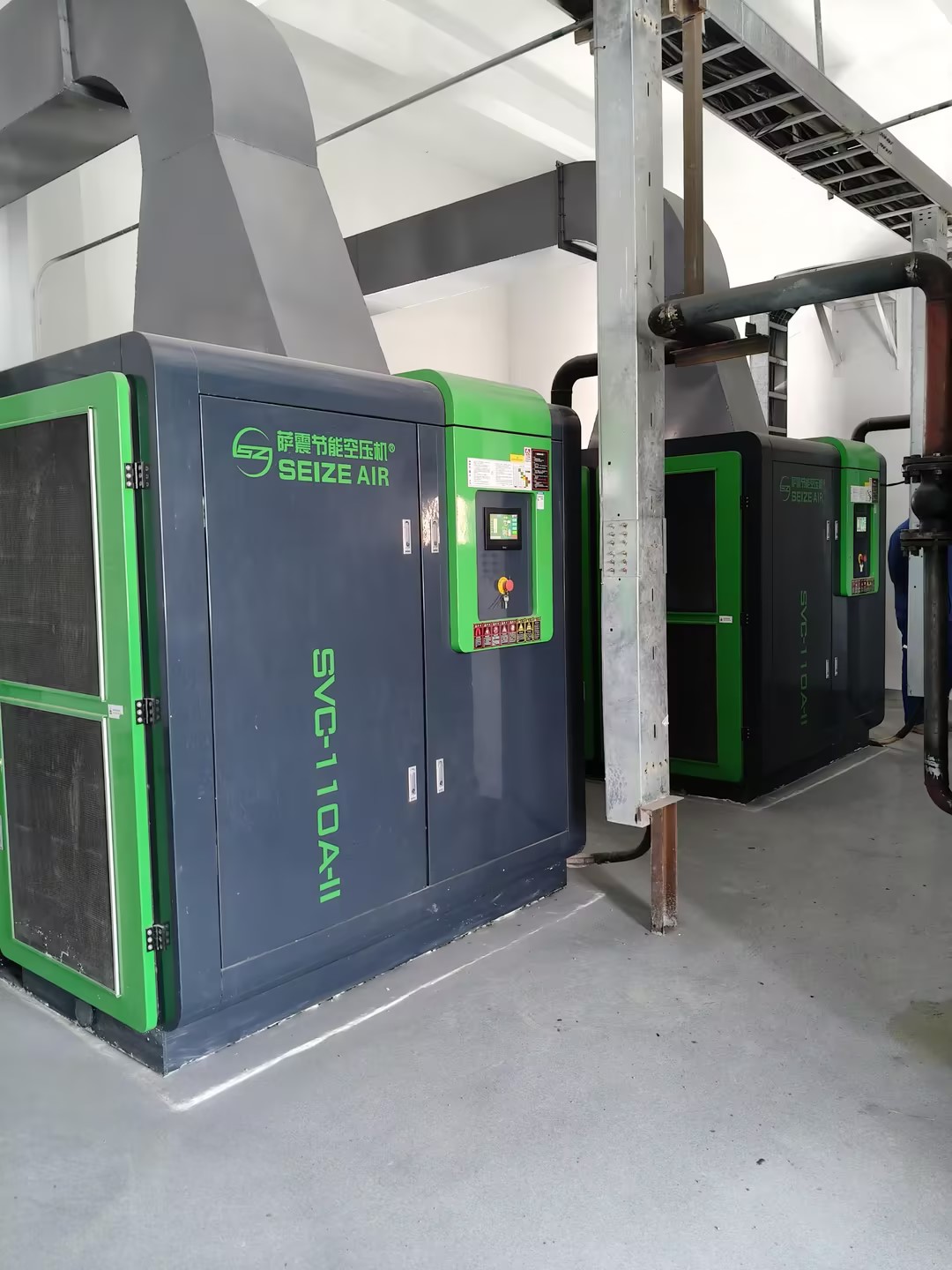
Oil-free compressors are often marketed as the obvious upgrade—lower maintenance, no oil changes, cleaner air. But for plenty of shops, paying a premium for oil-free is like buying racing tires for a commuter car. The 'clean air' benefit only matters if downstream filtration is already doing its job, and many oil-injected units with proper coalescing filters meet ISO 8573-1 Class 1 air purity without breaking a sweat.
Start with the real numbers. A typical oil-injected rotary screw compressor can run 40,000+ hours with routine oil and filter swaps that cost a few hundred dollars a year. Oil-free machines need far more frequent airend rebuilds—sometimes every 10,000 to 20,000 hours—and those rebuilds can hit five figures. Unless you're in food, pharma, or electronics where a single drop of oil is catastrophic, you're paying for a problem you don't have.
Then there's the noise and heat trade-off. Oil-free compressors tend to run hotter and louder because they lack oil's cooling and damping effect. That means more ventilation, more acoustic treatment, and often a shorter duty cycle in hot environments. So before you assume 'oil-free' equals 'better,' ask what you're actually producing. If your air tools don't care about trace oil vapor, your wallet definitely will.
Tank Size Is Not Just About Storage—It's About How Hard the Pump Works
A bigger tank does more than hold extra air or water; it changes how often the pump has to kick in. With a small tank, the pump starts and stops constantly as pressure bleeds off, which forces it to work in short, hard bursts. That kind of cycling generates extra heat and wears down seals, valves, and motor windings faster than steady operation ever would.
When the tank is sized generously, the pump gets a chance to run longer each time it turns on, but it also rests longer between cycles. This balance matters because a pump that runs briefly under load, then shuts off, then immediately restarts against residual pressure is working far harder than one that reaches full speed and stays there for a while. The stored volume acts as a buffer, smoothing out the demand spikes that would otherwise force the pump into a frantic stop-start rhythm.
So if you are comparing models or upgrading a system, look past the raw gallon or litre figure. Think about how the tank capacity influences pump duty cycle, cooling time, and overall strain. A slightly larger tank can often let a smaller, cheaper pump outlast a bigger pump paired with a tank that is too tight for the job.
Duty Cycle: The Spec That Separates a Weekend Hobby Compressor from a Shop Workhorse
Most buyers glance at max PSI and tank size, then call it a day. But the duty cycle tells a different story. It measures how long a compressor can run within a ten-minute window before it needs to rest and cool down. A 50% duty cycle means five minutes of pumping, five minutes of recovery. Weekend machines often hover around 30-50%, which is fine for inflating tires or running a brad nailer. Step into a professional shop, and you'll see compressors rated for 100% duty cycle—they can chug along continuously without breaking a sweat.
Here's why that matters in practice. A hobby compressor pushed beyond its duty cycle will overheat, trip thermal protection, or send moisture-laden air into your tools. The pump wears out faster, the motor strains, and your work stalls mid-project. A shop workhorse, on the other hand, is built with larger cooling fins, cast-iron cylinders, and oil-lubricated pumps that shrug off hour after hour of grinding, sanding, or impact wrench use. The duty cycle isn't just a number on a spec sheet—it's a promise about how the machine handles real workloads, not just burst tasks.
So before you swipe the card, match the duty cycle to your honest usage. Occasional trim work or filling a basketball? Save the money and accept a lower rating. But if you're running a DA sander, a blast cabinet, or a tire shop where the compressor never gets a breather, buy something that can run all day without complaint. That single spec often predicts whether you'll be cursing a hot, sputtering unit in month six or still humming along years later.
Maintenance Truth: How Often Do You Actually Want to Change Oil and Filters?
The sticker on your windshield says 3,000 miles, but the owner’s manual buried in your glovebox tells a different story. Most modern engines running on full synthetic oil can comfortably stretch to 7,500 or even 10,000 miles between changes. The real culprit isn’t the oil breaking down—it’s your driving pattern. Short trips that never let the engine reach full temperature, constant stop-and-go traffic, and dusty backroads push contaminants into the oil faster than a highway commute ever will. So before you blindly follow a generic interval, ask yourself: am I a severe-service driver or a gentle cruiser?
Now let’s talk filters, because changing oil without swapping the filter is like showering and putting on yesterday’s socks. The filter catches the microscopic grit, soot, and metal shavings that would otherwise grind away at your bearings. A quality filter with a silicone anti-drainback valve and high-efficiency media can handle extended intervals, but that cheap orange canister from the bargain bin? It might clog up half its advertised life. If you’re stretching oil changes past 7,000 miles, pair that long-life oil with a filter designed for the same distance. Otherwise, you’re just circulating dirty oil through a bottleneck.
The honest answer? There is no magic number—only a baseline and your own habits. Start with the manufacturer’s severe-service recommendation if you idle in traffic, tow, or live where winters bite hard. Then consider an oil analysis at 5,000 miles to see how the lubricant actually holds up in your engine. That $30 test beats guessing and throwing away perfectly good oil. Once you know your real wear pattern, you can adjust the interval up or down. Filters should always be replaced with every oil change, no exceptions. Skip that rule and you’re not maintaining a car—you’re just postponing a repair bill.
Noise, Space, and Heat: The Daily Realities Nobody Puts on the Box
The fan in my media cabinet doesn’t whir so much as complain. It kicks on at odd moments, a low-grade buzz that somehow synchs with the scene changes in whatever I’m watching. I’ve tried moving it, tilting it, wedging foam underneath. Nothing silences it for long. The box promised ‘quiet operation,’ but whoever wrote that never sat three feet away during a late-night movie.
Then there’s the footprint. The unit is smaller than my old one, sure, but the cables multiply anyway. Power brick, HDMI, Ethernet, a USB hub for the dongles I keep misplacing. I end up pushing it back against the wall, and suddenly the whole corner feels cluttered. A little breathing room would help, but the shelf was built before this thing existed.
Heat is the quietest annoyance. After an hour, the top is warm enough to make me pull my hand back. The exhaust blows toward the couch, not away, so by evening the living room feels a few degrees warmer than the hallway. I leave the closet door open when it runs, which annoys everyone else in the house. Nobody puts that on the box either.
FAQ
An oil-injected compressor uses oil to lubricate, seal, and cool the compression chamber, which lets it run cooler and often last longer in heavy-duty cycles. You’d pick it when you need reliable high-volume air for tools like impact wrenches, sanders, or spray guns. Oil-free models have their place in sensitive environments, but they tend to wear out sooner under constant load.
Tank size matters less than CFM at the pressure your tools actually use. Add up the air consumption of everything that might run at once, then add a 30% buffer. A 60-gallon tank with a 5 HP motor works for most home shops, but if you’re running a blast cabinet or DA sander continuously, step up to 80 gallons and at least 15 CFM at 90 PSI.
Most air tools are rated at 90 PSI, so the compressor should deliver its rated CFM at that pressure, not just at zero backpressure. Look at the “CFM @ 90 PSI” figure on the spec sheet. If you need higher pressure for things like tire inflation or certain spray guns, make sure the cut-in/cut-out settings match your target range.
Yes, it’s one of the most overlooked numbers. A 50% duty cycle means the pump should rest half the time. For continuous sanding or media blasting, aim for 75% or higher. An oil-injected pump can usually handle a heavier duty cycle than an oil-free one because the oil carries away heat, but the motor and cooling design still set the limit.
Use the viscosity recommended by the manufacturer—most rotary screw and piston compressors call for a non-detergent 20W or 30W compressor oil, sometimes a synthetic blend for high temperatures. Change it after the first 50 hours of break-in, then every 200 to 300 hours or at least once a year. Check the sight glass weekly and top up only with the same type.
Noise levels are often listed in decibels, but the number doesn’t tell the whole story. Piston oil-injected compressors usually run 70 to 90 dB, while rotary screw models are quieter around 65 to 75 dB. If it’s going in a shared or indoor space, look for a model with an enclosed cabinet or plan on a sound-dampening enclosure. Belt-driven units also tend to be quieter than direct-drive.
Piston compressors are cheaper upfront and fine for intermittent use—good for a home garage or small shop. Rotary screw compressors are built for continuous operation, produce more air per horsepower, and last longer under constant load, but they cost significantly more. If your tools run for hours without stopping, rotary screw is the better long-term choice.
Oil changes, filters, separator elements, and occasional condensate drains add up. Also consider installation: a 230V circuit, air dryer if moisture is a problem, and vibration pads. Rotary screw compressors need professional service every few thousand hours. A cheap unit with expensive replacement parts can cost more over five years than a mid-range machine with standard components.
Conclusion
Most people buy an oil-injected compressor backwards—they pick a model first, then discover it can't keep up. Start with your actual air demand: not the tool's max CFM rating, but the sustained CFM at the PSI you'll actually run. A spray gun at 40 PSI needs far more volume than a nail gun at 90. Once you know those numbers, ignore the horsepower sticker and compare pump displacement. Oil-injected units generally handle this better than oil-free because the oil bath cools and seals the pump, letting it run longer without overheating. But "oil-free" isn't automatically inferior; if your work is intermittent and you hate maintenance, a cheap oil-free may save you hassle—just don't expect it to survive hours of continuous grinding or sanding.
Tank size gets overhyped: a big tank stores air, but it won't fix a weak pump. What matters is duty cycle—the percentage of time the pump can run versus rest. A 50% duty cycle means ten minutes on, ten off, which is fine for home use but useless in a busy shop. Oil-injected compressors often have higher duty cycles because the oil manages heat better, but they demand regular oil and filter changes. If you'll ignore that maintenance, choose a smaller oil-free unit and accept shorter life. Finally, pay attention to noise, footprint, and heat output. An oil-injected compressor tucked in a small, unventilated room becomes a loud, hot nuisance—measure your space and think about where exhaust heat goes before you buy.
Contact Us
Contact Person: Mia
Email: [email protected]
Tel/WhatsApp: +86 19821985894
Website: https://www.seize-air.com