

OEM Swimming Goggles A Complete Sourcing Guide for Swim Brands
2026-08-26
Finding the right OEM swimming goggles supplier can feel like diving into murky water. Too many brands settle for generic designs that leak, fog, or fail after a season. That’s where OCORT changes the game. In this guide, you’ll learn what separates high-performance OEM goggles from forgettable ones—from materials and lens technology to customization options and minimum order quantities. Whether you’re launching your first swim line or scaling an existing brand, this is the roadmap to sourcing goggles your customers will actually rave about.
Finding a Factory That Already Knows Swim Goggles—Not Just Eyewear
Most eyewear factories can handle lenses and frames, but swim goggles live in a different world. A general factory might not think about how silicone gaskets behave after six months in chlorinated water, or why a curved lens needs a certain grade of anti-fog coating to survive humidity. When you find a factory that already makes goggles for swimming brands, conversations change: they ask about bridge width and orbital seal before you do.
That hard-earned knowledge shows up in small decisions—like using low-friction buckles that stay put on a dive start, or choosing a strap material that won't get brittle under sun and pool chemicals. A factory that only does fashion eyewear tends to overlook these details, leading to samples that look fine on paper but hurt around the eyes after 20 laps.
You can test this quickly during sourcing. Ask potential partners how they handle fogging on curved lenses or what they do to prevent suction marks. A swim goggle specialist will answer with specifics—maybe a double-layer gasket or a particular TPR durometer—while a general eyewear factory will pivot to vague assurances. That difference saves months of back-and-forth.
Lens Coatings and Tints That Actually Matter to Swimmers
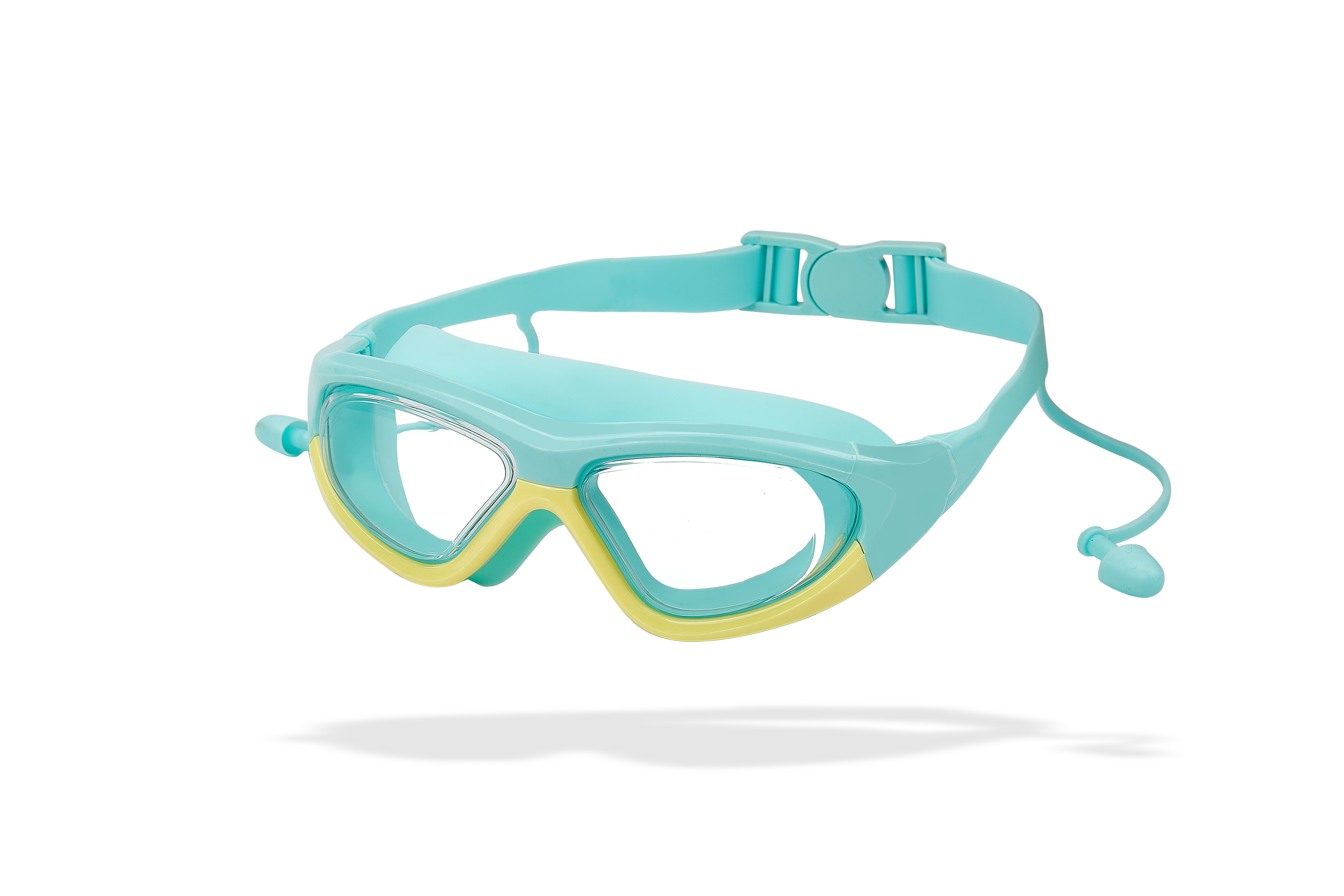
If you spend more than twenty minutes in a pool, the only coating you’ll actually notice is anti-fog. Cheap goggles fog up after a few swims because the factory coating is fragile. Swimmers who train regularly either buy a dedicated anti-fog spray or just spit in the lenses before a set. Hydrophobic coatings sound impressive, but their real benefit is minor: water beads off faster after a turn, which might save a fraction of a second on a start or a wall push.
For tint, match the light you actually swim in, not the one that looks best on a shelf. Clear lenses are best indoors or for early morning workouts. Amber and yellow tints boost contrast in flat or overcast conditions, which helps you spot lane lines and other swimmers. Blue, grey, or mirrored tints cut brightness outdoors, but many mirrored coatings are too dark for anything except full sun. If you race open water in bright conditions, a light mirror with UV protection is more useful than a deep smoke lens.
What you can safely ignore are 'chlorine-resistant' or 'blue-light blocking' treatments. Chlorine attacks the goggle frame and strap long before it hurts a polycarbonate lens, so a coating won't extend the life of the goggle. Blue light isn't the main visual problem in a pool or open water; glare and low contrast are. Spend the extra money on a spare pair with a different tint instead.
What Cheap Silicone Really Costs Your Brand
When a brand switches to low-cost silicone, the first casualty is rarely the balance sheet—it’s the unspoken promise of consistency. Inconsistent durometer, off-spec pigments, and unpredictable cure rates show up as visible color drift, uneven surface texture, and premature tearing at stress points. Customers may not have the vocabulary to describe a Shore A variance, but they notice when the second product they order feels flimsier than the first.
Cheap silicone also erodes trust in ways that warranty claims can’t fully capture. A wearable strap that yellows after three months or a kitchen tool that develops a tacky film signals that the brand tested only the first run, not the tenth. Return rates climb, support tickets fill with the same complaint, and social media becomes a catalog of side-by-side comparisons showing your product aging visibly faster than a competitor’s. The cost of re-engineering the product, re-issuing inventory, and rebuilding the brand’s reputation quietly dwarfs the original savings.
Perhaps the most underrated expense is the loss of design freedom. Premium silicone grades allow for thinner walls, tighter tolerances, and complex undercuts without sacrificing tear strength or heat resistance. Low-cost material often forces designers to thicken geometry or simplify features just to survive production, leaving the brand with a product that looks generic and feels heavy-handed. In that sense, cheap silicone doesn’t just reduce material cost—it caps the ceiling of what the product can become.
Customization Requests That Won’t Blow Up Your Lead Time
Most lead time disasters start with a vague request like “make it a bit different.” The fix is to define a menu of acceptable changes before the order lands. For example, allow three length options, two materials, and a fixed set of finish colors. When customers pick from a defined range, the shop floor already knows the setup steps, and the work slots into the existing schedule without a ripple effect.
Another practical move is to set a customization cutoff time that matches your production cadence. If cutting or programming happens on Tuesday, tell customers their tweaks must be confirmed by Monday noon. After that, changes go into the next batch. This keeps last-minute “just one more thing” requests from piling up mid-run. Pair this with a short list of quick modifications—like engraving or a different handle—that can be handled in final assembly, and you absorb variety without resetting machines.
It also helps to separate customization requests by impact level. Simple swaps stay on the main line; complex reconfigurations get grouped into a weekly custom batch. That way, a single oddball order doesn’t force a full line stoppage. Give the production team a daily quota for small tweaks, and when the quota is full, the next request simply waits until tomorrow. Customers get their special touches, and you keep the promised ship date intact.
Reading a Factory Quote Like a Seasoned Buyer
A seasoned buyer doesn't glance at the bottom line—they start by separating the quote into material, labor, overhead, and profit. Factory quotes often bury tooling amortization or setup charges in the unit price, so ask for a cost breakdown or at least an itemized list of exclusions.
Check the terms hidden in the margins: payment schedule, incoterm, delivery window, and minimum order quantity all shift the real cost. A low unit price can vanish when the quote assumes FOB factory and you're budgeting for landed cost. Seasoned buyers compare quotes not by the sticker number but by the total cost per unit delivered to their warehouse.
Finally, treat the quote as an opening position, not a final offer. Factories expect negotiation, so push on setup fees, packaging, and quality inspection clauses. If a quote doesn't specify material grade or tolerance, that omission is a red flag—ask for written clarification before comparing.
Quality Checks That Catch Problems Before Your Customers Do
Most defects don't announce themselves at the end of the line; they build up slowly from skipped steps or worn tooling. Our quality checks are scheduled to interrupt that drift. We sample components at receiving, test assembled units under load for a short cycle, and then re-inspect after a cool-down period. The last pass catches problems that only show up once materials settle or thermal stress has done its work.
When a check fails, the unit doesn't get a quiet rework and a stamp of approval. The trigger is logged against the batch, the station, and the shift, so patterns become visible within days rather than months. That visibility is what turns a one-off mistake into a permanent adjustment in the process—whether it's a torque setting, a supplier's measurement drift, or a training gap on a new line.
The point is not to inspect quality into the product. It's to make the checks fast enough and targeted enough that problems surface while they're still cheap to fix. The fewer surprises that leave the building, the fewer customers have to learn about our mistakes before we do.
FAQ
Start with the seal and strap adjustment. Press the goggles against your face without the strap—if the skirt doesn't hold a light suction for a few seconds, it will leak in the pool. Then flex the frame and check the lens coating for uneven tint or scratches. Many brands overlook the nose bridge options; make sure the factory offers at least three sizes or an adjustable bridge, otherwise you'll struggle to fit different face shapes.
Ask the OEM partner about their anti-fog treatment process. Most factories apply a coating during assembly, but durability varies a lot. Request a lab test report that simulates repeated wiping and humidity cycles. Also consider adding anti-fog solution as a packaging insert—it shifts some responsibility to the user and reduces returns.
It depends on how much you customize. If you only need your logo printed on an existing frame, expect around 500–1,000 units per color. For a fully new mold with your own frame shape, MOQs often jump to 5,000–10,000 units because the mold cost is amortized. Some smaller factories accept 3,000, but the per-unit price will be higher.
Plan for 45–60 days for standard customizations like pad printing or packaging. If mold changes are involved, add another 20–30 days for tooling and trial shots. Shipping by sea from major manufacturing hubs takes 2–5 weeks depending on destination, so a realistic total timeline is 3–4 months. Always add buffer for Chinese New Year or peak freight season.
For most Western markets, insist on CPSIA or REACH compliance for phthalates and lead, plus EN 16805 or BS 5883 for optical quality and impact resistance. Ask for test reports from an accredited lab, not just the factory's in-house statement. If the goggles have mirrored lenses, also check UV400 protection and visible light transmittance values.
Yes, focus on packaging and accessories. Use a simpler carrying case or switch from a rigid box to a recyclable polybag. Reduce lens color options to the three best-selling tints. Also confirm whether the quoted price includes anti-fog coating and strap printing—sometimes factories quote a base price and then charge extra for these as options.
They approve a sample based on photos and then order without requesting a sealed pre-production sample from actual mass production tooling. Prototype samples are often hand-finished or made on soft molds, so they look better than the final product. Always insist on a golden sample signed by both sides, and hold the factory to that standard for every shipment.
Ask for their export history to your target market, not just general experience. A factory that has supplied EU or North American brands for several years is more likely to understand labeling and chemical limits. Also do a video call walkthrough of the production floor—check if they have in-house injection molding and lens coating, because factories that outsource these steps have less control over quality and lead times.
Conclusion
Sourcing OEM swimming goggles goes far beyond picking a generic eyewear manufacturer. You need a factory that already lives and breathes swim goggles—someone who understands the pressure points of a racing goggle strap, the fogging issues in humid pool environments, and the optical demands of open-water swimmers. Lens coatings and tints are not just cosmetic add-ons; anti-fog durability, UV protection that holds up after repeated chlorine exposure, and tint choices like amber for indoor contrast or mirrored for outdoor glare directly shape how swimmers perceive your brand. Cheap silicone gaskets may save a few cents per unit, but they harden, yellow, and cause leaks after a season, triggering returns and damaging your reputation. The real cost shows up in customer complaints long after the order ships.
Customization does not have to stretch your lead time if you stick to adjustments the factory already has tooling for—changing silicone colors, strap patterns, or logo placement instead of demanding new frame geometry. When you read a factory quote, treat every line item as negotiable but also as a signal of what the factory actually does well. Ask for breakdowns on lens material, gasket silicone grade, and packaging; seasoned buyers compare those details against a reference sample, not just the bottom line. Quality checks should go beyond a final visual glance. Insist on in-line inspections for watertight seals, strap elasticity, and lens clarity, as well as random pull tests from the finished batch. The goal is to catch the warped buckle or weak anti-fog coating before your customers ever do.
Contact Us
Contact Person: Wendy
Email: [email protected]
Tel/WhatsApp: 86 18807398467
Website: https://www.zlfswim.com