

OEM Performance Cylinder Head Upgrades: What You Need to Know Before Buying
2026-10-25
A performance cylinder head is only as good as the decisions you make before it ships. Port volume, valve angles, deck thickness—get one wrong and you’ll chase tuning gremlins for months. OEM performance cylinder head upgrades aren’t plug-and-play jewelry; they’re a precision fit, and they punish lazy research. That’s exactly why DDR focuses on repeatable castings and honest specs rather than inflated flow-bench promises. Here’s what you should verify before you spend a dollar.
The Casting Number You Should Actually Care About
Most enthusiasts fixate on the large raised digits on the engine block, but the smaller stamping adjacent to them usually tells you far more. That short sequence is the date code, and it records when the block was actually poured at the foundry.
A block can carry the correct casting number yet have a date code that falls months after the car left the assembly line. When you compare that date to the vehicle's build date, the gap should be tight—often just a few weeks. If the timing is off, the engine has likely been swapped, no matter how convincing the casting number looks.
Port Volume Doesn't Equal Airflow
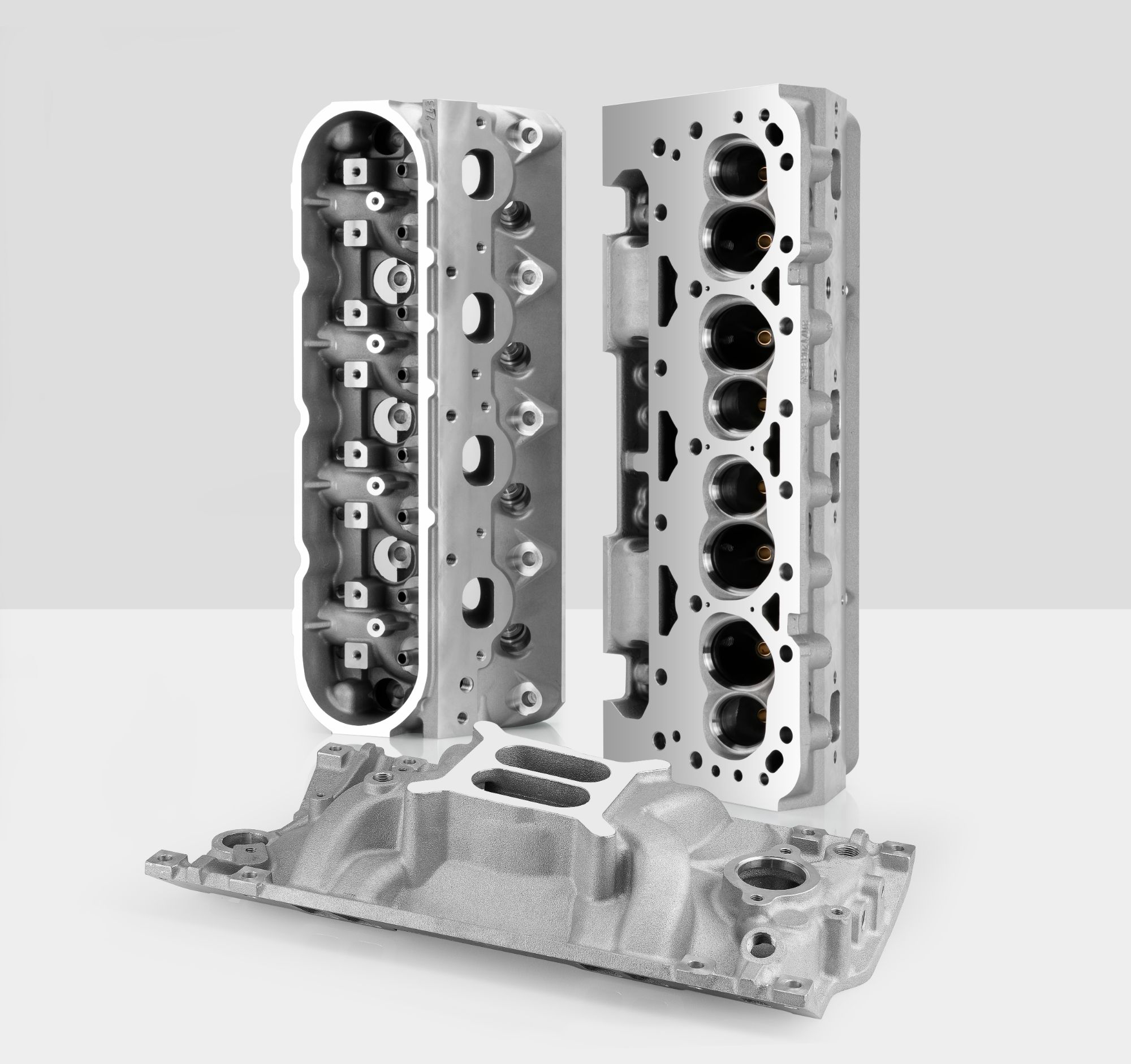
Larger openings look impressive on paper, but raw port volume tells you almost nothing about how much air will actually move through a system. Airflow is driven by pressure differences, not by empty space. A bulky cavity with sharp internal edges and pinched corners can create swirling dead zones that reduce net movement, while a compact port with a clean, gradual transition can pull air through with surprising force.
The real story lies in resistance and path design. Air hates sudden changes in direction and cross-section because every abrupt turn saps kinetic energy into turbulence. Two ports with identical measured volume can perform very differently once you account for entry shape, internal surface finish, and exit symmetry. A smaller but smoother duct often pushes more cubic feet per minute than a larger, poorly integrated one, simply because it wastes less of the available pressure budget.
This is why chasing the biggest port figures on a product sheet is misleading. Without knowing the pressure-to-flow curve or how the port interacts with surrounding components, volume is just geometry. A tuned, slightly restrictive passage can outperform a cavernous void under real thermal loads, especially when the fan or natural convection has to overcome leaks and obstructions. Port size sets the stage, but it never guarantees delivery.
Why Combustion Chamber Size Dictates Pump Gas Limits
The physical size of the combustion chamber sets a hard limit on how much cylinder pressure a pump-gas engine can tolerate before knock takes over. A larger chamber spreads the flame front across a longer distance, which gives the unburned end gas more time to heat up and reach its auto-ignition temperature. Even with the same octane rating, that extra time is often enough to trigger detonation. Conversely, a smaller chamber shortens the flame travel and lets the burn finish before the end gas becomes unstable. This is why two engines with identical displacement and identical fuel can behave completely differently at the same compression ratio—the one with the tighter chamber almost always survives more spark advance.
There's also the surface-area problem. A big, open combustion chamber exposes more metal area to the burning mixture, which pulls heat out of the flame and slows combustion even further. Add in poor mixture motion from a lazy chamber design, and you end up with hot spots, uneven burn, and a much lower knock threshold. Smaller chambers, especially those with a central spark plug and tight quench pads, promote turbulence and rapid combustion. That turbulence is what lets an engine run closer to the ragged edge on 91 or 93 octane without rattling itself apart. It's not about making more power per cubic inch—it's about keeping the combustion event short enough to stay ahead of detonation.
When engineers shrink a combustion chamber, they usually have to reshape the piston crown and relocate the valves, which changes how the flame kernel grows in the first few milliseconds. Those changes can push the pump-gas limit upward by several points of compression or a few pounds of boost. But the limit is still there. Pump gas has a fixed octane ceiling, and no amount of clever chamber work can eliminate end-gas auto-ignition entirely. What a proper chamber size does is stretch that ceiling as far as the fuel chemistry allows. After that, you're chasing diminishing returns—or reaching for race fuel.
Valve Springs and Retainers: The Parts Everyone Forgets
Most engine builds get all the attention on pistons, cams, and ported heads, but the small steel coils and little keepers that control valve motion are often an afterthought. Valve springs work constantly, cycling thousands of times per minute, and if they lose tension or crack, you'll chase misfires and power loss that no tune can fix. Retainers are just as critical—they hold the spring against the valve, and a worn or cracked retainer can drop a valve straight into the cylinder.
The mismatch between spring pressure and your cam profile is where many builds go wrong. Too much spring pressure eats horsepower through friction and wears the valvetrain; too little lets the valve float at high rpm, which can kiss a piston. Retainers made from cheap stamped steel might handle stock lift, but once you step up to aggressive lobes or higher redlines, titanium or hardened chromoly retainers become necessary. Check installed height, coil bind, and seat pressure with a proper gauge—not guesswork.
Don't reuse springs and retainers from a tired engine just because they look okay. Metal fatigue isn't visible until the part fails. A fresh set of quality springs matched to your cam's lift and rpm range, plus retainers designed for the same spring diameter, is cheap insurance compared to a dropped valve or shattered retainer. For any performance build, treat these parts as a consumable that gets replaced every time the heads come off.
When a 'Direct Bolt-On' Head Still Needs Machine Work
The phrase "direct bolt-on" gets thrown around a lot in the cylinder head aftermarket, but it rarely means the casting is ready to run right out of the box. Even a brand-new head that matches the intake and exhaust manifold pattern can have uneven deck surfaces from storage or shipping, or valve seats that are only rough-cut at the factory. A quick pass with a straightedge and feeler gauge often reveals low spots that will blow a head gasket within a few heat cycles if ignored.
Valve guides are another common trouble area. They might be installed but not finish-honed to the proper clearance for your specific valve stems. If the guide clearance is too tight, a valve can seize when the engine gets hot; too loose and you burn oil and foul plugs. The same applies to the valve seats—many "bolt-on" heads have seats that are not concentric with the guide, so the valves never seal properly until you have a machine shop cut them. Spring installed heights, retainer clearance, and even the final surface finish on the deck all need to be checked and corrected if necessary.
Street vs. Strip: Match the Head to How You Drive
A daily-driven street engine rarely spends more than a few seconds at wide-open throttle, so stuffing the biggest intake runners under the hood often backfires. The head that makes peak power on a dyno can feel lazy below 3,000 rpm, killing throttle response and fuel economy. For stop-and-go traffic, look for moderate runner volumes, strong low-lift flow, and chambers that don’t demand a gallon of octane booster.
Strip-only builds live at the other end of the tach. High compression, huge valves, and rectangular ports want RPM, and if you’re launching at 5,000 and shifting at 8,000, that trade-off is exactly what you want. Just be honest about how often you’ll actually be on the converter—an all-out race head on a weekend cruiser turns every drive into a fight against fouled plugs and soggy throttle response.
The real trick is matching the head’s airflow curve to the cam and intake, not chasing a single flow number. A well-chosen street/strip head should wake up in the midrange without giving up too much upstairs. If the engine spends most of its life between 2,000 and 5,500 rpm, that’s where the port should work hardest. Save the monster single-plane and huge roller cam for a car that sees more trailer miles than street miles.
FAQ
A stock head is built to a cost and tuned for a broad, safe operating range. An upgraded OEM casting typically gets a proper multi-angle valve job, some chamber cleanup around the valve seats to unshroud the valves, light port work that focuses on the bowl area and short-side radius rather than just making the ports bigger, and often better springs and retainers. On some engines you may also see larger valves installed. The goal is to improve mid-lift and high-lift flow without killing port velocity, which keeps throttle response and low-end torque intact.
If the engine has already been given a freer-flowing intake, headers, and a mild cam but power still flattens out earlier than expected, the heads are often the next restriction. Another clue is when a dyno pull shows excellent torque down low but a sharp drop in horsepower after peak instead of a gentle rolloff. Also, if the engine builder measures high intake port velocity or reports that the valve seats and bowls are the smallest cross-sectional point in the system, that's a clear sign the heads need work.
Not always. If your class rules require factory castings, or you want to keep the visual appearance and accessory bolt patterns stock, then working with OEM heads makes sense. But a well-designed aftermarket head often has better material in critical areas, more meat for porting, and a combustion chamber shape that was developed for performance from the start. For a street car that must pass emissions or look original, a properly prepared OEM head is a great route. For an all-out build, aftermarket heads may offer more headroom per dollar.
Flow bench numbers are useful but they don't tell the whole story. You want to see data at several lift points, not just peak flow. Look for a smooth increase in flow as the valve opens, with no dips or turbulence-induced stalls. The port's cross-sectional area should be matched to the engine's displacement and rpm range—too big a port can hurt torque. Ask about the valve job details, throat diameter relative to valve size, and whether the work was done by hand or with a proven CNC program. Consistency between cylinders matters more than an impressive peak flow from one port.
Almost certainly yes. Even if the displacement and camshaft stay the same, a better-flowing head changes how much air enters the cylinder and how the fuel mixes. The engine may run lean in spots or knock under load if the tune is left alone. A competent tuner will adjust fueling, ignition timing, and sometimes cam phasing to suit the new airflow characteristics. Skipping the tune is a common way to leave power on the table or cause damage.
Beyond the porting and valve work, you'll need new head gaskets, head bolts or studs, possibly new valve springs that match the cam and rocker geometry, and maybe shorter pushrods if the head was milled or the valve heights changed. The deck surface may need to be machined flat, and you should factor in fresh oil and coolant. If larger valves were installed, checking piston-to-valve clearance is mandatory, which can lead to additional machine work. It's rarely just a bolt-on.
It depends on how the heads changed the compression ratio and valve lift. If the heads were milled significantly or the combustion chambers were reshaped, the compression could go high enough to cause detonation on pump gas. If larger valves were used, you need to confirm they don't hit the pistons, especially with a high-lift cam. A healthy stock bottom end can handle a mild head upgrade, but you should check clearances and compression before final assembly.
A cheap hand-port job often focuses on making the port entrance shiny and bigger, which can actually hurt flow by slowing the air down. A properly developed CNC program is based on repeated flow bench and dyno testing, so every port gets the exact same shape, volume, and surface finish. The consistency means each cylinder makes the same power. That doesn't mean hand porting is automatically bad—an experienced head porter can do excellent work—but you need to verify their process and results rather than trusting a low price.
Conclusion
Before dropping money on upgraded cylinder heads, the first thing to check is the casting number, not the shiny marketing claims. That number tells you the actual core you're starting with—some cores have better material, thicker decks, or revised chambers. Port volume is another trap: a bigger intake port might look impressive on a spec sheet, but if the short-side radius or valve job is sloppy, the head won't flow any better where it matters. Combustion chamber size directly sets your real-world pump gas ceiling—shrink the chamber too much and you'll be chasing detonation on 91 octane, no matter what the compression calculator suggests.
Valve springs and retainers are the forgotten pieces that decide whether the head survives high rpm or floats a valve into a piston. Even a 'direct bolt-on' head often needs a light resurface or guide hone before it seals properly, so budget for machine work instead of trusting the box. Finally, match the head to how you actually drive: a big-runner head that works on a strip car can make a street engine lazy and soft below 4,000 rpm. Choosing the right head is less about peak numbers and more about how the whole combination behaves in your driving.
Contact Us
Contact Person: Shelly
Email: [email protected]
Tel/WhatsApp: 8613967667688
Website: https://www.yongyu.com/