

OEM Envelopemailers Box Packaging Ideas That Delight Customers
2026-09-04
Your customer’s first physical interaction with your product isn’t when they open the envelope mailer—it’s the moment they hold it in their hands. Envelope-style packaging often gets treated as an afterthought, but it’s one of the simplest ways to delight people before they even see what’s inside. With the right OEM design, a plain mailer can become a branded experience worth sharing. At Kuaijie Carton, we’ve seen how creative envelope mailer boxes turn routine deliveries into memorable moments. Here are the ideas we love seeing most—and why they work.
Tactile Finishes That Turn Packaging Into a Keepsake
Most boxes end up in the recycling bin within minutes of opening, but the right surface can change that. A soft-touch matte coating, a raised embossed logo, or a subtle linen texture invites fingers to linger. These tactile details signal that the object inside was worth more than a passing glance—and that its container deserves a second life on a shelf or desk.
Think of a rigid box wrapped in suedelike paper, where every lift of the lid feels like opening a hardcover book. Or a folded carton with a spot-gloss pattern that creates alternating smooth and gritty zones under the thumb. Techniques like debossing, flocking, or raised UV create a physical dialogue—some areas cool and slick, others warm and grainy. That sensory contrast makes the unboxing slower, more deliberate, and far more memorable.
When packaging begs to be touched, it stops being disposable. People keep boxes that feel like stone, leather, or heavy cotton rag—not because they have to, but because the object has become a small piece of the brand's story they want to revisit. A well-chosen finish doesn't just protect a product; it extends the moment of receiving into something closer to owning a keepsake.
Surprise Artwork Hidden Under the Flap
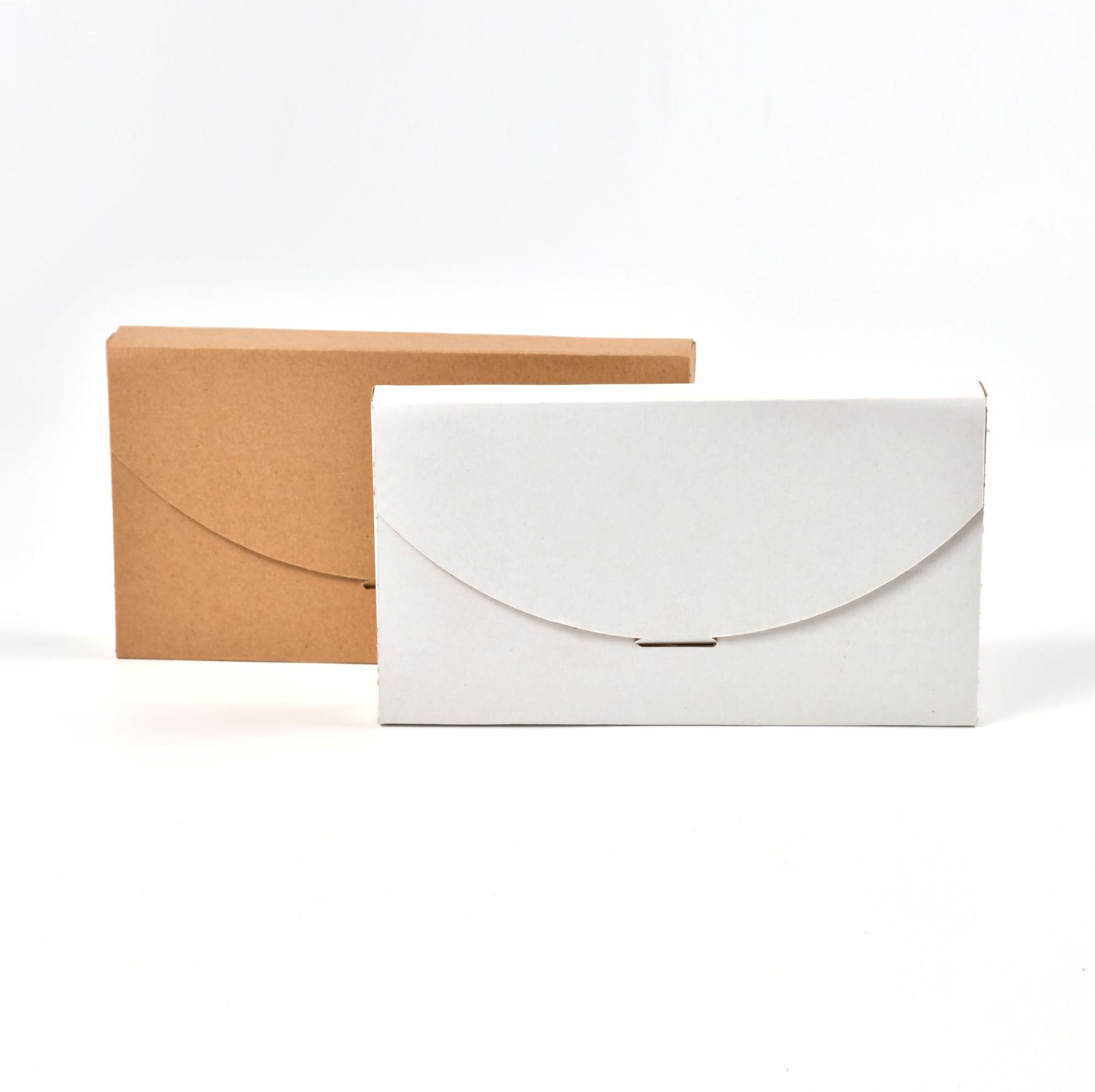
Lift the flap and the scene changes entirely. What looked like a simple cover gives way to a burst of color, a tiny hand-drawn character, or an unexpected message tucked just out of sight. It’s the kind of detail that makes people pause, smile, and show the person next to them.
This hidden artwork turns an ordinary moment into a small ritual. Fingers trace the edge, find the cut, and gently peel it back. The reveal feels private, almost like a secret shared between the maker and the person holding the piece. You never quite know what waits there—a playful doodle, a wash of watercolor, a line of handwritten text—and that uncertainty is exactly the point.
Because the surprise sits beneath the surface, it invites closer looking. It rewards curiosity rather than broadcasting everything at once. That quiet layer of thoughtfulness sticks with people long after the first glance, making the object feel more personal and alive.
Plantable Seed Paper That Grows After Unboxing
Tearing open a package usually ends with a crumpled ball of wrapping headed for the bin. This paper flips that moment. It's embedded with a mix of wildflower seeds, so once you've read the note or admired the tag, you can tuck it under a thin layer of soil, water it, and watch it turn into something alive. The paper itself is made from recycled fibers, and the seeds stay dormant inside until they get the moisture and darkness they need.
The real charm hits a week or two after planting, when tiny green specks break through the surface. Unlike standard paper that just sits in a drawer, this one disappears into the soil as the roots take hold. You don't need a garden — a small pot on a windowsill does the job. It's a quiet little ritual that turns unboxing into the start of a growing season, rather than a trip to the trash can.
What makes it feel less like a gimmick is the unpredictability. Depending on the seed mix, you might get chamomile, poppies, or clover — no two pieces come up the same way. That element of surprise, combined with paper that actually breaks down, makes it a more memorable way to send a thank-you or a launch announcement. It leaves something behind, just not the kind of thing you sweep up.
Magnetic Closures That Feel Premium Every Time
The first thing you notice is the weight—not heaviness, but a deliberate, grounded sense of purpose. When the flap meets the body, the magnets engage with a low, cushioned thump that feels less like a mechanism and more like a well-made door closing in a quiet library. There's no cheap snap, no plastic click, just a smooth glide and a secure hold that makes opening and closing the case something you look forward to, not just tolerate.
These closures are engineered so the pull force is strong enough to keep everything sealed, yet gentle enough that a single finger can break the connection without a struggle. Over time, many magnetic systems weaken or lose alignment, but the embedded rare-earth magnets here are seated in reinforced channels, preventing drift and ensuring that even after thousands of cycles, the closure feels exactly the same as day one—confident, precise, and quietly expensive.
Beyond function, there's a tactile ritual: the way your thumb naturally finds the indent, the brief pause as the magnets align, then the soft definitive close. It's the kind of detail that makes you pause and open it again just to feel it. That repeated, small satisfaction is what separates a premium closure from an ordinary one.
Reusable Mailer Boxes as Storage for Small Items
A mailer box doesn't have to end its life once the package is opened. The corrugated walls, especially from double-wall boxes, are rigid enough to hold stacks of small notebooks, batteries, or spice packets without bowing. I keep a shallow one inside a kitchen drawer to separate loose tea bags from rubber bands and takeout menus.
Because most reusable mailer boxes have a fold-over flap or self-locking tabs, you can close them partially to keep dust out while still grabbing items quickly. Cutting the lid off turns the base into an open tray that works well on a desk for paper clips, sticky notes, and charging cables. A strip of masking tape on the front gives you a spot to write what's inside, which beats guessing every time you open a closet.
The best part is that these boxes are often made to survive rough shipping, so they handle being shoved under a bed or stacked in a garage much better than flimsy gift boxes. When they start to tear, you can reinforce the corners with clear packing tape and keep using them for another few months. Eventually, the cardboard breaks down and can go into the recycling bin, but only after it has saved you from buying several plastic organizers.
Vibrant Inner Prints That Contrast the Outer Minimalism
The exterior reads as a quiet statement—clean lines, muted tones, no visible branding. But flip the cuff, open the flap, or turn the garment inside out, and a riot of pattern breaks loose. It's a deliberate sleight of hand: the outer shell keeps things restrained, while the inner layer carries all the noise you'd normally hide.
This kind of contrast isn't about being loud for the sake of it. The vibrant print stays tucked away until a specific moment—rolling up a sleeve, reaching into a bag, hanging a jacket on the back of a chair. That glimpse becomes a private signal. You know it's there; whoever notices gets invited into the joke. The restraint outside makes the secret feel more valuable.
Pulling it off requires careful calibration. The outer minimalism can't be so dull that it reads as generic, and the inner print can't be so chaotic that it clashes with the silhouette. Designers often anchor the pattern with one or two colors already present in the exterior, then let the rest run wild. The result is a piece that works as a whole—calm on the surface, restless just beneath.
FAQ
Envelope mailers feel more like receiving a letter or a gift than a standard box. The flat, slide-out tray design encourages a slower reveal, especially if you add a pull tab or a small notch for the thumb. That small pause before the product appears builds anticipation in a way a top-opening carton rarely does.
Focus on one high-impact detail instead of printing every surface. A single rich color on the outer sleeve with a blind embossed logo costs less than full-coverage CMYK but reads as far more intentional. Pair it with a contrasting interior print only on the tray floor, and customers will assume the whole package is expensive.
Soft-touch lamination is popular, but what actually surprises people are tactile contrasts: a matte exterior with a glossy spot UV pattern, or a textured uncoated sleeve over a smooth coated tray. Even a wax seal-style sticker over the closure point makes the opening moment feel like a private event rather than a shipping task.
A hidden magnetic closure on the flap is the most reliable trick—it holds the box shut in transit but gives that satisfying snap when opened. If magnets are out of budget, a tuck-end flap with a curved thumb cutout works well. Just avoid excessive tape; customers hate struggling with adhesive strips that tear the printed surface.
Look at what competitors in your niche are doing and pick the opposite temperature. If everyone uses pastel kraft, go for deep ink navy or oxblood. For type, limit yourself to two fonts at most—one display face for the brand name and one simple sans for any instruction. Oversized lettering on the front panel tends to get more attention than tiny logos.
Design the inner tray as a drawer that can be repurposed for desk storage or jewelry. Add a perforated section on the sleeve that becomes a bookmark or a thank-you card when torn along the dotted line. Reusable ribbon pulls are another option, but make sure they're securely attached so they don't fray or detach before arrival.
It matters more than most brands realize. The inside is the first thing a customer sees after opening, so a blank interior feels like a missed handshake. A simple repeating pattern, a short handwritten-style note printed near the product, or even a solid contrasting color can make the experience feel considered. It doesn't have to be loud—subtle details read as more genuine.
Yes, but only if you rethink the internal structure. Instead of just adding crumpled paper, use a custom die-cut insert that slots into the tray and suspends the product away from all six walls. Combine that with a rigid mailer board and a sleeve that fits snugly without pressing on the middle, and you'll get better protection than many standard shipping boxes.
Conclusion
Tactile finishes do more than protect—they turn a basic mailer into a keepsake. Soft-touch coatings, subtle linen textures, or raised spot UV invite fingers to linger, creating a sense of care that mass-produced packaging rarely achieves. Under the flap, a hidden artwork waits: an illustration, a handwritten-style thank-you note, or a brand motif that connects to the product story. Because this detail stays invisible until the box is opened, the act of lifting the flap feels like a private reveal. This pairing of touch and surprise shifts the mailer from disposable shipping material to something customers hesitate to throw away.
Plantable seed paper extends that feeling even further. Once the product is out, customers can plant the insert and watch wildflowers or herbs grow—a small ritual that keeps the brand alive for weeks. Magnetic closures offer a quiet, cushioned snap, echoing the feel of premium stationery or jewelry boxes. If the mailer is sturdy, people naturally reuse it for cables, accessories, or desk odds and ends, so the logo reappears in daily life without feeling pushy. Outside, keep the box minimal and solid-colored; inside, go bold with high-contrast prints or vivid patterns. The sharp contrast between a calm exterior and an energetic interior reflects how many people like to present a reserved face while holding vivid inner worlds. It also makes that first glimpse after opening feel genuinely alive, as if the package itself has a personality waiting to be discovered.
Contact Us
Contact Person: Tan Xiang
Email: [email protected]
Tel/WhatsApp: 8613798906863
Website: https://www.dgkjzx.com