

OEM Coal-Based Powdered Activated Carbon: How It Improves Industrial Purification Systems
2026-07-21
Industrial purification demands precision and reliability. OEM coal-based powdered activated carbon from Tundrr is engineered to optimize your systems, delivering superior adsorption and cost-effectiveness. Read on to explore how this advanced carbon solution transforms purification processes.
Unpacking the Adsorption Power of Coal-Based Activated Carbon
Coal-based activated carbon earns its reputation through a remarkably porous architecture, which provides an immense internal surface area—often exceeding 1,000 square meters per gram. This vast landscape, riddled with micropores, mesopores, and macropores, acts like a molecular net, trapping a wide spectrum of impurities from gases and liquids. The raw material itself, typically bituminous or anthracite coal, undergoes carefully controlled carbonization and activation steps that etch out these cavities. The result is a material whose adsorptive capacity isn't just about surface area; it's about the tailored pore size distribution that can be tuned to capture specific molecules, from small volatile organic compounds to larger color bodies in solution.
What truly defines its power, however, is the interplay between physical adsorption and surface chemistry. While the vast pores snag molecules through van der Waals forces, the carbon's surface can be modified during activation to host functional groups—such as carboxyl, hydroxyl, or carbonyl—introducing a degree of chemical selectivity. This means a single batch of coal-based carbon can be engineered to preferentially remove certain contaminants, whether it's pulling hydrogen sulfide from biogas or decolorizing sugar syrups. The activation process itself, often using steam or chemicals, determines this balance. Steam activation tends to favor physical pore development, while chemical activation with agents like phosphoric acid can create a more reactive surface, offering a dual mechanism that enhances capacity for polar adsorbates.
Tailoring Carbon Properties for Specific Industrial Needs
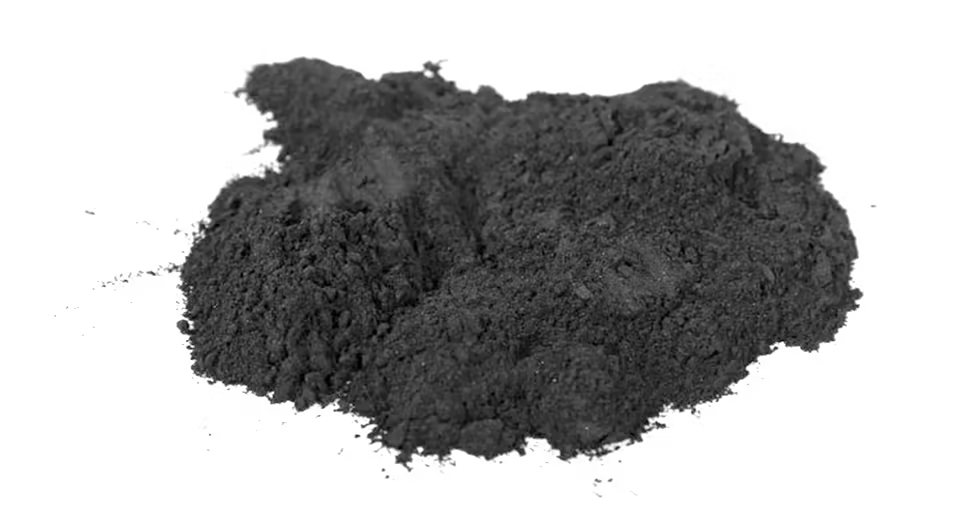
The versatility of carbon materials lies not in a single set of characteristics but in the ability to fine-tune their structure and surface chemistry for precise applications. From reinforcing polymers to filtering contaminants, the performance hinges on subtle adjustments in porosity, conductivity, and functional groups. This means that the same base carbon source can be transformed into electrodes for energy storage, adsorbents for water treatment, or conductive additives for coatings simply by altering the processing parameters. Rather than seeking a one-size-fits-all solution, manufacturers increasingly demand bespoke carbon grades that match their exact mechanical, thermal, or electrochemical requirements.
Achieving this customization often starts at the precursor stage. The choice of feedstock, carbonization temperature, and activation method dictates the resulting pore network and surface area. For instance, steam activation creates a different pore size distribution than chemical activation, which directly affects how ions or molecules interact with the material. Post-synthesis treatments further expand the possibilities—doping with heteroatoms like nitrogen or boron shifts the electronic properties, while oxidation introduces oxygen-containing groups that enhance wettability for aqueous applications. Each modification step is a lever that pulls the carbon’s behavior in a desired direction, whether it’s higher capacitance, improved catalytic activity, or tailored hydrophobicity.
Collaboration between material scientists and end users is critical to translate these physical and chemical levers into real-world performance. Instead of bombarding customers with generic specifications, suppliers now engage in co-development journeys, testing iterative samples under actual operating conditions. This tight feedback loop shortens the gap from lab to production line and uncovers nuances that datasheets rarely capture—such as long-term stability in aggressive electrolytes or compatibility with specific binder systems. The result is a carbon product that doesn’t just meet a technical data point but seamlessly integrates into the customer’s process, reducing trial-and-error and accelerating time-to-market.
Real-World Gains in Water and Air Purification
Communities that invest in modern purification systems see tangible improvements almost immediately. In regions once plagued by industrial runoff, advanced filtration has turned murky water crystal clear, restoring aquatic life and giving residents confidence to drink straight from the tap. The same holds for air—urban centers that adopted hybrid scrubber technologies report fewer smog days, with children and the elderly suffering less respiratory distress, which in turn eases pressure on local healthcare systems.
Beyond health, the economic ripple effects are hard to ignore. Cleaner water means less spending on bottled alternatives and fewer boiler breakdowns from scale buildup. Factories that recirculate treated air not only cut energy costs but also boost worker productivity, as fatigue linked to poor air quality drops noticeably. These gains stack up, making purification less an expense and more a long-term bet on community resilience and fiscal sense.
Why OEM Partnerships Streamline System Integration
Working directly with original equipment manufacturers removes the guesswork from system integration. Instead of piecing together components from various third-party suppliers, OEM partnerships give you access to hardware and software that are built to work together from the ground up. This coherence reduces the time spent on compatibility checks and custom coding, letting your team focus on fine-tuning the system for specific operational needs rather than wrestling with basic connectivity issues.
Another overlooked advantage is the level of technical insight that comes with these collaborations. OEM engineers understand their products at a granular level, which means integration support goes beyond generic documentation. They can anticipate potential bottlenecks and offer pre-tested configurations that sidestep common pitfalls. When issues do arise, the troubleshooting process is far more efficient because you’re dealing with a single point of contact who owns the entire stack, not just one interchangeable part.
Long-term maintenance also becomes less of a headache. OEM partnerships often include structured update cycles and backward compatibility guarantees that keep everything running smoothly as new technologies emerge. This continuity reduces the risk of sudden obsolescence and spreads out total cost of ownership in a more predictable way. By aligning roadmaps, both your organization and the manufacturer can evolve in step, turning integration from a one-time project into an ongoing, collaborative journey.
Cost Savings Without Compromising Performance
When teams trim budgets, performance is often the first casualty—but it doesn’t have to be. By auditing your infrastructure to identify idle resources and right-sizing instances, you can cut waste without touching the core user experience. Think of it as tuning an engine: you’re removing excess weight, not the horsepower.
A smarter approach involves leveraging auto-scaling and spot instances during off-peak hours. This ensures you only pay for what you actually need, and your applications stay snappy regardless of traffic spikes. The result is a leaner, meaner setup where every dollar works harder.
Perhaps the biggest myth is that high performance requires bleeding-edge hardware. Optimized code and efficient database queries often yield bigger gains than a hardware refresh. Investing in performance profiling early on prevents expensive over-provisioning later, creating a cycle where speed and savings reinforce each other.
Long-Term Reliability and Regeneration Potential
Enduring performance hinges on the system's innate capacity to recover and maintain function over extended cycles. Unlike short-lived solutions that degrade linearly, these designs incorporate self-healing mechanisms and adaptive material memory, allowing them to reverse microscopic wear before it compromises macroscopic integrity.
The regenerative capability is rooted in microstructural engineering that mimics biological resilience. Distributed micro-reservoirs of restorative agents activate upon crack formation, while gradient interfaces arrest propagation. This ensures that even after prolonged operational stress, the core functionality resurfaces with minimal external intervention, extending service life far beyond conventional predictions.
Real-world deployment reveals a compounding reliability effect: each regeneration cycle reinforces the material matrix, gradually reducing defect density. This upward spiral in dependability transforms initial robustness into an evolving, self-optimizing property, making the system not just durable but genuinely antifragile under cyclic loading and environmental fluctuations.
FAQ
OEM stands for Original Equipment Manufacturer. This type of activated carbon is produced by one company to be used as a component in another company's filtration systems, often custom-formulated to meet specific performance specs. It's derived from select grades of coal, processed into a fine powder to maximize surface area for adsorption.
Coal-based powdered activated carbon is prized for its high density of micropores, which gives it exceptional adsorption capacity for small-molecule contaminants. Compared to coconut shell or wood-based carbons, it often offers a better balance of hardness, pore structure, and cost-effectiveness, making it ideal for rigorous industrial applications.
It boosts purification by rapidly removing dissolved organics, odors, colors, and trace pollutants thanks to its massive internal surface area. The fine powder enhances contact kinetics, leading to faster treatment cycles and more consistent output quality. It can also be tailored to target specific impurities, reducing chemical usage elsewhere in the process.
Key sectors include wastewater treatment, food and beverage processing, pharmaceutical manufacturing, chemical refining, and power generation. In each case, the carbon tackles challenges like decolorization, deodorization, and the removal of toxic compounds to meet environmental and product-purity standards.
Absolutely. Powdered activated carbon has a much smaller particle size, so it offers faster adsorption kinetics and is often added directly to the process stream in a batch or continuous dosing mode. Granular carbon is typically used in fixed bed filters and can be regenerated in-place, while powdered carbon is usually used once and then disposed of or reactivated off-site.
Yes, this is one of the big advantages of going the OEM route. Manufacturers can adjust the raw coal type, activation process, and particle size distribution to create a product that targets particular molecular sizes or contaminant types. This customization leads to higher efficiency and lower total treatment costs.
Look beyond price per kilogram. Key factors include iodine number (indicating adsorption capacity), ash content, moisture level, consistency between batches, and the supplier’s ability to provide technical support and custom formulations. Reliable logistics and quality certifications are also critical to avoid downtime.
While the upfront cost might be higher than generic alternatives, the tailored performance often reduces overall operational expenses. Better contaminant removal can mean lower energy use, less frequent filter changes, reduced chemical consumption, and compliance with discharge regulations, all of which contribute to a healthier bottom line.
Conclusion
OEM coal-based powdered activated carbon brings a transformative edge to industrial purification systems by harnessing the inherent adsorption power of carefully processed coal. Its high surface area and pore structure excel at trapping contaminants ranging from organic compounds to chlorine and heavy metals, making it a cornerstone in both water and air treatment. What sets it apart is the ability to tailor these carbon properties—adjusting particle size, iodine number, or ash content—to precisely match the demands of specific processes, whether that means rapid decolorization in food-grade applications or deep removal of trace pollutants in pharmaceutical manufacturing. This customization ensures reactors run at peak efficiency without overdesign, directly translating into lower media consumption and fewer changeouts.
Beyond lab performance, real-world gains are evident: municipal water plants consistently meet tighter discharge limits, while industrial air scrubbers maintain compliance with minimal pressure drop. The OEM model streamlines integration by delivering ready-to-use, quality-assured carbon that fits existing dosing equipment, eliminating on-site handling hurdles and guesswork. Cost savings emerge not from cheaper materials but from smarter lifecycle management—longer bed life, reduced downtime, and the regeneration potential that slashes replacement frequency. Every batch is backed by technical support and reliable supply chains, turning what could be a commodity purchase into a strategic advantage. In essence, partnering with an expert OEM shifts the focus from simply buying carbon to solving purification challenges with precision, resilience, and a clear eye on operational expenditure.
Contact Us
Contact Person: Ellen Zhang
Email: [email protected]
Tel/WhatsApp: +86(21) 2287 6756
Website: https://www.tundrr.com/en/