

OEM Aluminum Tumbler Factory: Your Guide to Custom Drinkware Manufacturing
2026-11-03
Finding a reliable OEM aluminum tumbler factory can feel like searching for a needle in a haystack—until you realize the right partner changes everything. Whether you're launching a new drinkware line or scaling an existing brand, the manufacturing process behind custom aluminum tumblers is more nuanced than most people expect. From wall thickness and powder coating to laser engraving and leakproof lids, every detail matters. That's where APEXAL steps in, offering a behind-the-scenes look at how top-tier custom drinkware actually gets made. Let's explore what separates a forgettable tumbler from one your customers reach for every single day.
From Sheet Metal to Shelf-Ready Tumbler
Raw stainless steel coils arrive at the factory floor with little fanfare, but the journey from flat metal to a polished tumbler starts the moment they're unspooled and fed into a stamping press. The first punch cuts circular blanks, each one destined to become either the inner wall or the outer shell. These blanks are then drawn into deep cup shapes through a series of progressive dies, stretching the metal gradually to prevent tearing while maintaining uniform thickness.
Once the two cup halves exist—one slightly narrower to slide inside the other—the real craftsmanship begins. The inner and outer walls are welded together at the rim, and a vacuum is pulled between them to create the insulating barrier that keeps drinks hot or cold for hours. After that, the welded seam gets ground smooth and the entire body moves through a multi-stage polishing line where abrasive belts and buffing wheels erase every trace of tooling marks, leaving a mirror-like finish.
The final stretch involves attaching the base cap, threading the rim for a leak-proof lid, and running each tumbler through a battery of inspections—leak tests, drop tests, and visual checks under bright light. Only after passing those does it get laser-etched with a logo, wrapped in protective film, and boxed for display. What began as raw sheet metal is now a shelf-ready product, indistinguishable from the ones that have been advertised everywhere, yet each one still carries the faint evidence of its industrial birth in the subtle grain of the steel.
Reading a Factory’s Floor Before You Sign
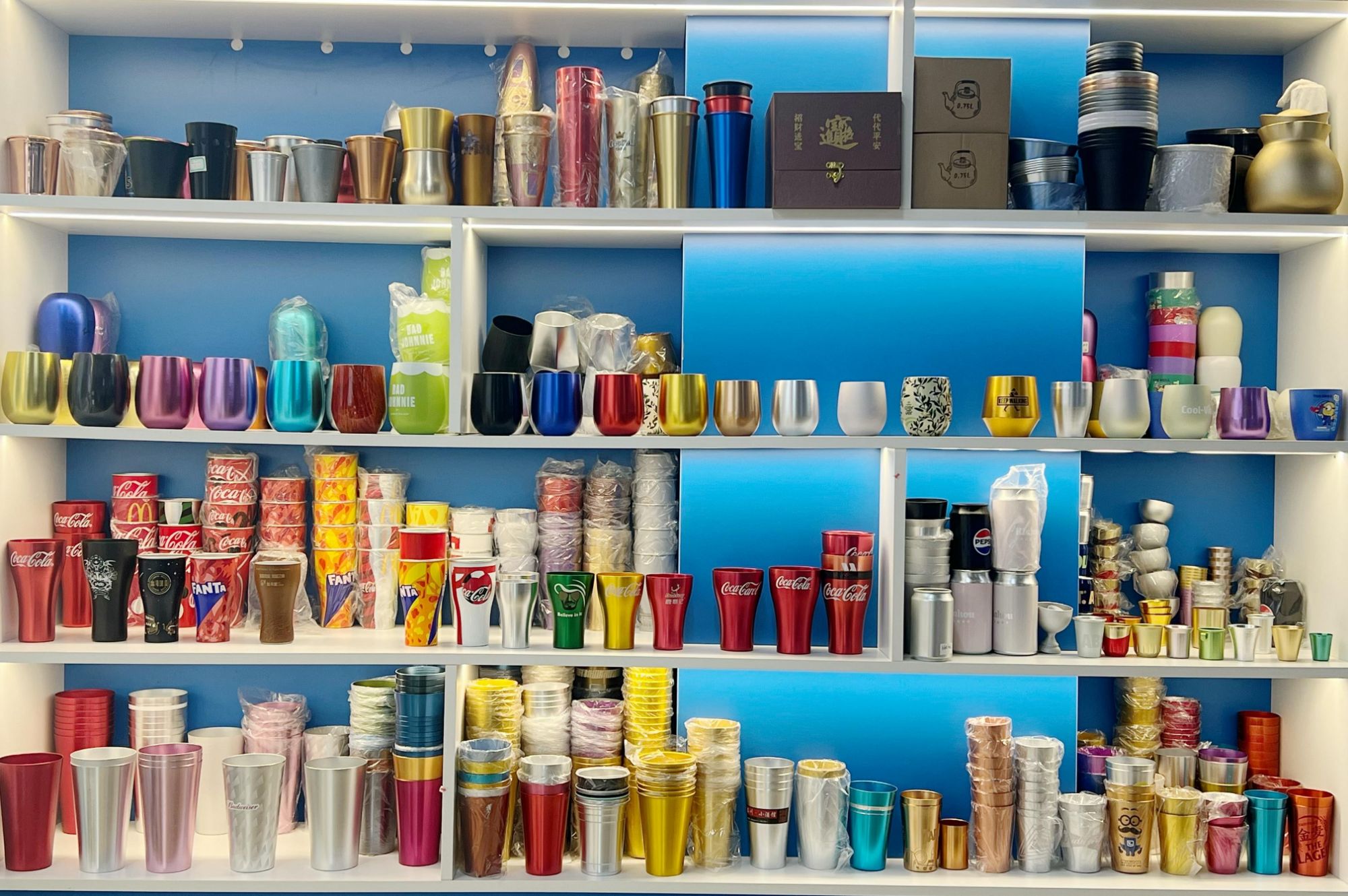
A factory floor tells you things that a spreadsheet never will. Before you put your name on any agreement, walk the production line slowly and watch how people move. Are operators reaching for tools that are already within arm’s length, or are they wasting steps? Is there a quiet rhythm to the work, or does the pace feel either frantic or half-asleep? Small details—scuffed floor markings, taped-up guards, handwritten labels on bins—often reveal whether the facility is truly maintained or just being dressed up for visitors.
Pay attention to how materials flow from receiving to shipping. A well-run floor has deliberate staging areas, clear visual signals for rework or rejection, and equipment that isn't buried under yesterday’s surplus. If you see pallets blocking exits, tools left on the floor, or operators improvising because fixtures are missing, that's not just clutter. It's a sign that processes are unstable and that your orders will likely face the same bottlenecks.
Most importantly, talk to the people on the line—not just the managers—and ask what slows them down. Their answers, or their hesitation to answer, will tell you more about the factory’s real culture than any audit report. If the floor is clean, the operators are engaged, and the work-in-progress moves in a predictable way, you're looking at a partner who can likely keep promises. If not, signing now could mean inheriting their chaos later.
Beyond the Logo: Coating, Engraving, and Texture Options
A logo might start the conversation, but the surface is what people remember when they touch the product. Coatings, engraving, and texture give a design physical depth that a printed mark simply cannot match.
Coatings range from soft-touch finishes that reduce fingerprints to high-gloss layers that make colors appear deeper. Some coatings add scratch resistance, while others are purely tactile—inviting a hand to linger on the product before the eye even registers the brand.
Engraving and texture introduce a different kind of detail. A laser-etched pattern can catch light from certain angles, while a raised texture can subtly guide the user's grip. These choices often go unnoticed at first glance, yet they shape the entire experience of holding and using the item.
The Real Cost Drivers Behind a Custom Run
Most people assume the fabric itself is the biggest expense, but that's rarely true on a custom run. The real costs show up in the setup: pattern grading, sample making, and machine changeovers all happen before a single production piece is cut. For small batches, those fixed costs don't get spread across thousands of units, so even a simple garment can carry surprisingly high per-piece overhead.
Material minimums are another quiet budget killer. Mills often require you to buy far more yardage than you need, and specialty trims or custom-dyed fabrics come with their own order thresholds. If your design calls for a non-standard color or a unique zipper, expect to pay for the privilege of a short run — or get stuck warehousing leftover stock that may never get used.
Then there's the labor that doesn't scale. A run of fifty pieces still needs the same number of fittings, quality checks, and hand-finished details as a run of five hundred, but there's no volume discount on human time. Add in back-and-forth revisions or last-minute spec changes, and the final cost can drift well past the original estimate — not because anyone is overcharging, but because custom work resists the shortcuts that mass production relies on.
Quality Checks That Separate Durable Tumblers from Disappointments
A tumbler can look flawless on a shelf and still fail within a week. The first check that catches weak builds is a simple drop from counter height onto concrete, repeated across several angles. If the lid pops off, the base deforms, or the vacuum seal hisses, it gets pulled from the batch. Good manufacturers also weigh each unit before and after filling to spot micro-cracks that leak insulation without leaving a visible mark.
Beyond the drop test, a thermal retention check over six hours separates real insulation from thin-walled pretenders. Ice water should stay cold with minimal condensation, while hot coffee shouldn't scorch the outer shell. Finally, the lid gasket gets stretched and compressed hundreds of times to ensure it keeps a tight seal after months of daily twisting, not just on day one.
Lead Times, Minimum Orders, and Freight Without the Guesswork
We publish real lead times for every item, not optimistic estimates. When a fabric is listed as 3–5 business days, that number comes from the mill's latest production schedule, not a generic promise. You'll see exactly when your order enters cutting, sewing, and packing, with updates if a material batch runs late.
Minimum order quantities are tiered by product type and material width, so you're never forced to buy more than what makes sense for a single project. For custom-dyed textiles, the minimum can be as low as 10 yards, while stock upholstery fabrics often start at 2 yards. Everything is shown before checkout, including any per-color setup fees.
Freight is calculated from dimensional weight and your delivery ZIP code, using live carrier rates. Choose between ground, LTL, or white-glove service, and see the cost for each before you commit. No hidden fuel surcharges, no "call for quote" dead ends — just the actual price to get your fabric to the dock or your studio door.
FAQ
Focus on their production capabilities, material sourcing, and whether they can handle your specific printing needs. A good factory will walk you through the entire process from blank to finished product, and they won't shy away from sharing details about their anodizing or powder coating lines.
Usually you start with a design file or even a rough sketch. The factory will help refine it for the tumbler's curved surface, produce a digital mockup, and then create a physical sample before mass production. Expect a couple of back-and-forth rounds to get the color and placement just right.
It varies, but many OEM factories set the MOQ around 500 to 1000 units per design. Some smaller workshops might accept 300 pieces if you're flexible on colors, while larger high-volume lines might require 3000 or more to get the best unit pricing.
Laser engraving gives a premium, permanent look and works great for logos. Full-color wraps are better for photo-realistic designs, while screen printing is a cost-effective choice for simple one- or two-color logos on bulk orders. The right method depends on your design complexity and budget.
After sample approval, production generally takes 20 to 35 days depending on order size and decoration complexity. Shipping adds another week or two if coming by sea. Always ask the factory to factor in a buffer for holidays or material shortages.
Yes, most established factories have in-house design teams. They can take a basic concept, suggest colors that match current trends, and adjust the artwork to fit the tumbler's dimensions without distortion. This service is often included or available for a small fee.
Conclusion
A tumbler starts as flat aluminum sheet, but the gap between a basic cylinder and a shelf-ready product is where most factories reveal their true capability. Deep drawing, trimming, and welding create the raw shape; polishing and surface preparation decide whether a coating will bond or peel after six months. Before committing to any OEM partner, walk the floor and look beyond the sample table. Check whether tooling is maintained or patched, whether workers follow the same steps for every batch, and whether in-process gauges are actually used. A factory that cannot explain how it controls wall thickness and weld consistency will struggle to repeat your order six months later.
Customization extends well past a printed logo. Powder coating, anodizing, laser engraving, and tactile textures each carry different tooling needs, minimum quantities, and failure points. The real cost drivers are rarely the raw aluminum; they come from coating complexity, order volume, and how many times a part must be handled between stations. Ask for proof of durability testing—vacuum retention after thermal shock, lid fit after repeated drops, engraving sharpness after dishwasher cycles. Finally, pin down lead times and freight terms before you fall in love with a quote. A low unit price means little if the factory requires a 10,000-piece minimum, ships on FOB terms that hide port fees, and cannot hold a promised 30-day production window.
Contact Us
Contact Person: Milo
Email: [email protected]
Tel/WhatsApp: +86 18621923991
Website: https://www.dgbaide.com