

Nickel Alloy Steel Manufacturer Expertise for Demanding Industrial Applications
2026-10-28
When a refinery valve fails or a turbine blade cracks under stress, material selection becomes the difference between safe operation and costly downtime. That's precisely why demanding industrial applications require more than a generic supplier—they demand real nickel alloy steel manufacturing expertise. Jiangsu Baowu New Materials brings that depth of knowledge to every order, from alloy selection to final testing. In this article, we'll examine what genuine expertise entails and how it protects your most critical assets.
Alloy Selection That Thrives Where Standard Steel Fails
In environments where standard steel quickly surrenders to corrosion, abrasion, or extreme temperatures, the right alloy selection becomes the difference between costly downtime and uninterrupted operation. Generic carbon steels may look economical on paper, but their hidden costs emerge in frequent replacements, unplanned maintenance, and production losses. By carefully mapping the specific failure mechanisms—whether chloride pitting in marine atmospheres, sulfidation in high-sulfur process streams, or stress corrosion cracking under tensile loads—engineers can shortlist alloys that resist those exact threats rather than relying on a one-size-fits-all upgrade.
The real advantage surfaces when material selection moves beyond simple hardness or tensile ratings. A duplex stainless, for instance, combines the toughness of austenite with the strength of ferrite, offering roughly twice the yield strength of standard 316 stainless while maintaining excellent weldability. In wet sour service, nickel-based alloys like 625 or C-276 outperform even super duplex grades where hydrogen sulfide and chlorides coexist. For high-temperature oxidation, iron-chromium-aluminum (FeCrAl) alloys form a self-healing alumina scale that shrugs off cyclic heating in ways conventional stainless cannot.
Yet alloy selection is not merely a metallurgical exercise—it is a strategic balance of initial cost, fabrication constraints, and life-cycle performance. A slightly more expensive alloy that eliminates a recurring failure point often pays for itself within months through reduced labor and eliminated shutdowns. The key is to test candidate materials under the actual service conditions, including temperature gradients, pH swings, and mechanical loading, because laboratory corrosion data alone rarely tells the full story. When standard steel fails, the answer is not thicker steel but smarter alloy chemistry matched to the precise operating reality.
Precision Forging and Heat Treatment for High-Stress Parts
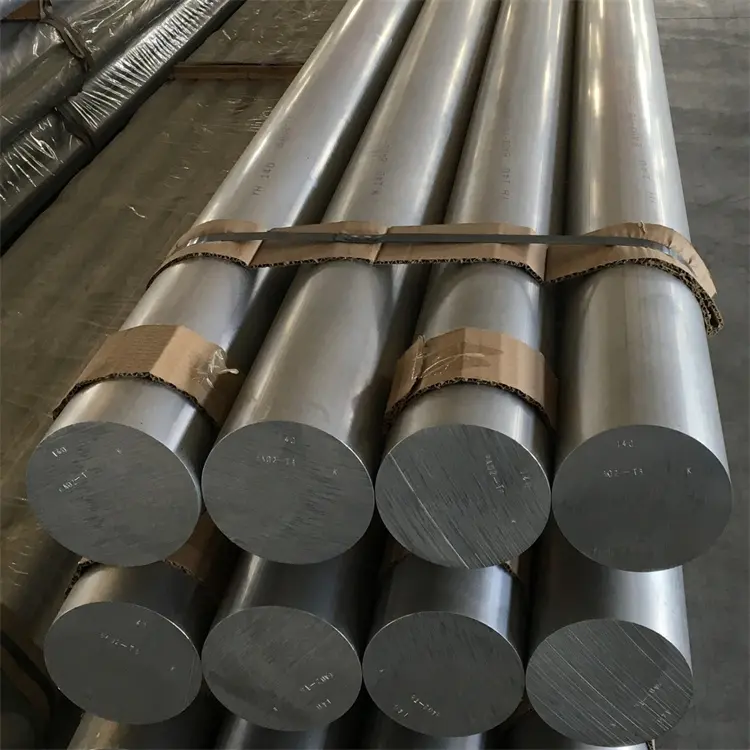
Manufacturing components that must endure extreme loads demands more than just selecting a strong alloy. Precision forging shapes the metal's internal grain flow to follow the part's contours, eliminating weak points that machining alone would leave behind. This directional strength is critical for parts like turbine blades, connecting rods, and landing gear components, where a sudden failure is not an option. By applying controlled pressure at elevated temperatures, the material's microstructure becomes denser and more uniform, allowing the part to withstand cyclic stresses far beyond what cast or conventionally machined equivalents can handle.
Heat treatment then refines the forged blank into a component with a tailored balance of hardness, toughness, and residual stress relief. Processes such as quenching and tempering are tuned to the specific alloy and geometry, ensuring that the surface resists wear while the core retains ductility. For high-stress applications, a poorly executed heat treatment can introduce micro-cracks or unwanted distortion, negating the benefits of forging. That is why precise temperature ramps, soak times, and cooling rates are monitored with tight tolerances, often using vacuum or controlled-atmosphere furnaces to prevent oxidation and decarburization.
The real advantage emerges when both steps are treated as a single engineering system. A part forged with the right amount of deformation and then heat-treated to a targeted hardness profile will outlast a component that only meets the same tensile strength on paper. This integrated approach also allows designers to reduce section thickness and overall weight without sacrificing safety margins. In industries where downtime or failure carries enormous cost, the combination of precision forging and carefully controlled heat treatment is often the difference between a part that merely passes inspection and one that performs reliably for decades under punishing conditions.
Corrosion Resistance by Design, Not by Accident
Corrosion rarely announces itself until a structure has already paid the price. That is why material selection, joint geometry, drainage paths, and coating compatibility are settled before the first fabrication drawing leaves the office. A crevice that holds moisture, a fastener that creates a galvanic cell, a coating specification copied from a different climate—each one is a decision, not a surprise.
The approach shifts the burden from inspection and repair toward prevention. Engineers map exposure conditions across the asset's service life, model corrosion rates for candidate alloys, and require full-scale cyclic tests when the environment is aggressive. Protective systems are then specified with defined maintenance intervals, not vague promises. The result is a structure that resists corrosion because every relevant parameter was chosen to do exactly that.
Field-Proven Performance in Petrochemical and Power Generation
Across ethylene crackers, hydrotreaters, and gas turbine fuel systems, the equipment that lasts isn't the one with the most impressive spec sheet—it's the one that keeps running when feedstock swings, steam pressures drift, and maintenance windows shrink. The components we supply for these lines have been hardened against chloride stress corrosion, high-temperature sulfidation, and thermal cycling that would push standard alloys past their limits. In one power plant running combined-cycle units, our valve trim and pump wear rings logged over 40,000 hours before the first scheduled replacement, with no unplanned downtime traced to material degradation.
That kind of record comes from selecting materials for the actual failure modes, not just the design temperature. In petrochemical service, we've seen carbon steel impellers lose wall thickness within months when trace acids concentrate in dead legs; by switching to a duplex stainless with controlled ferrite content and adding a short post-weld heat treatment, the same part now outlasts the turnaround cycle by a factor of three. For gas turbine fuel nozzles and liquid fuel purge systems, coking deposits and thermal fatigue are the usual killers. Here, the solution isn't exotic—it's a tighter surface finish, a revised flow path to reduce stagnant zones, and an alloy with better resistance to sigma phase embrittlement at sustained operating temperatures.
Field data from both sectors shows that most premature failures aren't caused by a single catastrophic event, but by the accumulation of small deviations: a few extra parts per million of H2S, a 15°C excursion during startup, a slightly delayed chemical injection. That's why the components are built with margins that account for real operating reality, not just ISO design points. It's not about overengineering for the sake of it—it's about knowing that in a hydrocracker or a peaker plant, the cost of a shutdown dwarfs any savings from a lighter, cheaper part.
Testing Protocols That Replicate Real-World Abuse
Most standardized tests fall short because they apply loads in clean, predictable cycles that have little in common with how products actually get beaten up in the field. To fix that, our protocols start with teardown data from failed units, warranty claims, and user-reported damage patterns. We then recreate those exact failure signatures under controlled conditions—whether that means twisting a phone inside a pocket, dragging a power tool across concrete, or exposing outdoor gear to alternating UV, salt fog, and thermal shock. The goal is not to pass a spec sheet but to make the lab match the scrapyard.
Building these protocols requires treating abuse as a measurable input rather than an accident. Engineers log everything from drop angles and grip positions to the types of debris commonly found in work boots or backpacks. They also run accelerated tests that compress years of wear into days, but only after verifying that the accelerated failure mode matches the real-world one. For example, a cable that frays near the connector in the field should fray the same way in the test rig, not snap in the middle from an unrealistic pull force.
The payoff shows up in fewer surprises after launch. Because the protocol reproduces genuine abuse, weak points emerge early enough to reinforce or redesign. This approach also gives production teams a repeatable benchmark, so a supplier change or material swap can be evaluated against the same brutal conditions. The lab still is not a perfect mirror of reality, but it is close enough that most failures caught there would have happened anyway, just later and at greater cost.
Custom Alloy Formulations for Unusual Operating Envelopes
Pushing materials beyond their standard ratings often means abandoning off-the-shelf alloys altogether. A pump impeller that must survive sour gas at 180°C while resisting chloride pitting, for instance, won't tolerate the usual nickel-based fallback if its molybdenum content sits just under the threshold. Custom formulations step in here—not as minor tweaks to a well-known chemistry, but as deliberate rebalancing of key elements like chromium, molybdenum, tungsten, and nitrogen to shift the pitting resistance equivalent number without sacrificing weldability or toughness.
The real difficulty lies in mapping an alloy's performance across a multidimensional envelope where temperature, pressure, pH, and contaminant load all interact. A duplex stainless that holds up beautifully in a refinery's hot hydrogen stream might crack within weeks in a subsea connector exposed to cathodic protection and fluctuating oxygen levels. Instead of relying on single-point corrosion data, we build compositional matrices and run small-batch melts through accelerated exposure tests, then correlate the microstructural response with thermodynamic simulations. That iterative loop often reveals an unexpected sweet spot—for example, a leaner nickel content that improves stress corrosion cracking resistance when paired with a carefully controlled nitrogen addition.
Fabrication constraints are just as critical as chemistry. An exotic martensitic stainless with perfect corrosion resistance is useless if it cannot be welded without forming brittle intermetallics or if its hot working window is too narrow for the required forging shape. So the formulation work extends to defining heat treatment cycles, welding consumables, and even surface finishing steps that preserve the alloy's designed-in passive layer. The end result is less about a heroic single-alloy breakthrough and more about a documented, reproducible pathway from lab-scale ingot to a component that refuses to fail on someone else's watch.
FAQ
It holds up under high heat, pressure, and corrosive chemicals without losing structural integrity. That's why you see it in refinery piping and turbine parts that can't afford premature failure.
They rely on vacuum induction melting, controlled forging, and ultrasonic or dye-penetrant testing. Any inclusions or micro-cracks are caught before the material leaves the plant.
Offshore oil and gas, chemical processing, power generation, and aerospace. Typical parts include valve bodies, heat exchanger tubes, and compressor shafts.
Yes. A capable producer will adjust the nickel-chromium-molybdenum balance, refine grain size through heat treatment, and machine to precise tolerances based on the specific acids, temperatures, or stress levels involved.
Metallurgists on staff, traceability from melt to final inspection, and the ability to supply smaller runs of non-standard grades without long delays.
Higher nickel generally improves resistance to stress corrosion cracking and reducing acids, but it must be balanced with chromium and molybdenum. The right ratio depends on the exact chemical mix and temperature range.
Look for ASME or ISO certifications, ask about in-house mechanical testing, and request case studies from similar service conditions rather than relying on generic claims.
Conclusion
Manufacturing nickel alloy steel for demanding industrial environments requires more than just metallurgical know-how—it demands a deep understanding of where standard materials break down. Our approach starts with alloy selection that thrives under extreme heat, pressure, and chemical exposure, followed by precision forging and heat treatment tailored to high-stress components. Corrosion resistance isn't left to chance; it is engineered into every batch through controlled composition and processing. From petrochemical reactors to power generation turbines, our components have demonstrated field-proven reliability in the harshest operating conditions.
What sets us apart is our rigorous testing protocols that replicate real-world abuse—thermal cycling, stress corrosion cracking, and mechanical fatigue—before any part leaves the facility. When off-the-shelf alloys fall short, we develop custom formulations for unusual operating envelopes, adjusting nickel, chromium, molybdenum, and trace elements to match specific service requirements. This combination of hands-on experience and adaptive manufacturing ensures that our nickel alloy steel components not only meet but exceed expectations in critical applications where failure is not an option.
Contact Us
Contact Person: Zoe Liang
Email: [email protected]
Tel/WhatsApp: 86 189 2128 6299
Website: https://www.jycomat.com