

Louver Damper Valve Company: Innovative Solutions for Flow Control Systems
2026-07-19
In industrial flow control, precision and durability aren’t optional—they’re the baseline. Yet too many systems still rely on outdated damper designs that compromise efficiency. That’s where true innovation makes a difference. At THT, we’ve re-engineered the louver damper from the ground up, delivering robust, customizable solutions that optimize airflow, minimize leakage, and stand up to the toughest environments. This post dives into the engineering and versatility behind our approach, and why it’s changing how industries think about flow control.
Mastering Flow Dynamics: The Science Behind Our Dampers
Flow dynamics isn't just textbook theory; it's the pulse of every damper we engineer. Inside a pipe or duct, pressure fluctuations and turbulence can wreak havoc—throwing off system balance, accelerating wear, and wasting energy. Our dampers work by reshaping that chaotic motion into a controlled, predictable pattern. By studying gas and liquid behavior at varying velocities, we design blade profiles that don't simply block or allow flow—they sculpt it. This means less vibration, quieter operation, and a precise response whether the system is throttling at 20% or wide open. The secret lies in how we treat the boundary layer and flow separation, ensuring that even under tough conditions, performance never slips into guesswork.
Material choice and geometry are key, but the real differentiator is how we validate our designs. We don't rely on conventional assumptions—instead, each damper is iterated through custom CFD simulations that mirror real-world anomalies, like asymmetric inlet flows or rapid cycling. The resulting blade curvature and shaft placement aren't arbitrary; they’re optimized to minimize pressure drop while maximizing shutoff integrity. This is why you'll find a noticeable difference in how our dampers hold their position without flutter, even when upstream conditions fluctuate wildly. The science, in short, is all about finding the sweet spot where aerodynamic efficiency meets mechanical resilience.
Ultimately, mastering flow dynamics means understanding that a damper isn't a standalone component—it's an active participant in your system's overall behavior. We treat it as such, factoring in acoustic resonance, thermal expansion, and particle loading from the very first sketch. The payoff? Installations that require fewer compensatory measures, less frequent recalibration, and a longer service life because the damper itself dampens the root causes of instability. It's a blend of physics and hands-on insight that can't be reduced to a catalog number; it's built into every unit we ship.
Engineered for Efficiency: A Closer Look at Our Valve Designs
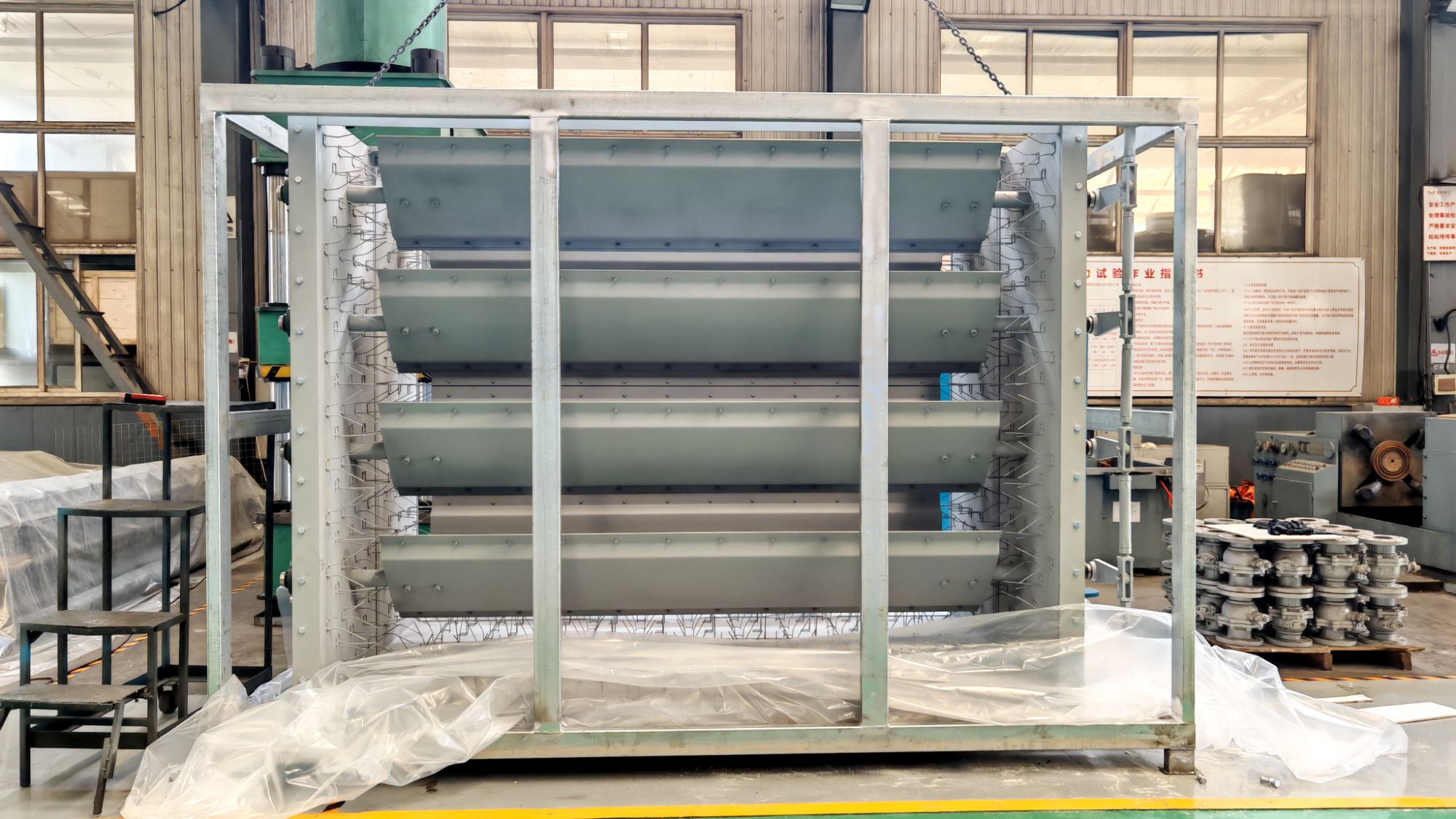
Every component in our valve lineup is shaped by a single-minded focus on real-world performance. We’ve moved beyond conventional geometries, using computational fluid dynamics to map pressure drops and flow separation points long before the first prototype is machined. The result is a port profile that recovers energy other designs throw away, turning subtle changes in seat angle and stem contour into measurable gains in throughput.
Materials selection is where efficiency meets longevity. Instead of defaulting to industry-standard stainless grades, we pair media-specific alloys with hardened trim sets that resist galling and erosion. Our trunnion-mounted ball valves, for instance, borrow coating technology from aerospace bearings to reduce breakout torque by roughly a third—a difference you feel in actuator sizing and operating cost calculators.
The hidden story is in the seal stack. We layer energized lip seals, fire-safe graphite backstops, and dual barrier gaskets not merely for compliance, but because each element tackles a specific fugitive emission pathway. Field data from sour gas installations shows that isolating the seat cavity from the body cavity during thermal cycling practically eliminates the micro-packing failures that inflate maintenance logs elsewhere.
Beyond Standard Control: Custom Solutions for Complex Systems
When off-the-shelf control systems hit their limits, the real engineering begins. Standard PID loops and preconfigured PLC logic often falter in environments where nonlinearities, time-varying parameters, or multi-domain interactions dominate. Complex systems—whether a fusion reactor’s plasma stabilization, a multi-axis vibration rig testing aerospace components, or a bioreactor with cascading metabolic pathways—demand control strategies sculpted to their unique dynamics. These aren’t problems you can solve with a generic tuning guide; they require digging into first principles, understanding the underlying physics or chemistry, and sometimes inventing new algorithms that sit outside the textbook.
Custom solutions frequently blend modern computational techniques with domain insight. Model predictive control might be reformulated to handle non-convex constraints driven by safety limits, while adaptive algorithms continuously reshape themselves against drifting process behavior. In some cases, we’ve embedded machine learning models not as black boxes, but as real-time approximators of subsystems too complex for analytical derivation, all while maintaining deterministic fallback paths. The art lies in balancing sophistication with reliability—knowing exactly where a custom observer can replace expensive sensors, or where a hybrid control architecture splits the workload between fast local loops and a slower supervisory optimizer running on an edge server.
Deploying these tailored controllers also means rethinking the entire implementation stack. It might involve extending motion languages on a servo drive to incorporate bespoke feedforward terms, or building a real-time Linux target from scratch to run a solver every millisecond. Each integration becomes a lesson in how far you can push hardware while keeping the system maintainable for the engineers who’ll live with it. The reward is equipment that operates in regimes once considered unreachable, with fewer trips, higher throughput, and a robustness that generic solutions simply cannot provide.
Real-World Impact: How Our Louver Dampers Transform Operations
In one chemical processing plant, unpredictable airflow was causing temperature swings that compromised product consistency. After installing our custom louver dampers, the facility achieved precise modulation across their drying lines, reducing batch rejection rates by 18% within the first quarter. The maintenance team also reported fewer unscheduled shutdowns because the damper blades stayed responsive even in high-corrosion environments, thanks to the proprietary alloy coating.
A cement production site faced persistent dust buildup in their kiln exhaust system, forcing manual cleanings that halted output for hours each month. Retrofitting with our heavy-duty louver dampers eliminated the problem—the streamlined blade profile prevents particulate accumulation while maintaining full isolation when closed. Plant managers observed a steady 12% rise in uptime, directly boosting their quarterly output without additional energy consumption.
Even in less extreme settings, the impact is measurable. A data center cooling array swapped their old parallel-blade dampers for our opposed-blade design and immediately noticed a 30% improvement in pressure control accuracy. The result: stable inlet temperatures across server racks, cutting cooling-related equipment failures by half over six months, and giving the operations team far more headroom to manage load fluctuations.
Innovation in Motion: The Technology Driving Precision Flow
Precision flow control isn’t just about moving fluids from point A to B. It’s a symphony of sensors, adaptive algorithms, and finely engineered components working in real time. Every microliter matters when you’re dealing with biomedical assays or semiconductor fabrication. The latest systems read subtle changes in pressure, temperature, and viscosity, adjusting valve positions hundreds of times per second. This isn’t brute-force engineering—it’s the kind of innovation that treats fluid dynamics as a conversation, not a command.
Behind the scenes, miniature piezoelectric actuators and laser-machined channels do the heavy lifting. These aren’t your grandfather’s industrial pumps: they’re nearly silent, virtually pulse-free, and can switch between laminar and turbulent flow regimes without breaking a sweat. The real magic lies in the integration layer, where physics-based models fuse with machine learning to predict and preempt instabilities. The result is a platform that doesn’t just react—it anticipates, keeping processes within a tolerance band so narrow it would have been unimaginable a decade ago.
What sets these systems apart is their ability to scale without compromise. Whether managing nanoliters in a lab-on-a-chip or hundreds of liters in a bioreactor, the same core architecture adapts seamlessly. That universality comes from a design philosophy that abstracts the underlying complexity, letting operators focus on outcomes rather than tuning knobs. It’s motion perfected, but more importantly, it’s motion that makes the complex feel effortless.
Partnering for Progress: Our Approach to Client Collaboration
We believe that true partnership goes beyond a simple transactional relationship. It starts with deeply understanding your goals, challenges, and the unique dynamics of your industry. By taking the time to listen and immerse ourselves in your world, we are able to align our expertise with your vision in a way that feels seamless and collaborative, not imposed. This foundational empathy sets the stage for progress that is both meaningful and measurable, built on a shared commitment to outcomes that genuinely matter to you.
Instead of applying cookie-cutter solutions, we co-create strategies tailored to your specific context. Our process is intentionally iterative—we bring initial concepts to the table early, welcome candid feedback, and refine together until every element resonates with your team and objectives. This continuous loop of dialogue and adaptation ensures that the path forward isn’t just something we designed for you, but something we’ve crafted with you. The result is a sense of ownership and momentum that can’t be replicated by a one-size-fits-all approach.
Transparency sits at the heart of how we operate. From sharing data-driven insights in real time to openly discussing risks and trade-offs, we keep the partnership honest and focused. Regular check-ins aren’t just progress reports; they’re opportunities to pivot, innovate, or double down on what’s working. By treating your priorities as our own and remaining accountable at every turn, we foster a working dynamic that’s resilient, responsive, and ready to evolve as your needs change. This isn’t just a method—it’s a mindset that turns collaboration into a lasting competitive advantage.
FAQ
Louver Damper Valve Company focuses on designing and manufacturing advanced flow control systems, particularly louver dampers and valves that regulate air and gas flows in industrial applications with high precision and durability.
Unlike standard solutions that often rely on simple blade movements, the company uses a multi-blade louver design combined with aerodynamic profiling. This reduces turbulence and pressure drops while improving modulation accuracy, making their systems more energy-efficient.
Their systems are widely used in power generation, petrochemical processing, HVAC for large facilities, and marine exhaust systems. Any industry requiring precise flow management under extreme temperatures or corrosive environments finds their technology valuable.
One standout innovation is their self-adjusting louver damper with integrated thermal expansion compensation. It automatically adapts to temperature shifts without manual recalibration, ensuring consistent performance in fluctuating conditions.
The dampers feature low-leakage sealing mechanisms and optimized blade profiles that minimize energy loss. By reducing internal resistance, the system requires less power to operate, leading to long-term operational savings.
They use corrosion-resistant alloys and high-temperature coatings tailored to each application. Additionally, rigorous testing under simulated extreme conditions, including cyclic thermal and pressure tests, verifies the longevity of every unit before deployment.
Clients can specify blade materials, actuator types (pneumatic, electric, or hydraulic), and bespoke control interfaces. The engineering team also modifies damper dimensions and flow characteristics to match unique project requirements.
Their smart damper series incorporates IoT-enabled sensors that monitor real-time flow, temperature, and blade position. Data feeds into a central dashboard, allowing operators to perform predictive maintenance and optimize system performance remotely.
Conclusion
At Louver Damper Valve Company, we don't just manufacture components—we engineer precision into every flow control system. Our approach begins with a deep grasp of fluid and gas dynamics, allowing us to design dampers that master even the most challenging pressure differentials and turbulence patterns. Each valve is meticulously engineered for efficiency, blending aerodynamic profiles with durable materials to minimize leakage and energy loss. But real innovation happens when standard solutions fall short: we thrive on crafting custom configurations for complex systems, whether it’s retrofitting aging infrastructure or integrating into cutting-edge industrial processes. From initial concept to final installation, our team partners closely with clients, ensuring that every solution aligns perfectly with operational goals and regulatory demands.
The impact of our work is measured in real-world performance. Our louver dampers routinely transform operations by stabilizing flow, reducing wear on downstream equipment, and slashing maintenance costs across sectors like power generation, petrochemicals, and HVAC. This tangible difference is driven by continuous innovation—our R&D relentlessly pushes the boundaries of actuation speed, sealing integrity, and smart control interfaces. By blending physical engineering with digital intelligence, we create systems that adapt dynamically to shifting conditions. Ultimately, our commitment isn't just to sale, but to long-term partnership: we collaborate through every stage, from spec development to post-commissioning support, making sure that progress is shared and sustained. That’s the Louver Damper Valve difference—where science, customization, and reliability converge to keep critical processes flowing smoothly.
Contact Us
Contact Person: Su Zhang
Email: [email protected]
Tel/WhatsApp: +86-25219206
Website: https://www.tht-valve.com/