

Leading Flexo Printing Machine Maker for Efficient Packaging Production
2026-11-16
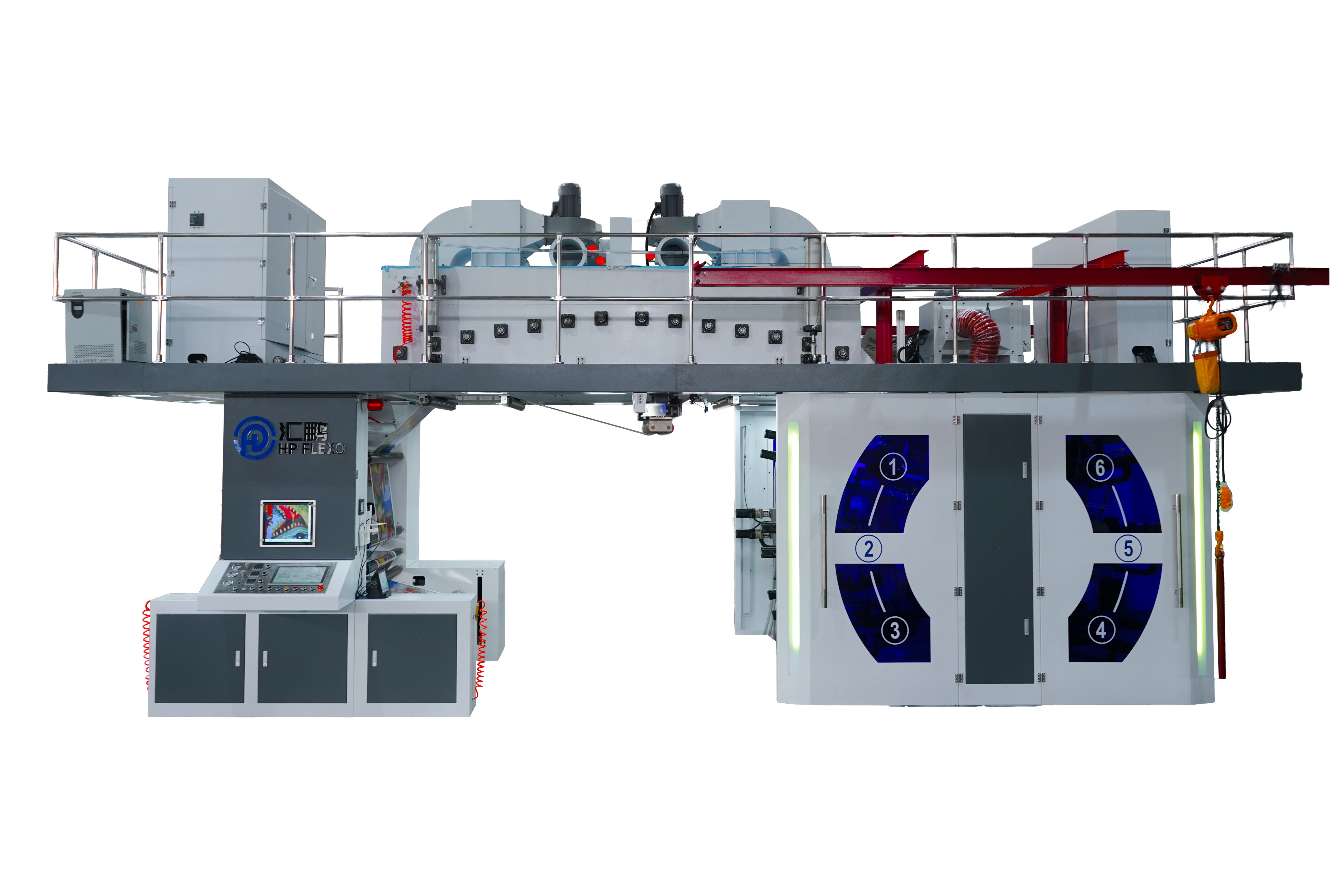
In the fast-paced world of packaging, every second counts—and so does every print. For converters chasing higher output without sacrificing quality, the choice of flexo press can make or break the line. That's where HuiPeng comes in. As a leading flexo printing machine maker, HuiPeng has spent years refining precision engineering and smart automation to keep production flowing smoothly. But what exactly sets their machines apart? In this post, we'll dig into the features and real-world advantages that make HuiPeng a go-to name for efficient packaging production.
Inside the Engineering That Keeps Flexo Presses Running Longer
Flexo presses endure relentless vibration, ink mist, and thermal cycling, yet many operators overlook the quiet engineering choices that stretch service intervals. The frame isn't just a box of steel; its ribbing pattern and weld sequencing are tuned to damp harmonics that would otherwise fatigue doctor blade chambers and bearing housings. When you see a press that still holds register at 800 feet per minute after a decade, that stability started on the drawing board with finite element analysis of every load path.
Gear trains and impression rolls get most of the attention, but the unsung heroes are often the small things: the compound-angle wiper seals that keep solvent out of linear rails, the hard-coat anodizing on plate cylinder journals that prevents fretting corrosion, and the automatic lubrication metering that delivers a fraction of a gram exactly when a cam follower needs it. These aren't accessories; they're the difference between a press that needs a weekend rebuild every quarter and one that runs through three holiday seasons with only routine maintenance.
Materials selection matters more than horsepower. A carbon-fiber idler roll with engineered flex can eliminate a standing wave that slowly chews through bearings, while a proprietary elastomer on the anilox roll locking collar absorbs torque spikes that would otherwise shear keys. The best flexo presses don't just survive harsh conditions—they redirect that stress into harmless heat or elastic deformation, turning what would be a breakdown into background noise.
Why Changeover Speed Matters More Than Top Print Speed
When manufacturers compare 3D printers, the first number they look at is usually the maximum print speed. It's an easy figure to latch onto, and marketing teams love to highlight it. But anyone who has spent time on a production floor knows that the headline number rarely reflects real throughput. What actually determines how many parts you can ship by Friday is how long the machine sits idle between jobs.
Consider a typical small-batch workflow. You finish a run of twenty brackets, swap the filament, re-level the bed, wait for the nozzle to purge, and only then start the next job. If that changeover eats up twenty minutes, a printer that runs twice as fast during the actual build still only gains you a few minutes per batch. Meanwhile, a slower machine that can be reloaded and recalibrated in under five minutes will outproduce it across a full shift.
That's why changeover speed is the quiet champion of print farm profitability. It's not about how fast a single toolhead can trace a path; it's about how rarely the printer sits still. A machine designed for fast material swaps, tool-free bed removal, and automatic first-layer calibration turns what used to be downtime into busy minutes. In the end, the spreadsheet doesn't care about your maximum speed setting—it only records completed orders.
Waste Reduction Starts With Smarter Registration Control
Registration errors in manufacturing often go unnoticed until excess scrap piles up. By tightening the alignment between stages, teams can catch drift before it turns into full-batch rejects. The result is less raw material wasted on misaligned cuts, prints, or assemblies.
Modern registration control doesn’t just lock in a set point—it learns from slight variances and adjusts in real time. That means fewer overruns and less need for rework. Smarter sensors and feedback loops keep every pass within tolerance, so the line produces only what meets spec.
When operators trust the registration system to flag minor deviations early, they stop running extra buffer stock or overproducing to hedge against defects. Waste drops not because of luck, but because stability is built into each stage.
The Operator's View: Ergonomics and Quick Access on the Line
Every shift on the line teaches you the difference between a reach that feels natural and one that costs you seconds with every cycle. The placement of tools, the height of the work surface, the angle of the display—these aren't just design details, they're the quiet architecture of fatigue or flow. When the most-used controls sit within a relaxed arm's arc and the secondary functions don't force a twist or a stretch, your attention stays on the work itself instead of leaking into constant micro-adjustments.
Quick access isn't about cramming more buttons into reach; it's about understanding which actions actually happen together, and letting that rhythm shape the layout. A well-placed lever or a thoughtfully angled touchscreen can turn a three-move sequence into one smooth motion. Operators will always find workarounds for awkward design, but those workarounds become silent friction—small hesitations that accumulate over hundreds of cycles into real strain and slowed throughput.
The best line setups feel almost invisible after a while: your hands know where to go before your eyes fully register the task. That's not luck. It's the result of watching real operators, noting where they naturally pause and pivot, and then removing every unnecessary inch between intention and action. Ergonomics on the line isn't a luxury or a compliance box—it's the practical difference between a team that ends the day tired but capable and one that's already running on borrowed motion.
Maintaining Color Consistency Across Long Packaging Runs
Color drift in long packaging runs rarely announces itself. It creeps in through subtle variables—ink temperature rising on a rotary press, solvent evaporation shifting viscosity, a batch of board stock with slightly different absorbency. If operators rely on periodic visual checks, the shift can go unnoticed until a reel is already split, sleeved, and on a pallet. A tighter approach is to lock down measurable inputs before the run begins: confirm anilox volume, set pH and viscosity windows for flexo inks, and standardize the white point of the substrate under the same lighting used for approval.
During the run, sample at intervals tied to real risk points rather than a fixed clock. The first 500 meters after a splice or a new ink bucket often causes more variation than the previous three hours combined. Pull sheets at those transitions, measure delta E against the approved target, and record the results in a simple trend chart. This makes it easier to see when a correction is needed before it becomes visible to the eye.
If the job spans multiple shifts, assign one person to own the color target and make small adjustments only within a defined tolerance. Document any press speed changes, fountain solution additions, or dryer tweaks next to the samples. Over time, those notes become the run's color history—useful for the next repeat order and for spotting recurring drift patterns that equipment settings alone won't reveal.
Adapting Flexo Lines to Thinner Substrates and Lighter Materials
Running thinner films and lighter papers through a flexo press isn't a simple swap—it changes the physics of the whole run. Web tension has to drop dramatically, or the substrate will stretch, wrinkle, or tear at every turn bar. Operators who have spent years dialing in tension for standard board stock often discover that their usual settings are nearly useless here. Instead of relying on feel, you need to monitor dancer roller position and edge guide corrections in real time, adjusting nip pressures and rewind torque almost continuously. Even small inconsistencies in roll hardness or splice alignment become magnified when the material is half the caliper.
Plate and anilox choices also need a rethink. A thinner substrate transfers less cushioning to the printing nip, so soft mounting tape that worked fine before may now cause dot gain or plate lift. Switching to a firmer tape and a finer anilox cell count helps hold fine text and halftones without crushing the material. Drying capacity becomes a bottleneck too—lighter films absorb less solvent or water, so inks sit on the surface longer. That means lower viscosities and higher air flow are necessary to avoid blocking or offset in the rewind. Some converters add a chilled roller after the last dryer to stabilize the web before it winds up.
Finally, don't overlook the unwind and splice unit. Thin webs are far less forgiving of abrupt speed changes during automatic splicing. Reducing the acceleration and deceleration ramps on the press can prevent snap-offs at the splice point. Many operators also find that switching to a zero-speed splicer, or at least retiming the existing one, eliminates a major source of waste. Ultimately, adapting a flexo line to these materials is less about buying new machinery and more about recalibrating every tension zone, every nip, and every drying parameter to match the new web's behavior.
FAQ
We focus on precision registration and consistent ink transfer, which keeps short-run and high-volume jobs moving without constant operator adjustments. The frames are built for stability, and the drying systems handle water-based and UV inks with equal reliability.
Many of our models are designed with quick-change plate sleeves and adjustable impression settings, so switching between thin films, labels, and light corrugated isn't a day-long ordeal. It's more about swapping anilox and sleeve combinations than rebuilding the machine.
Rather than just adding speed, we pay attention to makeready times and waste reduction. Automated register controls and pre-set job recipes let operators load a repeat order and be running within minutes, which matters more than a high top speed that's rarely reached.
Yes. We regularly adapt web widths, drying capacities, and unwind/rewind options based on whether someone is printing shrink sleeves, stand-up pouches, or folding cartons. The goal is to match the press to the converter's real job mix, not force a one-size-fits-all line.
We stay involved beyond commissioning. Our technicians typically spend extra days on the floor working with operators on tension control, plate mounting, and color matching. Remote diagnostics and stocked parts hubs in major regions also help avoid long downtime.
The newer dryer designs reclaim exhaust heat and adjust airflow based on substrate and ink coverage. That means you're not blasting full heat on a lightweight film job, which cuts energy use noticeably and also reduces the chance of curling or pinholing.
It depends on configuration, but a standard 8-color press with common options usually ships in about 18 to 22 weeks. Heavily customized lines with special dryers or inline finishing can take longer, and we give a clear schedule before you commit.
Conclusion
A flexo press built for packaging efficiency has to do more than run fast. The real advantage comes from how long it holds registration and how quickly it moves from one job to the next. On many converting floors, a machine that reduces changeover from forty minutes to twelve will outperform a faster press stuck on setup. That starts with smart engineering: rigid side frames, direct-drive servo motors, and automatic plate positioning keep the web stable and cut the waste typical of first impressions. Closed-loop registration systems read fine marks and adjust each deck in real time, which matters most when running thin films or lightweight substrates where tension changes quickly turn into misregister and scrap.
Operators benefit from front-side access to print decks, quick-change chambered doctor blades, and control panels that do not require walking back and forth. Those small ergonomic choices reduce fatigue and keep the line moving. Over long packaging runs, color consistency is managed through automated viscosity controls and inline spectrophotometers that flag drift before it becomes visible. The same press must handle thinner substrates without wrinkling or tearing, so tension zones are split into more precise segments and idle rollers are kept low-inertia. In combination, these details separate a leading flexo machine maker from commodity suppliers: the press is not just printing fast, it is staying predictable, reducing substrate waste, and adapting to lighter materials without operator guesswork.
Contact Us
Contact Person: Isaias
Email: [email protected]
Tel/WhatsApp: 86-13868693129
Website: https://www.hpflexo.com/