
Inside an Energy-Saving Air Compressor Factory: Cutting Costs Without Sacrificing Performance
2026-08-01
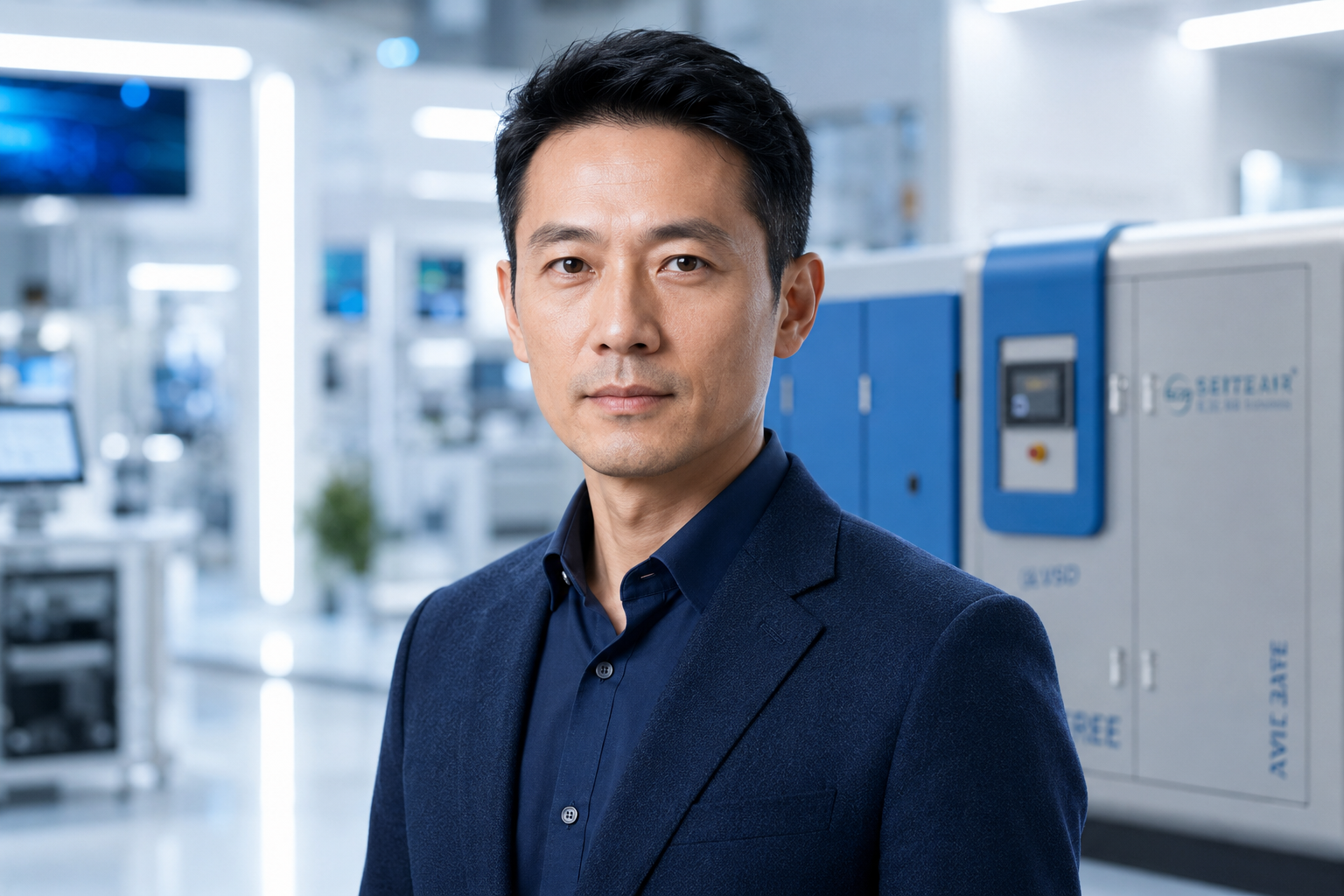
In the competitive world of industrial manufacturing, energy efficiency is no longer just a buzzword—it's a bottom-line necessity. At Seize Air, we've reimagined the air compressor not as a power-hungry workhorse, but as a smart, sustainable asset. Step inside our factory, and you'll discover how cutting-edge technology and meticulous engineering slash energy consumption without compromising the performance you depend on. This is the story of innovation that keeps your operations lean and your costs low.
The Silent Revolution: How Advanced Drive Systems Slash Energy Bills
In factories and commercial buildings around the world, a quiet transformation is underway. Motors—the workhorses behind pumps, fans, compressors, and conveyors—account for a staggering share of global electricity consumption. Traditional fixed-speed motors run at full throttle regardless of actual demand, wasting enormous amounts of energy. Advanced drive systems, by precisely matching motor speed to real-time load requirements, can cut energy use by 25% to 60% in many applications. This isn't a futuristic promise; it's a proven reality that's reshaping how industries approach their bottom line.
The magic lies in the electronics. Variable frequency drives (VFDs) convert incoming power to a variable frequency and voltage, giving operators exact control over motor speed. Instead of using mechanical throttling—like dampers or valves—that burns off excess energy as heat, VFDs electrically regulate the motor. The result is immediate and dramatic: a centrifugal pump running at 80% speed uses roughly half the energy of one running at full speed. When multiplied across hundreds of motors in a single facility, the savings cascade into millions of dollars annually, often paying back the initial investment within months.
Beyond the raw kilowatt-hour reduction, these systems bring secondary gains that are easy to overlook. Soft-start capabilities reduce mechanical stress, extending equipment life and cutting maintenance costs. Improved power factor reduces utility penalties. And because many drives now come with built-in intelligence and connectivity, facility managers gain granular visibility into energy patterns, enabling ongoing optimization. In an era of volatile energy prices and intensifying sustainability mandates, advanced drive systems aren't just a technical upgrade—they're a strategic advantage hiding in plain sight.
Rethinking Cooling: Capturing Waste Heat for Secondary Processes
Most industrial cooling systems throw away more than just heat—they squander a cascading stream of usable energy. A chiller plant, for instance, might dump low-grade warmth into a cooling tower while a nearby process, like preheating boiler feedwater or dehumidifying intake air, simultaneously burns fuel to reach the same temperature. Tapping that thermal bycatch isn’t a futuristic idea; it’s a logistical puzzle of timing, distance, and temperature lift that rarely gets solved outside of blueprints.
The real trick is matching the waste heat’s quality to a secondary need without overcomplicating the setup. A data center’s hot aisle, for example, can supply warm air to a greenhouse or a desiccant wheel with minimal retrofitting—if the two are colocated. When they aren’t, compact heat exchangers and low-pressure steam lines can bridge the gap, turning a cost center into a shared utility that trims both electric bills and carbon footprints without requiring a full-blown district heating network.
Facilities that get this right often start small, piggybacking on existing maintenance cycles. Instead of scoping a heat recovery project as a standalone investment, they fold it into equipment upgrades or controls modernization. One manufacturer I know rerouted chiller condenser water to pre-warm a plating bath, slicing gas use by 18%—not because they designed a revolutionary system, but because they questioned why that energy was being discarded in the first place.
Precision Engineering: Tight Tolerances That Cut Leakage and Boost Efficiency
In the world of high-performance machinery, the margin between optimal function and energy loss is often measured in microns. Precision engineering with tight tolerances ensures that components mate with near-perfect accuracy, virtually eliminating pathways for fluid or gas to escape. This meticulous control over clearance gaps not only prevents costly leaks but also maintains consistent pressure levels across the system, which is critical for sustained operational stability. By reducing internal slippage and blow-by, equipment consumes less power to achieve the same output, directly translating to improved fuel economy and lower carbon footprint.
Achieving such exacting standards requires advanced manufacturing processes like CNC grinding, honing, and laser measurement, all working in tandem to hold dimensional variations within a narrow band. The result is a dramatic reduction in parasitic losses—energy wasted through friction, heat, and internal recirculation. In hydraulic pumps, for instance, tighter plunger-to-bore fits minimize internal leakage, allowing the pump to convert more input torque into usable fluid power. This not only boosts volumetric efficiency but also extends service intervals, as components experience less wear from constant micro-leakage erosion.
The ripple effect of improved sealing extends across the entire machine. Reduced leakage means lower thermal loads, since escaping fluids often carry away heat that must then be replenished. Systems run cooler, lubrication stays cleaner, and auxiliary cooling components can be downsized or simplified. Ultimately, the pursuit of tighter tolerances is not merely a technical exercise but a strategic decision that enhances reliability, reduces maintenance downtime, and delivers measurable gains in both mechanical and energy efficiency.
Smart Controls: Adaptive Algorithms That Match Output to Real-Time Demand
Imagine a system that breathes with the demand around it, not rigidly pushing the same output regardless of context. Smart controls built on adaptive algorithms do exactly that—they continuously analyze real-time signals such as occupancy levels, ambient conditions, or usage patterns, and then dynamically adjust output to match. This is not about simple on/off reactivity; it's a nuanced, learning-driven approach where the algorithm refines its response over time, ensuring energy isn't wasted and performance isn't compromised when needs shift unexpectedly.
What separates these algorithms from conventional automation is their ability to handle ambiguity and multi-variable trade-offs. For instance, rather than just dimming lights based on a timer, an adaptive controller might weigh occupancy density, available daylight, and a room's thermal load simultaneously, then converge on an optimal output that balances comfort and efficiency. The logic evolves with the data—peak morning patterns might look different next month, and the algorithm silently retrains itself to stay aligned, all without manual reprogramming.
From HVAC systems that anticipate a sudden influx of people in a lobby, to irrigation controllers that account for hyperlocal weather forecasts, these smart controls transform raw sensor streams into action with minimal delay. The real magic is in their ability to operate on the edge, making split-second decisions without cloud dependency, while still logging trends for deeper analytics. In practical terms, it means a building that truly tunes itself to the rhythm of its occupants, and industrial processes that throttle output gracefully under fluctuating supply or demand—no human intervention needed.
Material Matters: Lightweight Components That Reduce Inertia and Wear
在高速运转的机械世界里,材料的选择往往决定了系统的效率与寿命。轻量化组件并非简单地将零件变薄,而是通过选用钛合金、碳纤维增强聚合物或先进铝锂合金等材料,从根本上降低运动部件的质量。这种质量上的减法,直接转化为惯性的锐减——无论是在快速启停的机器人关节,还是在转速飙升的涡轮叶片上,更小的惯性意味着更少的能量被内耗,更敏捷的响应速度得以释放。
更轻的构件还对磨损模式产生了深层的重塑。当惯性降低,接触面上的冲击载荷与滑动摩擦力同步减弱,微观层面的疲劳裂纹与材料剥落得到有效抑制。比如在往复式压缩机的活塞连杆上,镁合金替代钢件后,不仅振动幅度显著平缓,轴承与缸壁的磨损速率也几乎腰斩。这种效应在航空航天领域更为极致:每减少一克自重,整个服役周期内的维护需求都会呈非线性下降。
然而,轻量化绝非以牺牲强度为代价。现代工艺让蜂窝铝结构兼具高刚性和极低密度,增材制造则能打印出拓扑优化的复杂内腔,在应力分布最优的同时掏空冗余质量。正是这种材料与设计的协同进化,让惯性削减与耐磨增强从对立变成共生,推动着装备不断逼近性能的物理极限。
Beyond the Machine: Integrated System Design for Holistic Savings
Real savings don’t come from swapping out one component for a slightly more efficient version. They emerge when every part of a system is designed to work in concert—where energy recovery, thermal dynamics, and operational patterns are analyzed as an interconnected whole. A pump doesn’t just consume electricity; it influences pressure, flow, and heat dissipation in ways that ripple through the entire setup. By mapping these relationships early, engineers can shift from isolated upgrades to architectures that inherently waste less.
This mindset rethinks how systems are structured from the ground up. Instead of layering smart controls onto a fundamentally unbalanced design, the physical layout itself becomes a tool for eliminating excess. For instance, cascading thermal loads between processes or synchronizing variable-speed drives with actual demand curves can turn intermittent efficiency into steady-state minimal consumption. The goal isn’t just to tune parameters—it’s to create a blueprint where waste has no comfortable place to hide.
What often gets overlooked is how initial cost decisions create long-term consumption anchors. A slightly oversized heat exchanger might appear trivial on a spreadsheet, but its impact on pump sizing, piping losses, and control responsiveness compounds silently. Holistic design involves that kind of cascading foresight, weighing each choice against a system-wide energy budget rather than isolated specs. Done right, it yields machines that don’t merely run with less input—they fundamentally require less to deliver the same output, reshaping what savings actually mean.
FAQ
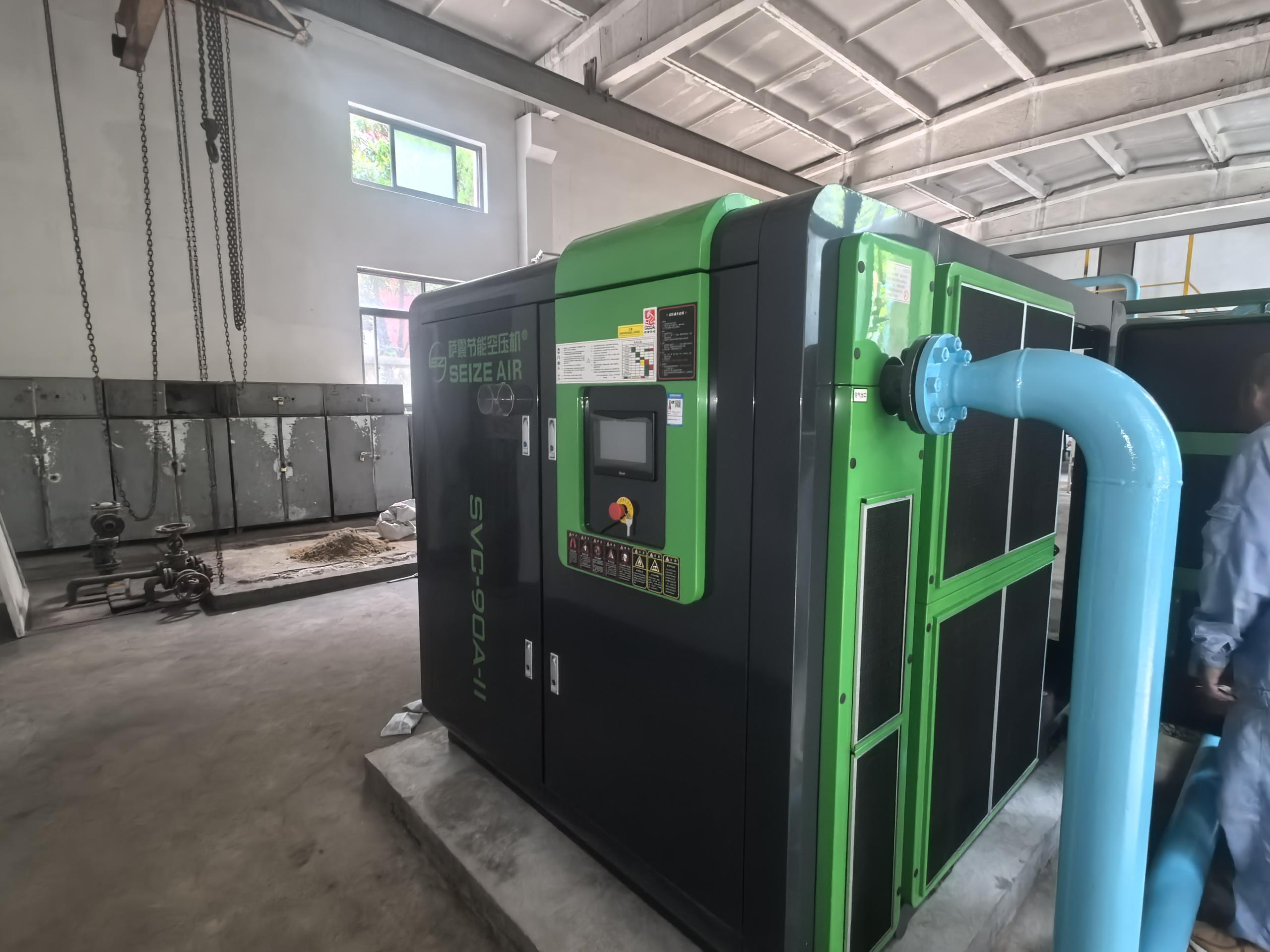
It starts with a design philosophy that treats every watt as precious. Instead of just slapping on a variable-speed drive, the entire production line is rethought—from precision-machined rotors that minimize internal leakage to heat recovery systems that repurpose waste warmth for facility heating. Even the testing bays run on closed-loop energy recycling.
They lean heavily on advanced aerodynamics inside the compression chamber and adaptive control algorithms that anticipate demand spikes. Rather than brute-forcing air delivery, these units adjust motor speed and inlet valve positioning in real time, so you get exact pressure without wasting power. The result is full-rated output with a slimmer energy bill.
It's a tie between permanent magnet motors and two-stage compression with intercooling. The motors eliminate the slip losses of induction machines, especially at partial load, while the two-stage layout slashes the thermodynamic strain—meaning less energy lost as heat and more turned into compressed air.
Absolutely. The duty cycle is engineered for 24/7 operation, with oversized cooling packages and heavily reinforced bearings. Many facilities running continuous lines have switched and report fewer unplanned stoppages because the soft‑start feature and lack of mechanical unloaders reduce wear on components.
A mid-sized plant typically sees a 30 to 40 percent drop in compressor-related energy costs, which can translate to six-figure annual savings once you factor in reduced maintenance and longer service intervals. One manufacturer documented payback on the equipment upgrade in under 18 months.
No. The internal components like airends and aftercoolers are built from the same hardened alloys as conventional high‑end units, and often go through additional surface treatments to withstand thermal cycling. The real difference is that fewer parts are rubbing or banging against each other, so you actually extend service life.
Conclusion
Step onto the production floor of a modern energy-saving air compressor factory and you immediately notice the quiet difference. The heart of the revolution lies in advanced drive systems that ditch traditional fixed-speed motors for variable-speed and direct-drive designs. These units precisely match motor speed to air demand, slashing energy bills by up to 35% without ever compromising flow rate. But that’s just the start. Every rotating element benefits from lightweight alloys and carbon-fiber components that cut inertia, dampen vibration, and dramatically extend bearing life. Meanwhile, precision engineering with ultra-tight tolerances ensures internal leakage stays well below 1%, squeezing every last cubic foot of compressed air from each kilowatt-hour.
This obsession with efficiency extends well beyond the machinery itself. Smart controllers armed with adaptive algorithms constantly read pressure, temperature, and flow sensors dozens of times per second, adjusting output in real time to match exactly what the production line needs—no more, no less. The cooling circuit, once a simple radiator, now captures waste heat and redirects it to warm factory spaces or preheat feedwater in nearby boilers, turning a liability into an asset. And crucially, the compressors are designed not as stand-alone boxes but as part of an integrated system where piping layout, receiver sizing, and air treatment are optimized together. The result is holistic savings that reach 50% or more on total cost of ownership, proving that peak performance and deep energy cuts are not opposing forces but natural allies inside a well-conceived air compression plant.
Contact Us
Contact Person: Mia
Email: [email protected]
Tel/WhatsApp: +86 19821985894
Website: https://www.seize-air.com