

Honest Road Roller Manufacturing Concern Traits Every Construction Buyer Should Verify
2026-11-27
A road roller's price tag won't tell you whether its manufacturer cut corners on bearings, hydraulics, or post-sale support. The honest traits worth checking are less about glossy brochures and more about what holds up when compaction work gets rough. That's where Dynamic invites closer inspection—and where a smarter buying decision starts.
What a Factory Tour Reveals Before You Spend a Dollar
Walk onto a factory floor and the first thing that hits you is rarely the machinery. It is the pace. Some lines move with a rhythm that feels almost habitual; others lurch between idle clusters and sudden bursts of activity. That tempo tells you more about scheduling, staffing, and upstream supply than any polished introduction. If materials are stacked in the wrong order or workers are waiting on carts, the operation is already spending money it hasn't accounted for. A tour makes those hidden carrying costs visible before you commit a single dollar.
Pay attention to what people do with their hands when they think no one is watching. Experienced operators often build small jigs, markings, or checklists around their stations. Those improvised fixes are a live map of where the official process falls short. They can also signal whether management tolerates creativity or merely tolerates problems. Ask to see a rejected part, not just the showcase samples. The way a factory explains defects—whether they speak plainly about rework, trace the cause to a specific batch, or shuffle you past the rework corner—reveals whether their quality system is real or rehearsed.
Finally, look at the corners: the maintenance bench, the incoming inspection area, the space behind the packing line. A factory that keeps its measurement tools calibrated, its labels legible, and its return shelves organized is usually a factory that respects the less glamorous parts of production. That is where problems either get caught early or quietly compound. No contract, sample, or certification can replace watching how a place handles the unglamorous moments between orders.
The Welding and Frame Details That Expose a Roller's True Build Quality
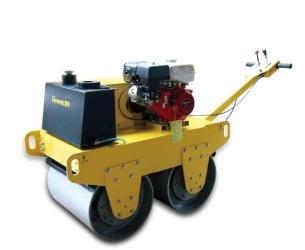
The first place to look is where the drum support plates meet the main frame. On a well-built roller, those welds are laid down in consistent passes with a smooth transition at the toe, and the heat-affected zone stays narrow and even on both sides. Cheap fabrication shows up fast as undercut edges, stray spatter, or heavy grinding that has been used to hide porosity. None of that gets better after a few hundred hours of vibration.
Frame details matter just as much as the obvious bead appearance. Check the cut edges of the plates around the articulation joint and the tie-down points. Clean, squared edges with tight fit-up usually mean the manufacturer spent time on fixturing. If you see uneven gaps that were bridged with weld, or tabs that were tacked in at slight angles, the alignment load eventually moves into the pins and bushings instead of staying in the frame.
The hidden areas tell the rest of the story. Pull an access cover or look behind the steps, and note whether the internal stiffeners are continuously welded or just spotted in place. Continuous welds along the high-stress corners give the frame a better chance of surviving years of drum bounce and rough grading. Spot welds save production time, but they create natural starting points for fatigue cracks once the roller works on hard ground.
Component Brands Worth Asking About Before You Sign
Signing for a product without checking which brands are inside the build is a common way to overpay for mid-range parts dressed up as a premium package. The main label may carry the reputation, but the daily experience often comes down to the brakes, drivetrain, bearings, and contact points that someone else manufactured. Ask for the actual component list before you commit, not just the headline spec.
Where possible, get exact model names. If a sheet says 'alloy crankset' or 'hydraulic disc brakes,' push the seller to name the supplier. Generic parts are not automatically bad, but they change how easy it is to find service, order replacements, or upgrade later. A widely stocked brand can be serviced quickly, while an obscure house brand may leave you waiting on a single distributor.
Pay extra attention to the pieces you touch or rely on most: the saddle, bars, pedals, hubs, and shifters. These shape your first weeks with the product more than a spec chart suggests, and they are often the first items quietly downgraded to keep the price attractive. If the seller hesitates to name them, take that hesitation seriously before signing.
How to Separate Lab-Tested Performance from Sales Talk
Vendor claims rarely survive contact with your own workload. The easiest way to cut through the noise is to ask for a reproducible test plan, not a slide deck. A lab result only matters when the setup mirrors your data shape, concurrency patterns, and failure modes. If they cannot hand over the raw configuration and let you rerun it on your own hardware or cloud account, treat the number as marketing.
Watch for the quiet omissions: cold cache runs, peak-hour contention, network latency between regions, and the cost of retries. A database that looks fast with one read-heavy benchmark may fall apart under mixed transactional load. Run side-by-side comparisons using your own query traces or log replays. The goal is not to find the fastest tool on a synthetic chart, but the one that degrades gracefully when real traffic gets messy.
Finally, involve the people who will operate the system, not just the architects. Ask them to read the maintenance docs, test a rolling upgrade, and simulate a node failure. Products that shine in a controlled lab often reveal their true character during a 3 a.m. incident. If a vendor resists letting your team touch the controls before signing, that hesitation is data too.
Warranty Clauses That Actually Matter for Roadwork Fleets
Most standard warranties fall apart quietly at the hour meter. For roadwork fleets, the first clause worth checking is whether engine, transmission, and hydraulic coverage is tied to hours or just a calendar limit; a paver idling through a 10-hour shift every day can burn through a three-year calendar term without hitting expected mileage. Look for wording that counts pump and valve failures under the hydraulic system, because that is where heat and contaminated fluid tend to destroy components long before the engine complains.
It is also worth ignoring the headline "bumper-to-bumper" promise and scanning the exclusions list for structural and corrosion items. Road salt, brine, milled asphalt dust, and washout water eat frames, wiring harnesses, and pivot joints faster than normal highway use. A clause that covers corrosion perforation only when it rusts through from the inside means little if the real problem is flaking crossmembers and seized leveling rams. Ask whether the warranty treats damage from road de-icing chemicals or abrasive slurry as normal use rather than environmental damage.
Finally, pay attention to what the fine print says about downtime. Roadwork contractors rarely have spare rollers sitting idle, so a warranty that only covers parts but not labor, freight, or rental reimbursement can leave the fleet paying twice. The clauses that actually hold up are the ones specifying a maximum response window, access to nearby service trucks, and advance authorization for repairs at independent shops when the dealer is too far from the job site.
The Dealer Support Network Test Most Buyers Overlook
A car can feel perfect on a short test drive, yet turn into a weekly headache once it needs parts that aren't in stock or a technician who actually understands its quirks. Most buyers spend twenty minutes checking acceleration and seat comfort, but almost no time asking how the dealer handles problems after the paperwork is signed. That's a strange oversight when you consider you'll likely visit the service department far more often than you'll revisit the sales floor.
Pick up the phone before you commit. Call the service desk and ask a simple question about a routine repair on the model you're considering. Note whether you reach a human quickly, whether they can give you a straight answer about parts availability, and whether loaner vehicles or shuttle rides are mentioned without you having to beg. A dealership with a thin support network will reveal itself in hesitation, vague promises, or an obvious script that falls apart the moment you ask for specifics.
Also look at the less glamorous corners: the workshop's posted hours, the number of factory-certified technicians, and whether the parts counter stocks common wear items instead of ordering everything from a distant warehouse. You don't need to become an expert; you just need ten minutes of polite questions. That small effort can save you from buying a car that's wonderful for a week and a logistical burden for the next five years.
FAQ
Watch how the drum is welded and machined, especially around the edges. Ask to see the test reports for hydraulic pressure and vibration frequency. A manufacturer that is hiding something usually avoids showing the assembly line or has no clean answer for how tolerances are held.
Travel speed, gradeability, and sometimes fuel burn are the usual suspects. Ask for the numbers to be verified with a machine configured the way you will actually run it, not a stripped-down base unit. If the rep cannot produce a signed test sheet, treat those figures as marketing.
Request the weight ticket from a recent production unit with the same options. Check whether the quoted weight includes the cab, full fuel tank, water tank, and the roller drum. Some companies quote a bare frame weight that is hundreds of kilos lighter than the machine you will receive.
A map pin means little if the nearest technician is two states away or the center stocks no roller parts. Call the local contact during the vetting process and ask for two recent customers you can visit. If they hesitate, that tells you more than any brochure.
Ask how their drums and vibration settings handle local soil types, moisture levels, or asphalt mixes. If the salesperson only talks about horsepower and drum width, they probably do not know your job site. Better suppliers can discuss when to use high amplitude versus low amplitude on your typical lifts.
Pick five wear items such as drum scrapers, rubber mounts, filters, and a hydraulic hose. Ask for their part numbers and prices on the spot, then ask how many are in stock locally. If those basics are not on the shelf, urgent repairs will become scheduling problems.
It names the exact components covered, the response window, and who pays freight on replacement parts. It also states what voids the warranty. Vague language like 'full support' or 'industry-leading coverage' without a written schedule is not a warranty; it is a conversation starter.
They admit what their machine is not good at. No roller suits every job, and a supplier who openly discusses limitations on steep slopes or tight turns is giving you usable information. That kind of candor usually carries through delivery, training, and parts support.
Conclusion
Before committing funds to a new road roller, treat the factory visit as non-negotiable. Walk the production floor and check whether frame plates are cut clean, jigged consistently, and welded with full penetration rather than spot stitches hidden under thick paint. Look at how the drum is mounted and whether stress points around the articulation joint show reinforcement or a convenient design shortcut. The component list matters just as much as the paint color: ask which hydraulic pumps, drive motors, and bearings are actually installed, and confirm they are brands your mechanics recognize instead of vague so-called equivalent parts. Compare lab test claims to the ground you actually roll, not the polished brochure numbers collected on flat, dry pavement.
The warranty text deserves a careful read because the clauses that count often sit in fine print. Look for realistic coverage on structural frame cracking, drum shell defects, and hydraulic component failure, with clear response times and no buried exclusions that vanish after the first thousand hours. The dealer network test is just as revealing: call a few branches unannounced, ask about parts availability for a three-year-old model, and see whether you get a straight answer or a sales callback. A roller that passes those checks usually reflects a manufacturer that builds for long-term fleet use rather than short-term purchase appeal, and that difference shows up on the job site.
Contact Us
Contact Person: Annie
Email: [email protected]
Tel/WhatsApp: 8613391442963
Website: https://www.dynamic-eq.com