

High Quality Piezo Inkjet Printer: The Ultimate Guide to Precision Printing
2026-05-20
Precision is not just a feature—it's the heart of every great print. As industries push for finer detail and faster production, piezo inkjet technology has risen as the silent powerhouse behind flawless results. But not all printers are created equal. When every droplet counts, Danmajet delivers a level of accuracy that turns complex designs into crisp, vibrant reality. Whether you're in electronics, packaging, or industrial coding, this guide unpacks what makes high-quality piezo inkjet printers tick—and why your next print might just be your best.
How Piezo Technology Redefines Inkjet Accuracy
Piezo technology brings a level of precision to inkjet printing that fundamentally shifts what’s possible in manufacturing and design. Instead of relying on heat to expel ink, piezoelectric crystals physically deform under an electric charge, creating a mechanical push that controls each droplet with extraordinary exactness. This direct mechanical action allows for droplet volumes measured in picoliters and placement accuracy within a few microns. The result is a consistent, repeatable jetting process where every nozzle fires exactly the same way, even after millions of cycles. Such uniformity not only sharpens image edges and fine details but also enables layering of functional materials—from conductive traces to bioactive agents—with a fidelity that thermal methods struggle to match.
What truly redefines accuracy is the system’s ability to modulate droplet size and velocity on the fly, without sacrificing throughput. The piezoelectric actuator can be tuned with a software-defined waveform to handle fluids of varying viscosity and surface tension, tailoring the jetting profile to the ink rather than forcing the ink to fit a rigid thermal cycle. This means that a single printhead can switch seamlessly between dense, high-contrast graphics and ultra-thin, transparent coatings, all while maintaining tight registration across large substrates. Engineers have moved beyond simple dot placement to controlling the shape and satellite-free breakup of each droplet, virtually eliminating mist and overspray that degrade edge definition. In applications like OLED pixel patterning or additive manufacturing, this level of command translates directly into functional performance—electrical, optical, or mechanical—that meets strict industrial tolerances.
The redefinition extends into the feedback loops that traditional inkjet lacks. Modern piezo heads embed sensing capabilities that detect nozzle health and jetting anomalies in real time, automatically adjusting drive conditions to compensate for slight deviations before they become visible defects. Combined with high-resolution motion control and vision alignment, the printer becomes a closed-loop system that maintains micrometer-scale accuracy over hours of continuous operation. This proactive correction reduces waste and rework while allowing manufacturers to run lighter, more delicate substrates that would be damaged by higher heat or aggressive cleaning cycles. By shifting the source of accuracy from brute-force repetition to intelligent, adaptive control, piezo technology enables a mindset where the process conforms to the product’s demands—not the other way around—opening doors to previously unprintable geometries and materials.
Key Components That Drive Print Quality
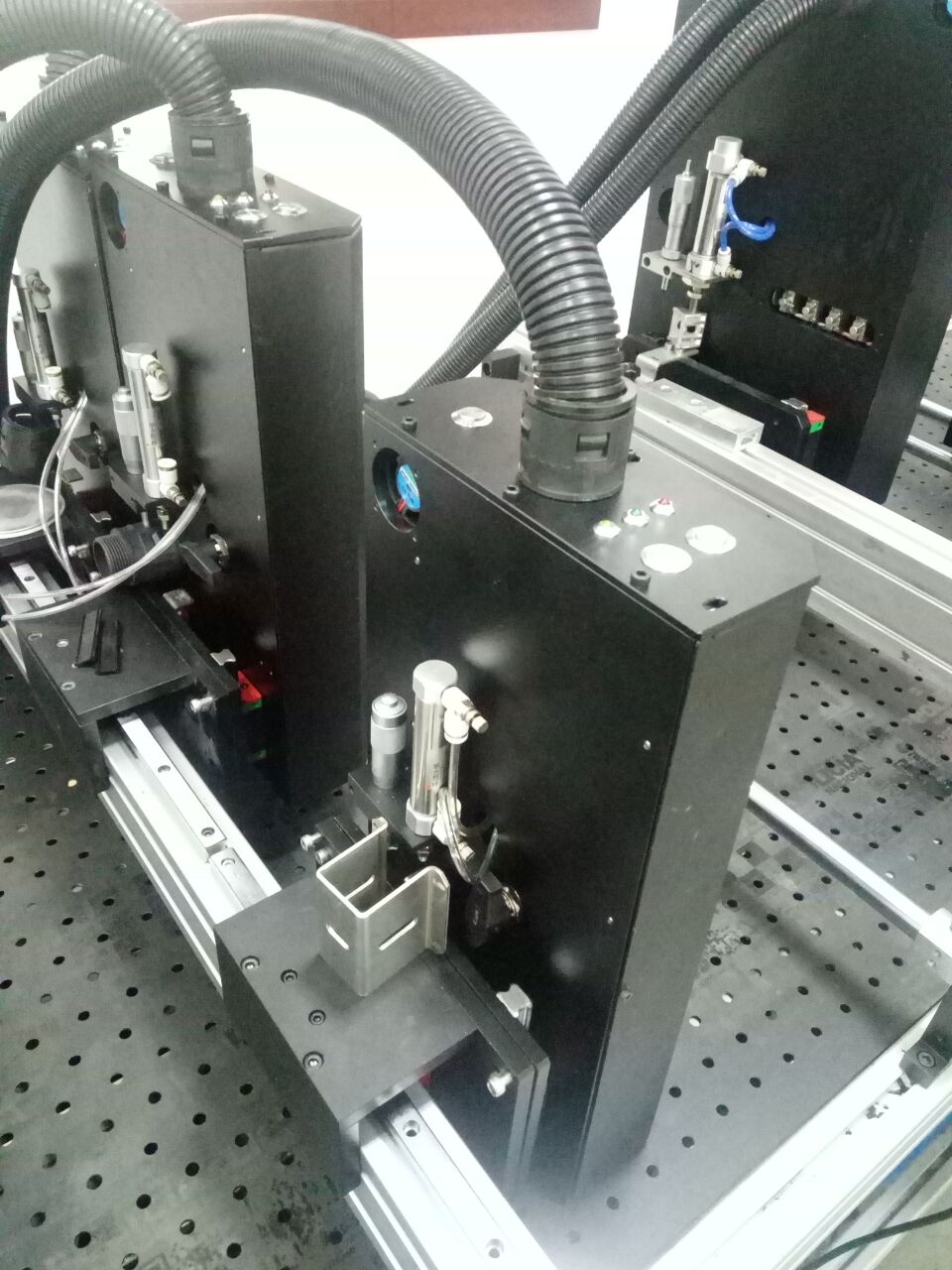
At the heart of any high-quality printed output lies the interplay between resolution, ink formulation, and paper characteristics. Resolution, often measured in dots per inch (DPI), defines the sharpness and detail a printer can reproduce, but raw numbers alone don't tell the whole story. The way a printer maps those dots—using advanced halftoning algorithms or variable droplet sizes—can make a 600 DPI image appear more refined than a lower-quality 1200 DPI counterpart. Ink chemistry equally matters, particularly in how pigments or dyes bond with the substrate, affecting color accuracy, longevity, and resistance to smudging or fading over time.
Beyond the basics, the mechanical precision of the printhead and paper transport system quietly determines consistency. A printhead that fails to maintain uniform jetting pressure or a misaligned paper feed can introduce banding, uneven coverage, or registration errors, especially noticeable in large solid areas or fine text. Meanwhile, the paper itself acts as a canvas that can either elevate or undermine the entire process. The coating, brightness, and absorbency of the media influence ink holdout, color vibrancy, and how crisp edges appear. Even environmental factors like humidity can subtly alter how paper fibers expand and interact with liquid inks, making material choice a critical—and often overlooked—piece of the puzzle.
Modern printers often rely on digital image processing to optimize output quality on the fly. Features like automated nozzle compensation, color calibration routines, and dynamic resolution enhancement help maintain consistency across different media types and usage conditions. When these components work in harmony—the digital front end interpreting the image, the print engine executing with mechanical accuracy, and the ink and paper forming a stable physical bond—the result is a print that matches the intent without the telltale artifacts that can undermine an otherwise professional presentation.
Materials That Thrive with Precision Printing
Precision printing unveils hidden possibilities in materials that usually crumble under less exacting conditions. Thin, flexible ceramics, for instance, gain new life when printed with controlled droplet placement and tailored ink formulas. Their inherent brittleness becomes a workable trait, opening doors for intricate lattice structures in biomedical scaffolds or heat-resistant electronics. It’s not about forcing a substance to behave against its nature, but coaxing out its best performance through meticulous process matching.
Metals like titanium and stainless steel, often reserved for high-stakes aerospace or medical devices, truly shine when deposited with powder-bed precision. The laser’s path and energy input can be tuned to minimize internal stresses, letting the final part keep near-perfect dimensional accuracy straight from the printer. Even notoriously tricky alloys stop warping and cracking when every scan line is placed with deliberate intent, making lightweight, complex geometries a practical reality instead of a costly gamble.
Comparing Drop-on-Demand Methods Side by Side
When you line up thermal and piezoelectric drop‑on‑demand technologies, the first thing that jumps out is how differently they move ink. Thermal printheads rely on a tiny resistor that flash‑heats a thin layer of ink, creating a vapor bubble that forces a droplet out of the nozzle. Piezo heads, by contrast, flex a crystalline membrane with an electric charge, mechanically squeezing the ink chamber. That fundamental gap shapes everything from fluid choices to the rhythm of each jetting cycle.
In daily use, thermal’s simplicity keeps cartridge costs low and makes it the backbone of countless desktop printers, but it limits you to water‑based fluids that can survive repeated boiling. Piezo printheads shrug off that restriction — they handle solvent, UV‑curable, and even conductive inks — so you see them driving ceramic tile decoration, circuit printing, and wide‑format graphics. Yet piezo’s engineering demands more upfront investment, and clogged nozzles can be pricier to replace. Thermal systems, meanwhile, trade lower resolution in some high‑speed modes for a staccato firing rate that piezo rarely matches.
Neither method wins across the board. A workshop churning out textile swatches might lean on piezo’s relentless ink compatibility, while a home office values thermal’s plug‑and‑play economics. The real choice lives in the details: how aggressive the solvent, how fine the drop placement needs to be, and how much downtime you can stomach for maintenance.
Real-World Uses Across Diverse Industries
From healthcare to finance, intelligent systems are quietly reshaping how professionals tackle daily challenges. In hospitals, algorithms analyze medical images with remarkable accuracy, flagging subtle anomalies that even seasoned radiologists might overlook. Meanwhile, banks deploy predictive models to detect fraudulent transactions in real time, sifting through millions of data points without breaking a sweat. These aren't futuristic fantasies—they're tools already woven into the fabric of critical operations.
Step onto a factory floor, and you'll see a different side of the story. Manufacturers use sensor-driven analytics to predict equipment failures before they happen, slashing downtime and keeping assembly lines humming. In agriculture, drones and ground sensors work together to optimize irrigation, delivering water precisely where crops thirst for it. Each industry bends the technology to its own rhythm, proving that practical value lies not in hype but in tangible, everyday results.
Retailers, too, have found their niche. Behind the scenes, recommendation engines sift through browsing habits to surface products that feel almost serendipitous to shoppers. Logistics firms harness route optimization to trim fuel costs and speed up deliveries, while energy companies balance grid loads by forecasting consumption patterns. The common thread? A quiet, persistent shift toward making decisions faster and with greater precision, all without fanfare.
What to Look for When Choosing Your Device
Picking the right device starts with how you actually spend your day. If you're constantly on the move, battery life and durability might matter more than raw processing power. Think about whether you need something that can survive a drop or a splash, or if most of your work happens at a desk with easy access to power outlets. The best device is the one that fits seamlessly into your routines, not the one with the flashiest specs.
Screen quality and input methods deserve more attention than they usually get. A vibrant, high-resolution display makes a huge difference if you read a lot, edit photos, or stare at documents for hours. Similarly, ask yourself if you prefer a touchscreen, a physical keyboard, or both. A 2-in-1 might sound versatile, but it's only useful if you actually flip, detach, or draw on it. Don't pay for features you'll never use.
Finally, look at the ports and connectivity options. A sleek design isn't so appealing when you need three dongles just to plug in your monitor and external drive. Check if the device has enough USB, HDMI, or headphone ports to support your current peripherals. Also, consider the future—some devices now prioritize cloud storage over large internal drives, so decide if you're comfortable with that shift before committing.
FAQ
Piezo inkjet printers use electrically charged crystals to precisely control ink droplet size and placement. This allows for incredibly sharp details and consistent output, even on delicate or uneven surfaces.
The piezo printhead operates without heat, so it works with a wide range of inks—from solvent-based to UV-curable. You can print on everything from thin films to thick rigid materials without sacrificing accuracy.
Industries that demand fine detail and repeatability, like electronics manufacturing, textile printing, ceramic tile decoration, and biomedical device fabrication, rely heavily on piezo technology.
Piezo heads last much longer since there's no thermal stress, but they still need regular cleaning to prevent clogs. Maintenance is less frequent and more predictable, which keeps downtime minimal.
Focus on native resolution, smallest droplet volume, grayscale capabilities, and the ability to maintain consistent drop velocity. Also consider software integration for variable data and layout precision.
Droplet uniformity defines edge sharpness and color blending. Piezo printers achieve this through waveform tuning, where the electrical pulse sent to each nozzle can be individually shaped for perfect ejection.
Absolutely. Modern multi-head piezo systems and high-frequency firing allow fast throughput while keeping the accuracy. Many lines synchronize the printheads with substrate movement for flawless alignment at speed.
Conclusion
Piezo inkjet technology has firmly established itself as the gold standard for precision printing, largely due to its ability to exert microscopic control over every droplet. Unlike thermal printheads that rely on heat to expel ink, piezo elements flex with electric current, enabling consistent drop volumes and pinpoint placement even at high speeds. This accuracy stems from a synergy of finely tuned components: advanced printhead actuators, high-resolution nozzle plates, and sophisticated waveform management. These elements together allow a broad range of inks—from UV-curable and solvent-based to aqueous and even conductive fluids—to adhere flawlessly on diverse substrates such as glass, textiles, and contoured surfaces.
When evaluating drop-on-demand approaches, piezo systems clearly outpace thermal counterparts in versatility and longevity, handling higher viscosity fluids and reducing nozzle clogging. Their precision is leveraged across industries, from producing intricate circuit patterns in electronics to crafting durable outdoor signage, professional photo prints, and personalized packaging. For anyone selecting a device, the emphasis should be on printhead life, ink compatibility, and the ability to maintain resolution across varying production demands. The true measure of a high-quality piezo printer lies in its capacity to fuse engineering rigor with ease of use, ensuring reliable output that goes beyond mere specification sheets.
Contact Us
Contact Person: Jacky
Email: [email protected]
Tel/WhatsApp: 086 15000607053
Website: https://www.danmajet.com