

Hand Towel Folding Machine China: Top Efficiency for Laundry & Hospitality Lines
2026-11-16
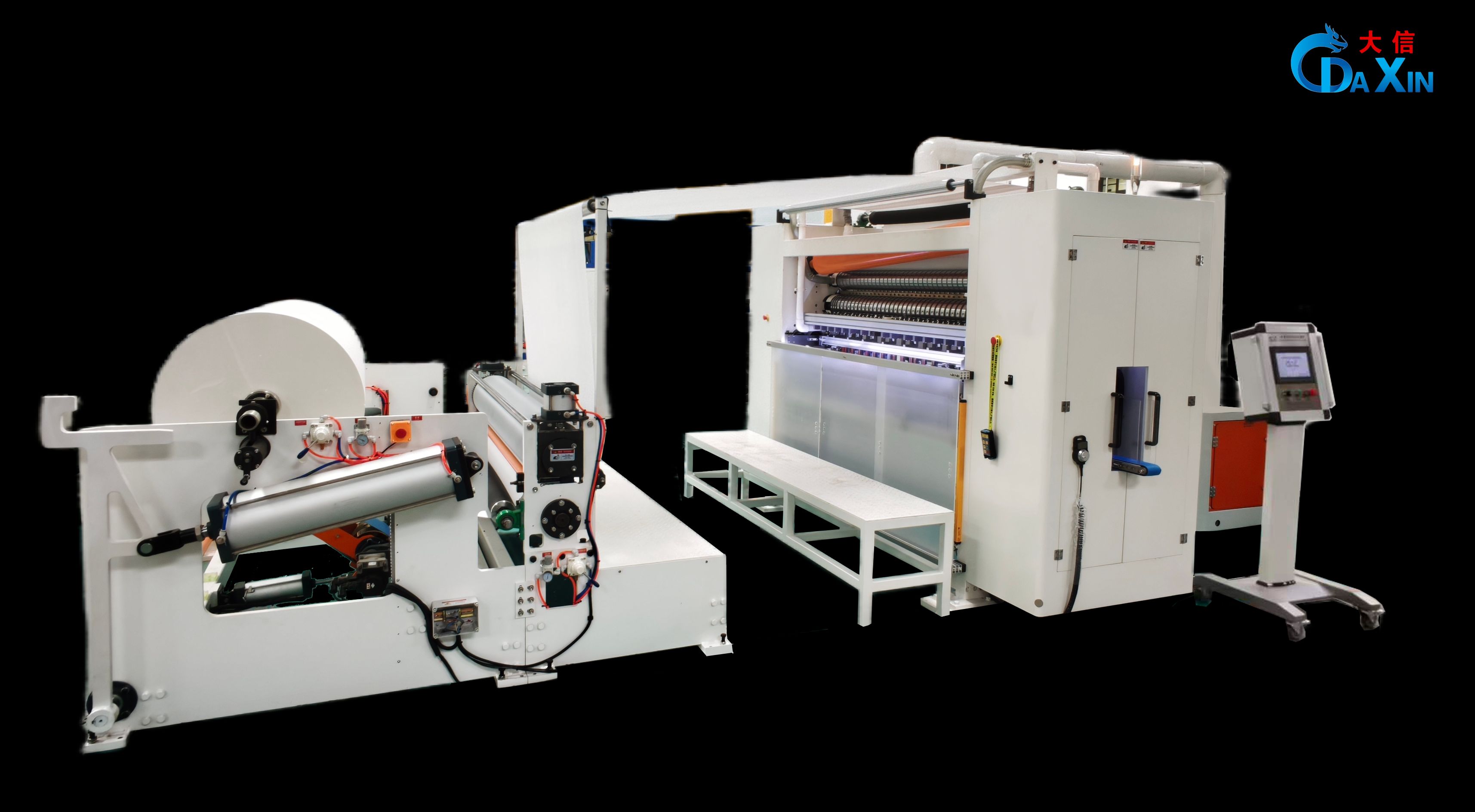
In the fast-paced world of commercial laundry and hospitality, every second counts — and so does every folded towel. That’s where DAXIN hand towel folding machines, engineered in China, are rewriting the rules of efficiency. Gone are the days of labor-intensive manual folding that slows down your operation. Instead, imagine a seamless, high-speed system that delivers crisp, uniform folds, reducing strain on your staff and boosting throughput. In this post, we’ll unpack how these advanced machines can transform your linen handling, making your line faster, smarter, and more reliable.
Where Hand Towel Folding Finally Meets Continuous Run Capability
For years, the hand towel industry has wrestled with a frustrating trade-off: precise, market-ready folds or the efficiency of nonstop production. Most machines force you to choose one. This is exactly where things change. The latest engineering bridges that gap by integrating intelligent folding stations into a true continuous-feed system—no batching, no stacking pauses, just an uninterrupted flow of towels that exit perfectly quarter-folded, tri-folded, or custom-creased at full production speed.
What makes this possible is a reimagined transfer mechanism that synchronizes fabric movement with the folding blades in real time. Instead of the typical stop-and-go motion that breaks momentum, the towel enters a dynamic folding zone where folding happens on the fly. Sensors detect the leading edge and adjust the fold geometry instantly, compensating for slight variations in towel length or fabric slip. The result isn’t just speed. It’s a consistency that holds across millions of towels, removing the micro-delays and misalignments that eat into yield.
Operators notice the difference immediately. Changeovers between fold styles now happen at the touch of a button, without stopping the line or swapping out mechanical parts. Maintenance routines shrink because there are fewer reciprocating components to wear out. And because the continuous run capability eliminates start-stop jolts, the process becomes quieter and gentler on the fabric, preserving the soft hand feel that premium towels demand. Finally, the ideal meets the attainable—and it runs around the clock.
Speed Without Compromise: How Chinese Engineering Rewrote the Rulebook
In a landscape where construction deadlines once seemed immovable, Chinese engineers refused to accept that pace and precision were opposing forces. They dismantled the long-held assumption that accelerating infrastructure meant sacrificing safety or longevity. Instead, entire teams reimagined workflows from the ground up, injecting real-time data monitoring, modular assembly techniques, and parallel construction sequencing into projects that had never seen such methods applied at scale. The result wasn’t just faster completion—it was a fundamentally new standard where speed became a measurable, engineered outcome rather than a desperate gamble.
What truly upended convention was the willingness to treat project delivery not as a linear timeline but as a dense, interlocking system of miniaturized milestones. Bridges and rail networks that once took decades began to emerge in a few years, not because corners were cut, but because every process was scrutinized for lag. Remote telemetry allowed soil analysis and component fabrication to proceed concurrently. Factory-prefabricated viaduct sections arrived on site ready to install, compressing months of on-site work into days. This shift wasn’t just technical—it rewrote procurement protocols, reshaped labor coordination, and forced a rethinking of risk management that many international observers initially dismissed as optimistic fantasy.
The legacy of this approach is visible not only in the finished silhouettes of bridges and terminal roofs but in the quiet recalibration of what the world considers achievable. Traditional rulebooks framed speed as an enemy of durability; Chinese engineering teams demonstrated that when innovation targets the intersection of materials science, digital twins, and relentless testing, the old dichotomies crumble. Concrete cured under precisely controlled conditions gained strength faster. Wind-resistant designs once refined in endless physical iterations were validated overnight through simulated aerodynamic loads. Each success chipped away at the myth that greatness requires prolonged gestation, proving that when engineering rigor leads, speed follows not as a compromise but as a natural byproduct of intelligence applied without hesitation.
Wrinkle-Free Stacks That Speak the Language of Five-Star Housekeeping
There’s a quiet perfection in a freshly made hotel bed, the kind that doesn’t just look crisp but feels effortless. Each fold, each tuck carries a precision usually reserved for bespoke tailoring. The stack of towels on the marble bathroom shelf isn’t simply piled up—it’s built with a rhythm, edges aligned so sharply you hesitate to touch them. It’s a silent conversation between the housekeeping staff and the guest, one that says, every detail matters, even the ones you’ll never see.
Achieving that elusive crease-free finish isn’t about brute force or a heavy iron. It lives in the patient smoothing of cotton while it’s still warm from the dryer, in the way a flat sheet is lifted and folded mid-air so its own weight resists rumpling. The laundry rooms of five-star properties have a certain sacred stillness—stacks rise like linen sculptures, corners sharp enough to cast tiny shadows. Here, a fingertip press along a hem is a ritual, not a rushed step, and that calm confidence settles into the fiber itself.
What makes these stacks truly speak is their quiet consistency. It’s the unspoken promise that tonight’s pillowcase will feel as cool and pristine as yesterday’s, that the robe hanging behind the door has never known a crooked fold. That language doesn’t use words, but guests learn it fast. A wrinkle-free stack isn’t just neat—it’s a gesture of respect, a way of saying the room has been refreshed to its purest form, ready to wrap you in a comfort that feels brand new and deeply familiar all at once.
Inside the Frame: What Makes a Laundry-Workhorse Machine Tick
The pulse of any dependable washing machine beats quietly behind the outer lid. At its core, a direct-drive motor eliminates the chatter of belts and pulleys, transferring power straight to the drum with uncanny precision. This isn't just about fewer moving parts—it's about a suspension system that adapts to uneven loads, shutting down vibration before it escalates into that familiar knock-across-the-floor symphony.
Beneath the stainless drum, a heating element sits in a sealed sump, gradually raising water temperature without the spikes that damage modern fabrics. The control board, potted against humidity, interprets what the sensors are telling it: turbidity readings tracking how much soil is lifting from your clothes, water levels adjusting in tenths of a gallon, and a foam detection loop that knows when you’ve been too generous with detergent. It’s a quiet conversation between components that shortens cycles without sacrificing clean.
What keeps these machines running past the decade mark often comes down to chassis rigidity. An unassuming steel counterweight, suspended above the tub, isn’t just a block of metal—it’s a dampener tuned to offset the chaotic forces of a high-speed spin. Pair that with double-lip seals on the bearings, and you’ve swapped out constant maintenance for a machine that genuinely shrugs off the daily grind of socks, sheets, and muddy jeans.
Why Large-Scale Hospitality Is Switching to Compact Vertical Systems
Floor space in hotels, resorts, and event venues has never been more valuable – every square foot needs to pull its weight. Traditional laundry setups, with their sprawling washers and dryers, eat into back-of-house areas that could be used for storage, staff facilities, or even guest-facing services. Compact vertical systems flip that logic on its head by stacking functions upward rather than outward. A single footprint can now handle what used to require two or three separate machines, slashing the square footage dedicated to linen care without cutting into throughput. Property developers and operators are catching on fast, realizing that a smaller equipment closet means a bigger bottom line.
It’s not just about saving space – it’s about rethinking workflow. In a busy hotel, the journey of a single bedsheet from soiled pile to neatly folded stack used to snake through multiple rooms and hallways. Compact vertical units let you design a near-linear path: in one side, processed in-place, out the other. This radically shortens turnaround time and reduces the back-and-forth that causes staff fatigue and errors. For large-scale operations where hundreds of pounds of linen move every hour, even a 15-minute reduction per cycle translates to labor savings that quickly outstrip equipment costs.
There’s also a quiet evolution happening around resource consumption. Older horizontal drum machines gulp water and energy, often running partial loads because housekeeping can’t wait for a full batch. Modern vertical systems use smart sensors to adjust water levels and spin speeds to the actual load size, routinely cutting utility bills by double-digit percentages. For hospitality groups managing multiple properties, that kind of efficiency becomes a portfolio-level advantage – one that improves sustainability metrics without asking guests to sacrifice a thing.
Beyond the Spec Sheet: Real Metrics for Real Washroom Turnaround
Chasing the numbers on a product sheet might feel productive, but it rarely tells you what actually happens between two flights. A dispenser that holds 2,000 towels means nothing if half of them jam during a rush or need to be reloaded mid-turn. The real measure is fluid: how many seconds does a passenger spend waiting for a sensor to respond? How many steps does the cleaner take from the entrance to each touch point? Those granular, human-scale metrics shape the pace of a turnaround far more than any lab-tested capacity figure.
We started timing things differently. Instead of counting paper towels, we watched how long it took for a washroom to recover after a surge of arrivals. One sink station might process 15 users in ten minutes, while an identical-looking unit three gates down handles only eight — not because of the hardware, but because the bin placement forces a bottleneck. Real metrics are about flow, refill intervals, and how often someone has to step in to fix a misfeed. Once you see those patterns, the spec sheet becomes background noise.
What sticks are the numbers that maintenance crews already feel in their bones: the soap cartridge that outlasts three shifts instead of one, the mirror that stays smear-free through fifty hand-washes, the towel port that never needs a mid-service tap to unclog. Those aren't printed on a glossy card, but they're what turn a 25-minute scramble into a calm, repeatable process. That's the yardstick we care about.
FAQ
Chinese manufacturers have fine-tuned the automation sequence to stack and fold at speeds exceeding 800 pieces per hour without jamming. The real trick is the sensor-driven alignment system that adjusts in real time, so even slightly off-center towels get corrected before the fold—minimizing waste and downtime.
Most high-end models now use a memory-based digital setting. You just tap the preset for a hand towel size—say 30x30 cm or 40x40 cm—and the folding plates and conveyor belt spacing recalibrate automatically. No screwdriver or calibration chart needed, which is a huge time-saver for laundry operations switching between hotel and restaurant account batches.
For hotel and spa laundry, presentation matters as much as speed. These machines are built with soft-grip rollers and an optional cold-air pressing station that maintains terry cloth loft. The result is a neat, wrinkle-reduced towel stack that looks like it was hand-folded, which directly improves the guest experience without adding labor.
Operators often worry about wear from lint buildup. In well-designed Chinese machines, the folding clamps are treated with a non-stick coating, and the lint filtration is self-cleaning every 200 cycles. Maintenance boils down to a weekly 5-minute roller inspection and making sure the static eliminator brush is dust-free—no specialized technician required for routine upkeep.
Yes, that's a key differentiator. The control module, stacking platform, and folding units are separate assemblies. If you need to go from single-fold to triple-fold later, you can retrofit the folding module without scrapping the entire machine. It’s a pragmatic approach that extends the equipment’s lifespan in a busy commercial laundry.
They combine an ionizing bar right before the folding plate entry with a micro-vibration feed system. The vibration shakes the towels just enough to break surface adhesion, and the ionizer neutralizes the static charge. Both work without chemical sprays, so the towels remain chemical-free and safe for sensitive skin.
Absolutely, if it supports dual-mode stacking. Some units let you switch between 'loose stack for coin-op laundry' and 'compressed stack for hotel carts' with a software toggle. The compressed mode uses a gentle pressure plate to create tight, transport-ready bundles that don't fall apart during room deliveries, while the loose mode keeps towels fluffy for end-user pickup.
Conclusion
The real story behind China’s hand towel folding machines isn’t just speed—it’s how they finally solved the puzzle of non-stop operation. Where older units needed pauses between batches, these machines sustain a steady flow, folding stack after stack without a hiccup. This continuous run capability, engineered through refined kinematics and responsive material handling, means a laundry line can absorb peak morning loads from multiple hotel floors without the feeder ever waiting. At the core, Chinese designers discarded the idea that high output had to bruise fabric integrity. By rethinking cam profiles and contact surfaces, they achieved cycles where even thin, well-worn towels land in crisp, alignment-perfect piles that mirror the standards of a five-star housekeeping cart.
What truly sets the latest compact vertical systems apart for large-scale hospitality is not a single datasheet figure, but the removal of invisible downtime. Inside the frame, rugged direct-drive assemblies and self-diagnosing sensors keep the machine relentlessly productive, while the vertical stacking architecture reclaims floor space in cramped laundry backrooms. The metrics that matter shift from theoretical pieces-per-minute to actual washroom turnaround: how fast a cleaned towel becomes a guest-ready stack, how few jams interrupt an overnight shift, and how consistently a housekeeper can grab and go. That’s the efficiency that property directors now bank on—not a number on a brochure, but a rhythm that simply never breaks.
Contact Us
Contact Person: Sam Xie
Email: [email protected]
Tel/WhatsApp: 86-18938538530
Website: https://www.daxin321.com/