

GH4169 Seamless Pipe Factory: Forging Excellence in High-Temperature Alloys
2026-11-16
When extreme heat and pressure threaten to compromise critical systems, the difference between success and failure often lies in a single component: the seamless pipe. GH4169, a superalloy engineered for punishing environments, demands manufacturing precision that few can deliver. At JILAIDA, this challenge isn’t just met—it’s redefined through a relentless pursuit of metallurgical perfection. Step inside a factory where every pipe is forged to withstand temperatures that would melt ordinary steel, and discover why the world’s most demanding industries trust one name to keep their operations flowing.
Where Precision Meets Endurance in Alloy Selection
The true art of alloy selection isn't about chasing the newest material on the market—it's about finding that intersection where dimensional stability refuses to waver under load, year after year. You might have a component that machines beautifully on day one, but if thermal cycling gradually warps its tolerances or chemical exposure roughens the mating surfaces, the initial precision becomes irrelevant. The materials that earn their place in critical applications are the ones that maintain their shape, hardness, and surface integrity well past the break-in period, as if they've made a quiet pact with the forces working against them.
That longevity doesn't come from a single attribute. It emerges when yield strength, corrosion resistance, and fatigue limit are balanced in ways that can't be captured on a basic datasheet. An alloy might have impressive tensile numbers yet still gall under slow sliding contact. Another might resist pitting beautifully but creep just enough to misalign sealed joints over thousands of thermal cycles. The selection process becomes a careful study of failure modes that only appear after extended service, which is why real-world endurance data often outweighs laboratory specifications.
What separates a reliable specification from a risky gamble is often the metallurgical fine print—things like inclusion cleanliness, grain structure homogeneity, and the stability of strengthening precipitates at the upper end of the operating temperature range. When an alloy is chosen with that level of scrutiny, precision stops being a snapshot measurement and starts being a long-term promise. It's the difference between a part that fits perfectly during assembly and one that still fits perfectly ten thousand cycles later, with no apologies to the maintenance schedule.
How Seamless Integrity Redefines Performance Under Stress
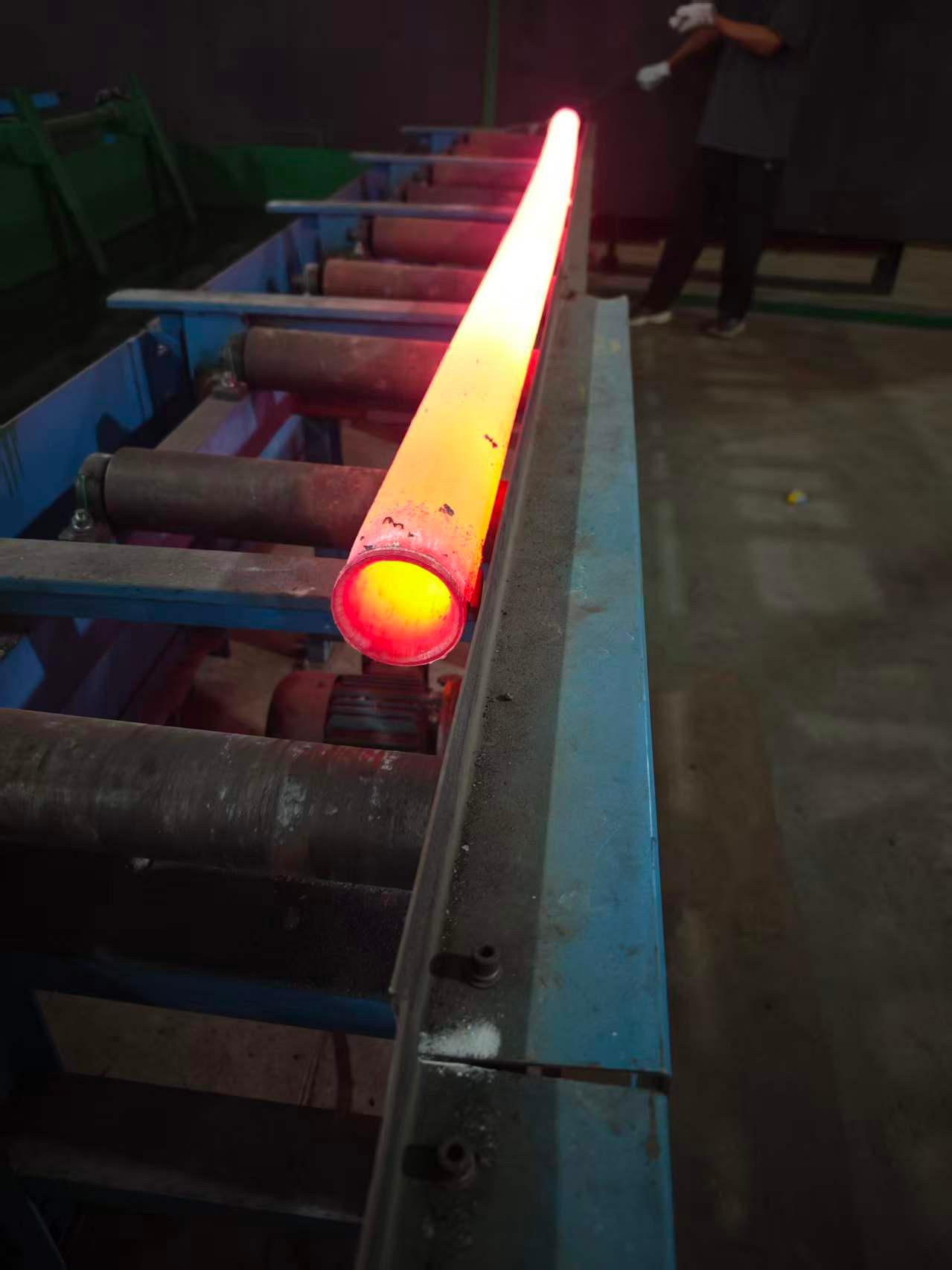
When systems are pushed to their limits, the typical response is to throw more resources at the problem—more processing power, more redundancy, more layers of fail-safes. But that brute-force approach often introduces complexity that itself becomes a liability. Seamless integrity takes a different path. It embeds resilience directly into the core logic, so that under strain, the system doesn't just keep running; it maintains the exact same quality of output as when it's idle. There's no degradation curve, no gradual erosion of accuracy or responsiveness. Instead, every component checks and rechecks the coherence of its own data and decisions in real time, silently correcting deviations before they cascade into failures.
Think of it as a structural trait rather than an add-on defense. In a high-stress scenario—say, a financial platform during a market spike or a manufacturing line facing a sudden sensor storm—most architectures start to exhibit micro-delays or data mismatches that users feel as lag, errors, or lockups. A seamlessly integrated integrity layer works underneath all of that, orchestrating how information flows and getting rid of contradictions at the source. It doesn't just log an anomaly and sound an alarm; it resolves it on the fly, using contextual cues that traditional monitoring tools wouldn't even capture. The result is a kind of quiet consistency that people experience as effortless reliability, even when the underlying infrastructure is right at its edge.
What really shifts is how we define performance itself. Without seamless integrity, performance is often reduced to throughput and uptime percentages—numbers that hide messy realities. With it, performance becomes holistic: the ability to maintain trust in every single transaction or measurement, regardless of load. Teams stop having to write exception-handling code for every conceivable failure mode because the system's own fabric handles unpredictability natively. This doesn't just save engineering time; it changes how products behave in the hands of users, who will never know the chaos that was quietly resolved behind the scenes. In the end, redefining performance under stress isn't about surviving the peak—it's about making the peak feel no different from the calm.
Behind the Heat: The Art of Controlled Forging and Grain Refinement
Controlled forging isn't simply about shaping metal with brute force; it's a thermal and mechanical dialogue where every hammer blow and cooling interval is carefully orchestrated. The heat is the catalyst, softening the crystalline lattice just enough to allow deformation without fracturing, but the real artistry lies in maintaining a temperature window that encourages recrystallization rather than grain growth. Push too hot, and the grains balloon, weakening the final structure. Cool too slowly between operations, and you miss the chance to refine the internal architecture of the steel.
Grain refinement itself is a dance of nucleation and restraint. As the metal deforms under controlled pressure, dislocations pile up within the existing grains, creating a mosaic of stressed zones. These areas become fertile ground for new, tiny grains to emerge during the recrystallization phase—provided the cooling hits the right rhythm. The trick is to repeat this cycle of deformation and brief recovery often enough to break down the old coarse colonies into a web of fine, equiaxed grains. This microstructural knitting turns what would be an ordinary piece of stock into a material that absorbs impact without tearing and resists fatigue crack initiation far better than its cast or over-forged cousins.
Modern forging shops chase that elusive triple point where temperature, reduction ratio, and strain rate intersect perfectly. It's rarely a one-punch affair. Multiple heats and staged die sequences scrub the grain boundaries clean, squeezing out segregations and smearing inclusions into harmless, streamlined semblances. The result isn't just a shape change—it's a profound rewrite of the material's internal narrative. When a forged component emerges with its grain flow wrapped around critical contours like a fiber composite, you're witnessing heat management and mechanical intuition fused into a single, deliberate process.
When Consistency Is Not a Goal but a Core Principle
Most brands and creators treat consistency like a finish line—something you strive toward, measure with metrics, and occasionally sacrifice when a flashier opportunity appears. But when consistency shifts from being a distant objective to the very fabric of how you operate, everything changes. It stops being a box to check and becomes the default rhythm of your work. That subtle shift means you no longer wake up asking “Should I publish today?” or “Does this align with our voice?” Instead, the instinct to show up, to deliver, and to maintain a recognizable thread through everything you create is simply how you’re wired. The pressure evaporates because the principle itself carries the momentum, not the other way around.
In practice, this means consistency isn’t about repeating the same format endlessly or forcing a rigid schedule that ignores context. It’s about reliability at a deeper level—the kind that makes your audience feel safe, knowing that even if you surprise them with a new angle, the underlying values and level of care remain untouched. When teams internalize this, decision-making becomes faster. You don’t need a committee to decide if something “feels on brand” because the principle already lives in the people doing the work. Meetings shorten, hesitations dissolve, and you spend less time debating authenticity and more time actually making things that resonate.
The real differentiator emerges over time. While competitors are still treating consistency as a performance metric—counting posts, polishing over cracks in their identity—those who’ve woven it into their core are quietly building trust that can’t be faked. Their audience doesn’t need a logo to recognize their work; the texture, the thoughtfulness, the unmistakable cadence of their presence all signal it. This kind of embedded consistency becomes a moat, not because it was a goal they finally attained, but because they stopped treating it as one and let it shape how they think, create, and connect from the inside out.
Beyond Standard Specs: Tailoring Tube Solutions for Real-World Extremes
Standard specifications serve as a useful baseline, but they rarely account for the messy realities of extreme industrial environments. When a pipeline must withstand abyssal pressures in deep-sea drilling, or carry cryogenic fluids in LNG plants, off-the-shelf tube dimensions and materials quickly reveal their limitations. Engineers regularly face conditions where temperature swings exceed 200°C, corrosive media attack grain boundaries, or vibration demands fatigue resistance far beyond what generic standards prescribe.
Tailoring a tube solution starts with a deep dive into the failure modes most likely to manifest in the intended application. Material selection moves beyond basic 300-series stainless steels to nickel alloys like Inconel 625, super duplex stainless steels, or titanium grades that offer the precise balance of strength, ductility, and corrosion resistance. Wall thickness, ovality, and even the manufacturing method—seamless vs. welded, cold-drawn vs. pilgered—are tuned to handle thermal cycling, high-cycle fatigue, or hydrogen embrittlement. Computational fluid dynamics and finite element analysis simulate real-world stress distributions long before the first prototype is formed.
The result is a tube that doesn’t merely meet a published specification on paper; it survives where others fail. Subsea umbilicals maintain signal and fluid integrity under crushing pressure, while heat exchanger tubes in chemical plants resist pitting and stress-corrosion cracking for decades. By approaching each project as a unique problem rather than a catalog order, engineers deliver reliability that can’t be captured by a single ASTM or EN number—performance that keeps critical operations running when standard components would have given up.
From Melt to Microstructure: A Closer Look at Quality That Lasts
Every durable product begins as a liquid. The way that molten material solidifies sets the foundation for what comes later—strength, stability, and resistance to wear are not added after the fact, they are grown right into the metal’s grain structure. What happens between the furnace and the first glimpse of the finished part often determines whether that part will quietly perform for decades or crack under the pressure of its first real challenge. In those fleeting seconds of cooling, atoms shift from chaos to order, forming patterns that can either defend against fatigue or invite it.
The details at the microscopic scale tell a story no specification sheet can capture. Grain boundaries, phase distributions, and dispersions of secondary particles all emerge directly from how the melt was handled—its temperature, its purity, the speed and direction of solidification. Some arrangements muffle vibrations and blunt cracks; others give rust a foothold long before anyone notices a surface blemish. The beauty of it is that these traits are repeatable, once you truly understand them. Consistency at this level doesn’t come from luck or generic process controls, but from refining every thermal step so that the final microstructure is not just acceptable, but deliberately shaped for the environment it will live in.
Long-term quality almost never reveals itself in a new product; it quietly shows up years later, when a component still fits, still holds, still resists corrosion while others have been swapped out. That resilience starts with how the material froze and what happened in the moments right after. When manufacturers pay attention to the invisible architecture beneath the surface, they stop merely filling orders and start creating parts whose lifespan is genuinely embedded in their earliest stage of existence.
FAQ
GH4169 is a nickel-based superalloy, essentially the Chinese equivalent of Inconel 718. Its standout features are exceptional strength and oxidation resistance at temperatures up to 700°C, along with excellent fatigue and creep properties. That combination makes it ideal for seamless pipes in aerospace engines, gas turbines, and deep oil drilling equipment, where materials face extreme heat and pressure without failing.
We control every step from vacuum induction melting and electroslag remelting to final hot extrusion or cold rolling. In-process checks track grain size, inclusion levels, and surface finish. Each batch undergoes rigorous ultrasonic and eddy current testing, and we test samples for tensile properties, stress rupture, and hardness to meet both AMS and customized specifications before release.
They're designed for environments where ordinary metals give up. Typical uses include combustion chambers, afterburning parts in jet engines, high-pressure piping in supercritical power plants, downhole casings in sour gas wells, and heat exchangers in chemical processing that run persistently above 600°C. Anywhere continuous heat plus mechanical stress is the norm, GH4169 pipes fit.
We start with a billet heated to a precise range, then employ a radial forging or hot piercing and pilgering approach, depending on the pipe dimensions. The pipe is forged in stages with controlled reductions to refine the grain structure while keeping the material's isotropic properties. After forging, we apply a solution heat treatment followed by aging to lock in the desired strength levels.
Our seamless pipes typically range from 6 mm to 350 mm in outer diameter, with wall thicknesses from 1 mm to 40 mm. We can deliver in annealed or aged conditions per ASTM B637, AMS 5589, or GB/T 14992. Non-standard lengths and tighter tolerances are also possible depending on the order volume.
Absolutely. We work with clients needing special wall thicknesses, longer maximum lengths, different heat treatment profiles, or additional non-destructive testing. Our engineering team can review your pipe specification and propose a manufacturing route, including small-batch customization for prototyping before full production.
Our in-house melting and re-melting capabilities plus an integrated pipe mill give us direct control over composition and final microstructure. That vertical integration shortens lead times and reduces inconsistency. We also keep a full traceability record from heat lot to final packaging, which major end users in energy and aerospace demand.
Conclusion
At the heart of the GH4169 seamless pipe factory lies a philosophy where precision in alloy selection meets the relentless demands of high-temperature service. Every heat of this nickel-based superalloy is treated not as routine inventory, but as a tailored solution for extremes—where standard specifications fall short. The journey from melt to microstructure is governed by a deeply ingrained discipline: controlled forging and grain refinement that aren’t merely production steps, but an art form. By manipulating thermal gradients and deformation rates, the factory locks in a uniform, equiaxed grain structure that elevates creep resistance and thermal fatigue life well beyond typical benchmarks. This internal architecture is what allows GH4169 to carry loads reliably when lesser materials would soften or fail.
What truly redefines performance under stress, however, is the seamless integrity built into every tube. Without a weld seam, the pipe eliminates a persistent weak point, distributing stress evenly across its cross-section and sustaining pressure containment even as temperatures soar past 1,000°F. This consistency isn’t treated as an aspirational target—it’s a core principle, audited through in-process microstructural checks and rigorous ultrasonic testing. The result is a product that doesn’t just survive in gas turbines, nuclear reactors, and deep-well extraction equipment; it excels. By moving beyond catalog dimensions to co-engineer wall thicknesses, surface finishes, and heat-treat cycles with clients, the factory ensures that each GH4169 seamless pipe isn’t just a component, but a reliable foundation for systems where failure is simply not an option.
Contact Us
Contact Person: Chenji Li
Email: 521 Zhonghui Road, Huishan Economic Development Zone
Tel/WhatsApp: +86 83112233
Website: https://www.jldnickelalloy.com/