

Fourth Generation Hydraulic Cement Mold: Which One Is the Most Reliable?
2026-08-22
Choosing the right fourth generation hydraulic cement mold can make or break your production efficiency—yet with so many options claiming reliability, it's easy to feel lost. Whether you're tackling high-volume road construction or precision precast work, the difference often comes down to engineering details that most buyers overlook. In this guide, we cut through the noise to compare top contenders and reveal which mold truly stands up to daily wear, extreme pressure, and tight tolerances. If you're serious about long-term performance without constant downtime, LugongMachinery has invested heavily in solving the exact pain points we'll explore. Let's find out which model earns the title of most reliable—and why it matters for your bottom line.
What Actually Changed in Fourth-Generation Hydraulic Cement Molds
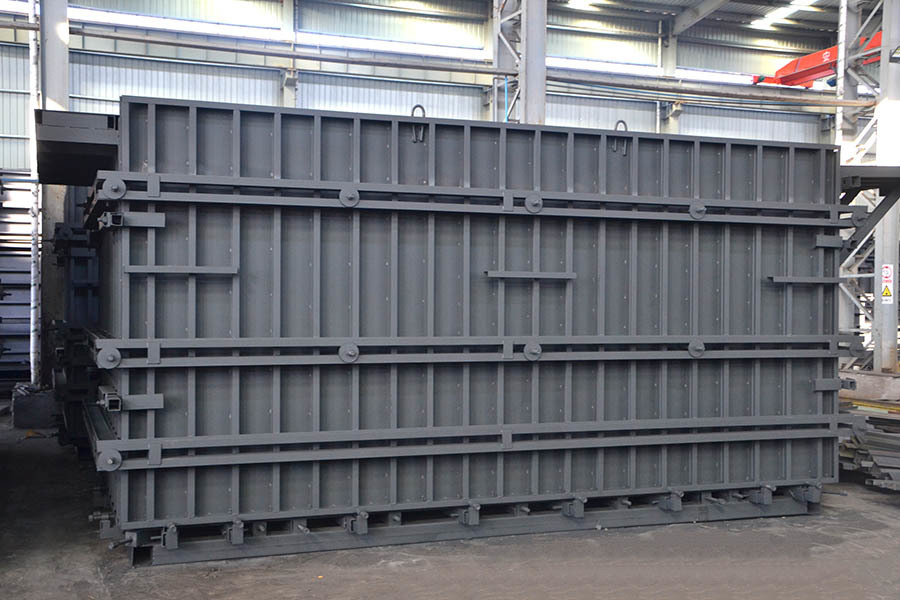
The most immediate shift in fourth-generation molds is the move away from single-piece steel bodies toward a two-part shell with replaceable wear inserts. That doesn’t sound dramatic until you handle one: the old versions wore unevenly around the fill port, and once the lip degraded, the whole mold had to go back for resurfacing. Now only the insert gets swapped, which cuts downtime on a production line more than any lab spec.
Another quiet change is in venting. Earlier molds relied on a few drilled holes that clogged within weeks, leading to trapped air pockets and weak corners in the cured blocks. The fourth-gen design routes gas through a shallow labyrinth cut into the upper flange, so the vents stay clear longer and release pressure more evenly. This also lets the mix settle without extra vibration, which reduces micro-cracking near the edges.
There’s also less guesswork in demolding. The new generation uses a graduated draft angle on the sidewalls, steeper at the base and flatter near the top, plus a low-friction ceramic coating that doesn’t wear off after repeated exposure to alkaline slurry. Operators notice it as a cleaner drop and fewer hammer strikes, but it’s really the combined effect of those geometry and surface changes.
Pressure Consistency Tests That Separate Workhorses from Disposable Units
Most pressure consistency tests burn through a checklist of static numbers, but the real tell comes from watching how a unit holds its curve under a shifting load. Workhorses don't just hit a target once they absorb the drift, recover without overshoot, and keep the needle steady when upstream flow stutters. Disposable units tend to nail the initial reading, then fade or hunt as soon as the demand profile changes, which makes field performance wildly different from bench specs.
A better approach is to run a ten-minute ramp where the setpoint dances between 40% and 85% of rated pressure every ninety seconds. Industrial-grade pumps and valves show a tight band with almost no lag, while cheaper builds reveal themselves through slow corrections, audible chattering, or a gradual loss of peak output after the third cycle. That accumulation of small failures is what separates a unit you can ignore for a year from one you're already planning to replace.
Beyond the gauge, listen and feel. Consistent machines run cooler and quieter under repeated testing because their seals and diaphragms aren't working overtime to chase pressure. The throwaway units get hot around the fittings, weep at the weep holes, and start making a thin whistling sound by the fifth iteration. That's not a defect in the test; it's the product telling you exactly which category it belongs in.
Seal Design Flaws You Won't Notice Until the First Leak
Many seal design flaws remain completely invisible during installation and initial testing. A subtle misalignment between the seal and the mating surface, for instance, may not cause an immediate leak but will gradually widen over thousands of thermal cycles. Similarly, choosing an elastomer with a slightly higher hardness might seem like it can withstand higher pressure, but it sacrifices compliance, making it unable to conform to tiny surface irregularities under low-pressure fluctuations. These flaws give no warning until the day a drop of oil or a wisp of gas appears.
Another common issue lies in the geometry of the seal groove. Designers often focus on compression percentage while ignoring fill ratio. If the groove is too narrow, the seal cannot deform sufficiently under pressure, potentially creating stress concentrations at the corners that eventually tear. Conversely, a groove that is too wide allows the seal to slowly extrude under pressure fluctuations, producing tiny extrusion marks that are almost impossible to detect before disassembly. The first leak often occurs months after equipment startup, and only then does tracing the cause reveal that the seal has permanently deformed.
Material compatibility with the operating fluid is also a hidden trap. Some seal materials perform well in static tests but gradually swell or harden after exposure to trace additives or cleaning agents. This change does not affect sealing performance initially, until the seal loses its resilience and can no longer compensate for slight separation of flange faces. In addition, surface finish that is too high or too low can cause problems—too high a finish may prevent the seal from gaining sufficient frictional anchoring, while too low a finish allows tiny leak paths to persist over time.
How to Spot a Mold That Can Survive a Full Pouring Season
Start by examining the gate and runner areas under bright light or with a dye penetrant. Thermal cycling leaves its mark there first, often as a web of fine cracks that look almost like dried mud. If you see those hairline fractures spreading away from the sprue or along the parting line, that mold has already started to fatigue. A mold meant to last an entire pouring season will show very little of this even after hundreds of cycles, because the steel hasn't been pushed past its thermal limit.
Next, look at how the mold handles heat distribution. Molds with thick, uniform walls and generous radii at sharp corners tend to shed stress instead of concentrating it. Check the cooling line layout too: if channels run close to high-wear surfaces without creating thin sections, the designer understood what a long campaign does to metal. Avoid molds that rely on a single massive core or have obvious hot spots where the metal can't cool evenly—those are the ones that warp or crack halfway through the season.
Finally, ask for the maintenance log, not just the sales pitch. A mold that survives a full season has been preheated correctly before every pour, cleaned without aggressive grinding, and stress-relieved on schedule. If the records show repeated weld repairs or unexplained dimensional shifts, walk away. The real test is consistency: a well-built mold will have a boring, predictable history with only routine upkeep, no drama.
Maintenance Habits That Quietly Extend or Kill Mold Lifespan
Many mold failures trace back to routines that feel harmless in the moment. A quick wipe with a stiff brush or a shot of compressed air might seem thorough, but if the operator skips checking vent slots and ejector pins for micro-debris, wear accelerates in ways that only show up as flash or sticking parts weeks later. The quiet killer is usually the habit of good enough cleaning—removing visible grime while leaving residue in corners that slowly corrodes surfaces or alters dimensional fit.
Lubrication habits matter more than most shops admit. Over-greasing guide pins and interlocks can trap fine particles and create a lapping compound that scores mating surfaces. Under-lubricating high-cycle areas leads to galling, especially on aluminum or untreated steel. The habit of using whatever grease is nearby, instead of a compatible high-temp or food-grade option when required, can shorten mold life dramatically. A simple daily log of lube points and volumes often catches problems before they become expensive.
Storage and startup routines also determine whether a mold reaches 100,000 cycles or dies at 30,000. Leaving a mold on the press overnight without rust preventative in a humid plant invites corrosion on polished cores and cavities. Starting a cold mold at full clamp tonnage without a warm-up cycle stresses plates and can crack thin steel sections. Shops that adopt a short pre-run checklist—check water lines, verify knockout stroke, inspect last-shot parts—tend to double or triple tool life without any major investment.
Field Notes from Contractors Who Switched Brands Recently
One remodeler we talked to had been running the same cordless drill line for eight years. He made the jump after a gearbox failure on a job site, and the replacement he grabbed from a different brand just felt better in his hand. Not a dramatic reason, but he said the switch came down to three weeks of no missed screws and a chuck that didn't slip once.
A roofing crew lead gave a similar account. His old nailer brand kept jamming in cold weather, so he borrowed a competitor's model from another crew. After two days, he bought four for his team. He mentioned the weight difference first, then the fact his guys stopped cussing at the tool. Sometimes that's all it takes.
There's also a concrete finisher who switched power trowel brands after a rental yard closed. He expected a learning curve, but the new machine's controls were intuitive enough that his apprentice ran it by lunch. Now he says he won't go back, mostly because the local dealer actually stocks wear parts on the shelf.
FAQ
The fourth generation typically moves away from bolted-together side plates to a rigid mono-block or cassette design, with integrated vibration channels and quick-change wear liners. Earlier generations focused on basic compaction; this one emphasizes uniform pressure distribution, faster cycle times, and modular replacement of high-wear parts without pulling the whole mold.
No single model is universally the most reliable because operating conditions vary widely. That said, units with a one-piece hardened frame, centrally greased bushings, and independently adjustable vibration motors consistently report fewer unplanned stops. Look for models that have been run for at least two full seasons in a similar climate and aggregate type to yours.
Ask the manufacturer for downtime logs from existing customers, not just sales brochures. Inspect the weld zones around the pressure plate and guide columns. A reliable mold usually has replaceable wear strips on all sliding surfaces, a hydraulic manifold with pressure test ports, and visible serial numbers on major components for traceability.
The most common failures show up at the vibration motor mounts, the quick-clamp hydraulic fittings, and the lower punch seals. If those areas are cheaply made, micro-cracks and oil leaks appear within the first few hundred cycles. Prevent this by checking bolt torque weekly and replacing seal kits before they harden.
Not always. You pay for better metallurgy, tighter machining tolerances, and factory testing, but some expensive molds are over-engineered for light use. A mid-range mold that matches your daily cycle target and uses standard, locally available seals and hoses can be more reliable in practice than a premium import with long spare part lead times.
Stick to a short daily routine: clean all guide rails, grease nipples, and check hydraulic oil temperature. Every 500 cycles, inspect the alignment pins and wear liners for scoring. Every 2,000 cycles, drain and filter the hydraulic fluid. Most reliability problems are not design flaws but skipped lubrication and ignored pressure fluctuations.
It is often underestimated. A simple PLC with manual override switches and clear fault codes beats a fancy touchscreen that fails in a dusty plant. Reliable fourth generation molds use sealed cabinets, vibration-isolated wiring, and pressure sensors that trigger an automatic stop before the mold is overloaded.
Look for at least a two-year structural warranty on the frame and a one-year warranty on hydraulic components, with replacement parts shipped within 72 hours. Avoid brands that only cover defects under normal laboratory conditions. A confident maker will also include a commissioning checklist and free training for the first mold change.
Conclusion
Fourth-generation hydraulic cement molds aren't just a rehash of older designs—the real shift is in pressure delivery. Older units hammered the mix with a single piston stroke, while the newer ones use staged compression and internal reservoirs to keep force steady across the entire pour. That sounds great on a spec sheet, but the pressure consistency test is what actually separates a mold you keep for years from one you toss after a single season. Run the same mix ten times and watch the gauge: if the needle bounces more than a few psi between cycles, the mold is already losing its grip. Seal design is the other quiet killer. Most leaks don't happen at the main gasket; they start at the corners where the seal seat is slightly off, or where the clamp plates flex under load. You won't notice it until you see a thin film of cement slurry oozing out on pour number forty. By then, the seal is chewed up and the pressure drops.
Spotting a mold that can survive a full pouring season comes down to a few physical details. Look for a solid one-piece frame instead of bolted rails, a seal groove that has no sharp bends, and wear plates that can be swapped without pulling the whole mold apart. Contractors we've talked to who switched brands recently all mention the same thing: the old mold died from neglect as much as design. A quick rinse after every pour, keeping the guide pins greased, and not cranking the clamps down to maximum every time adds months to the life. Some now run a "last pour of the day" with just water and a release agent to flush the seal seats. The most reliable fourth-gen mold isn't necessarily the one with the highest pressure rating. It's the one that holds pressure repeatably, has a seal system you can inspect in two minutes, and doesn't punish you for missing one cleaning cycle.
Contact Us
Contact Person: Zhang Zhenlai
Email: [email protected]
Tel/WhatsApp: 8618563210000
Website: https://en.lugongmachinery.com/