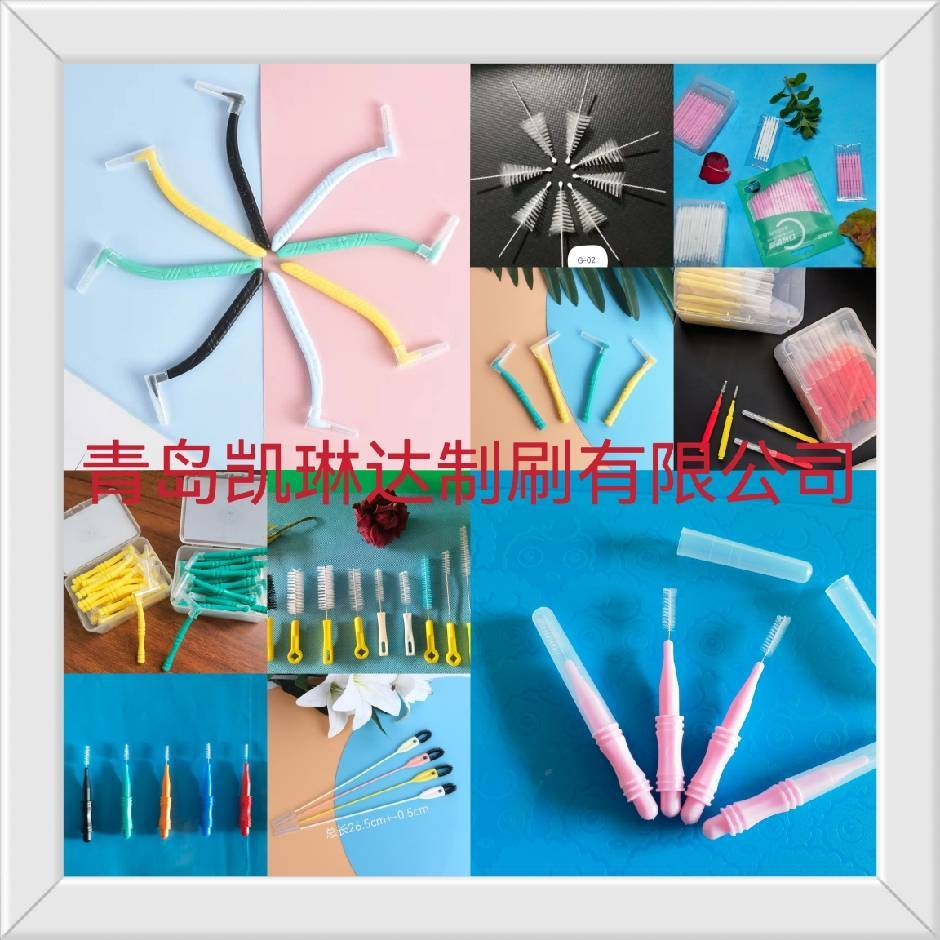

Custom Cervical Sampling Brush Factory: Key Factors for Quality Medical Device Production
2026-08-23
When it comes to cervical sampling, the brush is more than a simple tool—it’s a critical link between patient comfort and accurate diagnosis. But not all brushes are created equal, and the factory behind them makes all the difference. At KLDZS, customization and rigorous production standards turn a basic device into a reliable medical instrument. If you've ever wondered what separates a quality cervical sampling brush from the rest, the answer lies in the manufacturing details—and that’s exactly what we’re about to unpack.
Polymer Choices That Hold Up Under Repeated Sterilization
Repeated sterilization slowly erodes most polymer properties, but a few materials stand out when the cycle count climbs. Polyphenylsulfone (PPSU) and polyetheretherketone (PEEK) handle hundreds of autoclave runs without significant embrittlement because their high glass transition temperatures keep chain mobility low during steam exposure. PPSU's amber transparency is often used for instrument trays and handles, while PEEK finds its way into load-bearing components that need creep resistance even after gamma irradiation.
Chemical sterilants introduce a different set of demands. Polymers that tolerate steam may still crack under repeated exposure to hydrogen peroxide plasma or ethylene oxide. Polycarbonate, for example, retains clarity with low-temperature hydrogen peroxide but can turn brittle after repeated autoclaving. Silicone rubber remains flexible through many steam cycles, though it may absorb small amounts of water that affect dimensional stability. For chemically aggressive environments, fluoropolymers like PTFE offer nearly universal inertness, but their tendency to cold-flow under sustained load limits their use in tight-tolerance parts.
Selection should be driven by the specific sterilization method, total cycle count, mechanical loads, and whether the part is disposable or reusable. A practical approach involves running prototype parts through simulated cycles and measuring tensile strength, color shift, and dimensional change. Grades with optimized stabilizer packages or glass-fiber reinforcement can extend service life significantly, but they rarely match the baseline performance of PPSU or PEEK when steam autoclaving is the primary method.
Bristle Geometry Tuned for Cell Collection Efficiency
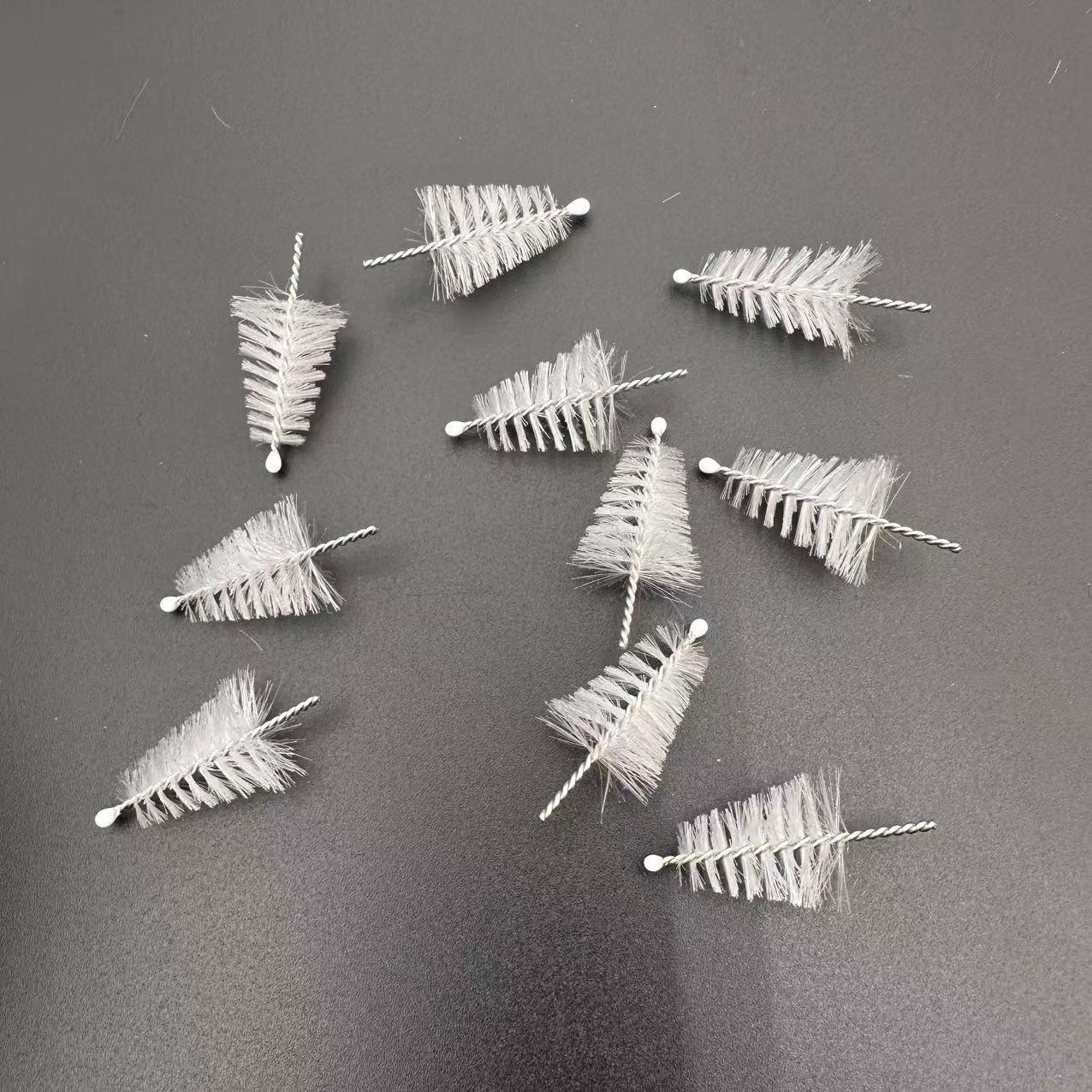
Bristle arrangement is one of the quiet variables that decides whether a sampling device lifts enough cells from a tissue surface. By varying bristle length, diameter, and spacing, the contact pattern can be shifted from a flat, uniform press to a more adaptive sweep. Shorter, stiffer bristles deliver localized pressure that dislodges cells from dense or keratinized areas, while longer, softer bristles follow shallow folds and gather cells from recessed regions without causing deep abrasion.
Tip shape adds another layer of control. Tapered or rounded tips lower the chance of cutting through epithelial layers, yet still create enough shear to release superficial cells into the brush. Spacing between bristles influences how easily those cells move from the contact zone into the interior of the tuft. If the gaps are too narrow, cells pack tightly and become difficult to transfer later; if they are too wide, large parts of the target area remain untouched. A layered density pattern, with a compact core and a more open perimeter, often improves both pickup and release.
The angle of the bristles relative to the shaft also affects collection during insertion and withdrawal. Slightly angled or spiraled rows produce a gentle wiping motion that draws cells across the surface, while vertical bristles rely mainly on direct pressure. When these geometric choices are tested against cell counts and sample quality, the result is a brush tuned to collect efficiently across varied tissue contours without increasing patient discomfort.
Custom Mold Engineering to Minimize Breakage Risk
Breakage in molded parts rarely stems from a single cause, so the mold design has to address several failure points at once. Sharp internal corners are replaced with generous radii, and wall transitions are tapered rather than stepped, reducing stress concentrations that often lead to cracking during ejection or end-use loading. Gate placement is selected to avoid knit lines in high-stress regions, and runner systems are balanced to prevent uneven filling that can create weak spots.
Material shrinkage and cooling behavior play a direct role in part durability. The mold incorporates conformal cooling channels that follow the part contour more closely than straight-line drilling, allowing for uniform temperature drop and lowering residual stresses. Ejector pin locations and sizes are mapped against the part geometry so that ejection forces are distributed over areas with enough structural support, rather than concentrating on thin ribs or bosses. This combination of thermal control and mechanical load management reduces the chance of micro-cracks forming right out of the tool.
Cleanroom Protocols That Exceed Baseline Regulatory Needs
Most facilities treat ISO 14644-1 classification as the finish line, running particle counts once or twice a year under static conditions and then moving on. Our cleanroom protocols push beyond that baseline by adding continuous particle monitoring during active manufacturing, with sensors placed at operator hand-offs and fill lines. Airflow velocity and pressure differentials are trended in real time, not just spot-checked, so any drift that could compromise the environment is caught before it becomes an excursion. This dynamic view catches transient contamination events that a static certification can miss entirely.
Personnel remain the largest variable in cleanroom performance, so we treat gowning and behavior as an ongoing verification rather than a one-time training box to tick. Entry into the core aseptic zone requires a three-stage gowning sequence, and every operator undergoes fingertip contact plate sampling at each entry, not just during initial qualification. Quarterly requalification includes practical aseptic technique assessments under video review, with coaching tied to specific motion patterns that create turbulence. That level of oversight is rare, but it directly reduces human-borne contamination in ways that generic SOP training cannot.
Cleaning and disinfection routines are similarly elevated beyond minimum expectations. Instead of relying on visual inspection after cleaning, we use ATP bioluminescence testing on high-touch surfaces weekly, with results tracked per room and shift. Disinfectants are rotated on a documented schedule that accounts for local microbial flora, not a generic monthly swap. When a result comes back above the action limit, the investigation starts immediately with resampling and root-cause analysis, rather than waiting for a full batch failure to trigger a response. This proactive stance keeps the cleanroom in a state of control that exceeds what baseline regulations demand.
In-Process Inspection Points That Stop Defects Early
Every production line has moments where a small flaw quietly slips into the work, only to become a costly problem later. The trick is to catch it the instant it appears, not after the batch is done. That means placing inspection points at the exact stages where errors most often creep in — right after a critical cut, before a coating cures, or when two parts first join. A quick visual check or a simple gauge test at these moments can save hours of rework and a pile of scrap.
Too many teams wait until the final audit, then wonder why so much material is already wasted. By moving inspection earlier, you turn each operator into a gatekeeper. They don't need to be quality engineers — just trained to spot the three or four things that commonly go wrong at their station. A small lamp, a mirror, a go/no-go fixture, or even a clearly marked photo of a bad part can be enough. When a defect is found, the line stops, the cause is addressed within minutes, and the root issue never gets a chance to multiply downstream.
The real payoff shows up when changeover happens or a new operator takes over. Early inspection points act like guardrails, catching setup errors before the first good piece is even made. Instead of discovering a misalignment after fifty units are already produced, you catch it on unit one, adjust, and move on. That's the difference between a line that reacts and a line that prevents — and it's a difference you can see in the daily yield numbers.
Lot-Level Traceability for Full Production Transparency
In discrete manufacturing, tracing a single lot from raw material intake through every workstation, test station, and packaging line closes the gap between what was planned and what actually happened. Each lot carries a unique identifier that links to real-time data—operator actions, machine parameters, environmental readings, and quality results. When a defect surfaces, teams can pull up the complete history in seconds instead of sifting through paper logs or disconnected spreadsheets.
This level of visibility also changes how suppliers and customers interact. A batch of components can be checked against the exact lot that went into a finished product, so recalls become surgical rather than sweeping. Production managers can spot drift early—like a slight temperature shift on a particular line—and correct it before a full lot is compromised.
Beyond containment, lot-level traceability supports continuous improvement. Comparing yield data across similar lots reveals which upstream variables actually matter. Over time, those insights feed back into process controls, making full production transparency not just a compliance exercise but a practical tool for reducing waste and protecting margins.
FAQ
An effective design typically uses soft, rounded bristle tips arranged at a slight spiral to gently collect endocervical cells without causing abrasion. The handle should be flexible yet firm enough for controlled rotation, and the overall brush length must accommodate varied cervical anatomies while minimizing insertion depth variability.
Medical-grade nylon or polyester bristles offer consistent stiffness and low particulate shedding, which are critical for preserving sample integrity. The plastic handle resin should be free of phthalates and heavy metals, and the entire assembly must withstand ethylene oxide or gamma sterilization without becoming brittle or discolored.
Beyond final visual inspection, a reliable factory runs automated bristle pull-force tests on every production lot, checks brush head diameter with optical comparators, and verifies that the twist wire or molded core meets torque specifications. Environmental monitoring of the cleanroom for particulates and bioburden is equally important.
Each brush must be sealed in a peelable pouch that maintains sterility until the moment of use, with a validated seal strength that prevents accidental opening or contamination. Packaging should also include clear lot codes and expiration dates, and the materials must be compatible with the chosen sterilization method to avoid fiber degradation.
Yes, customization often works through adjustable mold inserts or interchangeable bristle wheels that allow head diameters from 8 to 15 millimeters and bristle counts from 40 to 120 fibers. The factory should provide 3D-printed prototypes for clinician feedback before committing to production tooling, ensuring the final brush matches the intended collection technique.
Modern factories use in vitro cytotoxicity assays on finished devices, plus chemical characterization per ISO 10993-18 to screen for leachable irritants. They also maintain a biological evaluation plan that documents the rationale for material choices and any clinical history of similar devices, reducing the need for new in vivo studies.
A complete device history record should include incoming raw material lot numbers, sterilization cycle parameters, in-process inspection data, and final release signatures. The factory must also maintain a forward and backward traceability system that can link a finished brush to the specific patient test within hours, not days, in the event of a field action.
Conclusion
Material integrity sits at the heart of any cervical sampling brush that survives repeated autoclave cycles without cracking or losing tip resilience. Instead of settling for off-the-shelf resins, the factory selects polymers with documented resistance to steam, chemical sterilants, and thermal shock—then validates them through accelerated aging tests that mirror actual clinical reuse. Bristle geometry is engineered cell by cell, so to speak: softer outer filaments sweep the transformation zone gently, while a slightly stiffer central tuft dislodges enough squamous and columnar cells for a readable sample. Custom mold engineering closes the loop by eliminating micro-gaps and sharp transitions where stress concentrates; gates and ejector pins are positioned away from the brush neck, reducing the chance of snap-off mid-procedure.
Cleanroom practices go beyond ISO 14644 checklists by pairing positive air pressure with daily settle plates and surface sampling in high-traffic mold and packaging zones. Every batch moves through in-process inspection stations—after bristle insertion, after handle bonding, and after final pouch seal—where dimensional gauges and vision systems catch crooked tufts or incomplete welds before they ever reach sterilization. Lot-level traceability ties each raw resin lot, mold cavity number, operator shift, and sterilization cycle to the finished device code. That means a single returned brush can be traced backward to the exact production hour and forward to every kit that shared the same materials, keeping corrective actions precise and recall scope limited to what actually matters.
Contact Us
Contact Person: Caiju Zhang
Email: [email protected]
Tel/WhatsApp: +86 14763963294
Website: https://www.kldbrush.com