

Corrugated Box Vendor: How to Find a Partner That Delivers Quality and Consistency
2026-10-26
Finding a corrugated box vendor who won't let you down is trickier than it sounds. Too many suppliers promise the moon on the first call, then deliver warped flaps and late shipments once the contract is signed. That inconsistency can quietly eat into your product protection, your brand image, and your bottom line. At Imagine Craft Packaging, we believe you shouldn't have to gamble on the basics. In this guide, we'll walk through what actually separates a dependable box partner from a costly headache—so you can make a choice you won't regret.
Nail Down the Exact Board Grade and Flute Profile Before You Talk Price
Most buyers shoot themselves in the foot by asking for a price before they've pinned down the exact board combination. A carton made from 35 lb recycled medium with a B flute will price out nothing like one built on 42 lb kraft liner over an E flute, even if both boxes look similar on a shelf. If you don't specify the grade and flute profile upfront, you'll get three quotes that aren't comparable.
Board grade dictates burst strength, puncture resistance, and how well the box survives humid environments. Flute profile controls cushioning, stacking strength, and print surface. An A flute gives you thick cushioning but eats warehouse space. A C flute balances the two. E or F flutes suit retail packaging where graphics matter more than drop protection. Skip this step and you risk buying a box that collapses in transit or overpaying for fiber you don't need.
Write down the exact spec before sending a quote request: liner grades on both faces, medium type, flute letter, and any coatings or treatments. Something like "single wall, C flute, 42 lb kraft outer / 23 lb semi-chem medium / 33 lb test liner inner" tells a supplier exactly what to quote. It also gives you a baseline to push back if a cheaper alternative shows up later with thinner walls.
Ask for a Line Trial, Not a Polished Sample from the Sales Kit
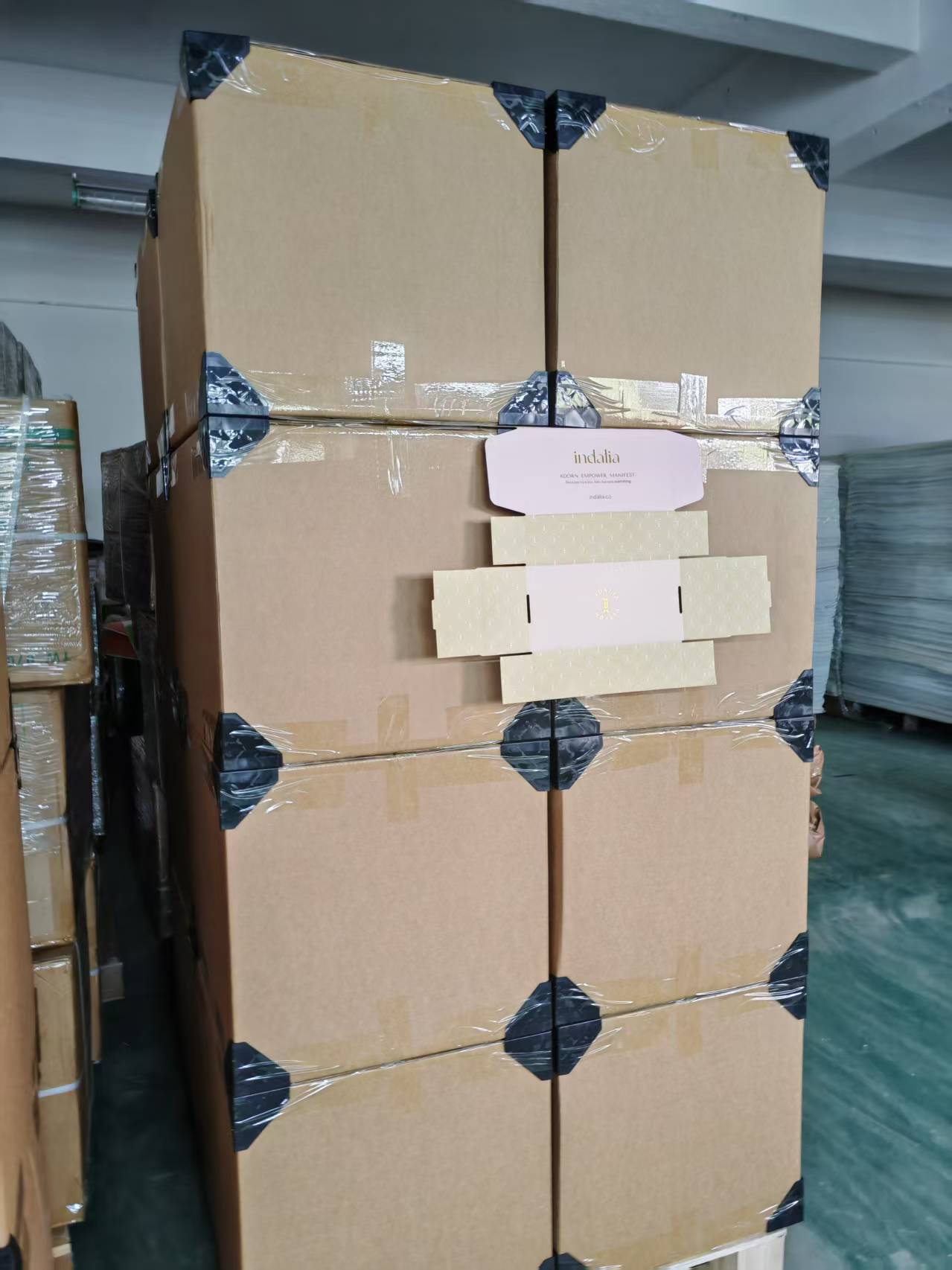
Most suppliers will happily send you a single, perfectly finished sample from their sales kit. It looks great on your desk, but it tells you almost nothing about how their production line actually behaves day to day. A polished sample has been handled, tweaked, and inspected by someone whose only job is to make that one piece flawless. It doesn't reveal whether the factory can maintain that quality when they're running 5,000 units on a Tuesday afternoon with half the staff on lunch break.
Instead, ask for a line trial. That means a small production run pulled directly from the normal manufacturing process, not a hand-selected showpiece. You want to see the raw output before any special sorting or rework. Look at the variation from piece to piece, the consistency of fit and finish, and whether the numbers match what the factory claims on paper. A line trial exposes the real tolerances, the actual defect rate, and the kind of problems you'll face when you order in volume.
One practical approach is to request a trial batch of 50 to 100 pieces and have the supplier send them unlabeled, in the same packaging they'd use for bulk shipping. Then inspect them yourself or have a third party do it. If you spot three or four out-of-spec items in a small batch, imagine that ratio scaled up to a container load. That kind of evidence is far more useful than any glossy sample, and it lets you negotiate fixes before you commit real money.
Check Their Supply Chain for Paper Stock Stability, Not Just Delivery Dates
Anyone can promise a delivery date, but what happens when the paper runs out before the order is even printed? A surprising number of print vendors operate on a just-in-time basis, which means they don't hold inventory of the specific stock you need. If you ask them directly about delivery dates, they'll give you a confident answer. What you should be asking instead is: how much of this exact paper do they have on hand right now, and what's their backup plan if it suddenly goes out of stock at the mill?
Supply chains for paper are less stable than they were a decade ago, with mills consolidating, grades being discontinued, and allocations tightening for specialty stocks. A vendor who only orders paper after you sign the contract is essentially gambling with your timeline. Look for partners who can show you a physical inventory or at least a written confirmation from their supplier that your stock is reserved. That kind of transparency tells you they've thought beyond the quote stage.
It's not about being difficult; it's about avoiding the classic trap where a beautiful proof gets delayed for six weeks because the paper is backordered. Ask what happens if the stock is damaged in transit or if the mill has a production hiccup. A serious vendor will have alternative substrates in mind that don't compromise your design, and they'll walk you through those options before you're stuck waiting with an empty press.
Compare Rejection Rates from Current Customers, Not Just Testimonials
Testimonials tend to surface only the happiest voices, which is why they rarely predict how many existing customers quietly walk away. A more revealing metric sits in the rejection rates among your current accounts. When a long-time user declines a renewal, upgrade, or additional service, that single data point often exposes friction that a dozen positive quotes can hide.
Tracking these refusals over time shows whether dissatisfaction is spreading or isolated. One or two churned accounts might be bad luck, but a rising pattern of current customers saying no indicates a product or support issue that hasn't reached public complaints yet. This kind of internal signal is far more actionable than curated success stories.
Instead of relying on a wall of praise, build a simple weekly review of each rejection reason from active clients. Categorize them by pricing, feature gaps, or service delays. The goal isn't to punish sales teams but to spot the earliest warning signs before they appear in broader market feedback.
See How They Handle a Rush Order or a Last-Minute Change
When a client calls on a Tuesday afternoon needing forty engraved acrylic awards by Friday morning, most suppliers quietly panic. The ones worth keeping don't. Watch how they respond: the project lead immediately pulls up the production calendar, checks which machines are already running hot, and asks two specific questions—what's the absolute drop-dead time for delivery, and are there any design files that can be shared right now? No vague promises, no “we'll see what we can do.” They either re-sequence the floor or tell you within the hour that it can't be done without compromising quality.
A last-minute change is where you really learn who you're dealing with. Say the event theme shifts from navy to charcoal, or the logo gets a font tweak on Wednesday morning. A solid vendor treats it as a normal part of the workflow, not an interruption. They'll pull up the digital proof, redline the adjustment, and confirm the new Pantone or vector file in a single email thread. You can hear it in their voice—no sighing, no upcharge lecture—just a calm question about whether the revised files are final and if the ship date still holds.
The best test is to give them a small rush job before you trust them with the big one. Ask for a dozen badges with a short turnaround and a minor art change halfway through. If they hit the deadline without excuses, keep your contact's direct line and remember how they communicated under pressure. That's the supplier you want in your corner when the annual gala is three days away and the CEO decides the tagline should be one word shorter.
Build a Joint Quality Checklist That Evolves with Your Packaging Needs
A static checklist rarely survives contact with a changing product line. Instead of locking yourself into a fixed set of boxes to tick, treat the checklist as a living document that grows with every new material, supplier, or shipping route you adopt. Start with core quality gates—seal integrity, drop performance, print registration, and moisture resistance—then add or retire items based on what you actually observe on the line. When a new film or adhesive enters rotation, bring the relevant stakeholders together and ask what failure would look like, then turn that answer into a measurable checkpoint. This way, the checklist doesn't just record quality; it teaches your team what quality means for each specific package.
The real value comes from making the checklist a collaborative artifact rather than a top-down mandate. Packaging engineers, line operators, and even downstream logistics partners each see different failure modes. A joint checklist should reflect that collective eyesight. For example, an operator might flag that a certain corrugated flute tears more often in humid months, while a warehouse lead notices that pallet overhang causes corner crush. By folding those insights into the same document—and revisiting it at a set cadence, say quarterly or after any major spec change—you keep the checklist honest and relevant. It becomes less about compliance and more about shared ownership of the final package's condition.
To make evolution painless, structure the checklist in layers: a small set of non-negotiable must-haves that apply to every shipment, plus modular add-ons for specific product categories, customer requirements, or seasonal risks. When a new packaging need emerges, you don't rewrite the whole document—you simply add or adjust a module. This approach prevents checklist bloat, where too many irrelevant items cause fatigue and missed defects. Over time, you'll notice the checklist starts to mirror your actual packaging challenges rather than an idealized generic standard, and that reflection is exactly what keeps defects from slipping through the cracks.
FAQ
Look beyond the sales pitch and ask to see their most recent third-party board test reports. If they hesitate or only show internal numbers, that's a red flag. You want to confirm the board grade matches what they quote, not just the price.
Check whether they run multiple corrugators or have backup lines. A vendor with one bottleneck machine will struggle during your peak season. Ask for references from clients with similar order sizes, and ask those references about consistency over the last six months, not just the first delivery.
Not always, but it often means thinner liners, less medium, or cheaper glue. Instead of comparing unit prices, compare the combined board basis weight, ECT rating, and flute profile. Sometimes a box that costs 5% more carries 20% more stacking strength, which saves money on damage claims.
Watch how they handle incoming roll stock. Do they store it in a humidity-controlled area? Do they run regular splicing and tension checks? Consistent boxes start with stable paper moisture and caliper, so if the plant looks chaotic or the rolls are exposed to weather, walk away.
Request the actual test data for your specific box style, not a general catalog sheet. Ask for ECT or Mullen burst values from the same production line they'll use for your orders. A serious vendor will run ISTA or TAPPI methods and can show pass/fail results with dates and batch numbers.
A box that fits your product exactly uses less void fill and reduces damage. Ask if they offer CAD-based design services or on-site packaging audits. If they can redesign a die-cut or inner partition to cut 2 inches of corrugated without losing protection, that's a partner, not just a supplier.
Give them one of your current boxes and ask for a first article sample with the flute direction, linerboard type, and scoring depth labeled. Compare the sample under real shipping conditions, not just on a table. A good vendor will document the differences and suggest improvements if your current box has weak spots.
Look at their reject rate and how they handle problems. Do they have a closed-loop quality system where every batch gets checked for dimension, print position, and joint strength? Ask about their cap on out-of-spec shipments. Vendors who track that data and share it without being asked tend to be more reliable.
Conclusion
Choosing a corrugated box vendor isn't about who quotes the lowest price first. It's about knowing exactly what your product needs before that conversation even starts. If you haven't nailed down the precise board grade and flute profile, any price comparison is meaningless. Ask for an actual line trial on your packaging line—not a cherry-picked sample from a sales kit that has never touched your equipment. A real trial exposes how the boxes handle your automated case erectors, conveyors, and palletizing patterns.
Then look behind the delivery promise. Does the vendor have stable paper stock sources, or are they scrambling month to month? That instability shows up later as inconsistent corrugate thickness or burst strength. Ask current customers for rejection rates, not just glowing testimonials. And test how the vendor reacts when you need a rush order or a last-minute spec change—do they push back or adapt quickly? Finally, build a joint quality checklist that you both review as your packaging requirements evolve. A vendor that does all this becomes less like a supplier and more like an extension of your own operation.
Contact Us
Contact Person: Sunnie
Email: [email protected]
Tel/WhatsApp: +8615818596517
Website: https://www.imagine-craft.com/