

Color Masterbatch Brand: Premium Color Solutions for Plastic Manufacturing
2026-10-22
Every plastic product starts with a vision, but bringing that vision to life demands more than just resin and machinery—it requires color that performs. At Xinwancai, we understand that the right masterbatch isn't just about pigment; it's about consistency, durability, and turning raw polymer into a premium finished good. In this blog, we’ll explore the key factors behind selecting a color masterbatch partner that truly delivers, and why leading manufacturers are making the switch.
When Color Needs to Survive the Molding Process
In injection molding, color isn’t just a cosmetic layer—it’s a material component that has to endure the same heat, pressure, and shear as the polymer itself. Many organic pigments start to degrade above 260°C, leading to dramatic shifts in hue or, worse, a chalky surface finish. Formulators often switch to inorganic alternatives like iron oxide or mixed-metal oxides, but these bring their own trade-offs in saturation and cost.
Shear is another overlooked killer. High-speed filling through narrow gates can tear apart pigment agglomerates, causing streaks or color fade in thin-walled parts. Pre-dispersed color concentrates with optimized carrier resins help, but the real trick is matching the carrier’s melt flow to the base resin. If the carrier flows too easily, it migrates to the surface and leaves a visible bloom; if it’s too viscous, you get uneven distribution and visible swirl marks. Even a small shift in hold pressure or barrel temperature can pull the final shade away from the approved standard, so process control is just as critical as pigment selection.
The Case for Custom Color Matching Over Off-the-Shelf
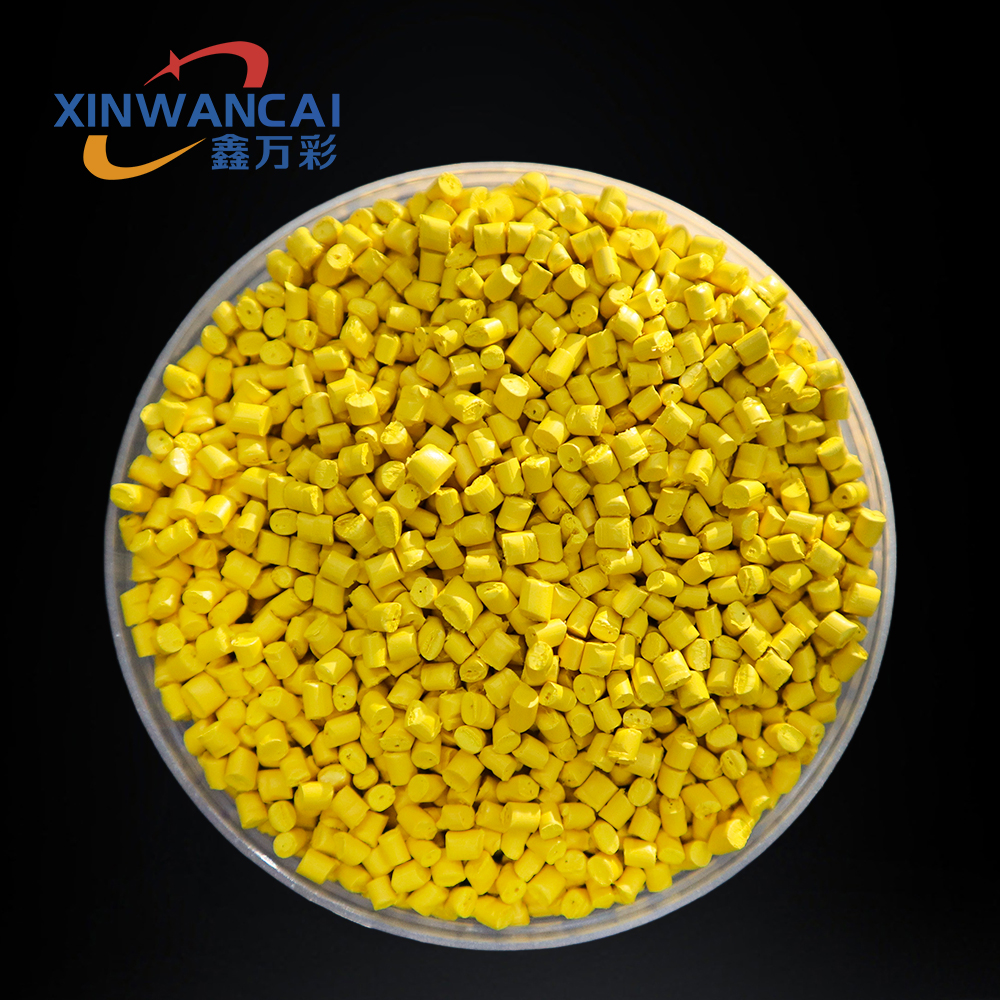
Custom color matching isn’t just about getting a shade that looks close enough—it’s about solving the quiet annoyances that standard options ignore. Off-the-shelf products force you to adapt your vision to whatever happens to be in stock, which often means settling for a hue that’s slightly too warm, slightly too dull, or just not quite right in your specific lighting. Custom matching flips that relationship: you start with the exact color you need, whether it’s pulled from a fabric swatch, a brand palette, or a chip of old paint, and the finish is built around that reference. This removes the guesswork and the endless back-and-forth of trying to “make do,” giving you a result that feels intentional from the first application.
There’s also a practical side that rarely gets talked about—consistency across different materials and batches. When you buy off-the-shelf, you might find the same color name looks noticeably different on metal than it does on wood, or that a second can of “exact same” paint shows a slight drift from the first. Custom matching services typically use controlled pigment blends and testing against your reference under multiple light sources, so what you approve is what you get, again and again. For anyone working on a project where colors need to align across trim, cabinets, walls, or even packaging, that repeatability saves time and avoids the frustration of discovering mismatches after the fact.
Beyond purely functional benefits, custom color matching lets you create something that doesn’t already exist on a shelf. Many standard lines follow trends, which means you’ll see a lot of careful neutrals or predictable accent colors repeated across brands. A custom match gives you the freedom to bring in a shade from a vintage tile, a piece of art, or a specific memory—something with personal or historical weight. That level of specificity makes the finished space feel less like a showroom and more like a deliberate, lived-in choice, which is exactly the kind of quiet distinction that off-the-shelf options rarely provide.
How Dispersion Quality Quietly Shapes Your Bottom Line
A mill base that barely passes a Hegman gauge check might look fine on paper, but it’s already costing you money. Poor pigment wetting forces longer grind times, raises energy draw, and leaves oversized particles that clog filters or force a rework. Those extra hours and scrapped batches don’t show up as a line item called “bad dispersion,” yet they quietly eat into margin week after week.
The financial drag also travels downstream. Unstable dispersions lead to viscosity drift, color strength swings, and settling in the can—problems your customers notice long before you do. A returned pallet of tinted coating or a lost repeat order has a cost that’s hard to capture in a spreadsheet but very real on the P&L. Every reformulation or added stabilizer is a patch, not a fix.
Investing in a robust dispersion process—better wetting agents, optimized bead size, tighter temperature control—usually pays for itself faster than expected. Batch-to-batch consistency rises, first-pass yield improves, and your production schedule stops being held hostage by rework. That’s how a supposedly technical detail becomes a quiet lever for gross margin.
Beyond Aesthetics: What Premium Masterbatch Does to Polymer Properties
Most people picture masterbatch as a way to add color, but premium grades quietly reshape how a polymer behaves under load, heat, and UV exposure. The right formulation can lift tensile strength by a few percentage points, push heat deflection temperature upward, or make a brittle resin survive impacts that would normally crack it. These shifts rarely show up on a datasheet headline, yet they determine whether a part warps in a hot car or snaps during assembly.
Dispersion quality is the hidden lever. When pigment and additive particles clump together, they create stress concentrators that undermine mechanical properties. Premium masterbatch suppliers use longer mixing cycles, higher-shear extrusion, and surface-treated pigments to break agglomerates down to sub-micron sizes. The result is a more uniform load path through the polymer matrix, which translates directly into better elongation at break and fatigue resistance.
Functional additives often ride along in these concentrates, turning a simple color match into a property upgrade. UV stabilizers, nucleating agents, slip aids, and antistatic packages can be blended in at precisely controlled let-down ratios. Because the masterbatch producer pre-disperses these ingredients under controlled conditions, the molder avoids the trial-and-error of dry blending powders, and the final part shows tighter consistency from shot to shot. That consistency is what separates a premium masterbatch from a commodity colorant.
Batch-to-Batch Consistency Without the Guesswork
When every batch carries the same viscosity, color, and particle distribution without relying on constant tweaking, manufacturing shifts from a game of chance to a predictable routine. The real lever isn't luck—it's a closed-loop feedback system that corrects raw material drift before it ever reaches the mixer. Operators stop chasing variations and start trusting the process, because the data tells them what's coming next, not what already went wrong.
Suppliers rarely admit when their feedstock quietly drifts a few percentage points. But a robust recipe management layer paired with inline spectroscopy can flag those shifts early. Instead of discovering a bad batch during final QC, you adjust the blend at the point of impact. That's where consistency lives: in the smallest upstream corrections, not in heroic downstream saves.
The payoff shows up in reduced scrap, fewer reworks, and a night shift that doesn't call the lab every two hours. More importantly, your customers stop sending back samples with handwritten question marks. They simply receive the same product in July that they got in January—and that trust is worth more than any certificate of analysis.
Matching Pantone Shades in Recycled and Bio-Based Resins
Matching a Pantone reference in recycled or bio-based resins rarely works with the same pigment load used in virgin material. Post-consumer streams carry traces of inks, labels, and degradation products that shift the base color toward yellow, gray, or brown, while many bio-based polymers start with a warm off-white tone. Measure the natural color of each incoming lot with a spectrophotometer first, then build your colorant formula from that measured baseline rather than from a generic data sheet.
Pigment adjustments need to be small, lot-specific, and often counterintuitive. A tiny amount of violet or blue can neutralize yellowing in recycled polypropylene, while high-opacity grades may need less titanium dioxide because the recycled fraction already scatters light. For translucent or natural bio-based materials, thickness and crystallinity change perceived color almost as much as the pigments do, so keep mold temperature, cooling rate, and wall thickness consistent between the color approval sample and production parts.
Physical reference chips should be molded from the same resin blend that will run in production, not from a standard lab plaque. View them under D65, TL84, and incandescent light to catch metamerism, and record pigment percentages by weight for each supplier batch. Recycled feedstock can shift from one shipment to the next, so a formula that matches this month may need a small correction next month. Agree on a Delta E tolerance early with the customer and keep the conversation on measurable color difference instead of subjective “looks close.”
FAQ
The formulations lean on high-load pigments and a tightly controlled dispersion process. You get vivid, repeatable color at lower let-down ratios, which helps keep mechanical properties intact and reduces total coloring cost.
Yes. Specific carriers and heat-stable pigments are selected for engineering plastics, so there is no noticeable color shift or degradation during molding or extrusion at elevated temperatures.
We match against physical chips, Pantone references, or spectral data. The lab usually provides a pressed-plaque sample within a few working days, then adjusts Delta E to below 0.5 before production batches are released.
The portfolio covers polyolefins, styrenics, PET, polycarbonate, nylon, ABS, and several bio-based resins. Each base is chosen to match the host polymer's melt flow and compatibility requirements.
Raw pigments are pre-tested, and every batch is measured on a spectrophotometer against a locked digital standard. Only lots within tight CIELAB tolerances ship, and retained samples are kept for traceability.
Yes, UV-stabilized and weather-resistant grades are available. They use lightfast pigments and, when needed, co-stabilizers to hold color and surface appearance through years of sun and weather exposure.
Standard pellet form works for most dosing systems, but powder and micro-granule versions are offered for thin films, fibers, or difficult-to-feed processes. Liquid color is available on request for high-speed molding lines.
You can send a small resin sample or part target, and the lab will prepare a trial batch, often within a week. Technical staff can join the trial call or visit to fine-tune dosing and processing parameters.
Conclusion
When color has to survive the molding process, off-the-shelf options rarely hold up. Custom color matching isn't just about hitting a target shade—it's about engineering a formulation that withstands heat, shear, and residence time without shifting or fading. A premium masterbatch brand treats dispersion quality as a quiet profit driver: poor dispersion leads to specks, weak spots, and higher reject rates, while uniform pigment distribution keeps downstream processing smooth and scrap rates low. Beyond aesthetics, the right carrier resin and additive package can preserve or even enhance polymer properties like impact strength, UV stability, and flow, so the color becomes part of the material's performance story rather than a compromise.
Batch-to-batch consistency removes the guesswork from production planning. Instead of adjusting process parameters for every lot, manufacturers can rely on tight color tolerances and repeatable melt behavior. This becomes especially critical when matching Pantone shades in recycled or bio-based resins, where feedstock variability and impurities can wreak havoc on color accuracy. A premium masterbatch supplier anticipates those challenges with specialized pigment systems and stabilizers, delivering the same visual identity across virgin, post-consumer, and bio-polymer runs. The result is a color solution that works with the material, the machine, and the market—not just a pretty pellet.
Contact Us
Contact Person: JACK
Email: [email protected]
Tel/WhatsApp: 86 18650130917
Website: https://www.xinwancai.com/