

Chinese Fanfold Corrugated Cardboard Delivers Reliable Protection for Modern Packaging
2026-10-16
When a fragile product arrives cracked or a heavy item gets crushed in transit, the blame usually falls on the packaging. Modern supply chains demand more than just a box—they need engineered protection that flexes without failing. That’s where Chinese fanfold corrugated cardboard comes in: a versatile, high-strength material that bends, folds, and cushions in ways standard sheets simply can’t. Unlike rigid pre-formed cartons, fanfold board allows custom sizing on the fly, reducing void fill and eliminating wasted space. ShiTeng Packaging has refined this material for today’s e-commerce and industrial demands, delivering reliable defense against drops, vibrations, and stacking pressure. But does it really outperform traditional corrugated? Stick around—we’re about to unpack the mechanics behind its protective edge.
How Fanfold Corrugated Cardboard Holds Up Against Rough Handling
Fanfold corrugated cardboard earns its reputation the hard way—by surviving drops, scrapes, and the kind of punishment that would leave lesser packaging crumpled in a corner. The secret lies in its fluted inner layer, which acts like a series of tiny shock absorbers. When a heavy box lands on an edge or a pallet jack clips a stack, the flutes compress and distribute the force across a wider area instead of letting it concentrate at a single point. That means the board can bounce back from impacts that would crack solid fiberboard or tear through single-wall alternatives.
Another advantage shows up during repeated handling. Fanfold stock is manufactured with a higher density of fibers in the liner sheets, giving it what packaging engineers call “wet strength retention” even before any moisture is introduced. So when a warehouse worker drags a bundle across a gritty concrete floor or a forklift operator nudges a stack into place, the surface resists abrasion and edge crushing. It's not indestructible, of course—hit it hard enough with a steel toe and you'll leave a mark—but for the everyday rough-and-tumble of loading docks and distribution centers, it holds its shape longer than most people expect.
What really sets fanfold apart, though, is how it responds to being flexed and re-flattened. Because it ships in continuous, accordion-folded lengths, workers often have to pull sections apart and snap them into a flat position. Cheaper corrugated materials tend to lose structural integrity after a few cycles of folding and unfolding, developing soft creases that weaken the entire sheet. Fanfold's construction, with its balanced liner weights and precise flute geometry, keeps its rigidity through hundreds of those cycles. That's why it remains a go-to for void fill, layer padding, and protective wraps in operations where boxes are stacked, strapped, and shipped through multiple handlers before reaching the final destination.
Chinese Manufacturers' Secret to Lightweight Yet Tough Packaging
At the heart of this approach is a willingness to rethink material blends from the ground up. Many Chinese producers combine high-flow polypropylene with precisely dosed mineral fillers like talc or calcium carbonate, then use multi-layer coextrusion to place stiff, thin skins over a microcellular core. The result is a wall section that weighs far less than solid plastic but still resists buckling under stack loads.
Tooling precision also plays an outsized role. Instead of simply thinning a standard design, engineers tweak rib patterns, corner radii, and draft angles until the part withstands repeated drops and vibration without cracking. Some factories run in-line regrind systems that feed controlled amounts of recycled flake back into the melt, trimming both material cost and weight while keeping impact strength within tight tolerances.
The real secret, though, is iteration speed. Because mold shops and compounding lines sit close to assembly plants, a packaging concept can move from CAD to pilot run in days, not months. That lets manufacturers test dozens of lightweighting ideas—honeycomb cores, gas-assisted voids, thin-wall injection with nitrogen counterpressure—and keep only the ones that survive brutal shipping simulations.
Custom Fanfold Panels That Fit Any Product Like a Glove
Fanfold panels cut to your exact product envelope remove the usual workarounds—no trimming oversize blanks, no stacking shims to close gaps. Each sheet arrives scored to bend where your corners actually land, so the wrap feels less like an applied layer and more like the product's own skin. The fit stays consistent from the first unit to the last because the panel dimensions follow your CAD file, not a generic tolerance band.
Small variations in corner radius or edge thickness don't get averaged out. The panel supplier adjusts the cut and crease lines to match the specific footprint, including recessed areas and side cutouts, so installation time drops and the finished surface stays crisp under handling. That level of fit also reduces adhesive overhang and edge lifting, which are the usual first signs a stock panel was forced to do a job it wasn't shaped for.
Cutting Warehouse Clutter with Stackable Fanfold Sheets
Warehouse floors often end up littered with loose cardboard, empty boxes, and awkward rolls of padding. It’s a familiar sight: aisles narrowed by stacks of flattened cartons, workers stepping over discarded scraps, and time lost hunting for the right material. This clutter doesn’t just look messy—it slows down packing and increases the chance of trips or damage to inventory.
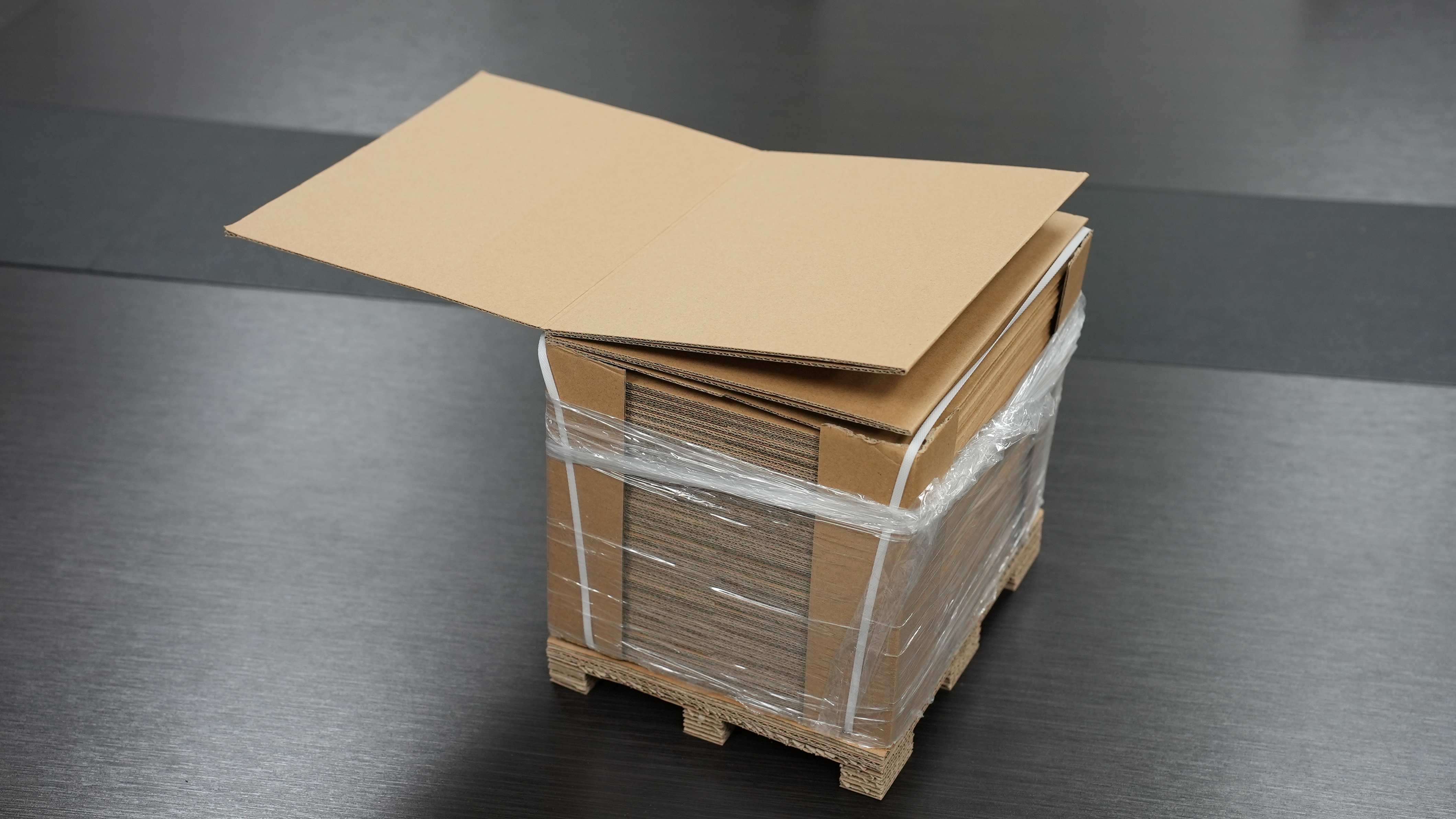
Stackable fanfold sheets offer a straightforward fix. These pre-scored, continuous cardboard panels fold flat into a compact block that sits neatly on a shelf or against a wall. Instead of wrestling with bulky boxes or tangled roll stock, your team can grab a single stack, tear off exactly what’s needed for each shipment, and put the rest back without creating a mess. The uniform size and shape mean multiple stacks line up perfectly, using vertical space rather than sprawling across the floor.
What really changes is the daily workflow. When packing materials have a dedicated, tidy home, employees stop wasting minutes searching and start moving orders out the door. Less clutter also means fewer hiding spots for dirt and pests, and a cleaner workspace tends to encourage everyone to keep it that way. Over time, the habit of stacking rather than scattering becomes second nature, and the warehouse feels less like a storage cave and more like an efficient operation.
Protecting Fragile Items from Drop to Doorstep Without Extra Padding
Every carrier tosses boxes. It is not personal, just speed. So the real challenge is not asking for gentleness, it is designing for the drop. Start by making the item itself the first line of defense. Wrap hollow ceramics or glassware with a single layer of corrugated cardboard cut to size, then tape it snugly. That slight air gap does more than a mountain of newsprint.
Use the box geometry to your advantage. Instead of centering the fragile piece and surrounding it with crumpled paper, wedge it between two cushioning points that already exist inside the package — the folded flaps, a rigid product box, or a tightly rolled magazine. Press the item against one corner so it cannot build momentum when the box is thrown. Momentum, not impact, causes most cracks.
Finally, seal the package as if it will be dropped from waist height onto concrete. Reinforce the bottom with a strip of tape across the full length, not just the seam. If the item rattles when you shake the box gently, add a single folded sheet of cardboard against the opposite side. That is usually enough to stop the internal movement that leads to chips and fractures. Less padding, but smarter placement, often wins.
Recyclable Cushioning That Keeps Returns and Waste Low
Most protective packaging has a one-way trip: it absorbs a few bumps, then lands in a landfill. Recyclable cushioning flips that pattern by using materials like molded pulp, corrugated cardboard baffles, or starch-based foams that can go straight into a curbside bin after unboxing. These options tend to be just as effective at absorbing shock as polyethylene foam, but they don't leave behind a trail of plastic film that customers have to wrestle with or feel guilty about throwing away.
A less obvious benefit shows up in return rates. When cushioning is cut to fit the product instead of stuffed loosely into a box, items shift less during transit. That means fewer crushed corners and fewer broken seals, which directly reduces the number of packages sent back. Because the material is recyclable, any packaging that does end up being returned or exchanged doesn't add another layer of hard-to-dispose waste to the process.
Some companies are pairing recyclable cushioning with reusable outer boxes, creating a loop where only the inner protective layer is recycled after each trip. This keeps the waste stream thin while still giving fragile goods the protection they need. The result is packaging that works with the way people actually recycle at home, rather than asking them to make special trips or store bulky materials for drop-off programs.
FAQ
Pre-made boxes leave a lot of empty space, so items can shift and get damaged. Fanfold sheets let you cut the exact panel length you need, wrap the product tightly, and add just enough cushioning at the corners without excess material.
Because the cardboard arrives as flat, stacked panels instead of assembled boxes, you can store a large volume in a fraction of the floor space. This also means fewer restocking trips and less clutter around packing stations.
Yes, Chinese fanfold corrugated board often uses high-strength fluting and liner grades. When folded into multi-layer wraps or corner protectors, it resists punctures and distributes compression force evenly, keeping heavy items stable during transit.
Absolutely. Many machines can dispense, cut, and fold fanfold board on demand. This speeds up packing cycles and reduces repetitive manual cutting, which is why it fits well in modern fulfillment centers.
It is typically made from recycled paper and is fully recyclable after use. Because you cut only what you need, there is less offcut waste compared to using multiple box sizes, and the compact shipping format also lowers transport emissions per unit.
The flat panels can be printed with logos, handling instructions, or patterns before being fanfolded. Die-cutting and perforation options also allow you to create custom wraps, pads, or dividers that keep the unboxing experience clean and professional.
It works particularly well for furniture, electronics, glass panels, automotive parts, and long or awkward shapes like pipes or rolled textiles. The ability to cut to any length means one material can guard products of very different dimensions without stocking many box sizes.
Conclusion
Chinese fanfold corrugated cardboard has quietly become the backbone of modern protective packaging, and for good reason. Unlike rigid pre-formed boxes that demand exact product dimensions, fanfold sheets arrive flat and can be scored, folded, or cut on demand to wrap around almost any item. This flexibility means less wasted space, fewer damaged returns, and a packaging workflow that adapts to odd shapes without stocking dozens of box sizes. The material itself surprises many skeptics: multiple layers of fluted paper, bonded under heat and pressure, create a cushioning structure that absorbs shocks from rough handling, conveyor drops, and even the occasional toss onto a doorstep. Chinese manufacturers have refined this process using high-quality recycled linerboard and precise flute profiles, yielding a board that stays lightweight yet resists crushing far better than single-wall alternatives.
Beyond strength, fanfold cardboard solves two persistent warehouse headaches: storage clutter and sustainability pressure. Stackable flat sheets take up a fraction of the space needed for assembled boxes, so distribution centers can keep more protective material on hand without sacrificing aisle space. Meanwhile, the recyclable nature of corrugated board aligns with growing demands for circular packaging—cushioning can be reused, flattened, and returned to the fiber stream with minimal waste. For fragile goods like glassware or electronics, custom-cut fanfold panels replace bulky foam or plastic air pillows, cradling items from pick line to final delivery without extra padding. That combination of tailored fit, dependable shock absorption, and low environmental footprint makes Chinese fanfold corrugated cardboard a quietly powerful choice for brands that need reliable protection without overengineering the box.
Contact Us
Contact Person: Mr. Ge Man
Email: [email protected]
Tel/WhatsApp: 8613710506492
Website: https://www.shitengzx.com