

China Swiss-type Machine Supplier: A Complete Guide to Precision Turning
2026-08-25
Ask any precision machining shop what separates good parts from scrap, and Swiss-type turning usually enters the conversation. Yet sourcing the right China Swiss-type machine supplier remains a puzzle—dozens of names, vague specs, and quality claims that blur together. This guide cuts through that noise. You’ll discover what actually matters in precision turning, why machine architecture and thermal stability decide your tolerances, and how WINNRUI CNC fits into a market that’s moving faster than most buyers realize.
The Unusual Geometry That Gives Swiss-Type Machines Their Edge
Most lathes hold the workpiece rigidly at one or both ends while a tool moves along its length. Swiss-type machines invert that logic. The bar stock slides through a guide bushing that grips it just a few millimeters from the cutting zone, while the tool itself stays nearly stationary. This localized support means the cutting forces are absorbed almost entirely by the bushing, not by the unsupported length of the bar. Long, slender parts that would chatter or deflect on a conventional lathe can be turned with surprising stiffness.
The sliding headstock is the other half of the trick. Instead of moving the tool along the entire length of the part, the machine feeds the bar forward through the bushing as the tools engage. Because the tool only ever works right next to the bushing, the geometry stays constant regardless of how far the part extends beyond the guide. This enables tight tolerances on diameters and lengths that would otherwise require tailstock support, steady rests, or multiple setups.
Tool layout follows from this geometry. Swiss machines typically arrange several tools around the bushing in a gang slide or turret, each able to cut almost simultaneously. Since the part moves rather than the tool, you can perform turning, drilling, milling, and threading operations in rapid sequence without repositioning the workpiece. That concentrated work envelope also shrinks cycle times and reduces idle travel. The unusual configuration may look counterintuitive at first, but it is exactly what lets these machines hold a few microns on a part thinner than a pencil lead.
Reading a Chinese Supplier's Quality Signals Before You Commit
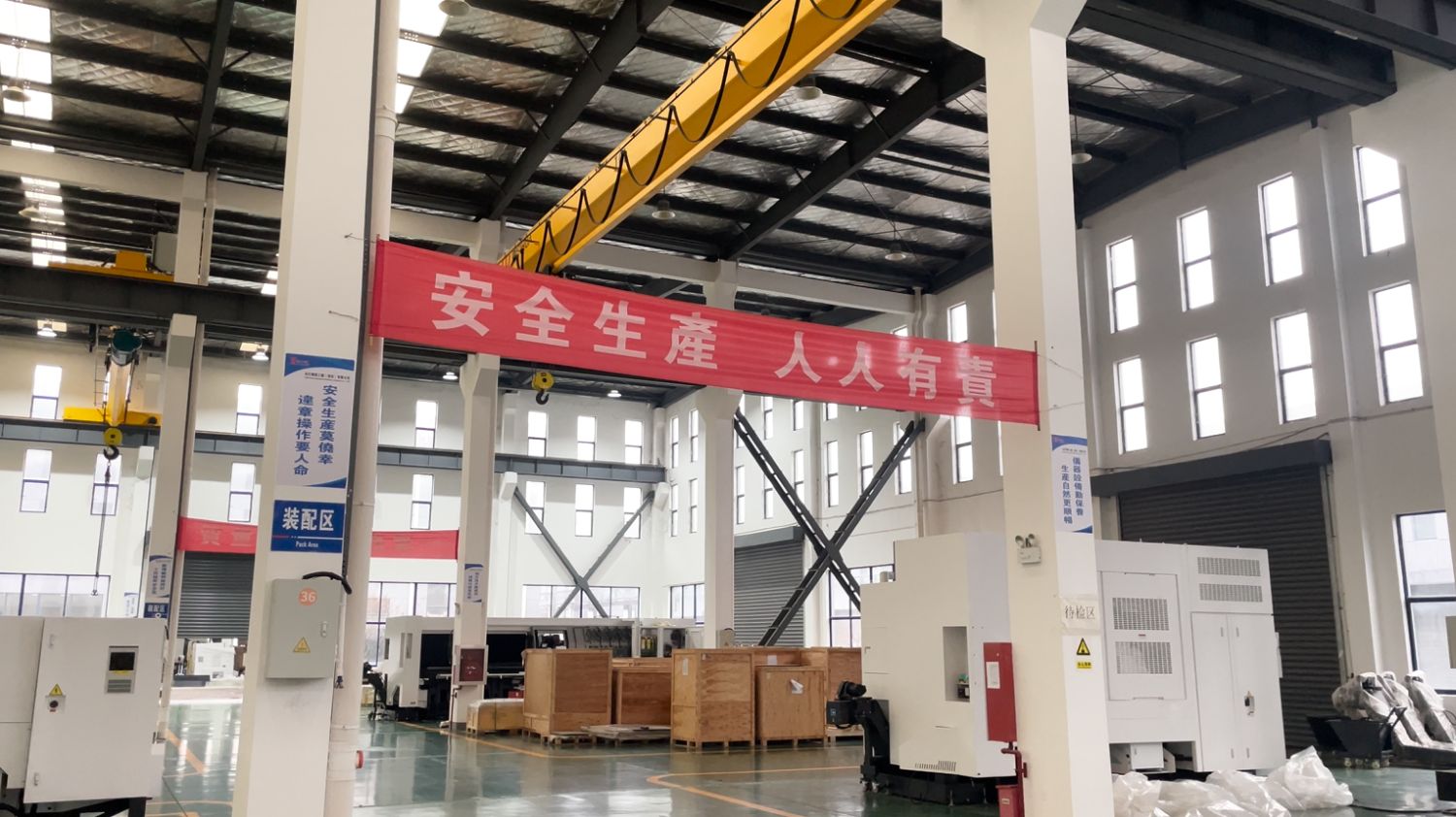
Placing an order with a factory you've never visited feels like a leap of faith. Most buyers focus on price and sample quality, but the real story usually hides in how the supplier communicates before money changes hands. A factory that responds with vague timelines, avoids direct questions about production capacity, or suddenly switches contact people mid-negotiation is often telling you something important. Watch for consistency in their answers about raw material sourcing, defect rates, and what happens if the first batch fails inspection. If they dodge these topics or promise “no problems ever,” treat that as a quiet warning rather than reassurance.
Signals also come from the small administrative details. Does the supplier send a proper quotation with unit pricing, payment terms, and lead time clearly itemized? Or do you get a single-sentence email that says “we can do cheaper” with no further breakdown? A well-run factory typically mirrors that order in its paperwork. Ask for a copy of their export license, a recent bill of lading, or contact information for one of their current overseas clients. Reluctance to share any of these—even with sensitive details redacted—is often a stronger indicator of trouble than a bad product sample.
Finally, test their responsiveness under pressure. Send an email after hours and see how long it takes to get a coherent reply. Ask a technical question about a tolerance or finish and check whether you receive a considered answer or a hasty “yes, no problem.” A supplier that admits a limitation, explains how it would solve a production bottleneck, or pushes back on a unrealistic delivery date is usually one you can trust more than the one that agrees to everything. Commitment without internal scrutiny is how orders become expensive lessons.
Why 'Cheap' Can Cost More in Tight-Tolerance Turning
Low-bid shops often cut corners where it matters most: tooling, fixturing, and inspection. A machine that hasn't been thermally stabilized or a chuck with runout measured in tenths can produce parts that pass a quick spot check but fail under a CMM audit. The scrap rate climbs, and every scrapped part isn't just wasted material — it's wasted spindle time, wasted operator attention, and a delayed shipment.
Then there's the expense of rework. A bearing bore that drifts a few microns out of round may not be caught until assembly. By then the part has already been through deburring, cleaning, and possibly plating. Reworking a tight-tolerance feature often means starting over or adding a secondary operation that was never priced into the original quote. The savings evaporate the first time a batch gets quarantined.
Cheap suppliers also tend to skip the documentation that keeps a job under control. Without SPC data, material certs, or first-article inspection reports, an OEM has no way to trace a dimensional drift back to its source. When a field failure happens, the recall costs dwarf any upfront price difference. In tight-tolerance turning, the real price is set by the parts that don't make it — not the ones that do.
From Watch Components to Bone Screws: Where Swiss Turning Excels
Swiss turning didn't start as a medical manufacturing process, but the jump from watch plates and pinions to cortical screws and spinal implants is less surprising than it sounds. The core advantage has always been the guide bushing, which supports the bar stock just millimeters from the cutting zone. That geometry lets you hold tolerances on parts with length-to-diameter ratios that would chatter or deflect on a conventional lathe. Watchmakers demanded that stability for balance staffs and winding stems; orthopedic designers need it for long, slender bone screws and intramedullary pins.
In horology, the stakes are aesthetic and mechanical: a wheel pivot that's off by five microns might stop a movement. In orthopedics, a bone screw with an inconsistent thread root or a rough transition near the head can cause stress risers, poor osseointegration, or even implant failure. Swiss turning excels at producing these fine features in a single setup—thread whirling, milling hexalobular drives, and even cross-drilling cannulations without removing the part from the spindle. That reduces handling errors and keeps every feature coaxial.
Material choice also plays to Swiss turning's strengths. Titanium alloys, 316L stainless, and cobalt-chrome are notoriously tough to machine, but the short overhang and high-pressure coolant delivery common to Swiss machines reduce work hardening and tool wear. Add in the ability to run lights-out with automatic bar feeders, and you get a process that can turn out thousands of bone screws with repeatable surface finishes under 16 microinches. It's that combination of old watchmaking precision and modern medical-grade consistency that makes the technology hard to replace.
Questions That Reveal a Supplier's Real Capability
Most sourcing teams stick to the same tired checklist: capacity, certifications, lead times. But those answers are rehearsed. To see what a supplier can actually handle, ask about the last time a process broke down. How did they catch it? Who made the call to stop a line or hold a shipment? The details they volunteer—or avoid—tell you more than any audit score.
Another question that separates solid suppliers from polished sales decks is about their least profitable customer. Ask them to describe a client whose orders are small, messy, or irregular, and then explain why they still keep that account. If they can talk about the constraints and the workarounds without blaming the customer, you are hearing from a team that understands service. If they pivot to a case study with perfect metrics, keep probing.
Finally, ask who owns problem-solving when the contract is silent. Not the account manager—ask about the person who actually re-sequences work, negotiates with the raw material vendor, or stays late to fix a label issue. A capable supplier can name that person, describe their authority, and give a recent example without needing a meeting. If the answer is always "the project lead" with no story behind it, that is a red flag.
Maintaining Sub-Micron Consistency Across a Million Parts
Holding a sub-micron tolerance on one part is a careful process. Holding it across a million parts means every thermal cycle, tool change, and material lot has to be understood well enough that its effect never reaches the part edge. Most lines that survive this scale don't rely on a single tight machine; they rely on constant, small corrections driven by what the last hundred parts actually measured.
The real work happens between the checkpoints. Inline probes and post-process gauges feed offsets back to the machine before drift turns into scrap. Vibration pads, temperature-compensated spindles, and filtered coolant become less like accessories and more like part of the tolerance stack. Even a half-degree shift in shop air can push a boring bar a few tenths, and at this scale, tenths are the whole game.
What separates long, stable runs from constant firefighting is usually discipline around the process, not a better machine spec. Operators are trained to react to trends, not single readings. Tool life is tracked by actual wear curves rather than part counts. And material lots are pre-qualified before they ever reach the line. The result is a system where sub-micron consistency stops being an achievement and starts being the default condition.
FAQ
Start by asking about the components you cannot easily see: the spindle bearing make and grade, the linear guide and ballscrew suppliers, and the control system's thermal compensation logic. Request a cutting test on your own material, not their demo bar, and ask for the raw inspection report. Also check whether they manufacture the casting and spindle in-house or buy them from third parties; this affects long-term stability. A supplier that openly shares photos from inside the spindle housing and gives you a realistic cycle time estimate is usually more trustworthy than one that only quotes maximum RPM and rapid traverse.
For many standard tight-tolerance jobs, the gap has narrowed considerably. Chinese machines now commonly use NSK or SKF bearings, THK or Hiwin guides, and Fanuc, Siemens, or Mitsubishi controls, which are the same core components as higher-priced competitors. The main difference shows up in long-term thermal stability, surface finish under interrupted cuts, and the granularity of factory calibration. If you are holding ±0.005 mm on a simple profile, a well-built Chinese machine will often match the others. For extreme micro-machining or 24/7 unattended runs with tight CpK demands, you still need to audit the specific factory's quality control rather than assume the platform is equivalent.
Swiss-type lathes shine on long, slender parts with a length-to-diameter ratio above 3:1, especially in medical bone screws, dental implants, watch components, and miniature hydraulic fittings. They are also strong for small connector pins and electronic contacts. The sliding headstock design reduces deflection, but it is overkill for short, rigid parts like a simple bushing under 20 mm long. In those cases, a conventional fixed-headstock lathe is cheaper and faster to set up. If your production runs are below a few thousand pieces and the part geometry is simple, Swiss-type capability may not pay for itself.
Beyond the quoted machine price, budget for the cost of a pre-shipment inspection, crating, inland freight, and customs brokerage. Many buyers forget about the voltage and frequency differences, so a transformer or rewiring may be needed. Lead times commonly stretch when you request non-standard options like a high-pressure coolant system or a specific bar feeder interface, because these often require custom integration. Also confirm whether the supplier includes the bar feeder alignment and initial tooling setup in the quote. Shipping delays at ports and the availability of the control system can add three to six weeks to the original promise.
Ask them to machine a batch of test parts from your supplied material and ship the parts along with a CMM report from an independent lab, not just their in-house inspection. Request a video showing the full cycle, including tool changes and bar feeder indexing, without editing. Check the machine's laser interferometry report for positioning accuracy and ask for a ballbar test result. If the supplier hesitates to provide these, treat the claimed tolerances as marketing. You can also hire a local third-party inspection service in China to visit the factory for a few hundred dollars, which is cheap insurance.
Yes, but only if the machine is specified correctly from the start. You need a high-pressure coolant pump, usually 70 bar or more, to break chips in titanium and Inconel. Rigid tapping and a spindle with good low-speed torque matter more than top RPM. Many builders offer ceramic or CBN-ready tooling interfaces, but you must ask for a hardened guideway and a heavier bed casting to damp vibration. Always run a cutting test on your actual material before paying the balance. A machine that handles brass well will not automatically handle 316L stainless or titanium at the same speed and precision.
The biggest one is under-specifying the bar feeder and guide channel set, which leads to feeding vibration and poor surface finish. Buyers also forget to order enough live tooling positions or choose a control system without macro B capability, limiting future flexibility. Another common error is matching the machine to the current part only, with no extra stroke or tool stations for family-of-parts growth. Many people skip the chip conveyor or mist collector to save money, then struggle with chip packing on long runs. Finally, ignoring the through-spindle coolant option makes deep-hole drilling far less stable than expected.
It varies widely by builder. Some large Chinese manufacturers now have service partners in Europe, North America, and Southeast Asia, while smaller ones rely on remote video support and DHL for parts. Before buying, ask for the list of critical spare parts they recommend you stock locally, such as guide bushings, spindle belts, and encoder batteries. Confirm whether they offer a service engineer for on-site installation or only phone support. Check the response time in writing: a good supplier commits to a 48-hour diagnosis and ships standard parts within a week. If they cannot name a single installed machine in your region, expect slower support.
Conclusion
The unusual sliding headstock geometry of Swiss-type lathes gives them a decisive edge in precision turning: the guide bushing supports the bar stock close to the cutting zone, dramatically reducing deflection and enabling long, slender parts with tight tolerances. When evaluating a Chinese Swiss-type machine supplier, reading quality signals before committing matters more than brochure claims. A supplier's true capability shows up in the precision of their demo parts, the metrology equipment they actually use, and how they document process control—not just in a low unit price. In tight-tolerance turning, ‘cheap’ often costs more through hidden rework, scrap, and inconsistent delivery.
Swiss turning excels in fields like watch components and bone screws, where small diameters and complex geometries are common. To uncover a supplier's real ability, ask direct questions about tooling strategy, thermal compensation, bar feeder synchronization, and how they handle batch-to-batch variation. A supplier that can maintain sub-micron consistency across a million parts will have clear answers for every one of these points. This guide combines those questions with practical checks so you can separate genuine precision partners from shops that only talk about microns.
Contact Us
Contact Person: Tim
Email: [email protected]
Tel/WhatsApp: +86 15522553731
Website: https://www.winnrui-cnc.com/