

China FWA Solution: Empowering Seamless Fixed Wireless Access Across the Nation
2026-05-14
In China's rapidly evolving digital landscape, Fixed Wireless Access (FWA) has emerged as a game-changer, bridging connectivity gaps and delivering high-speed internet to even the most remote corners. But what truly powers this seamless experience? At the heart of China's FWA revolution lies IPLOOK's innovative core network solutions—designed to handle massive device connections, ensure ultra-low latency, and simplify deployment. Whether it's rural broadband or urban fiber alternative, IPLOOK's technology is the invisible force connecting millions. Dive in to explore how this agile infrastructure is reshaping the nation's connectivity future.
Bridging China’s Geography: FWA Without Terrain Limits
Delivering fast, reliable internet to every corner of China has always been a monumental challenge. The country’s vast and varied landscape—from the towering mountains of the Tibetan Plateau to the dense forests of Yunnan—makes laying fiber-optic cables prohibitively expensive and technically difficult. In many rural areas, the terrain simply does not cooperate with traditional infrastructure projects. This is where Fixed Wireless Access (FWA) steps in, offering a way to bypass geographical barriers entirely. By beaming high-speed signals from towers directly to homes and businesses, FWA eliminates the need to dig trenches or navigate rocky ground, turning once-isolated communities into connected hubs.
Unlike wired solutions that grind to a halt when confronted with rivers, steep slopes, or permafrost, FWA thrives on flexibility. A single base station can serve a broad area, and with advances in 5G, the capacity and speeds rival those of fiber. For villagers in the remote foothills of the Himalayas or farmers on the edges of the Gobi Desert, this means access to telemedicine, online education, and digital markets without waiting years for cable installation. The technology adapts to the land, not the other way around, effectively bridging a divide that geography once enforced.
Moreover, FWA deployment is quicker and less disruptive. In regions prone to natural disasters like earthquakes or floods, wireless links can be restored faster than buried cables. This resilience ensures that connectivity becomes a constant, helping local economies grow and attracting younger generations to stay put. By taking the terrain out of the equation, FWA is quietly reshaping China’s digital landscape, one wireless link at a time.
Plug-and-Play Broadband: The Simplicity Behind the Signal
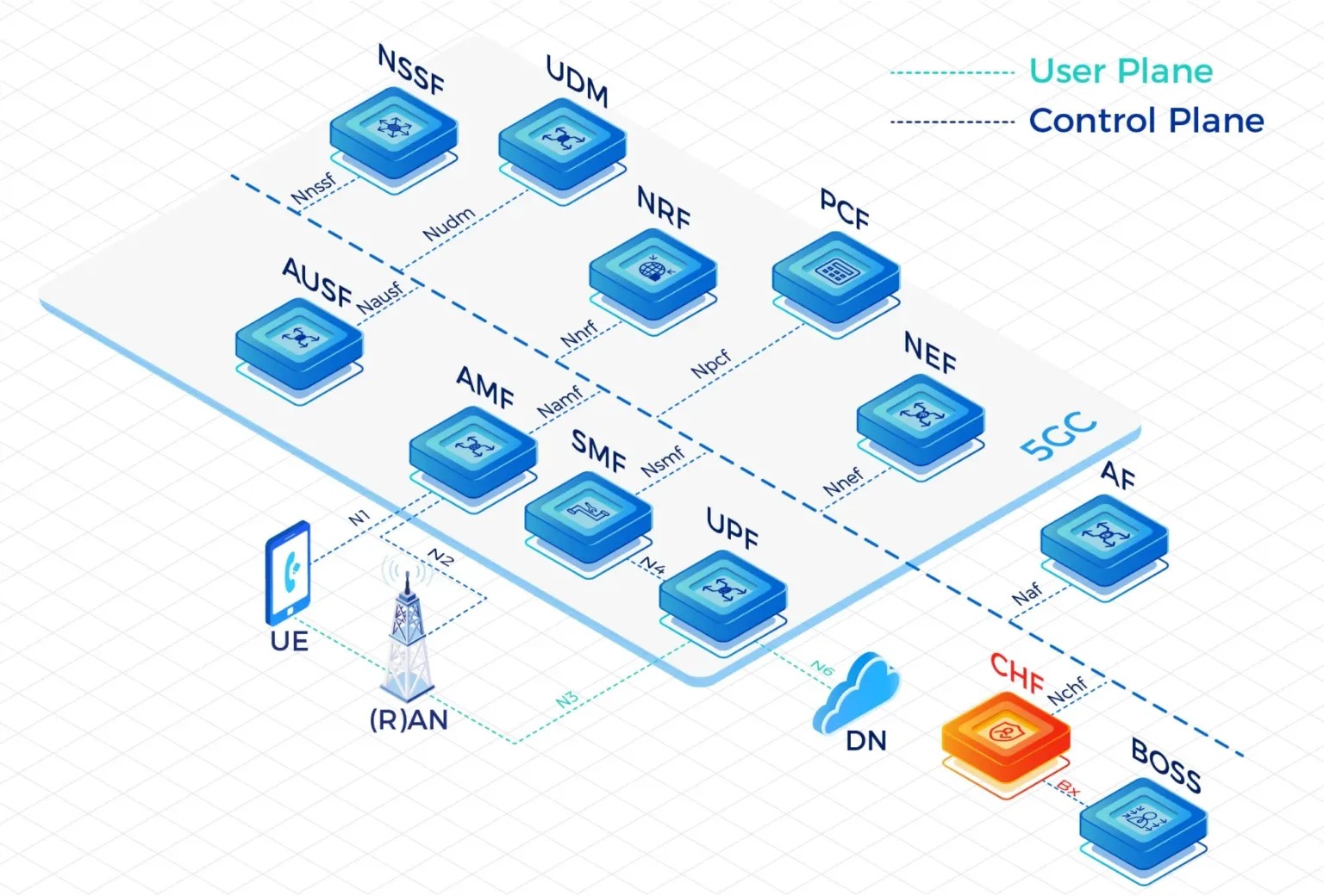
Plug-and-play broadband strips away the hassle of traditional internet setup. You take a modem or router out of the box, connect it to a power source and the network line, and a steady broadband signal emerges nearly instantly. There’s no disc to insert, no arcane settings to tweak—just a straightforward link to the online world.
Behind that simplicity is a suite of automated protocols that negotiate your connection in the background. The device speaks with the service provider’s infrastructure, authenticates itself, and configures the proper channels without human intervention. What reaches you is a clean, ready-to-use signal that carries the full promise of high-speed connectivity.
This approach redefines what it means to get online. Families can set up their network in minutes rather than hours, small offices avoid the need for IT staff, and anyone can relocate their service without a technician visit. The simplicity isn't just a feature—it’s the core of why broadband now feels as effortless as flipping a light switch.
Rural Revival: Empowering Villages with Instant Connectivity
Across remote landscapes, the hum of new fiber-optic cables and the silent pulse of satellite signals are rewriting the story of village life. A farmer in a hilltop settlement now checks real-time crop prices on her phone before deciding when to sell, while a weaver in a forest-edged hamlet uploads a video of her craft and finds buyers in cities she's never visited. This instant access isn't just about convenience—it’s about dismantling the isolation that has long defined rural existence. Suddenly, smallholders can bypass middlemen, students can attend virtual classes from top universities, and local clinics can share patient data with faraway specialists in seconds.
What makes this shift truly transformative is the sense of agency it restores. When a coastal fishing community can track weather patterns and fish stock data through a community Wi-Fi hub, they’re no longer entirely at the mercy of luck and rumor. Young people in depopulated villages are launching digital services—from heritage tourism apps to hyperlocal delivery networks—that bring income and pride back home. The technology adapts to local rhythms: solar-powered kiosks withstand unstable grids, and mesh networks built with off-grid routers let villages stay online even when infrastructure falls short. This isn’t a top-down rollout but a grassroots adoption, often driven by village cooperatives and local innovators who know exactly what their neighbors need.
The ripple effects touch everything from community bonds to cultural preservation. Grandmothers swap recipes over video calls with diaspora relatives, traditional songs find new audiences on streaming platforms, and village councils livestream meetings so everyone can weigh in. Crucially, connectivity isn’t homogenizing these places—it’s amplifying their uniqueness. A pottery collective uses QR codes on their pots to share the stories behind each design; a farming community builds a shared sensor network to monitor water quality in the local river. These villages aren’t just catching up; they’re crafting a leap forward that doesn’t require leaving home. The result is a quiet redefinition of progress, where staying rooted becomes a viable, vibrant choice.
Urban Scalability: Meeting Megacity Demands Wirelessly
As cities swell into sprawling megacities, the pressure on infrastructure multiplies faster than most planning cycles can handle. Laying down new cables or expanding physical networks often means ripping up streets and enduring years of disruption—hardly a nimble approach. Wireless technologies sidestep much of this heavy lifting, letting cities scale services more like a software update than a construction project.
What makes wireless truly transformative for urban growth is its ability to weave connectivity into places traditional cabling can't reach, from dense informal settlements to moving vehicles. These networks can thicken overnight as new nodes are added, without the sunk costs and rigidity that hold back fiber-only builds. The result is a living grid that breathes with the city, expanding and reconfiguring as demands shift.
Perhaps the least spoken advantage is how wireless scalability forces a rethink of resource allocation. Instead of overbuilding for peak usage that may never come, cities can densify coverage incrementally, guided by real-world data rather than projections. This leaner, iterative growth model not only saves money but also keeps options open for future technologies that don't exist yet.
5G-Powered Access: Beyond Speed, Towards Reliability
The narrative around 5G often stops at blistering download speeds and seamless streaming, but that's only scratching the surface. True transformation lies in the network's ability to deliver rock-solid reliability, a feature that quietly reshapes industries. This isn't just about buffering-free videos; it's about building a connection you can stake a life on, where a dropped signal is not just an inconvenience but a critical failure.
Behind this dependability is a symphony of innovations like network slicing and ultra-reliable low-latency communication (URLLC), carving out dedicated virtual lanes for data that cannot afford delays. Picture a remote surgeon commanding robotic instruments from miles away, where a millisecond's lag could alter a patient's fate. Or autonomous vehicles negotiating a busy intersection through instantaneous, trustable data exchanges. Here, consistency isn't a perk—it’s the foundation, turning wireless links into trusted threads in our societal fabric.
Looking ahead, this shift from peak speed to unwavering stability will quietly permeate everyday life. Smart factories will lean on it to orchestrate synchronized machinery, while energy grids will balance loads with real-time precision. The real magic of 5G isn't how fast it can go, but how deeply it can be trusted. Speed opens the door, but reliability changes the room.
Economic Acceleration: FWA as a Catalyst for Local Innovation
Fixed wireless access is quietly reshaping local economies by lowering the barrier for high-speed connectivity. In places where laying fiber remains prohibitively expensive or logistically complex, FWA delivers dependable broadband almost overnight. This sudden leap in access allows small businesses to adopt cloud-based tools, remote collaboration, and digital storefronts without waiting years for infrastructure upgrades. The result is a more level playing field, where a start-up in a rural town can compete with urban incumbents, fueling job creation and diversifying local industry.
Beyond immediate connectivity, FWA acts as a platform for grassroots innovation. Entrepreneurs are combining reliable internet with locally relevant solutions—smart agriculture sensors, telemedicine kiosks, and community-driven e-learning hubs. These initiatives often emerge organically, driven by the needs of the area rather than directives from distant corporate offices. By placing robust connectivity at the heart of a community, FWA turns passive consumers of technology into active creators, accelerating the cycle of economic renewal.
The ripple effects extend into traditional sectors as well. Manufacturing and logistics firms in previously underserved zones are now integrating IoT devices for real-time inventory tracking and predictive maintenance, boosting efficiency and attracting investment. Real estate developers are marketing "FWA-ready" commercial spaces, tapping into a growing demand for flexible, gigabit-capable workspaces outside major metros. This shift is not just about catching up—it's about enabling regions to carve out distinctive economic identities built around their unique strengths, powered by the speed and reliability of wireless broadband.
FAQ
It's a nationwide fixed wireless access offering that uses cellular networks to deliver broadband to homes and businesses without the need for physical cables. By tapping into existing 4G and 5G infrastructure, it beams high-speed internet directly to a receiver placed at the customer's location, effectively turning mobile signals into a reliable home broadband connection.
Deployment speed and flexibility are the big draws. Laying fiber can take months and involves digging up streets, while FWA can be set up in days with just a rooftop antenna. It also shines in rural or hard-to-reach areas where wiring is economically unfeasible, offering a practical path to bridging the digital divide.
The architecture relies on a dense mesh of base stations and smart signal routing that automatically hands off connections as users move between coverage zones. Advanced beamforming and carrier aggregation compensate for distance and terrain challenges, keeping latency low and throughput steady even in crowded urban cells or remote mountain villages.
In 5G coverage areas, typical households see speeds north of 100 Mbps with single-digit millisecond latency, enough for 4K streaming, online gaming, and multiple video calls simultaneously. Even in 4G-served regions, speeds average 30–50 Mbps, which comfortably supports modern digital life. The service prioritizes consistency, so you won't experience the wild fluctuations common on satellite internet.
Absolutely. The design uses dynamic spectrum sharing and virtualized network functions that scale capacity on demand. When a neighborhood gets busier, the system automatically allocates more spectrum and compute resources. This keeps performance stable during peak hours and allows the provider to add subscribers without costly hardware upgrades.
You only need a small outdoor antenna unit and an indoor Wi-Fi gateway, both provided by the service operator. Installation is typically a one-visit affair: a technician mounts the antenna, aligns it with the nearest cell tower, and plugs it into the gateway. The whole process takes under two hours, and from the user's perspective, it works just like any other broadband connection.
By making high-speed internet accessible in areas previously limited to dial-up or spotty mobile data, it directly supports remote education, telemedicine, e-commerce, and smart agriculture. Small towns can attract digital businesses, students can attend virtual classrooms, and elderly residents gain access to telehealth services—all without waiting years for fiber to arrive.
Conclusion
China's FWA solution is rewriting the rules of connectivity by turning geographical challenges into opportunities. From the remote highlands of Tibet to the sprawling plains of Inner Mongolia, fixed wireless access eliminates the need for costly fiber trenches, delivering broadband directly through the air. This terrain-agnostic approach ensures that even the most isolated villages gain instant access to digital services, sparking a rural revival where telemedicine, e‑commerce, and online education flourish without waiting years for infrastructure. The plug‑and‑play nature of the equipment—often installed in minutes by the end user—cuts through technical complexity, making high‑speed internet as simple as positioning a compact receiver by the window.
Beyond bridging the urban‑rural divide, the solution thrives in dense megacities, gracefully handling massive device density by dynamically allocating spectrum where demand spikes. Underpinned by 5G’s ultra‑reliable low‑latency backbone, the network provides not just raw speed but carrier‑grade dependability for mission‑critical applications. This reliability becomes a catalyst for economic acceleration, enabling small‑town entrepreneurs to compete globally and giving rise to hyper‑local innovation hubs that tap into cloud AI and IoT. By weaving together simplicity, scalability, and resilience, China’s FWA platform is not merely closing the digital gap—it is actively shaping a future where geography no longer dictates prosperity.
Contact Us
Contact Person: Shimmy
Email: [email protected]
Tel/WhatsApp: 85253392231
Website: https://www.iplook.com