

Boron Carbide Tiles Exporter Guide: What Buyers Should Evaluate Before Ordering
2026-10-20
Ordering boron carbide tiles from an overseas exporter isn’t just about comparing price per kilogram. A spec sheet can look flawless while the material arrives with chipped edges, inconsistent density, or vague certification claims. This guide cuts through the noise, walking you through the specific checks that separate reliable suppliers from costly gambles. Whether you’re sourcing for armor systems, nuclear shielding, or wear-resistant linings, knowing what to verify before you sign off can save you weeks of delays and rework. At HUAYI TECH, we’ve seen firsthand which evaluation steps matter most—and which red flags buyers tend to overlook. Here’s what to look for before your next order.
Reading beyond the certificate for meaningful purity data
A certificate of analysis often feels like the final word on purity, but treating it as gospel skips over how those numbers were actually produced. Batch-to-batch variation in raw material sourcing, differences in analytical instrumentation, and even the choice of reference standards can nudge reported purity figures in ways that a single page rarely captures. Digging into the methodology behind the certificate—such as which chromatographic column was used, what detection wavelength was selected, or whether the assay was normalized against a dried or as-is basis—turns a static percentage into something you can actually reproduce or question.
Beyond method details, the missing piece is often the impurity profile itself. A 98% purity claim doesn't tell you whether the remaining 2% is a single known degradant, a cluster of unidentified peaks, or residual solvent that happened to fly under the radar. Requesting the underlying chromatograms, peak integration reports, and batch history can reveal whether that purity number is stable across storage conditions or merely a snapshot from a fresh sample. This kind of scrutiny matters most when the material feeds into sensitive formulations, where a minor impurity at the certificate stage can become a major headache after weeks in a warehouse.
It also pays to compare certificates across suppliers or across lots of the same supplier, not just for the headline purity value but for the shape of the data behind it. One lab might report purity by area normalization, another by external standard calibration—two approaches that can easily diverge by a full percentage point for the same physical sample. Building a small internal reference set, or at least keeping a running log of how different certificates correlate with your own in-house QC results, turns purity from a vendor's claim into a living dataset you can trust.
How sintering temperature shifts alter final tile hardness
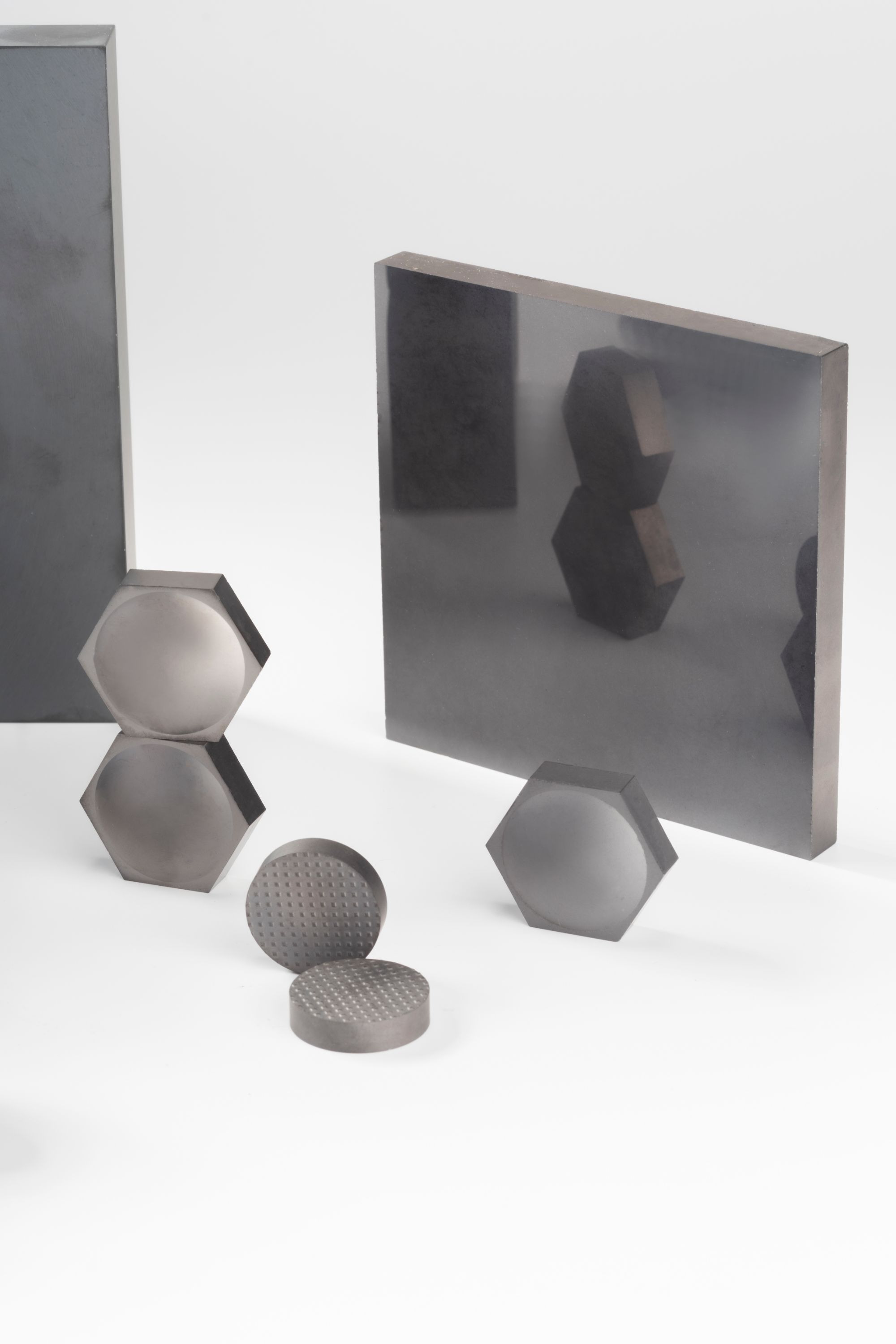
Raising the kiln temperature a few degrees seems trivial until you check the hardness readings. Most ceramic tiles begin to densify sharply once the glass phase forms, and that phase formation is extremely sensitive to the heat-work curve. A shift of just fifteen degrees can push the body past the point where residual pores close, giving the fired tile a much tighter grain structure and a measurable jump in Mohs or Vickers hardness.
The effect isn't linear. At the low end of the firing range, the tile remains under-sintered: particles bond only at contact points, leaving open channels that weaken the surface. As temperature climbs into the proper sintering window, liquid phase fills those gaps and crystals continue to grow, raising hardness. But overshooting that window triggers bloating or excessive glass, which can actually soften the body and leave microcracks behind.
Plant operators often track this by watching shade and size, but hardness is the hidden variable. A slight downward drift in temperature may still produce an acceptable-looking tile, yet the edge will chip more easily and the surface will score faster in abrasion tests. That's why even small temperature shifts are logged and corrected quickly—hardness depends on staying inside a surprisingly narrow band.
Dimensional drift after machining and what to inspect
Dimensional drift after machining rarely shows up right away. It tends to appear hours or days later, once internal stresses from roughing settle, coolant temperature equalizes, or a part gets moved to a different room. That delay is what makes it frustrating: your in-process measurements look perfect, but the final inspection tells another story. Pay attention to how much variation you see across the same feature on multiple parts, not just whether one part is out of tolerance.
When inspecting for drift, start with the obvious: hole diameters, slot widths, and critical linear dimensions that define fit or function. But also check straightness and flatness on long or thin walls, since those are the first to move when stress redistributes. Measuring the same point before and after a 24-hour rest period can reveal whether the part is still moving. If you use a CMM, keep the fixture and ambient temperature stable, otherwise you will be chasing thermal expansion instead of true drift.
Don't forget to look at surface finish and edge condition, because drift often accompanies micro-cracking or tearing caused by aggressive feed rates. Record the inspection environment and time of day for each measurement. That data helps separate gradual drift from random noise, and it points you toward the real source: maybe it's a dull tool, insufficient stress relief, or a clamping method that warps the part when released.
Fracture toughness under repeated ballistic stress cycles
Repeated ballistic stress cycles impose a sequence of shock compression, decompression, and tensile reflection that rarely leaves a material unchanged after the first strike. Fracture toughness in this context cannot be read from a single-impact datum; instead it emerges as a cumulative property shaped by microcrack nucleation at grain boundaries, inclusion clusters, or pre-existing porosity. Each subsequent pulse finds a slightly different flaw population, so the effective resistance to crack advance shifts with loading history.
Laboratory simulation often relies on edge-on impact or split Hopkinson pressure bar sequences to replicate the short, intense stress pulses without destroying the entire specimen. Data from these tests reveal that crack growth per cycle tends to accelerate once a critical microcrack density is reached, even when individual pulse amplitudes remain below the static fracture threshold. Scatter is therefore not noise but a signature of how local microstructure interacts with the stress wave front.
Material selection for repeated ballistic exposure benefits more from controlled crack deflection and energy-absorbing phase transformations than from a high static toughness value alone. Laminated or functionally graded architectures can interrupt the propagation path and delay the onset of unstable fracture, though they add manufacturing complexity. In field conditions, the practical limit is often set by the growth of subcritical damage during the interval between strikes, not by the final catastrophic failure event.
Export paperwork that can quietly stall your shipment
A single typo on a commercial invoice—say, a missing digit in the harmonized code—can turn a routine clearance into a multi-day hold. Customs officers don’t have discretion to wave through mismatched paperwork; the system flags it and the shipment sits in a warehouse while you chase the originator. What makes it “quiet” is that the delay rarely triggers alarms on your end. The carrier status just shows “pending customs,” and nobody realizes the document needs fixing until the storage fees start accruing.
Some of the most overlooked documents are those that only matter for specific destinations. A certificate of origin might be required only when the total value exceeds a threshold, or an import license might be needed for goods that are perfectly ordinary in your own market. Shippers often discover these requirements after the vessel has left port, because the buyer’s broker assumed you knew, and your own forwarder never asked. By then, correcting the file means emailing scans, getting stamps, and hoping the destination customs accepts a late amendment.
The fix is not more checklists; it’s making someone responsible for reading the fine print before cargo is booked. Ask your customer’s broker to confirm the exact document list in writing, and check that every field matches the purchase order exactly—down to the unit of measure and incoterm. A ten-minute review while the truck is still loading can save ten days of demurrage later.
Packaging design against edge chipping during transit
Edge chipping remains one of the most overlooked failure points in transit, especially for flat-pack panels, ceramic tiles, glass shelves, and precision-milled components. A well-thought-out packaging design does more than cushion the broad surfaces—it creates dedicated standoffs at every corner and along each vulnerable edge. These standoffs can be formed from die-cut foam rails, corrugated angle boards, or molded pulp cradles that keep the product suspended away from the outer carton walls. The key is to engineer a consistent gap, typically 15 to 25 mm, so that even if the box receives a sharp impact from a drop or conveyor jam, the force transfers through the structural buffer rather than reaching the fragile edge directly.
Material selection and geometry work together here. A common mistake is relying on bubble wrap or loose fill, which migrates during vibration tests and leaves edges exposed after just a few minutes of simulated transport. Instead, interlocking inserts or thermoformed trays with raised ribs provide repeatable protection because they lock into place and resist shifting. For heavier items, combining a low-density foam layer (to absorb initial shock) with a high-density fiberboard edge guard (to spread the load) prevents localized stress concentrations. Even the flute direction of corrugated protectors matters—vertical flutes along the edge offer superior crush resistance compared to horizontally oriented ones.
Testing drives the final refinement. A package might look robust on the bench but fail in a real-world drop rotation or a horizontal impact scenario. Using ISTA 3A or ASTM D4169 protocols, designers should monitor edge integrity after each sequence, not just at the end. Small adjustments—adding a folded paperboard collar around a tile stack, extending a foam rail by ten millimeters, or switching from a single wall to a double wall carton at the corner regions—can cut edge chipping incidents by over eighty percent. The most effective designs treat every edge as a load path that needs its own dedicated energy-absorbing zone, rather than assuming the overall box strength will protect the product.
FAQ
Start by asking for their technical data sheet and compare it against independent test reports. A knowledgeable exporter will readily explain how their tiles behave under repeated impact, which grades of boron carbide they use, and why their sintering method suits your application. If they dodge questions about grain size or hardness testing, treat that as a warning sign.
Request a full material certificate showing chemical composition, density, flexural strength, and hardness values from a third-party lab. Also ask for a certificate of origin, export packing list, and a sample tile from the current production batch. Keep the signed proforma invoice with clear Incoterms and inspection criteria so there is no ambiguity later.
Focus on hardness, fracture toughness, and density uniformity. Boron carbide is extremely hard but can be brittle, so fracture toughness tells you how it handles sudden stress. Ask for density measurements across several tiles, not just a single sample. Consistent density usually points to better pressing and sintering control.
Ask for an X-ray diffraction or X-ray fluorescence report that quantifies B4C content. You can also compare the tile's measured density against the theoretical density of boron carbide: a large gap often means excessive porosity or unwanted phases. If the exporter hesitates to share raw lab data, consider testing a random sample yourself.
Tiles need rigid separation, foam inserts, and moisture-resistant wrapping. Loose stacking inside a wooden crate leads to edge chipping during transit. Ask the exporter to provide photos of the packed pallet before shipping and to mark the crate with handling instructions. For long sea freight, request desiccant packs and sealed plastic lining.
Ask for a documented inspection checklist for each production lot, including random sampling size and rejection limits. A reliable exporter will offer a pre-shipment inspection report from a third party such as SGS or Bureau Veritas. If they only show glossy brochures but no traceable QC records, that is a red flag.
Even small variations in thickness or flatness create installation problems, especially when tiles are bonded to curved or multi-panel surfaces. Tight tolerances reduce the need for field grinding and lower overall labor cost. Request tolerance data for thickness, length, width, and diagonal flatness, and compare it with your assembly requirements.
Cheap tiles often hide higher porosity, lower hardness, or inconsistent edges, which lead to early replacement costs. Calculate the total cost per square meter including freight, import duties, possible rejects, and expected service life. A slightly higher unit price from a consistent exporter can save money when downtime and rework are included.
Conclusion
When sourcing boron carbide tiles, buyers often stop at a certificate of conformity, but meaningful purity data requires digging into trace element reports, especially for boron-to-carbon ratios and residual free carbon. Sintering temperature is not a fixed spec; even small shifts change grain boundary phases and hardness distribution across a tile, so ask for hardness maps rather than a single Rockwell value. After machining, dimensional drift can occur as internal stresses relax—inspect thickness at multiple points across each tile, not just edges, and check flatness after a few days. Fracture toughness matters more than hardness under repeated ballistic stress; request data from cyclic impact tests, not just a single Vickers indentation, because microcrack networks develop over time and reduce multi-hit capability.
On the logistics side, export paperwork often creates hidden delays: certificates of origin, end-use statements, and dual-use export controls for boron carbide can require extra processing time depending on destination. Confirm the exporter’s experience with the specific HS code and whether they have shipped to your region before. Packaging is equally critical—edge chipping during transit can invalidate an entire batch. Look for custom foam cradles with interleaving layers, not just bulk crates, and ask for drop-test or vibration-test reports. A supplier who treats packaging as an afterthought will likely cause field failures or costly returns, even if the tiles themselves meet spec.
Contact Us
Contact Person: Junting Leo
Email: [email protected]
Tel/WhatsApp: +86 18615009766
Website: https://www.huayimaterial-china.com/