
Bogie Hearth Furnace Export for Global Industrial Heating Solutions
2026-08-25
Most furnace suppliers can build a box that gets hot. Far fewer can deliver a bogie hearth furnace that clears customs, meets local safety codes, and still hits ±5°C uniformity on the other side of the world. That gap between a drawing and a running production line is where export expertise really lives. In this article, we look at what separates genuine global industrial heating partners from the rest—and why THINKING-LONG puts as much engineering into the journey as into the furnace itself.
Precision Heat Treatment for Heavy Loads, Minus the Border Delays
Handling massive gears, shafts, and press columns calls for heat treatment that won’t compromise dimensional stability. Our furnaces are built for heavy loads and controlled with tight soak tolerances, so even oversized parts come back with uniform hardness and minimal distortion.
Because the facility sits close to your own operations, you skip the multi-day border holds that usually stall outsourced treatment. No customs paperwork, no freight detours—just schedule the job, deliver the load, and keep the project moving while the steel is still hot.
Every batch is tracked against your specified ramp rates, hold times, and quench parameters. That means critical heavy components get the exact thermal profile they require, without the logistical bottleneck that used to force early teardown or long lead times.
Flexible Furnace Configurations for Unpredictable Production Mixes
Most heat-treating operations still rely on furnaces sized for a narrow band of part geometries and cycle times. When the Monday schedule suddenly shifts from dense castings to thin stampings, a fixed-zone furnace either idles at half capacity or forces rework. Flexible configurations break that constraint by letting operators reassign heating zones, change effective chamber length, or adjust quench severity without rebuilding the line. The key is not more horsepower, but modular insulation, movable baffles, and burner controls that respond to actual load mass rather than a preset recipe.
A well-planned flexible furnace uses segmented temperature control along the length, so a short, high-temperature profile for fasteners can run immediately after a long soak for large shafts. Atmosphere panels with quick-connect ports allow swapping between endothermic gas and nitrogen-methanol blends in under an hour, while variable-speed drives on the charge conveyor let dense baskets dwell longer without slowing the entire line. These changes sound minor, but they remove the usual hidden cost of mixed production: waiting for the furnace to cool down or heat up between jobs.
The real payoff shows up in shops that handle five to ten part families per week. Instead of batching similar parts to protect a fragile schedule, planners can load what the customer actually needs. One midwestern heat treater cut changeover losses by roughly forty percent after retrofitting a continuous mesh-belt furnace with independently controlled top and bottom heating elements plus a movable soak-zone divider. That kind of flexibility rarely comes from a single large upgrade; it is the cumulative effect of giving operators small, reversible adjustments instead of locking them into one thermal profile.
Thermal Uniformity That Aerospace and Forging Shops Actually Notice
In a forge shop, thermal uniformity isn't an abstract spec—it's the difference between a billet that moves predictably under the hammer and one that folds or tears because one end cooled faster than the other. Operators read temperature gradients through the color of the work, the sound of the press, and the way flash forms. When a furnace has dead zones or a door seal leaks, they feel it in the reject bin long before a formal audit flags it.
Aerospace work magnifies the problem. Alloy systems like 718 or Ti-6Al-4V respond to uneven heating with residual stress patterns that show up later in machining, not just at the forge. A part that measures fine after heat treat can move a few thousandths when you start cutting away surface layers. Shops that chase this find the root cause is often a furnace whose thermocouples read a nice average while the actual load sees a 60°F spread.
Fixing it usually means changing how you load, where you place sacrificial blocks, and how you tune burner ratios—things that never make it into the brochure. That's why shops with truly uniform furnaces guard their setups like trade secrets, and why anyone who has worked both sides of the aisle can tell within a shift whether a furnace is truly uniform or just certified uniform.
Energy Bills Drop While Cycle Times Stay Put
Until recently, cutting energy use in a washing machine or dishwasher often meant adding twenty or thirty extra minutes to a load. The trade-off was accepted as unavoidable: longer soaks and lower temperatures reduced electricity demand, but they also stretched laundry and dish duty well into the evening. That tension has now largely disappeared from newer models. Improved inverter motors, smarter water heating, and more efficient spray arms let a normal cycle finish in roughly the same time it did a decade ago, while pulling noticeably less power from the meter.
Part of the shift comes from better heat recovery. Instead of sending warm rinse water down the drain, many current machines capture that heat and use it to preheat the incoming cold supply for the next phase. This simple change trims energy consumption without lengthening the wash. In dryers, heat pump technology removes moisture at lower temperatures but maintains air movement that speeds drying, so a standard cotton load can still be done in under an hour. Dishwashers have followed a similar path, using targeted spray zones and variable-speed pumps to clean heavily soiled pots without a long pre-soak.
For households, the practical result is straightforward: lower monthly utility bills do not have to mean living around an appliance's schedule. A fast cycle can now be an efficient cycle, not an exception. When shopping, look for the energy label's estimated annual consumption rather than assuming shorter programs waste more power. The gap between eco mode and the quick wash has narrowed enough that leaving the house on time and keeping costs down are no longer competing goals.
Export-Ready Bogie Hearth Units With Simplified On-Site Assembly
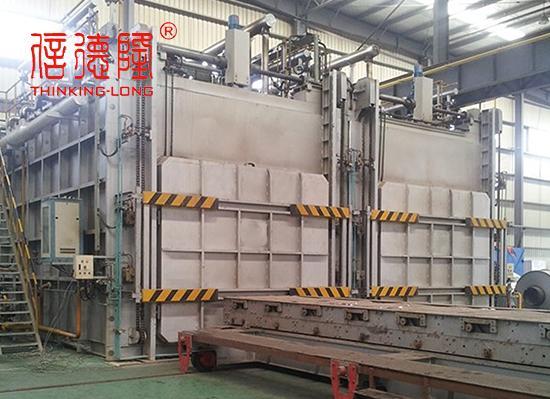
Every bogie hearth unit is pre-assembled and tested at our facility before being carefully crated for overseas shipment. The furnace body, bogie drive system, heating elements, and control cabinet are broken down into large, manageable modules that align with standard container dimensions. This approach keeps freight costs predictable and eliminates the need for heavy lifting equipment at the destination beyond a basic forklift or crane.
On site, assembly focuses on just a handful of mating points. Pre-wired junction boxes, quick-connect gas or electrical lines, and pinned structural joints mean your local team can complete the final fit-out in a matter of days. No special welding, no complex alignment procedures, and no factory technician required for the basic mechanical setup—although remote commissioning support is available if you want extra confidence.
Because the furnace leaves our workshop nearly complete, the uncertainty of field fabrication disappears. You get a predictable schedule, a cleaner installation site, and a unit that reaches its first heat-treat cycle faster. That is particularly valuable for mining operations, remote processing plants, or any project where skilled labor is scarce and downtime carries a heavy cost.
Direct Engineering Support From First Inquiry to Full Operation
When you reach out with a project idea, you are not handed off to a general sales team. The first person you speak with is often the same engineer who will later review your drawings, ask about load cycles, and challenge assumptions that could cost you downtime. That continuity means details discussed in week one are not lost by week ten; they live in the same notes, the same phone number, and the same head.
As the design moves toward approval, we stay involved in material selection, tolerance stack-ups, and integration points with your existing equipment. You get direct answers about what can be simplified, what needs a custom part, and where a standard component will do the job just as well. No layers of account managers, no waiting for a callback from a technical specialist who was not in the room.
Once installation begins, the same support extends to on-site tuning, troubleshooting, and operator training. If a sensor reads unexpectedly at 3 a.m., you call the person who knows why that sensor was chosen. Full operation is not the finish line; it is when the engineering support proves itself under real load.
FAQ
They handle heavy, oversized, or oddly shaped workpieces that fixed-hearth units struggle with. The movable car bottom allows a crane or forklift to load outside the chamber, then roll the entire load in without disturbing the setup.
You'll typically find them in aerospace, automotive, steel mills, foundries, ceramics, and heat treatment shops. Anywhere large batches of parts need stress relieving, annealing, tempering, or preheating before forging or rolling.
Most units are designed in modular sections that fit into standard shipping containers or flat racks. We coordinate port handling, customs clearance, and local transport, then send a supervisor to oversee reassembly and commissioning at the final site.
Yes, the chamber size, maximum operating temperature, heating source, and atmosphere control can all be adjusted. Options include gas, electric, or dual-fuel heating, plus nitrogen, argon, or endothermic atmospheres for oxidation-sensitive materials.
Support usually includes operator training, commissioning assistance, spare parts catalogs, remote troubleshooting, and scheduled maintenance visits. Some suppliers also offer performance audits to keep fuel consumption and cycle times in check.
The big advantage is loading flexibility. You can prepare one load while another is still heating or cooling, which shortens turnaround. It also reduces crane time inside the furnace and lowers the risk of damaging the refractory lining.
The design is adapted to the destination country's regulations before fabrication. That may mean CE marking, ASME pressure vessel codes, or specific burner management systems, along with flue gas treatment to meet local emission limits.
It covers the full scope: thermal calculations, layout drawings, combustion or electric systems, control panels, ductwork, installation supervision, and operator training. The goal is a turnkey package tailored to the customer's production flow rather than a one-size-fits-all machine.
Conclusion
For manufacturers tackling massive castings, forgings, or weldments, exporting a bogie hearth furnace should not mean trading thermal precision for customs headaches. These units are built to handle extreme load weights while holding tight temperature tolerances, and the export process is streamlined so cross-border shipping does not introduce delays. Instead of forcing a standard layout onto irregular production schedules, the furnace configuration adapts to shifts in product mix—one week heavy plates, the next oversized housings—without compromising the uniform heat distribution that aerospace and forging shops rely on. The result is a heating system that feels engineered for the actual floor, not a catalog.
Operating costs receive equal attention. Burner and insulation upgrades trim energy consumption while cycle times remain unchanged, so throughput stays predictable. On-site assembly is deliberately simplified: pre-aligned modules, clear rigging points, and factory-tested control circuits reduce commissioning from weeks to days. And because every export order begins with direct engineering dialogue—not a sales script—the furnace arrives matched to your voltage, fuel, and site constraints. That support continues through first heat and beyond, which is why these bogie hearth units become long-term production assets rather than one-off purchases.
Contact Us
Contact Person: Qian Xijun
Email: [email protected]
Tel/WhatsApp: 8613961736750
Website: https://www.thinkinglong.com/