

Best Speaker Magnet Types: Choosing the Right One for Your Audio System
2026-10-01
Speaker magnets might be hidden inside the cabinet, but they're the driving force behind every note you hear. Choose the wrong type—ferrite, neodymium, or alnico—and even the best drivers can sound lifeless. That's why understanding magnet materials matters before you buy or build. In this guide, we'll walk you through the most popular speaker magnet types, what they do for your sound, and how to match them to your audio system. With expert advice from DAWA, you'll stop guessing and start listening with confidence.
Ferrite Is the Unsexy Magnet Behind Almost Every Speaker You've Owned
Ferrite doesn’t get name-dropped in audiophile forums the way neodymium or alnico do, but it’s the gray ceramic ring doing the heavy lifting in the vast majority of speakers ever shipped. Made by sintering iron oxide with either strontium or barium carbonate, ferrite is more pottery than exotic metal. Its magnetic strength per gram is modest, yet it has one stubborn advantage: it costs almost nothing to produce at scale.
Speaker builders care about consistency, heat tolerance, and resistance to demagnetization inside a voice coil gap that can get hot and violent. Ferrite shrugs off that abuse. While alnico can lose its magnetism if driven hard and neodymium falls apart above moderate temperatures unless heavily coated, ferrite stays stable well past anything a home or car speaker will see. That reliability, not raw power, is why it became the default once manufacturing moved away from expensive cobalt alloys in the 1970s.
Yes, ferrite magnets are bulkier and heavier than their high-tech rivals. Designers simply make the motor structure a little larger, add more steel, and the end result still fits a cabinet and hits a price point that sells. The fact that you’ve never once thought about the magnet inside your bookshelf speakers, soundbar, or car door driver is exactly why ferrite keeps winning. It’s not flashy, it’s just always there, doing the job without a single complaint.
Neodymium Matters When Your Speaker Needs to Fit in a Backpack Instead of a Road Case
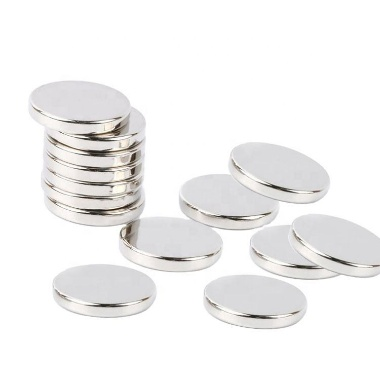
Most portable speakers settle for weak ferrite magnets because they're cheap and easy to source. But when the goal is squeezing serious output from a cabinet that slides into a daypack, every gram and every millimeter counts. Neodymium drivers pack roughly ten times the magnetic energy of ferrite into the same volume, which means a 6.5-inch woofer can behave like something much larger without turning your backpack into a gym session. The trade-off isn't just about weight, though. It's about reclaiming enclosure space that would otherwise be eaten up by a bulky motor structure, letting designers tune the cabinet for low-end extension instead of fighting physics for every extra decibel.
There's also a practical side nobody mentions in spec sheets: heat. A neodymium magnet is more efficient at converting electrical energy into cone movement, so less power gets wasted as heat inside the voice coil. For a battery-powered speaker riding around in a hot car trunk or sitting in direct sun at a picnic, that's the difference between a driver that keeps its composure and one that slowly cooks itself into distortion. You won't see “neodymium” printed on the outside of the box, but you'll hear it the first time you push the volume past 70% and the bass stays tight instead of flabbing out.
Of course, neodymium isn't a magic wand — it's expensive, it can corrode if the coating gets chipped, and a poorly designed magnet circuit will still sound mediocre. But for anyone who's ever tried to carry a conventional 12-inch wedge more than two blocks to a rehearsal, the appeal is obvious. The next time you compare two similarly sized portable speakers and one feels suspiciously light, check the driver specs. If it says neodymium, that weight savings isn't cheap plastic. It's the reason the thing can hit notes that make you glance over your shoulder, even when it's hanging from a carabiner.
Alnico and Why Some Guitarists Pay a Premium for a Technically Inferior Magnet
Alnico sits in an odd place in the guitar world. On paper, it's a weaker magnet than the ceramic or neodymium alternatives, with lower coercivity and a tendency to lose charge over time. But the very flaws that engineers might flag are exactly what many players listen for. An alnico pickup tends to soften the attack, round off the high end, and let the midrange breathe in a way that harder magnets often don't. It compresses slightly under the player's fingers, making dynamics feel more vocal and less clinical.
That's why some guitarists will happily spend extra for a part that measures worse in a lab. The premium isn't about magnetic strength or efficiency; it's about a familiar voice and a certain tactile response that has become baked into the sound of classic recordings. Once a player associates that slightly sagging, warm tone with a favorite album or a beloved old guitar, no spec sheet can compete with it. The technical inferiority, in this case, is precisely the feature they're paying to preserve.
Samarium Cobalt Is the Over-Engineered Choice for Yacht Speakers and Desert Rigs
Most speaker builders reach for neodymium without a second thought, but samarium cobalt sits in a different corner of the parts shelf. It is not there to save money or shave grams. It is there because salt spray, humidity, and relentless sun wreck ordinary magnets long before the cone or voice coil gives up. On a yacht, the air is thick with moisture and chloride, and even coated neodymium eventually pits and flakes. Samarium cobalt shrugs that off without needing a protective jacket, so the driver keeps its gap strength year after year while the boat rocks and the spray flies.
Out in the desert, the enemy is heat and vibration. A dune rig baking in the afternoon sun can push a conventional magnet toward its operating ceiling, and repeated hard hits accelerate the loss. Samarium cobalt holds its magnetic field at temperatures that would embarrass most neodymium grades, and it does not care about the constant pounding from washboard roads. Its flux density may not top the highest-energy neodymium, but the difference is academic when the alternative is a speaker that slowly goes dull after one brutal summer.
The obvious downside is cost and the fact that it is brittle enough to make machinists swear. Yet for someone who wants to install a set of speakers and forget they exist, that over-engineering starts to look like common sense. A failed driver in the middle of the ocean or fifty miles from pavement is not a quick swap. Samarium cobalt is the part you buy once and then ignore, which is exactly the point of building something that can take more abuse than it will ever realistically see.
Field Coils Are 1930s Tech That Still Makes Modern Audiophiles Argue
Field coil drivers occupy a strange corner of high-end audio. They rely on an electromagnet instead of a permanent magnet, a design that was common in the 1930s but largely disappeared when alnico magnets became cheap and reliable. On paper, that sounds like a step backward. Yet a small group of listeners insists the old approach offers something modern drivers can't match: a sense of ease and dynamic fluidity that makes vocals and acoustic instruments feel startlingly alive.
The arguments start the moment someone asks why. One camp points to the adjustable power supply, which lets users fine-tune the magnetic field to suit a room or taste. Another camp claims the real advantage is simply that field coil speakers tend to be built to a higher standard, so any perceived magic comes from better cones, surrounds, and cabinets. Without controlled comparisons, both sides rely on anecdotes and listening impressions, which is exactly why the debate refuses to die. Nostalgia may play a role, but for those who have spent years chasing a particular tonal texture, field coils remain a stubbornly compelling anomaly.
Magnet Weight Doesn't Equal Sound Quality — Here's What Actually Matters
There's a stubborn bit of folklore that a heavier magnet means a better driver. It's easy to see why — pick up a vintage alnico speaker and it feels substantial. But raw magnet mass doesn't translate into a stronger magnetic field in the voice coil gap. What actually matters is how efficiently the magnet's energy is focused. A compact neodymium motor can easily outperform a chunky ferrite one if the pole piece geometry and voice coil gap are tighter. In fact, a massive magnet on a poorly designed magnetic circuit just adds weight and cost while doing very little for transient response or bass control.
The spec worth paying attention to is magnetic flux density in the gap, often expressed in Tesla. This, combined with voice coil length and electrical damping, shapes how quickly a driver starts and stops. High flux in the gap gives the motor more control over the cone, which translates into cleaner attack and less overhang. So instead of judging a speaker by how heavy it feels, look at the total Q factor, sensitivity, and real-world distortion measurements. A well-executed small magnet can sound tighter and more articulate than a heavy one that's just along for the ride.
FAQ
Focus on three: ferrite, neodymium, and alnico. Ferrite is the workhorse, cheap and durable, used in most general-purpose drivers. Neodymium is the strong lightweight option, common in modern compact designs. Alnico is the old-school choice, prized in guitar and high-efficiency hi-fi for its particular character.
Alnico has a softer magnetic saturation curve, which means the speaker compresses more gracefully when pushed hard. Guitarists like that smoothing effect on overdriven tones. Hi-fi systems usually want linearity and lower distortion, so ferrite and neodymium are preferred there.
Not necessarily. A larger magnet can produce a stronger field, but the real metric is the magnetic flux density in the voice coil gap. A well-designed small neodymium magnet can outperform a larger ferrite one if the motor geometry is optimized. Bigger does not automatically mean tighter bass or higher output.
Only if size or weight is a real constraint. Neodymium drivers excel in slim cabinets, bookshelf speakers, or installations where you do not want a heavy driver hanging on a baffle. If you have a large floorstanding enclosure and do not care about weight, a good ferrite driver can deliver excellent sound for less money.
The magnetic field strength influences the driver's electrical damping (Qes), which in turn affects how tightly the woofer tracks the amplifier signal. A stronger motor generally raises damping, giving tighter, punchier bass, but the enclosure and crossover have to be matched. It is not a simple 'bigger magnet equals better bass' equation.
Often yes. Ferrite magnets are ceramic gray and usually large, visible as a thick ring or slab on the back of the driver. Neodymium magnets are much smaller, often nickel-plated, and sit directly on the pole piece. Alnico magnets are typically cast metal, can be cylindrical or horse-shoe shaped, and are found mostly on vintage or boutique drivers.
Neodymium is the clear winner. You get a much higher energy product per gram, so the driver can be small and light without sacrificing output. Ferrite would force a bigger, heavier motor to reach similar sensitivity, which defeats the purpose of a portable design.
Ferrite and alnico are quite stable, though alnico can lose strength if the speaker is subjected to very high temperatures or strong opposing fields. Neodymium has a lower Curie temperature, so it can demagnetize if the voice coil gets extremely hot, but in normal use with proper power handling, all three last for decades.
Conclusion
When you peel back the grille cloth on almost any speaker you've owned, chances are a humble ferrite magnet is doing the heavy lifting. It's not flashy, not expensive, and it won't win any spec-sheet beauty contests, but ferrite's thermal stability and low cost have made it the quiet workhorse of everything from budget bookshelf speakers to giant PA stacks. That reliability is exactly why it dominates, even if audiophiles rarely brag about it. Step into the world of portable audio or modern line arrays and the conversation flips to neodymium. Pound for pound, neo delivers dramatically more magnetic flux, letting designers shrink drivers to backpack-friendly sizes without sacrificing output. It's the reason a pocket-sized Bluetooth speaker can still kick surprisingly hard.
Yet raw magnet strength isn't the whole story. Guitar players have spent decades arguing that alnico's uneven, slightly less linear magnetic field gives tube amps a warmer, more forgiving compression and bloom, even though alnico is technically inferior by modern measurement standards. On the opposite end, samarium cobalt shrugs off temperature swings and corrosion, making it the over-engineered choice for yacht speakers baking in salt air or desert rigs roasting at 50°C. Some purists go even further back, reviving 1930s field coil drivers where the magnet is an electromagnet you power yourself—this lets you tune the magnetic strength in real time, but it also requires external power supplies and sparks endless audiophile debates. In the end, magnet weight alone means nothing. A heavy ferrite driver can sound better than a featherweight neo driver if the motor geometry, voice coil, and enclosure are right. What actually matters is matching the magnet type to the real-world demands of your system: size, heat, cost, and the tonal character you're chasing.
Contact Us
Contact Person: Kelvin Lo
Email: [email protected]
Tel/WhatsApp: 0769-88561131
Website: https://dawamagnetic.com/