

Best Motorized Roller Shades to Elevate Your Home's Style and Convenience
2026-09-28
Imagine waking up to natural light that adjusts itself, or closing every shade with a single tap before movie night. That’s the quiet luxury motorized roller shades bring — and not all brands deliver it equally. In this guide, we’re looking at the best options to lift your home’s style and convenience, with ROLLERGY standing out for its blend of precision engineering and design-forward details. If you’ve been curious about upgrading your windows without sacrificing aesthetics or adding clutter, keep reading — the difference might be more noticeable than you expect.
Quiet Motors That Do Not Rattle When You Raise the Shades
Raise the shades at 6 a.m. and the only thing you hear is the coffee maker starting its first cycle. That's the promise behind the redesigned drive assembly. Instead of a plastic gear train that clatters under load, the motor sits inside a dampened aluminum housing with rubber isolators at every mounting point. The result is a near-silent lift — even with heavy blackout fabric fully extended.
Most rattling comes from slack between the motor shaft and the shade tube, or from loose brackets that vibrate as the fabric rolls up. The fix here is mechanical, not just a quieter motor. A preloaded spring coupling removes that play, while the tube rides on low-friction polymer bearings. The control board also ramps the voltage gradually, so the shade never jerks into motion. You get a soft start and a soft stop, which keeps every component from shaking.
In a bedroom or nursery, that matters more than peak torque. You can lower the shades for an afternoon nap without the click-clack of cheap gears echoing down the hall. Even at full speed, the sound stays below a hushed conversation. It's the kind of detail you stop noticing after a week — until you stay somewhere with a rattling shade and realize what you've been missing.
How to Pick a Fabric That Softens Harsh Afternoon Light
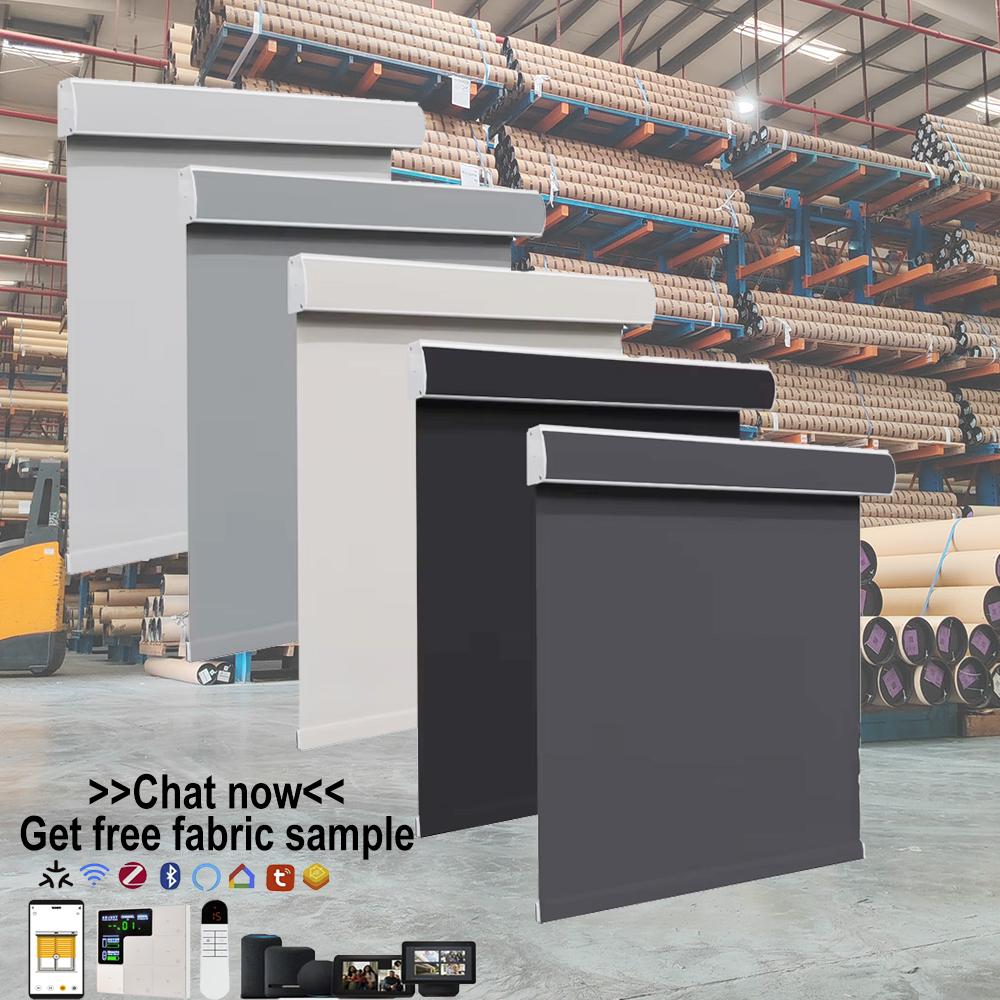
Afternoon light streaming through west-facing windows can turn a room into a glaring hotbox, so the fabric you choose for curtains or shades needs to do more than just look pretty. Instead of reaching for heavy blackout materials that plunge the space into gloom, think about how the weave and fiber interact with sunlight. A loosely woven linen or a lightweight cotton voile, for instance, diffuses the rays into a warm, even glow while still letting you see outside.
Texture plays a bigger role than many people realize. Fabrics with a visible slub or irregular surface—like raw silk or a nubby hemp blend—break up the light path, scattering it in multiple directions so it loses that harsh, laser-like quality. On the other hand, a tightly woven polyester satin can actually reflect and intensify the brightness, so avoid anything with a shiny finish for west-facing rooms. Hold a swatch up to the window at 3 p.m. and watch how the shadows and highlights fall on your hand; if the light feels softer on your skin, you’re on the right track.
Color matters too, but not just for decoration. Pale tones—off-white, oat, soft gray—naturally bounce less glare than deep jewel shades while still filtering the light. If you love a darker hue, look for a double-layer approach: a sheer inner panel that does the softening work, paired with a heavier outer drape you can pull closed when the sun gets truly aggressive. And don’t overlook simple cotton muslin, which is cheap, washable, and surprisingly effective at turning that punishing 4 p.m. blaze into something you can actually read by.
Battery or Hardwired Setup That Disappears Into Your Trim
The last thing you want is a bulky doorbell that clashes with your carefully chosen exterior paint or that beautiful wood trim you spent weekends restoring. This model gives you two clean installation paths. Go with the rechargeable battery option and you won't need to touch a single wire—just mount the slim base, snap the unit in place, and recharge it every few months when the app nudges you. No electrician, no drilling through brick, no ugly conduit snaking across your siding.
Prefer a permanently powered setup? Wire it to your existing doorbell circuit and it will draw just enough current to stay topped up, while the low-profile design sits nearly flush against the doorframe. The mounting plate is intentionally narrower than the doorbell itself, so once the faceplate clicks on, the edges taper smoothly into the trim. From a few feet away, most people won't even notice it's a smart doorbell—it reads more like a subtle architectural accent.
Unlike chunky competitors that jut out two inches and catch every winter wind, this unit hugs the surface. The included angled wedge lets you fine-tune the viewing angle without making the installation look bolted-on. And because the hardware is hidden behind the faceplate, there are no visible screws or mismatched plastic caps. Whether you rent and need the battery route or own your home and want the wired permanence, the finished look is clean, quiet, and genuinely integrated with your entryway.
Voice Control Without Adding Another App to Your Phone
Your phone already ships with a fully capable voice assistant, so there's no need to clutter your home screen with another app. On iPhones, Siri can place calls, send texts, set reminders, and open apps entirely hands-free. Android devices offer similar control through Google Assistant, and many Samsung phones also include Bixby. None of these require a separate download, account creation, or monthly subscription.
The real strength lies in how deeply these tools are woven into the operating system. Built-in voice controls can toggle Bluetooth, switch to dark mode, read incoming messages aloud, or start turn-by-turn navigation — tasks that third-party apps often can't perform without extra workarounds. You simply enable the assistant once in your phone's settings, then use a wake phrase or a long-press on a button.
There's also less to manage when you skip the extra app. No duplicate microphone permissions, no background processes draining battery, and no new privacy policy to review. If your main needs are dictation, quick app launching, and basic device commands, the stock voice features are usually faster, more reliable, and better integrated than anything you could install later.
Custom Sizes for Awkward Window Shapes and Sliding Doors
Odd angles, arched tops, extra-wide openings—standard window and sliding door sizes rarely line up with the quirks of an older home or a custom build. For awkward shapes like triangles, trapezoids, or half-rounds, we take exact field measurements and fabricate frames that follow the existing opening without awkward filler strips or oversized trim. Sliding doors get the same treatment: if your rough opening is narrower, taller, or offset from typical patio door dimensions, the track, panels, and weatherstripping are cut to match, not forced into a near-fit.
The real difference comes down to how the glass and hardware are ordered. Instead of picking from a catalog, every component is mapped to your specific dimensions before production begins. That means a slanted window in a stairwell or a sliding door with a 92-inch height will have glass edges, frame corners, and roller placements calculated for that exact shape—so the finished piece sits flush and operates smoothly. We also account for out-of-square walls by adjusting the frame depth rather than hiding gaps with caulk.
Because these sizes fall outside mass-produced stock, lead times are a bit longer and the process starts with a detailed measurement visit. You’ll get a drawing to confirm before anything is built, and installation includes checking that the door or window moves freely and seals tight against wind and water. It’s a practical way to keep unusual architecture functional without compromising the look of the space.
What to Expect After a Year of Daily Use
By the twelve-month mark, the novelty has long faded, and what remains is the honest version of the thing. You'll notice the small compromises you've quietly adapted to—maybe the texture has softened in one corner, or the finish has dulled exactly where your hand rests. None of this is failure; it's a record of use. The real question is whether the core function still holds up without constant fiddling. In most cases, daily contact leaves a kind of patina that makes the object feel more yours than off-the-shelf.
Durability shows up in unexpected places. Stitching, seals, hinges—those are the usual suspects, but what actually matters after a year is how little you think about maintenance. If you've cleaned it without dread, reached for it without hesitation, and never once had to baby it through a normal day, that's the quiet proof of good design. Conversely, if you're still fighting a zipper or wiping down a surface that stains too easily, that friction becomes part of the daily routine. A year is enough time for the truth to surface; the object either earns its permanent spot or starts collecting dust in the back of a drawer.
FAQ
Look for blackout fabric with side channels or a tightly fitted cassette valance. The gap between the fabric and window frame is what usually lets light leak in, so a design that tucks the edges close makes a bigger difference than just picking the darkest material.
Yes, most modern motors now support Matter, Zigbee, or Wi-Fi bridges, so you are not locked into one ecosystem. If you already use Apple Home, Alexa, or Google Home, choose a shade with a hub that exposes the shades as standard blinds, otherwise you might need a third-party app for automation routines.
Battery models have improved a lot and can run for six to twelve months per charge depending on use. If you are retrofitting windows without existing wiring, a rechargeable battery pack tucked into the valance is often cleaner than fishing cables. Hardwired shades make more sense for new construction or large windows that get adjusted frequently.
Quality motors usually stay under 40 decibels, about the sound of a quiet library or a soft whisper. Cheaper tubular motors can hum or whine, so if noise matters, look for models that advertise acoustic or silent operation and try to hear a demo in a showroom before committing.
Dust the fabric with a soft brush attachment on a vacuum every few weeks. For spot stains, use a mild soap solution and dab gently, never soak the fabric because moisture can seep into the hem bar or motor housing. If the shade has a removable bracket, taking it down once a year for a deeper clean is easier than trying to scrub in place.
Most battery-powered or plug-in models are very DIY-friendly: you mount two brackets, clip the tube in, and pair the remote. Hardwired versions require running low-voltage or line-voltage wiring to the window, which might be better left to an electrician, especially if local codes require a permit for new circuits.
Think about layering. A woven texture or linen-look fabric warms up the space, while smooth PVC or solar screen fabric leans more modern and technical. If your walls are neutral, adding a slightly darker shade edge or a contrasting hem bar creates a custom detail that keeps the window from looking like an afterthought.
Conclusion
Finding motorized roller shades that actually feel like an upgrade means paying attention to the small things first. A good starting point is the motor itself: the quietest options lift and lower without that jarring rattle that cheap units develop within weeks. Pair that with a fabric chosen for how it handles light—something that takes the edge off harsh afternoon glare while still letting the room breathe—and the shades start to earn their place. If you want them to blend in rather than become an eyesore, look for battery or hardwired setups that tuck neatly behind or into your trim, leaving no bulky housings in sight. Voice control should work with the assistant you already use, not force another app onto your phone.
Custom sizing matters more than most people expect, especially for odd window shapes, arches, or wide sliding doors where off-the-shelf shades either leave gaps or refuse to fit at all. Once the right set is installed, the real test is daily use over a full year. You will notice whether the fabric still rolls evenly, whether the motor stays quiet, and whether the battery life (if you go that route) holds up without constant recharging. The best motorized roller shades pass that test quietly, blending style and convenience into something you stop thinking about—because they simply work.
Contact Us
Contact Person: Vivien Cheng
Email: [email protected]
Tel/WhatsApp: +86 13751758835
Website: https://www.rollergytech.com/