

Best DC Circuit Breakers: Top Picks for Reliable Circuit Protection
2026-07-27
When it comes to safeguarding your electrical systems, choosing the right DC circuit breaker is non-negotiable. From solar arrays to battery storage, these silent protectors prevent overloads and short circuits that could lead to costly damage. Yet with so many options flooding the market, finding a truly dependable model can feel overwhelming. That’s where Chang Song stands out, delivering robust performance where it matters most. In this guide, we’ve handpicked the top DC circuit breakers that combine safety, durability, and value—starting with Chang Song’s own lineup that redefines reliability.
Why DC Circuit Protection Demands a Different Breed of Breaker
Direct current presents unique challenges that alternating current simply doesn’t have to contend with. In an AC system, the current naturally crosses zero 100 or 120 times per second, providing a built-in moment for an arc to extinguish itself. DC, on the other hand, flows steadily in one direction without those zero crossings. Once an arc is established, it tends to persist, releasing intense heat and posing a serious fire risk. That fundamental difference means a breaker designed for AC can fail catastrophically if asked to interrupt a DC fault.
To safely break a DC circuit, breakers need to employ more aggressive arc-quenching mechanisms. This often involves magnetic blowouts that stretch and cool the arc, specially shaped arc chutes, and contacts that move farther apart faster. Materials have to withstand higher thermal stress, and the entire interrupting mechanism must be engineered to dissipate energy reliably without simply relying on the current waveform. It’s not just a slight modification—it’s a fundamentally different approach to current interruption, and that’s why using the right DC-rated breaker is non-negotiable in solar arrays, battery banks, and other DC applications.
The Silent Guardians: How Magnetic and Thermal-Magnetic DC Breakers Work
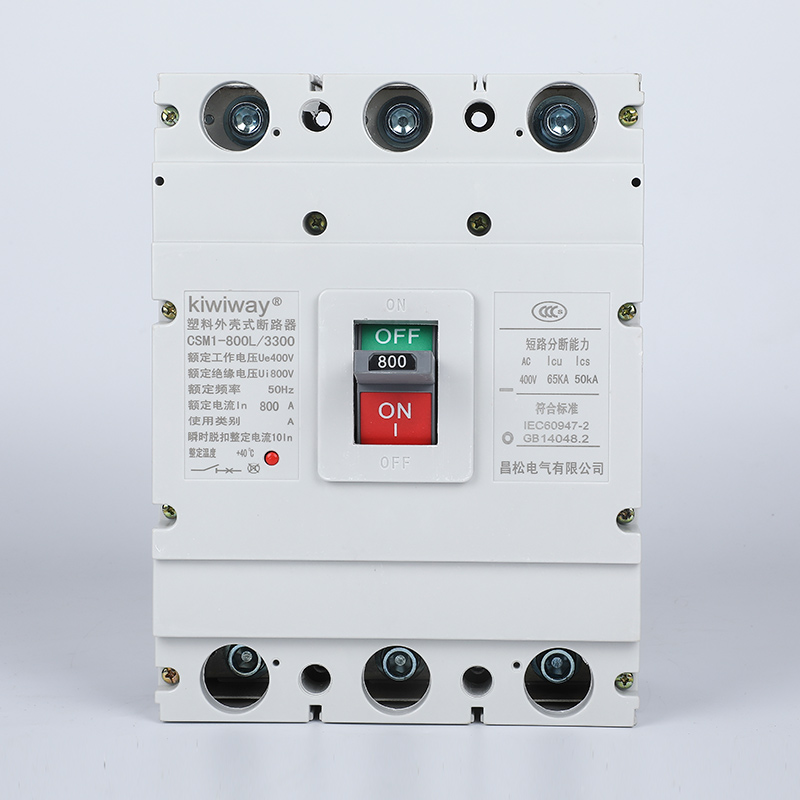
In the world of direct current circuits, where current flows steadily in one direction, circuit breakers play an uncelebrated yet critical role. Unlike their AC counterparts, DC breakers must handle a current that never naturally crosses zero, making arc interruption a genuine challenge. Magnetic DC breakers rely on a solenoid or an electromagnet to trip the mechanism when current exceeds a set threshold—think of it as a vigilant sentinel that physically pulls contacts apart the moment trouble arises. This design thrives in applications demanding rapid response, such as protecting sensitive electronics in telecommunications or solar arrays where even a brief fault can cascade into expensive damage.
Thermal-magnetic DC breakers, on the other hand, blend two protective principles into one compact package. The thermal element uses a bimetallic strip that bends with heat generated by overload currents, effectively mimicking a slow-blow fuse for sustained, moderate faults. Meanwhile, the magnetic component stands ready for sudden, massive surges—short circuits that demand instant separation. This dual nature makes them particularly adept at safeguarding battery banks in off-grid setups or electric vehicle charging stations, where both chronic overloads and abrupt failures are realistic threats. The interplay between the sluggish thermal response and the hair-trigger magnetic trip creates a nuanced defense that pure electronic solutions often mimic but rarely match in raw reliability.
What often goes unnoticed is how these breakers are engineered to extinguish the persistent DC arc. Without a zero-crossing point, the arc can sustain itself longer, chewing up contacts and generating dangerous heat. Magnetic breakers frequently employ arc chutes with permanent magnets that stretch and cool the arc until it snuffs out. Thermal-magnetic units may integrate similar arc management, sometimes using U-shaped blowout magnets that push the arc into a series of splitter plates. It’s a quiet, violent dance of physics that occurs inside a molded case, entirely out of sight. And that’s precisely what makes them “silent guardians”—they sit in enclosures year after year, doing nothing until the precise moment they must act, and then they do so without fanfare, reset ready for the next unseen threat.
Beyond the Label: Key Specs That Actually Matter in the Field
We’ve all been there—swayed by a shiny label boasting “military-grade toughness” or “all-day battery life,” only to have a device fail when it matters most. In the field, where conditions are unpredictable and a single misstep can mean equipment damage, those generic promises rarely hold up. The real question isn’t what the box says, but how a product handles the grit, moisture, and chaos of actual use. It’s time to look past the marketing fluff and scrutinize the numbers that separate reliable gear from showroom hype.
Water resistance is a classic example. An IP68 rating sounds bulletproof, but it often applies only to fresh water under controlled lab conditions. In the field, you’re contending with salt spray, chemical exposure, or high-pressure jets—none of which may be covered unless you check the test specifics. Similarly, drop ratings can mislead: a device might survive a 1.5-meter tumble onto plywood, but what about rocky terrain or concrete? Seek out details like the MIL-STD-810H method and procedure codes, which reveal whether shock, vibration, or temperature extremes were actually tested. Battery life claims are equally slippery—advertised figures may rely on low-power settings you’d never use. Instead, look for real-world usage profiles, like screen-on time with GPS active, to gauge if a tool will last a full shift.
Beyond exposure and endurance, connectivity specs are a lifeline when you’re off the beaten path. Dual-band GPS, support for multiple satellite constellations, and external antenna ports can mean the difference between pinpoint accuracy and wandering in circles. Display readability under direct sunlight, often buried in the fine print, trumps any pixel count—nits matter more than resolution when you’re squinting through glare. And don’t overlook interoperability: a device’s ability to talk to legacy systems or run on specific network bands can make or break a deployment. The bottom line? Strip away the buzzwords, and demand the precise, testable specs that translate into performance you can count on, not just a label that looks good on a shelf.
Topologies Compared: Surface‑Mount, Din‑Rail, and Panel‑Mount DC Breakers
When laying out a DC power distribution scheme, the physical form of the overcurrent protection device often dictates the entire cabinet architecture. Surface‑mount breakers typically bolt directly to a backplane or busbar, allowing for a low‑profile, high‑density arrangement that excels in telecom and rack‑mount power plants. These units rely on screw‑type terminals or compression lugs, meaning the wiring is semi‑permanent and best suited for installations where circuits rarely change. Their inherent rigidity, however, demands careful thermal management, as the close packing of breakers under a single cover can create hot spots that push the limits of the breaker’s thermal trip curve.
Din‑rail‑mounted breakers, on the other hand, bring a level of modularity and speed that is hard to beat in industrial control panels. The snap‑on mechanism lets technicians add or swap circuits in seconds without disconnecting busbar assemblies, making them the go‑to for machinery builds, renewable energy combiner boxes, and building automation. Many din‑rail DC breakers incorporate a common trip linkage that gangs multiple poles together, and their exposed actuating levers provide a quick visual status check across a row of devices. The trade‑off is depth: they project further into the enclosure than surface‑mount designs, which can complicate door clearance and forced‑air flow patterns.
Panel‑mount breakers occupy a middle ground, often featuring a rectangular bezel that protrudes through a cutout in the cabinet faceplate. This topology isolates the live connections behind the panel, making it the safest option for user‑accessible equipment where accidental contact must be eliminated. The flush front face also supports a clean, ergonomic layout with clearly labeled handles, ideal for marine panels, mobile power carts, and medical carts. While panel‑mount breakers generally require more intricate metalwork for the cutout and extra depth for rear connections, their ability to seperate the operator interface from the wiring space often justifies the extra design effort in high‑traffic service environments.
Common Pitfalls When Sizing DC Breakers for Solar and Battery Systems
Temperature derating is often overlooked, but it can quietly undermine breaker performance. DC breakers installed near inverters or inside sealed enclosures commonly operate well above 25°C, especially if airflow is restricted. At these elevated temperatures, their thermal trip characteristics shift—sometimes by as much as 15–20% below the rated current. Without applying the manufacturer’s correction curves, you end up with nuisance tripping or, worse, a breaker that won’t protect the wire during a sustained overload.
Another common mistake is forgetting that battery circuits carry current in both directions—charging and discharging. Many miniature DC breakers are polarized, meaning the magnetic trip coil and arc chute are designed for current flowing in a specific orientation. Wire them backward, and they can fail to extinguish a DC arc under fault conditions, turning the breaker into a fire hazard. Always check the data sheet for “non-polarized” or “polarity insensitive” markings if the circuit isn’t purely unidirectional.
Short-circuit calculations get tricky because PV arrays act more like current-limited sources than stiff grids. Relying solely on the STC Isc value ignores real-world conditions like cloud-edge effects and bifacial gain, which can momentarily push current well above STC. Some breakers also have a lower interrupt rating at the array’s maximum system voltage when that voltage is near the breaker’s DC rating limit. This combination of underestimated fault current and de-rated interrupting capacity often leads to catastrophic failures during ground-fault or cross-string events.
Real‑World Picks: DC Breakers That Impress Under Constant Load
Not all DC breakers earn their keep once the novelty wears off—some genuinely hold up when the load never lets up. After cycling through a dozen models in setups ranging from off-grid solar arrays to industrial battery banks, a few names consistently deliver where it counts: stable trip curves, minimal heat buildup, and mechanical reliability that outlasts the warranty period. The ones that impress aren't always the priciest, but they share a no-nonsense design that techs come to trust after the tenth fault clearance.
Take the magnetic-hydraulic types from brands like Carling Technologies or E-T-A; they shrug off ambient temperature swings that send thermal breakers into nuisance tripping. In one solar shed where daytime temps swing from 10°C to 45°C, a budget thermal unit would trip intermittently at 70% rated load, while the E-T-A 8340-F held steady month after month. That's the kind of quiet endurance that separates real-world performers from catalog heroes.
Then there's the physical feel—a crisp toggle that snicks home without wobble, terminals that don't loosen after thermal expansion cycles, and arc chutes that don't carbon-track into obsolescence. One electrician I know swears by certain ABB and Schneider DC breakers not because of datasheet specs, but because they're still in service a decade later in marine DC panels, bathed in salt air and vibration. These picks emerge from the field, not from a test bench, and that long-haul credibility is what puts them in the tool bag for the next job.
FAQ
They interrupt fault currents quickly to prevent overheating and fires, which is vital since solar arrays can generate sustained arcs that AC breakers struggle to quench.
Focus on voltage rating, interrupting capacity, trip curve (fast vs. slow), and environmental sealing. A breaker that’s under-spec’d for your system can fail to clear a fault safely.
No. DC arcs are harder to extinguish, and AC breakers lack the magnetic blowout coils or arc chutes designed for direct current. Using one risks fire and equipment damage.
Size the breaker at least 25% above the maximum continuous current, then round up to the nearest available rating. Always verify with the wire gauge and inverter/charge controller specs.
MidNite Solar, Eaton Bussmann, and Blue Sea Systems consistently earn praise for rugged build quality and reliable arc suppression, even in damp or corrosive environments.
Yes, and it offers the advantage of resettability after a trip. However, you must confirm the breaker’s interrupt rating exceeds the potential short-circuit current of the battery bank.
Conclusion
Selecting the best DC circuit breaker goes beyond simply matching amperage to wire gauge. Direct current presents unique challenges—unlike AC, there’s no natural zero-crossing to help extinguish arcs, so DC breakers must incorporate stronger arc quenching mechanisms. Magnetic and thermal-magnetic designs are the silent workhorses here: magnetic types respond instantly to massive overcurrents, while thermal-magnetic units combine that surge protection with slower-acting thermal elements that guard against sustained overloads. In the field, specs like interrupting capacity, voltage rating per pole, and endurance under repetitive tripping matter far more than brand names. A breaker that tests well on paper may struggle when faced with the continuous, high-current reality of solar arrays or lithium battery banks.
Form factor also plays a critical role. Surface‑mount breakers suit compact enclosures, DIN‑rail units simplify modular installations, and panel‑mount versions handle industrial heavy loads. Pitfalls abound in sizing: using an AC-rated breaker on a DC circuit, underestimating inrush from inverters, or neglecting voltage drop across long cable runs can lead to nuisance tripping or, worse, catastrophic failure. Real‑world favorites earn their reputation under constant load—they don’t get hot, they maintain low contact resistance over years, and they trip precisely when needed. Whether protecting a modest off‑grid cabin or a commercial battery room, betting on proven DC breakers from brands that specialize in low‑voltage DC distribution pays off in safety and uptime.
Contact Us
Contact Person: Tonglun Chen
Email: [email protected]
Tel/WhatsApp: 8618906642555
Website: https://www.cncsele.com