

Best Automated Guided Vehicle Solutions for Smarter Warehouse Logistics
2026-08-23
Automated guided vehicle solutions are no longer a futuristic nicety—they're the difference between warehouses that scale and those that stall. Yet not all AGVs are built for the chaos of real-world logistics. HANGCHA takes a different route, focusing on rugged simplicity and data-driven flow. In this guide, we compare the options that actually deliver smarter warehouse logistics.
Where Traditional Warehouse Flow Breaks Down (and How AGVs Fix It)
Traditional warehouse flow often breaks down at the handoff points between zones. Pallets arrive at the end of a picking aisle, then wait for a forklift driver who might be on break or handling a rush order elsewhere. That idle time isn't just a minor delay—it cascades into uneven workloads, blocked staging areas, and missed shipping windows. Managers try to patch it with more labor, but adding people to a system designed for linear movement only increases congestion and miscommunication.
Another subtle failure shows up in how inventory data drifts from reality. A worker scans a carton into a buffer location, but if it gets moved manually to make room for an inbound trailer, the system still thinks it's in the original spot. Over a shift, these small discrepancies force pickers to hunt for items, walk back to confirm counts, or wait for a supervisor to override a location. AGVs don't just transport goods—they log every movement automatically, closing the gap between what the WMS expects and what's actually on the floor.
Finally, conventional flow depends on human memory for priority. When an urgent order drops in, someone has to radio a driver, interrupt a pick cycle, or physically reshuffle pallets near the dock. That reactive juggling works once or twice, but under peak season loads it turns the floor into a gridlock of half-finished tasks. AGVs operate on a shared traffic map with dynamic rerouting, so they can absorb a hot order without breaking stride. The result is less firefighting and more steady, predictable throughput.
Retrofitting AGVs into Existing Floor Plans Without Halting Operations
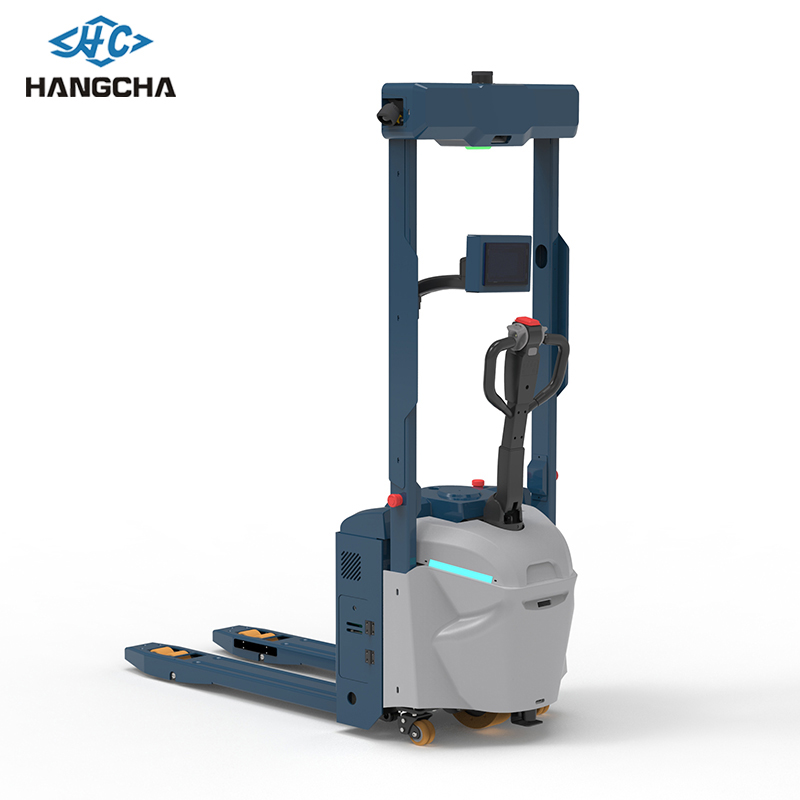
Retrofitting AGVs into a live facility starts with a non-disruptive audit of current material flow. Rather than pausing production, teams walk the floor during shift changes or breaks to measure turning radii, note floor irregularities, and map where forklifts and workers most often cross paths. These observations feed into a phased rollout plan that introduces one or two vehicles on a controlled loop first, using temporary magnetic tape or painted guide lines that require only minimal downtime for application.
Once the initial loop proves stable, the system expands using QR markers or lightweight reflectors mounted during short maintenance windows. Night-shift pilot runs verify docking accuracy and traffic rules without interfering with daytime output. Any physical adjustments—such as trimming a rack corner or relocating a charging bay—are bundled into pre-planned maintenance slots. This piecemeal approach keeps existing workflows intact while gradually shifting more transport tasks to the AGV fleet.
Using Live Route Data to Reduce Picking Errors
Warehouse teams often rely on printed pick lists or static route plans, but these can quickly become outdated when inventory moves, orders change, or congestion builds in certain aisles. By tapping into live route data, pickers receive real-time guidance that reflects the current state of the floor—whether that means rerouting around a blocked aisle, prioritizing a hot order that just dropped, or merging nearby picks to cut travel time. The result is fewer mispicks caused by outdated information, since workers are always following a path that matches what's actually happening right now.
A common source of picking errors is the gap between the plan and the physical environment. For instance, a picker might be sent to a bin that was just replenished but not yet updated in the system, leading to a wrong item scan or a wasted trip. Live route data closes that gap by continuously syncing with warehouse management systems, RFID readers, and barcode scans. When a location changes or a pick is confirmed, the route recalculates instantly, steering workers away from trouble spots and toward verified stock. This dynamic feedback loop keeps errors from compounding over a shift.
Another overlooked benefit is the reduction in cognitive load. Instead of juggling a paper list, a scanner, and mental notes about which aisle to skip, pickers simply follow the next indicated step on their device. Clear, turn-by-turn routing based on live conditions removes guesswork, which is a major contributor to picking mistakes. Over time, teams that adopt this approach see not only fewer errors but also faster onboarding for new staff, since the system handles the complex decision-making and leaves workers with a simple, reliable path to follow.
A Fair Cost Comparison: AGV Fleets vs. Manual Material Handling
When evaluating warehouse operations, upfront price tags rarely tell the whole story. A fleet of automated guided vehicles demands a significant initial investment in hardware, software integration, and facility modifications. Manual labor, on the other hand, appears cheaper at first glance—but that assumption crumbles once you factor in recruitment, training, turnover, overtime, and the hidden costs of human error. A fair comparison must look beyond sticker prices and examine total cost of ownership over a five- to seven-year window.
Productivity patterns reveal another stark contrast. AGVs operate continuously with consistent speed and precision, never taking breaks, calling in sick, or losing focus during a night shift. Human workers bring adaptability and problem-solving skills to the floor, but their throughput fluctuates with fatigue, motivation, and seasonal absences. The cost per moved pallet or completed task often drops sharply with AGVs after the break-even point, while manual operations see costs rise steadily with wage inflation and compliance requirements.
Perhaps the most overlooked factor is risk and variability. Manual material handling carries ongoing expenses for workplace injuries, ergonomic assessments, and liability insurance—not to mention the operational disruptions from accidents. AGV fleets shift that risk profile dramatically, replacing physical strain with predictable, sensor-driven navigation. When you compare these two models side by side, the "cheaper" option depends entirely on whether you're looking at a single month's payroll or the cumulative financial and operational impact over the lifetime of your facility.
Building Collision-Free Zones Where Forklifts and AGVs Share Aisles
Shared aisles between manual forklifts and AGVs fail when safety depends on painted lines or warning signs alone. A more reliable approach splits each aisle into micro-zones with entry permissions handled by the fleet controller. Laser scanners on both vehicle types feed a common map, and when a forklift drifts into an AGV’s reserved path segment, the nearest AGV either pauses at the previous checkpoint or shifts to a pre-approved bypass before the gap closes below four meters.
Physical layout does part of the work, but dynamic virtual barriers do the rest. At blind intersections, overhead projectors throw a red zone onto the floor that follows the forklift’s live position, while AGVs treat that projected polygon as a hard stop. Forklift operators wear lightweight UWB tags, so whenever they step off the vehicle inside an active aisle, the system adds a two-meter personal exclusion radius around them. One-way time windows for narrow stretches—alternating every ninety seconds based on downstream congestion—remove most head-on conflicts before they start.
Operators need clear, non-negotiable handoff rules. Before entering a shared aisle, a forklift driver taps a request button at the entrance; the system grants a green path light only after nearby AGVs have reached safe hold points. If an AGV loses its localization lock or a forklift travels faster than the aisle’s speed profile, all vehicles in that segment drop to crawl speed and a warning tone sounds at both driver interfaces. Weekly review of near-miss timestamps and zone breach logs leads to small geometry adjustments, because a collision-free zone is maintained through continuous tuning rather than a one-time installation.
Scaling AGV Capacity for Seasonal Peaks and SKU Growth
Retail and e-commerce operations rarely see steady order volumes. A facility might run 40 AGVs comfortably in March, then face a 300% spike during November promotions. Scaling AGV capacity for seasonal peaks and SKU growth starts with decoupling the fleet from fixed infrastructure: using magnetic tape or QR-code navigation limits quick expansion, whereas laser or vision-based AGVs can join the map within hours. Warehouse managers often lease extra units for a ten-week peak window instead of buying year-round capacity that sits idle. This approach keeps capital expenditure low while ensuring that the floor doesn't become a bottleneck when order lines jump.
SKU growth adds a different kind of pressure. More SKUs mean more split-case picking, denser storage layouts, and longer travel distances. A fleet sized for 10,000 SKUs will slow down at 15,000 if shelf locations aren't rebalanced. One practical tactic is to use velocity data to relocate fast movers closer to packing stations and assign AGVs to dynamic loops rather than fixed routes. During peak season, some operations double the number of charging stations and run staggered battery swaps to keep uptime above 95%. This reduces queueing at chargers, which is often the hidden constraint when adding vehicles.
Successful scaling also requires a feedback loop between the warehouse management system and fleet manager. When new SKUs are onboarded, the system should automatically recalculate optimal pick paths and redistribute idle AGVs to high-traffic zones. After the seasonal peak ends, the extra leased units can be returned, and the core fleet recalibrates to the new SKU baseline. This elastic model avoids both overinvestment and missed order deadlines, making capacity a continuous dial rather than a fixed number.
FAQ
Real-world navigation reliability matters more than spec sheets. Focus on how the vehicles handle uneven floors, changing layouts, and mixed traffic with forklifts or pickers. Also check whether the fleet software can re-route on the fly when a dock door gets blocked.
Many systems use simultaneous localization and mapping with safety-rated lidar and onboard cameras. They sense pallet position, adjust fork or conveyor alignment by a few centimeters, and retry docking if needed, so minor placement drift doesn't stop the workflow.
Not anymore. Compact under-cart and pallet-moving units work in narrow aisles and low-clearance mezzanines. Mid-sized operations often start with a small fleet of three to five vehicles and expand after the first picking season.
Most operations see labor reallocation and damage reduction pay back the investment in 18 to 30 months. The fastest returns come from repetitive horizontal transport, night shift moves, and cold storage where staff turnover is high.
They usually communicate through a middleware or fleet manager that receives move requests and reports task status. This lets the WMS stay the source of truth for inventory while the fleet software handles traffic control, battery charging, and exception alerts.
Safety-rated lidar or radar for obstacle detection, audible and visual warnings, emergency stop buttons, speed reduction around corners and blind intersections, and automatic braking when a person enters the protective zone.
Yes, if the model is specified for the temperature range and moisture. Cold storage versions use sealed electronics and heated sensors. Outdoor units need IP-rated enclosures and tires or tracks suited to wet or uneven pavement.
Use opportunity charging at designated stops or induction charging at high-use stations. Smart fleet software rotates vehicles so no more than one or two are off the floor at once, and lithium batteries can top up during 10-minute idle windows.
Conclusion
Most warehouses hit the same wall—manual pallet moves and fixed conveyor paths start losing time when order profiles shift. Because retrofitting leans on existing infrastructure, no shift gets paused for a full layout redesign. Instead of ripping out racks or pausing shifts, the best AGV solutions map existing aisle widths and dock positions, then drop into current workflows with magnetic tape, LiDAR, or vision guidance. Live route data becomes the real differentiator—pickers no longer chase paper lists because AGVs adjust travel paths after every scan, cutting mispicks and deadheading without adding supervision.
On the cost side, a fair comparison rarely favors manual handling once you factor in overtime, injuries, and turnover; AGV fleets show payback through fewer damage claims and predictable throughput. For many operations, the break-even arrives within 18 months when AGVs handle double shifts. Where forklifts and AGVs share aisles, modern systems build collision-free zones by geofencing high-traffic intersections and slowing AGVs around blind corners. That same software layer makes scaling straightforward—add more units during seasonal peaks or SKU growth, repurpose charging bays, and reuse the existing floor plan rather than redesigning it.
Contact Us
Contact Person: Liuxue
Email: [email protected]
Tel/WhatsApp: +86-19084200370
Website: https://www.hf-ec.com/