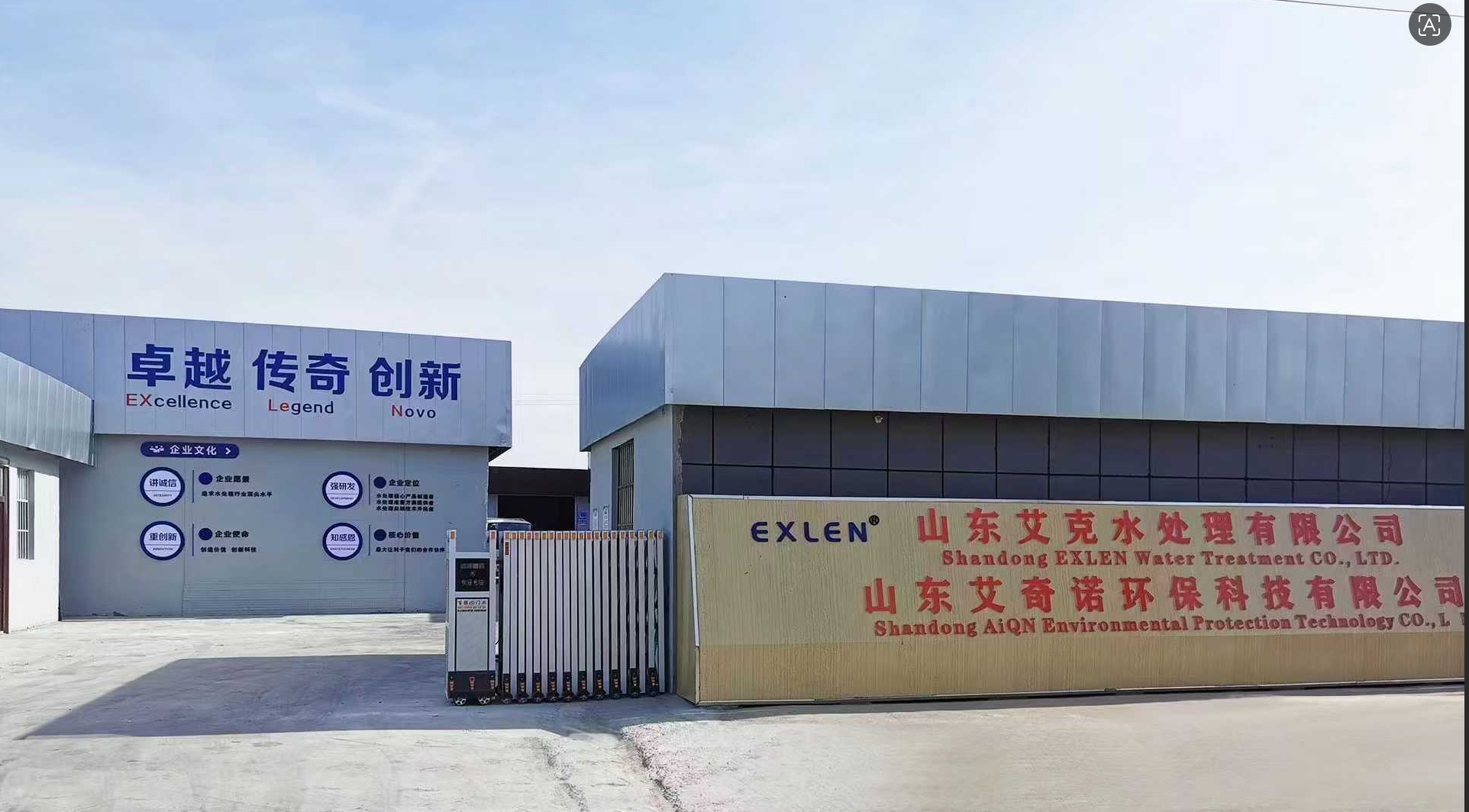

APAM Anionic Polyacrylamide Factory: Inside Advanced Production for Efficient Water Treatment
2026-07-06
Step inside the EVO anionic polyacrylamide factory, where precision engineering transforms raw materials into high-performance water treatment solutions. From automated reactors to real-time quality checks, every detail is designed to maximize efficiency and reliability. This inside look reveals how advanced production methods are reshaping the industry—and why EVO stands at the forefront of sustainable water management.
Where Precision Meets Production: Inside the APAM Synthesis Line
Step into the APAM synthesis line and you’ll quickly realize it’s less a factory process and more a carefully choreographed chemical ballet. Every stage, from monomer purification to polymerization and final granulation, is engineered to keep variability off the table. Temperature, pH, initiator dosing—each parameter is tracked by redundant sensor arrays that feed a central control system tuned by real-time analytics. Operators don’t guess here; they watch trends and trim margins that most plants wouldn’t even measure.
What sets this line apart isn’t just the hardware but how it adapts. Different molecular weights and charge densities for anionic polyacrylamide demand swift recipe shifts, and the system swaps conditions within minutes without residual cross-contamination. Valves sequence with sub-second precision, and inline viscosity probes confirm the polymer structure before the batch even finishes. It’s the kind of agility you’d expect in a pilot lab, scaled up to full production without losing its edge.
Walk the length of the line and you get why customers in mining, water treatment, and papermaking trust the output. The granules that leave the dryer don’t just meet specs—they carry a uniformity that makes field dosing predictable, pump life longer, and flocculation curves repeatable. That reliability doesn’t come from a single breakthrough; it comes from hundreds of small design choices that never allowed precision to take a backseat to volume.
The Chemistry Behind Anionic Polyacrylamide's Water-Taming Power
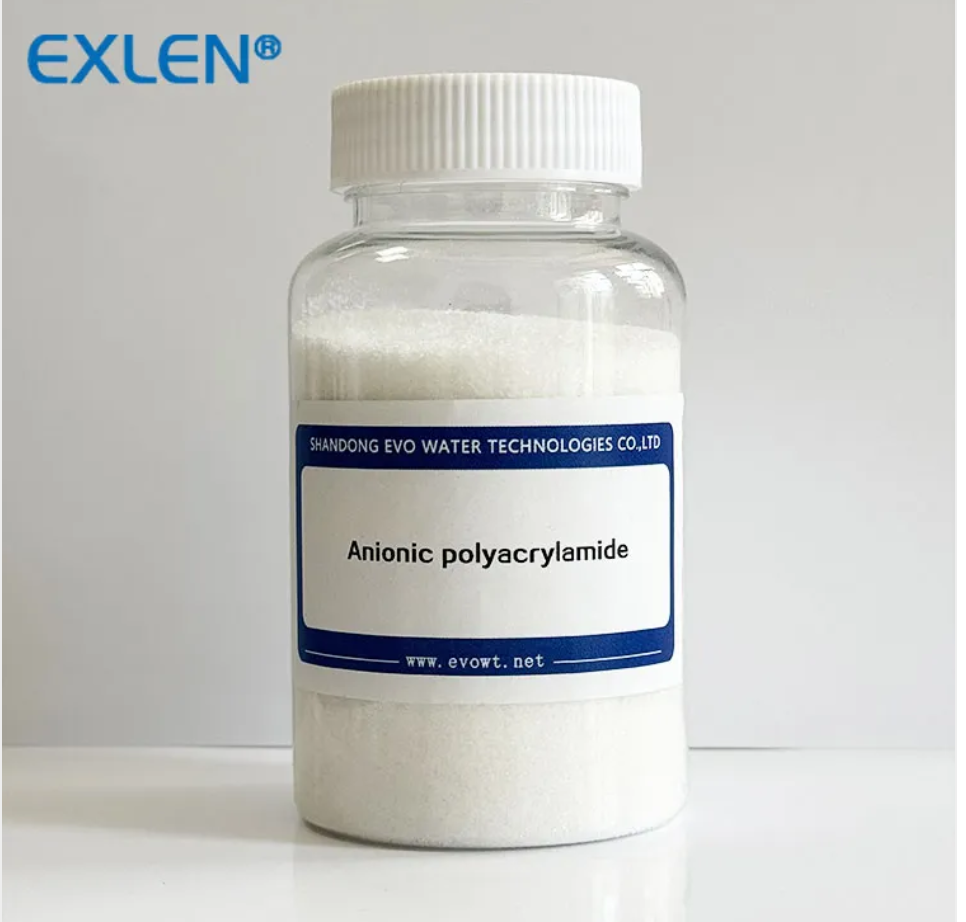
Anionic polyacrylamide (APAM) owes its remarkable water-treatment capabilities to a delicate balance of molecular architecture and electrostatic behavior. The polymer backbone is built from acrylamide monomers, but the real magic happens when carboxylate groups (-COO⁻) are introduced via copolymerization or post-hydrolysis. These negatively charged sites dot the chain at strategic intervals, creating a high density of active binding locations. When APAM dissolves in water, the polymer coils extend as like charges repel each other, exposing those anionic groups to suspended particles in the solution. This chain expansion transforms the molecule from a compact ball into a sweeping net, ready to capture positively charged contaminants.
The dominant mechanism here is charge neutralization and bridging flocculation. Most clay particles, metal oxides, and organic colloids in wastewater carry a slight positive surface charge under typical treatment conditions. APAM's carboxylate ions lunge toward these oppositely charged surfaces, clinging tightly through electrostatic attraction. Once attached, the long polymer chains loop and trail into the surrounding water, where they can snag other particles. This bridging effect assembles tiny, stable suspensions into larger, heavier flocs that settle rapidly. The sheer length of the polymer—often reaching millions in molecular weight—allows a single chain to latch onto multiple particles simultaneously, drastically speeding up separation.
What sets APAM apart from its nonionic or cationic cousins is its pH-responsive personality. In alkaline environments, the carboxyl groups remain ionized and highly active, maintaining that open-chain conformation and potent negative charge. But as pH drops, some groups protonate into uncharged carboxylic acids, causing the polymer to coil up and lose efficiency. This sensitivity allows operators to fine-tune performance by adjusting the water's pH, making APAM a versatile tool across mining, papermaking, and municipal sludge dewatering. Its chemistry isn't just about grabbing particles—it's about doing so with precision, adapting to the unique ionic landscape of each water body.
Quality That Doesn't Settle: How We Test Every Batch
We don’t just spot-check—we inspect every single batch as if our reputation depends on it, because it does. Raw materials are run through a gauntlet of physical and chemical analyses before production even begins. Then, during manufacturing, samples are pulled at multiple stages to catch the slightest drift. If something feels off, the entire batch is quarantined immediately, no questions asked. This isn’t about ticking boxes; it’s about making sure what you receive is exactly what we promised, every time.
Our lab team treats testing like a craft, not a chore. They’ve developed custom protocols that go beyond industry standards—simulating real-world stresses, from temperature swings to extended shelf-life scenarios. Each product faces a unique set of challenges tailored to its formulation, ensuring stability and performance under conditions that actually matter. We’ve shelved batches that met code but fell short of our own benchmarks, because settling for “good enough” never sits right.
Transparency is built into the process. Every test result is logged with a timestamp and tied to a specific batch number, creating a traceable record that you can access if you ever want to dig deeper. We keep retained samples for years, re-testing them periodically to confirm long-term consistency. It’s a quiet obsession with accountability—no shortcuts, no excuses, just quality that holds up long after the shipment arrives.
From Lab to Lagoon: Scaling Up Without Sacrifice
Scaling a conservation project from a controlled lab setup to a sprawling natural lagoon is rarely a straight line. It’s tempting to chase numbers—more sites, more partners, more data—but each expansion risks diluting the very things that made the small-scale effort work: the tight feedback loops, the adaptive tweaks, and the deep local trust that took years to build. We’ve learned that real growth isn’t about replicating a blueprint; it’s about translating principles. That means packaging not just protocols but the why behind them, so on-the-ground teams can adjust without losing the core intent.
One quiet lesson came from our early attempts to standardize monitoring. Lab tanks gave us crisp, comparable metrics, but lagoon ecosystems don’t behave like aquariums. Water moves, species interact unpredictably, and the signs of stress or recovery show up in ways no sensor can flag. We began embedding local knowledge not as an add-on but as a primary channel of information. Fishermen’s logs, seasonal cues remembered by elders, and even the changing taste of shellfish became part of our dashboard. Scaling without sacrifice meant broadening our definition of evidence without lowering the bar for action.
The hardest shift was accepting that fidelity to a method matters less than fidelity to an outcome. In one lagoon, the restoration design called for replanting seagrass in neat grids, but community volunteers found that scattering patches in natural depressions worked far better—less washout, faster colonization. It would have been easy to insist on the lab-tested approach, but that would have sacrificed local ingenuity and ultimately, ecological function. This is the quiet work of scaling: not cloning success but nurturing conditions where wisdom—formal and informal—can interbreed and adapt to new shores.
Real-World Results: APAM in Municipal and Industrial Treatment
Across municipal wastewater plants, the shift to anionic polyacrylamide (APAM) has consistently tightened sludge dewatering cycles. In one mid-sized facility processing mixed domestic and light industrial streams, belt filter press throughput jumped nearly 20% after fine-tuning the polymer dose—without raising chemical costs. The drier cake not only cut hauling fees but also reduced the energy load on downstream dryers, freeing up capacity for peak wet weather events.
Industrial users see equally tangible gains, though the drivers differ. A paper mill struggling with fiber-rich whitewater found that a medium-charge APAM, injected ahead of the dissolved air flotation unit, clarified effluent to below 30 NTU while recovering enough reusable fiber to pay back the polymer in under six months. In metal finishing, APAM combined with inorganic coagulants pulls chromium and zinc hydroxides into dense, fast-settling flocs, slashing clarifier retention times and letting plating lines run longer between cleanouts.
What ties these cases together is the flexibility of APAM formulations—charge density and molecular weight can be dialed in to match the specific suspended solids, pH, and shear conditions of each site. Plant operators who run jar tests on their own sludge batches, rather than relying on supplier defaults, routinely uncover 15–30% reductions in polymer consumption. The message from the field is clear: APAM works best when it is tuned, not just dosed.
Beyond the Factory: Our Commitment to Green Manufacturing
Green manufacturing, for us, starts long before raw materials reach the production floor. It’s about rethinking product design to eliminate waste at the source, choosing materials that are recycled or renewable, and engineering for disassembly so components can have a second life. This upstream approach means our environmental responsibility isn’t confined to the factory walls—it’s embedded in every stage of the product lifecycle, from the initial sketch to the moment a customer receives the finished item.
We work hand-in-hand with suppliers who share our vision, auditing their processes to ensure water, energy, and chemicals are managed responsibly. Outside our own operations, we’ve helped fund community-led reforestation and water restoration projects in regions where we source materials. These partnerships extend our impact beyond direct emissions, creating a ripple effect that strengthens ecosystems and local economies.
Continuous improvement is the engine that drives us. We publicly track our progress against science-backed targets, and we’re not afraid to share setbacks alongside successes. By inviting third-party audits and encouraging employee-led sustainability initiatives, we keep our commitment grounded in action rather than rhetoric. What happens inside the plant is only part of the story—real progress happens when green principles reshape every decision we make, no matter where it takes place.
FAQ
We’ve moved away from traditional batch methods and adopted a continuous, fully automated line. The reactors are designed with precise temperature and pH control loops that minimize side reactions, giving us a much more consistent molecular weight distribution. Plus, our in-house catalyst system cuts down polymerization time without compromising the polymer chain integrity—something you won’t find in most standard plants.
Purity starts with raw material selection—we only source acrylamide with residual acrylic acid below 0.02%. During the polymerization, we use a closed-loop system with nitrogen sparging to prevent oxygen inhibition. Post-polymerization, the gel goes through a multi-stage washing and drying process that strips out unreacted monomers and oligomers, routinely hitting residual monomer levels under 0.05%, which is well below industry norms.
It’s primarily a flocculant for clarifying industrial effluent and municipal sludge. APAM’s long-chain molecules bridge suspended solids into larger flocs that settle fast. Beyond that, we’ve seen it excel in oily wastewater treatment where cationic polymers fail—the anionic charge repulsion actually helps separate emulsified oils. In mining, it’s used for tailings dewatering and red mud settling, drastically reducing the water trapped in sludge.
The backbone is acrylamide monomer, which we hydrolyze on-site from acrylonitrile using a biocatalytic process—no copper catalyst residues to worry about. We then use a controlled anionic comonomer, typically sodium acrylate or 2-acrylamido-2-methylpropane sulfonic acid (AMPS), to introduce the negative charge. Everything is stored in nitrogen-blanketed tanks to avoid any premature polymerization or moisture uptake.
We treat our own process water with the very APAM we produce—it’s a nice closed test loop. Volatile organic emissions are captured and thermally oxidized, and the dried powder packaging areas are under negative pressure with baghouse dust collection. Spent filter press cakes from purification are recycled into the drying line as a heating fuel blend. We also hold an ISO 14001 certification, and our effluent discharges are consistently under 10 ppm total suspended solids.
Sure. First, the monomer solution is carefully pre-mixed with chelators and chain transfer agents in a dedicated vessel. That mixture enters a series of belt reactors where UV-initiated polymerization happens under a nitrogen curtain. The resulting gel slab is diced and washed in countercurrent water baths to remove impurities. Next, it’s extruded into small pellets and dried in a fluidized bed dryer with staged temperature zones. Finally, the dried granules are ground and sieved to client-specified mesh sizes and packed in moisture-barrier bags.
Its real advantage is versatility across a wide pH range, especially in alkaline conditions where inorganic coagulants like alum lose effectiveness. APAM creates much larger, denser flocs compared to polyamine or polyDADMAC, so settling times are shorter. Also, because the polymer chain is mostly linear with just enough carboxylate groups, it doesn’t require intense mixing and doesn’t leave a sticky residue in downstream equipment, which is a headache with some natural-based flocculants.
Every batch goes through a full chain of analysis. We measure intrinsic viscosity for molecular weight estimation, anionic degree via colloid titration, and dissolution speed in a standardized test rig. Samples are also run in a lab-scale jar test using synthetic wastewater to confirm floc settling rate and supernatant clarity. Finally, we screen for residual acrylamide with HPLC and check moisture content with a Karl Fischer titrator. Only if all parameters align with the order spec does a batch get released.
Conclusion
Walking through the production floor of an APAM anionic polyacrylamide factory, it becomes clear that efficient water treatment starts long before the chemical reaches a treatment basin. The synthesis line merges precision engineering with deep chemical understanding, where every reactor run builds on the polymer's innate ability to flocculate suspended solids. From the controlled initiation of acrylamide monomers to the careful incorporation of anionic charge groups, the process is tuned to yield long-chain molecules that will later uncoil in water and latch onto particles. This isn't just batch mixing—it’s a continuous refinement of viscosity, charge density, and molecular weight, all monitored against the real-world demands of municipal sludge dewatering and industrial effluent clarification. The result is a polymer that bridges the gap between laboratory promise and field reliability, with performance baked in from the very first reactor pulse.
That performance doesn't rest on chemistry alone; it's verified at every stage through testing protocols that go far beyond routine quality checks. Each batch undergoes rheological profiling, ionic charge titration, and rapid settling tests under simulated process conditions, ensuring that the polymer will deliver consistent results whether it's dropped into a cold-weather municipal plant or a hot, chemically aggressive industrial stream. Beyond machine-level precision, the factory's commitment echoes in its approach to scale-up—where pilot-scale lessons are translated directly into full production without diluting the polymer's effectiveness—and in a green manufacturing ethos that recycles water, captures fugitive dust, and pursues a closed-loop energy cycle. Real-world case studies back this up: in municipal treatment, APAM slices polymer consumption while improving cake solids; in mining and textiles, it clarifies high-turbidity wastewater with remarkable speed. The factory is less a point of manufacture and more a node in a continuous improvement loop, where each shipment carries the cumulative learning of chemistry, engineering, and environmental stewardship—proof that modern water treatment chemistry can be both ruthlessly effective and responsibly made.
Contact Us
Contact Person: Fiona Su
Email: [email protected]
Tel/WhatsApp: 8619963724144
Website: https://www.evo-chemical.com/