

Aluminum Parts Maker: Selecting a Reliable Manufacturing Partner for Precision Components
2026-07-12
In the realm of precision manufacturing, the choice of an aluminum parts maker can define the success of your product. From aerospace to automotive, every micron matters, and a partner with advanced capabilities and unwavering quality standards is non-negotiable. At DDR, we understand that behind every component is a demand for reliability, speed, and innovation. This blog peels back the layers of what makes a manufacturing partner truly dependable—so you can move from design to production with confidence.
What goes unnoticed in a precision aluminum part often matters most
It’s easy to fixate on the obvious dimensions of a machined aluminum component—the bore diameters, the flatness of a face, the thread pitch. But what really separates a reliable part from one that causes field failures often hides in details that never appear on an inspection sheet. Things like burr formation on internal cross-holes, the subtle chatter marks that feather into stress risers over time, or the microscopic pitting left by a worn cutting tool. These aren’t glaring errors; they’re whispers of imperfection that go unnoticed until a fatigue crack propagates under cyclic loading or a hydraulic leak eats into system pressure. In precision work, the absence of drama in the final product is exactly what you’re paying for—because the drama has already been meticulously removed.
Another layer of invisible quality sits in the residual stress profile of the raw material. A billet of 6061-T6 isn’t just a homogenous hunk of metal; its interior holds a history of rolling and cooling that can twist a finished part all out of alignment once you machine away the outer skin. The shops that consistently produce stable parts aren’t just running CNC programs; they’re managing material stress relief—whether through pre-machining thermal treatments, strategic roughing sequences, or simply knowing which aluminum lot to reject before it ever hits the spindle. This kind of awareness never shows up on a CMM report, but it’s what prevents a tightly toleranced housing from warping weeks after delivery.
Then there’s the anodizing talk—the finishing step that looks purely cosmetic until you peel back the electrochemical story. A dyed Type II anodize might deepen corrosion resistance and hide light surface blemishes, but the real unsung hero lies in the conversion time, bath chemistry, and sealing control that determine whether that thin coating actually bonds into the surface or merely sits on top like cheap paint. Poorly controlled parameters can leave porous, milky patches or an insidious base-metal corrosion that spreads silently beneath the dye. It’s the sort of downfall that no one spots in a QA photo, but it’ll bloom into warranty claims six months down the road. In aluminum, the parts that work longest are those where every process parameter—even the ones the customer never asks about—is held with quiet precision.
Material expertise and the hidden cost of getting it wrong
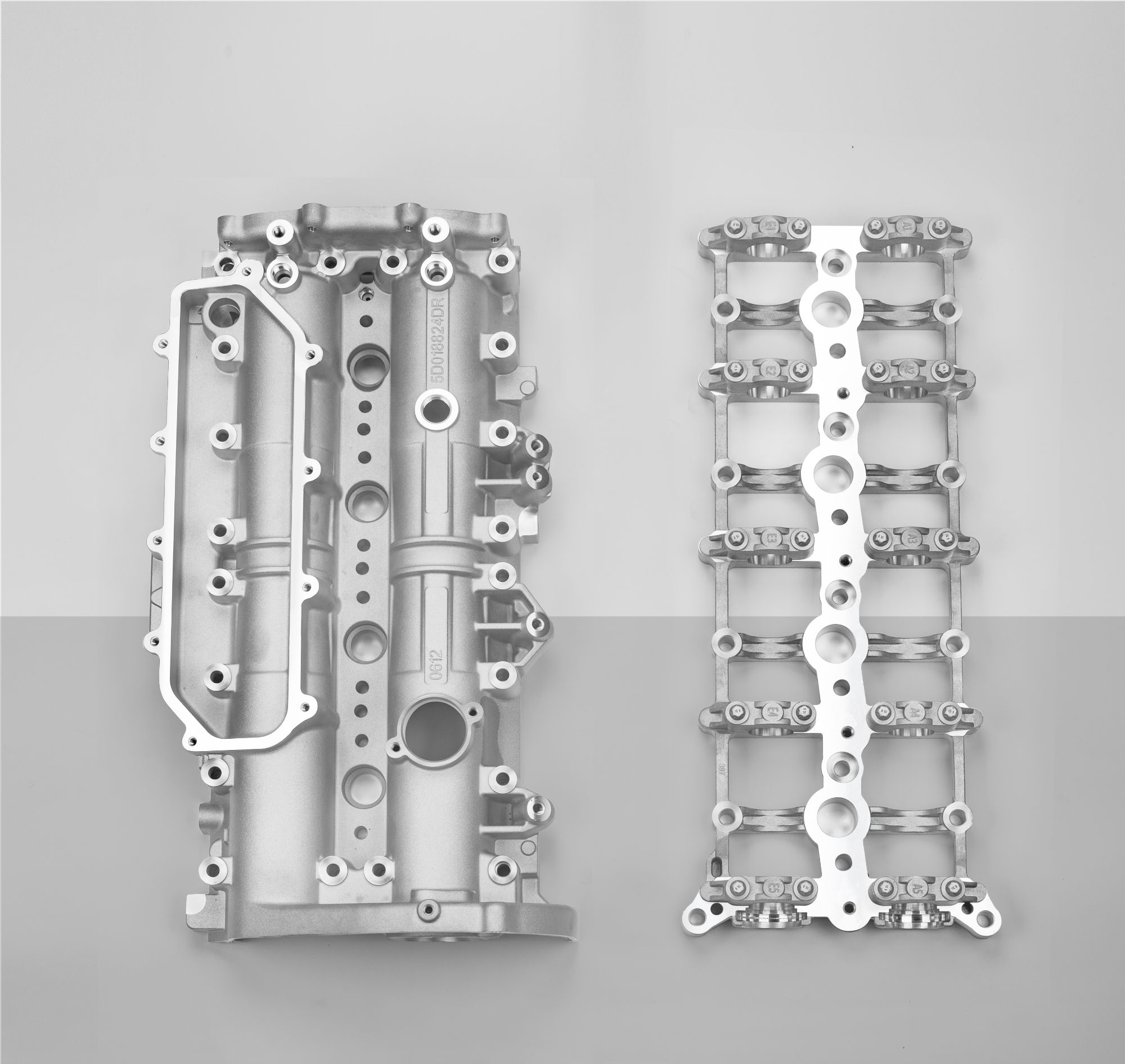
Choosing the wrong material for a project rarely announces itself with a bang. Instead, it creeps in through premature wear, unexpected failures, or a product that simply never feels right in the user's hands. When a design team lacks deep material knowledge, the consequences often surface long after launch — in warranty claims, safety recalls, or the slow erosion of customer trust.
Material mix-ups can trigger a cascade of expenses that never appear on the upfront bill of materials. Reworking tooling, redesigning parts late in development, or navigating supply chain scrambles burns both budget and team morale. Worse, the sunk cost of the initial mistake is just the beginning: legal liabilities, compliance penalties, and the invisible drain of engineers firefighting instead of innovating.
True material expertise isn't about memorizing datasheets. It's the ability to anticipate how a polymer, metal, or composite will behave under real-world stress, environmental exposure, and manufacturing constraints. Companies that invest in this nuanced understanding avoid the kind of quiet failures that tarnish reputations and turn promising products into cautionary tales.
Certifications that signal real capability, not just paperwork
Too many certifications still lean on theory-heavy exams that rarely mirror the messy, fast-paced reality of a job. They reward memorization, not resourcefulness. The ones worth your time are built around performance: you're asked to troubleshoot a live system, write a script under time pressure, or untangle a scenario that mimics what lands on your desk at 9 a.m. on a Tuesday. That kind of test doesn't leave room for bluffing.
Hiring managers have grown weary of laundry lists of acronyms that fall apart during the first week. What grabs attention now is evidence of fluency — a portfolio piece, a lab result, a recorded simulation that maps directly to a skill in demand. Certifications that include peer-reviewed projects or real-time assessments tell a story of capability, not just compliance. They signal to a future team that you've already stumbled, debugged, and delivered something that works.
The credential that opens a door isn’t the one with the highest score threshold on a multiple-choice gauntlet. It’s the one that makes a skeptical senior engineer nod after glancing at your outcomes. Look for programs where the final assessment feels less like a test and more like a condensed workday. If the industry sees it as a proxy for proven experience, you’ll spend less time explaining your value and more time actually doing the work.
When design support saves the project before it starts
Early involvement of design teams can reveal hidden constraints that would otherwise derail a project later. By stress-testing concepts against real-world usability, material limitations, or manufacturing quirks, they spot friction points long before they become costly dead ends. It’s not about following a checklist—it’s about deep, contextual probing that uncovers what the brief never said.
A seasoned designer doesn’t just react to requirements; they reframe the problem itself. When a client brings a half-formed idea, asking “who exactly will use this, and in what situation?” often exposes fundamental mismatches. That early intervention shifts the trajectory, saving months of rework and turning a vague wish into something that actually delivers value.
The rescue happens quietly, often in a single workshop or a rough prototype that makes an assumption tangible. Suddenly, stakeholders see the gap between intention and feasibility. By making the abstract painfully concrete at the earliest stage, design support prevents the whole team from marching confidently in the wrong direction.
Delivery promises versus floor-level reality
In the final sprint to launch, the gap between what was promised and what actually works on the sales floor becomes painfully visible. Strategy decks painted a seamless customer journey, but the store associates are wrestling with a mobile checkout that crashes when scanning more than three items. The feature list boasted real-time inventory, yet the system shows stock levels from yesterday's batch upload. These aren't glitches—they're the predictable outcome when timelines are dictated by marketing milestones rather than technical readiness. Every shiny demo in a controlled environment crumbles under the chaotic reality of peak-hour foot traffic, where the WiFi struggles, the payment terminals time out, and the customer just wants to leave.
The disconnect runs deeper than just software bugs. Merchandising was promised dynamic planogram updates tied to customer data, but the in-store hardware can't handle the rendering load without overheating. The immersive digital signage, touted as a game-changer, flickers between content loops because the content management system chokes on the 4K files that were never properly optimized. Meanwhile, the operations team discovers that the promised "single view of inventory" requires manual reconciliation twice a day because the warehouse management system speaks a different data protocol than the e-commerce backend. These are the floor-level truths that turn visionary roadmaps into frustrated team huddles, where the conversation shifts from innovation to damage control.
Perhaps the most telling gap emerges in the human experience. The training materials promised that associates would become empowered style consultants, but they're spending their shifts rebooting card readers and explaining to customers why the online price is lower than the store tag. The seamless omnichannel return vision evaporates when the return kiosk fails to recognize QR codes from emails, forcing a manual override for every transaction. This isn't just technical debt—it's a promise-reality rift that erodes trust among the very people expected to bring the experience to life. When floor managers start creating their own workarounds and shadow processes just to keep the day running, you know the delivery promise has become a work of fiction written by those who never had to open the store in the morning.
Evaluating whether a manufacturer will grow with you
Growth isn’t just about capacity—it’s about evolution. A manufacturer that truly grows alongside you will adapt its processes, expand its expertise, and stay curious about your changing needs. Watch for signs that they’re investing in their own development, whether that means new equipment, ongoing training, or a willingness to tackle unfamiliar challenges. You want a partner whose trajectory mirrors your own ambition, not one who’s content with the status quo.
Communication habits often reveal whether a manufacturer is prepared for a long-term relationship. Are they proactive in suggesting improvements? Do they ask questions that show they understand your industry? Manufacturers stuck in a transactional mindset tend to go silent once the order is placed, while those worth growing with keep the dialogue open, sharing insights or flagging potential issues before they escalate. That kind of engagement is a strong signal they’re thinking beyond the next shipment.
Finally, assess how they’ve handled past clients’ growth spurts. Ask for examples of times they scaled up production quickly or adjusted to a new product line. A manufacturer who can point to concrete instances of flexibility and problem-solving is more likely to absorb the surprises your business will inevitably throw their way. If they talk about those experiences with genuine enthusiasm rather than a rehearsed sales pitch, you’ve probably found a keeper.
FAQ
Beyond basic metrics, evaluate their engineering support. A truly reliable partner doesn't just machine parts—they suggest design improvements that reduce weight, fix weak points, or simplify assembly. Examine sample reports: do they catch potential issues like thin walls or unrealistic tolerances before production? Also consider their material sourcing networks. A maker with strong mill relationships can often secure 7075 or 2024 alloys faster and at better rates when supply tightens.
Ask to see real inspection data from previous orders—not just a certificate. A capable shop will openly share CMM reports, surface roughness charts, or SPC data that show how consistently they hold ±0.0005 inches or tighter. In conversation, they'll ask insightful questions about your part's function, fit, and mating components. If they don't mention things like thermal expansion effects on aluminum during machining, they may lack deep experience.
Watch for vague quality systems. If they can't explain their process for material traceability, or if they hesitate to provide ITAR or ISO 13485 documentation, be cautious. Also, a concerning sign is when they accept every print without questioning tolerances that could cause warping or stress. Reliable partners push back professionally—they'll warn you that a particular pocket design might distort after anodizing, for instance, because they've seen it happen.
Look at their equipment list diversity. A shop running only 3-axis machines may struggle with complex geometries at scale. The ideal partner has a mix: quick-turn 5-axis cells for prototypes, plus multi-pallet horizontals for production. Ask how they manage tooling. Do they standardize on certain end mills across projects to maintain repeatability? Also, check if they invest in automation cells for unstaffed runs—this often indicates a mature approach to scaling without operator-dependent variability.
Many shops machine well but outsource anodizing or alodine coating with poor control. A trustworthy partner either has in-house treatment lines or a tightly managed supply chain. Ask how they prevent dimensional shifts after hard anodizing, or how they ensure consistent corrosion resistance for marine parts. They should be able to explain masking techniques, racking strategies, and testing methods like salt spray tests. If they treat finishing as an afterthought, you may face peeling coatings or oversized bores later.
Absolutely, and often more so for complex, low-to-medium volume work. Local shops can offer faster feedback loops: when a design tweak is needed, you're not losing days to time zones. They tend to value long-term relationships and may assign a dedicated engineer to your account. However, verify their financial stability and backup capacity. A local shop with a single spindle is risky unless they have contingency plans for machine downtime. Many excel when communication and flexibility matter more than sheer cost reduction.
Inquire about their familiarity with different tempers. For instance, ask: 'What is your approach to stress-relieving 7050-T7451 before final machining to minimize distortion?' A seasoned team will discuss pre-machining steps or aging treatments. Also, ask how they handle long, thin parts in 6061-T6 to avoid chatter. Their answer should involve specialized workholding, optimized feeds and speeds, and perhaps progressive roughing strategies. If they lump all 6000-series together, they might lack nuanced understanding.
Check if they track metrics like first-pass yield or on-time delivery with real data. A proactive maker will share quarterly business reviews and suggest process changes—like switching to a different cutter geometry that extended tool life on your part. Ask about their training programs for machinists. Continuous learning shops rarely rely on tribal knowledge alone. Additionally, see if they're adopting Industry 4.0 practices: machine monitoring, predictive maintenance, or digital twin simulations can signal a partner ready to adapt as your needs evolve.
Conclusion
The parts that quietly succeed in high-stress applications often go unnoticed precisely because someone paid attention to the details that never appear on a drawing. A precision aluminum component might meet every tolerance on the spec sheet and still fail early if grain structure, residual stress, or surface integrity were afterthoughts. This is where material expertise separates suppliers who simply machine metal from those who engineer outcomes. The real cost of choosing a partner without that depth often surfaces months later—in warranty claims, field failures, or production bottlenecks that could have been avoided with a better alloy selection or heat treatment cycle. Certifications like ISO 9001 or AS9100 should be a starting point, not a differentiator. What matters more is whether those badges reflect a culture of process control that extends to every shift, every setup, and every first-article inspection—not just an audit-ready binder on a shelf.
Design support can be the quiet lever that prevents a project from derailing before tooling is even cut. A manufacturing partner who raises thoughtful questions about wall thicknesses, radii, or tolerances often saves weeks of iteration and thousands in rework. Yet even brilliant engineering means little if delivery dates are aspirational rather than operational. Floor-level reality reveals itself in scheduling transparency, capacity buffers, and how a shop handles a late material shipment without ever letting the customer feel the delay. Over time, the difference between a transactional vendor and a strategic partner becomes impossible to ignore. A manufacturer worth growing with invests in new capabilities not when you demand them, but when they anticipate where your designs are headed. Their team learns your tolerances, your design language, and your unspoken priorities, turning what could be a series of orders into a collaborative advantage that competitors can’t easily duplicate.
Contact Us
Contact Person: Shelly
Email: [email protected]
Tel/WhatsApp: 8613967667688
Website: https://www.yongyu.com/