

All-Steel Ventilated Floor Vendor Guide: Choosing Durable Raised Flooring
2026-10-03
Selecting the right all-steel ventilated floor vendor can make or break your data center's performance, cooling efficiency, and long-term durability. Raised flooring isn't just a structural afterthought—it's the backbone of airflow management, cable routing, and equipment stability. Yet with so many suppliers claiming excellence, how do you separate proven engineering from marketing noise? This guide cuts through the confusion, walking you through the critical factors—material gauge, air volume, load ratings, surface finishes, and vendor reliability—that determine whether your raised floor will stand the test of time or become a costly headache. Along the way, we'll spotlight what sets top-tier manufacturers apart, including insights from Lipin Floor, whose ventilated panels are engineered for real-world airflow demands. Whether you're retrofitting an existing facility or building from scratch, getting the vendor choice right from day one saves you from premature replacements, hot spots, and downtime. Ready to make an informed decision that protects your critical infrastructure? Let's dive into the essentials.
Steel Gauge Is Only the Starting Point
Ask most buyers about steel selection and the first question is usually about gauge. That's understandable—thickness is easy to measure and compare. But two sheets of 16-gauge steel can behave completely differently depending on what happens after the rolling mill. One may have been cold-rolled for tighter tolerances, then annealed to relieve internal stress; another might be hot-dipped in zinc with no post-treatment. Same number, different lifetimes in the field.
The alloy itself often matters more than the decimal point on a spec sheet. A high-strength low-alloy (HSLA) grade can outperform a thicker plain carbon steel in load-bearing applications, letting designers drop a gauge or two without sacrificing safety. Conversely, choosing a gauge based solely on load tables ignores corrosion mechanisms, fatigue cycles, and how the steel will be joined. Weldability, formability, and coating adhesion all shift with chemistry and processing—not just thickness.
So when someone says 'we need 14-gauge steel,' the better conversation starts with what the part must survive. Moisture exposure, thermal cycling, impact energy, fatigue life, and even the radius of a bend can push you toward a thinner or thicker option than the gauge chart suggests. Thickness sets a boundary, but the real engineering happens in the choices made after that number is written down.
How Ventilation Patterns Affect Load Capacity Over Time
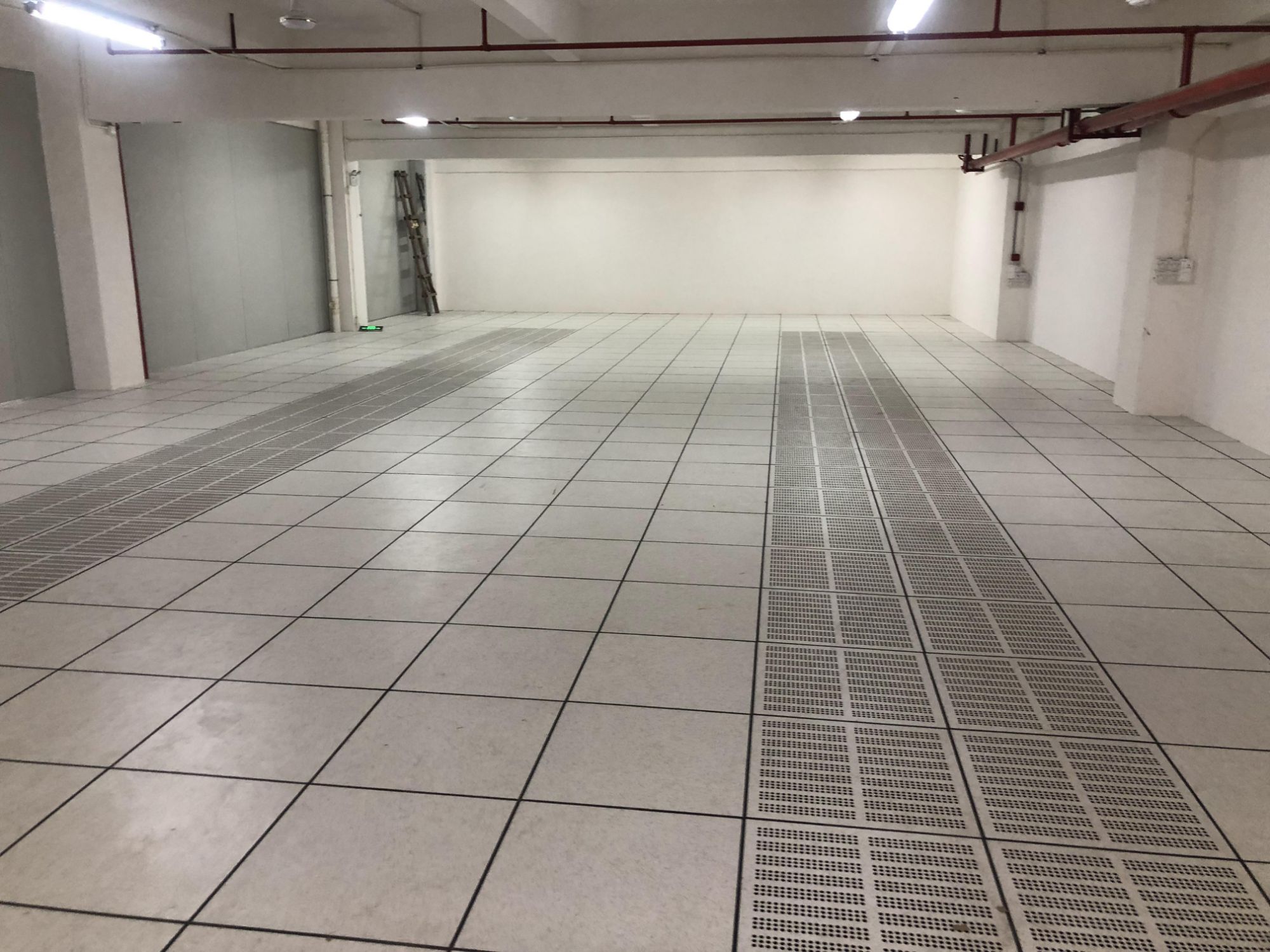
Over time, uneven ventilation patterns create distinct microclimates within the same structure. Airflow that favors one side while leaving another static leads to moisture buildup, thermal gradients, and localized condensation. These pockets become weak points long before visible damage appears, slowly chipping away at the total load capacity.
Repeated drying and wetting cycles caused by shifting air currents can crack timber fibers or soften composites near edges. For steel parts, stagnant humid zones encourage corrosion at joints and fasteners, thinning the cross-section that resists stress. Once a small section fails, the load shifts to neighboring members, accelerating their degradation and creating a cascading effect.
More ventilation is not automatically better; the pattern matters as much as the volume. Forcing air through every load-bearing area and removing dead zones helps maintain a consistent environment, which in turn preserves the original load capacity for a longer period. In practice, adjusting inlet and outlet positions has been shown to reduce the long-term loss more effectively than simply increasing fan output.
Coating Systems That Prevent Corrosion and Static Buildup
A coating that only blocks rust often leaves another problem untouched: static charge accumulation on non-conductive surfaces. The most practical systems combine barrier protection with a controlled dissipation path. Rather than relying on a single thick layer, these coatings embed conductive pigments—like graphite, carbon black, or metallic flakes—within a tightly cross-linked resin. The resin keeps moisture and oxygen away from the substrate, while the conductive network bleeds off static before it can arc or attract dust.
What separates better formulations is how they hold that balance under stress. If conductivity drops too low, the surface reverts to an insulator; if the film is overloaded with conductive filler, adhesion and flexibility weaken. A graduated stack tends to perform more reliably: a zinc-rich primer for sacrificial corrosion protection, followed by a static-dissipative mid-coat, then a chemical-resistant topcoat. This layering avoids the familiar trade-off where anti-static performance fades after months of abrasion or solvent contact.
The right system ultimately depends on the operating environment. Floors in electronics assembly, fuel transfer piping, and enclosures for volatile powders each need different resistance ranges, film thicknesses, and cure profiles. Calling for a single number—say, surface resistivity between 10^6 and 10^9 ohms per square—rarely tells the whole story. A more useful specification includes test methods, substrate preparation, and re-coat intervals, because preventing corrosion and static buildup is less about a single formula and more about matching the coating's failure mode to the asset's expected service life.
What to Look for in Vendor Weld and Load Test Documentation
Vendor documentation often looks impressive at first glance, but the real value lies in whether the weld procedures and load test results align with the specific conditions of your project. Look for evidence that the vendor's welding process was qualified under parameters that mirror your actual application—things like base material thickness, joint configuration, and position. If the documentation only references generic standards without tying them to the product's intended service environment, treat it as a red flag rather than a reassurance.
Beyond the weld itself, scrutinize how load testing was conducted and reported. A legitimate test report should state the exact load applied, the duration, the deformation observed, and the acceptance criteria used. Vague statements like "passed load test" without numerical data or test setup photos don't give you enough to verify structural adequacy. Also check whether the test was witnessed by an independent third party or purely self-certified—independent oversight tends to produce more trustworthy numbers.
Finally, compare the documentation against the physical product. If the heat numbers, material certificates, welder qualifications, and test dates don't line up with what you can actually trace on the delivered components, the paperwork is effectively decorative. Good vendors make this cross-referencing easy, providing clear revision histories and signatures from responsible engineers. If you have to dig through dozens of pages just to find the connection between a weld symbol and its corresponding procedure, that friction is often a sign that the documentation was assembled for show rather than for genuine quality assurance.
Installation Tolerances That Keep Raised Floors Quiet and Stable
Getting a raised floor to sit dead level might seem like the obvious goal, but chasing a perfect plane often leads to more noise than it prevents. The real trick lies in how the pedestal heads accept the panels—if the tolerance between the panel edge and the support is too tight, you end up with metal-on-metal contact that creaks under every footstep. A small, controlled gap of around 1 to 2 millimeters lets the panel settle without binding, while still keeping it from rattling sideways. This breathing room absorbs micro-movements from load shifts and temperature swings, so the floor stays quiet long after the last adjustment wrench is put away.
Stability under rolling loads doesn't come from cranking every pedestal to the same torque—it comes from respecting the cumulative effect of small variations. When installers work to a tolerance of plus or minus 1.5 millimeters across the entire grid, the panels form a continuous but slightly flexible surface that distributes weight evenly. If one corner of a panel sits 3 millimeters higher than its neighbor, that edge becomes a pivot point, amplifying vibration and eventually causing a dull thumping sound as carts pass over. Keeping the vertical deviation within a narrow band stops these hard spots from forming, so even heavily trafficked aisles stay calm and predictable.
The relationship between the stringer, the pedestal head, and the panel underside matters more than the nominal dimensions on a spec sheet. A tolerance stack-up that leaves a hair of vertical play in each joint—typically no more than 0.5 millimeters—acts like a built-in dampener. This is not sloppiness; it's deliberate compliance that prevents the entire assembly from becoming one giant tuning fork. Installers who understand this will often leave the perimeter screws slightly less tightened than the field screws, allowing the edges to flex just enough to kill resonance. The result is a floor that feels solid underfoot but never transmits the sharp, metallic clicks that betray a rigidly over-constrained installation.
Lifecycle Costs That Separate Durable Floors from Replacements
A floor that demands replacement every seven years quietly drains budgets in ways a simple price tag never reveals. Consider the full chain: removal, disposal, subfloor repair, and the labor hours lost to a recurring cycle. What looks like a bargain at first purchase often becomes the most expensive option once downtime and repeated installation fees enter the equation.
Durable flooring shifts that math entirely. Instead of budgeting for tear-outs and new material every few seasons, facilities pay once for a surface that withstands decades of foot traffic, equipment loads, and cleaning chemicals. The savings compound through avoided operational disruptions and reduced waste handling, areas rarely shown on an initial quote but impossible to ignore in long-term accounting.
The real separation emerges when comparing maintenance and repair frequency. High-wear zones with a robust floor need occasional recoating, not full replacement. Less durable alternatives develop cracks, delamination, and staining that force early intervention. Over a thirty-year horizon, the gap in lifecycle spend can exceed three to five times the original material cost, making durability not a premium feature but a fundamental cost-control strategy.
FAQ
Look at the gauge of the steel top sheet and how the louvers are formed. A continuous stamped pattern with no sharp transitions resists fatigue better than a panel with welded inserts. Ask the vendor for third-party test reports showing deflection under rolling load, not just static uniform load.
Concentrated load and rolling load matter more than uniformly distributed load. If you expect server lifts or pallet jacks, insist on a rolling load rating above 1,000 kgf and check the indentation resistance. Many spec sheets highlight 1,250 kgf concentrated load, but real failures happen under caster wheels.
Request details on the zinc coating thickness and whether the panel edges are sealed after cutting. Epoxy or polyurethane topcoats alone won't stop edge rust. A vendor that provides cut-edge treatment and salt-spray test data is far more credible.
Start around 25% to 35% open area for typical 6-12 kW racks, but don't rely on assumptions. Compute the required airflow at the rack face and match panel open area to the underfloor static pressure. Too much free area can actually reduce directed airflow where you need it.
They can work, but the cost and acoustic properties change the equation. In offices, you might only need them in equipment rooms or print areas. The vibration damping is different from woodcore panels, so expect a slightly higher footfall sound if underfloor air is not used.
Focusing only on panel price. The pedestal system, stringer configuration, and cutout costs for odd-shaped tiles often add more to the final bill than the panel itself. Request a full bill of materials with every trim piece and corner plate listed.
Sometimes, but you need to match the panel size, corner lock style, and pedestal head dimensions exactly. A 5 mm difference in thickness or edge profile will create a tripping hazard. Bring a sample of your existing panel to the vendor for a test fit before committing.
Every six months, or after any major equipment move. Check for loosened pedestal bases, cracked gaskets around cutouts, and accumulation of dust in the louvers that can reduce airflow. Swap out high-wear tiles in aisle intersections rather than waiting for visible sag.
Conclusion
Choosing an all-steel ventilated floor that actually lasts means looking past the spec sheet's thickest number. Steel gauge is a useful baseline, but it won't tell you how perforation geometry redistributes stress over years of rolling loads or foot traffic. Dense, sharp-edged vent patterns can create fatigue points that quietly compromise load capacity, even when the raw material seems heavy enough. The coating system deserves equal weight: a quality multi-layer finish does more than keep rust away. It must control static dissipation without peeling at the seams, especially in data halls where airflow and hardware grounding coexist. Pay attention to whether the vendor can explain how their vent layout and surface treatment work together under real operating conditions, not just in a clean test report.
Vendor documentation gives you a window into manufacturing discipline. Look for weld test results that show consistent penetration and no undercut at the joints where pedestals meet the panel edge—this is where most floors eventually creak or loosen. Load test data should cite the specific perforation pattern you're buying, not a generic solid-panel figure. Installation tolerances matter more than many buyers expect: a few millimeters of level variation across a row can turn a quiet floor into a rattling nuisance once cabinets and cables are loaded. Finally, lay out the lifecycle cost honestly. A cheaper floor that needs re-leveling, re-coating, or panel replacement within five years will cost far more than one with documented welds, stable tolerances, and coatings that survive the environment. Durable raised flooring is not found in a single spec line—it emerges from the interaction of gauge, airflow design, finish chemistry, weld quality, and installation precision.
Contact Us
Contact Person: yuki
Email: [email protected]
Tel/WhatsApp: +86 18664390732
Website: https://www.lipinfloor.com/